M10R-620TR

620 Wp TOPCon Bifacial 80%
ComparePV verdict

Middle of its segment, weak in heat

Rank 2,572 of 14,005
Compare panels Datasheet PDF
Power (Wp)
620
Typical for its class
Efficiency (%)
22.95
Typical · median 22.80%
Density (Wp/m²)
229.5
Typical · median 227.7
Temp (%/°C)
-0.300
Weak · bottom 19%
Weight (kg)
32.5
Typical · median 32.7 kg
Warranty (yrs)
30
Typical · median 30 yrs

The M10R-TR series comprises monocrystalline modules built on N-type TOPCon technology, engineered for installations that need to maximize energy yield on limited roof or ground area. The use of 132 half-cut cells in an MBB (multi-busbar) layout reduces resistive losses and improves the module's tolerance to partial shading, resulting in more stable performance under real-world operating conditions. The bifacial design captures light reflected off the ground surface, boosting total energy harvest by as much as several percent compared to conventional monofacial panels - making this an especially attractive option for utility-scale PV farms and installations on bright, reflective surfaces. The rectangular cell design lowers open-circuit voltage while maintaining high current output, which cuts BoS costs and simplifies inverter matching. The manufacturer backs the series with a 30-year linear power warranty, low annual degradation, and resistance to LID and PID effects, while the module's appearance (available with a black frame) can be customized to meet the aesthetic requirements of the investor. The M10R-TR series is well suited to both commercial projects and larger prosumer installations where long-term reliability and strong return on investment are priorities.

Ranking

1,086 panels in the segment TOPCon 600-650 W
Metric This panel Median Position in segment Overall rank
Module efficiency 22.95% 22.80% Typical 2,268
Power density 229.5 227.7 Typical 2,191
Temperature coefficient -0.300 -0.290 Weak · bottom 19% 6,093
Weight per kWp 52.4 53.1 Typical 5,893
Performance warranty 30 yrs 30 yrs Typical 21
Colour key Strong - top 25% Typical - middle 50% Weak - bottom 25%

Signals from the data

5 positive · 3 caution
Not ideal for

Hot climates.

Watch-outs
-0.300 %/°C temperature coefficient

Bottom 19% of the TOPCon 600-650 W segment, against a median of -0.290.

What owners get
N-type TOPCon technology with MBB cells

132 half-cut cells in a multi-busbar layout reduce resistive losses and improve partial-shading tolerance, translating into higher and more stable energy yield compared to older PERC technology.

30-year linear power warranty

The manufacturer offers a 30-year linear power warranty with low annual degradation and resistance to LID and PID - a term comparable to leading peer comparables such as HT-SAAE HT66-18X(ND)-F and Weran LR7-72HTH.

Bifacial design boosting energy yield

The double-sided module construction captures reflected light from the ground, potentially increasing total energy yield by double-digit percentages versus classic monofacial panels - a significant advantage for PV farms and installations over bright, reflective surfaces.

High efficiency at premium-segment level

Efficiency of up to 22.95% at power up to 620 Wp places the series near the top of its peer comparables (HT-SAAE 23%, MY Solar 22.95%, Weran Solar 23%), making it competitive within the high-power TOPCon module segment.

Experienced manufacturer with in-house production line

Hunan RedSolar has operated since 2008 and was the first in China to launch a fully localized, intelligent PV cell production line, with over 30 GW of products delivered - evidence of a mature manufacturing process.

Trade-offs
Model discontinued from production

According to independent sources (ENF Solar), the M10R-MBB CETC-600-620TR model is no longer commercially manufactured by Hunan RedSolar, which may limit availability of warranty service, replacement parts, and the ability to source identical modules for system expansion.

Efficiency slightly below segment leaders

Maximum efficiency of 22.95% is marginally lower than the best comparable models - HT-SAAE HT66-18X(ND)-F and Weran LR7-72HTH achieve 23% at the same 620 Wp maximum power - a small but real gap that matters in large-scale installations totaling hundreds of kW.

Notes from the database
  • At 22.9% efficiency, this panel is on par with typical TOPCon 600-650W modules
  • At 229.5 W/m² power density, roof space requirements are typical for TOPCon 600-650W panels
  • Temperature coefficient of -0.30%/°C matches the TOPCon 600-650W median
  • Bifacial design (80% factor) captures reflected light - adds 4-12% yield on ground-mount or white roof
  • In the top 16% for efficiency among all TOPCon panels

Specifications

Open datasheet PDF
Nominal power (Pmax) 620 Wp Nameplate at 1000 W/m², 25 °C
Module efficiency 22.95 % Typical Segment median 22.80%
Vmpp · Impp 40.05 V · 15.48 A Operating point at max power
Voc · Isc 47.85 V · 16.32 A Sizes the string length
Max system voltage 1500 V Longer strings than 1000 V modules
Dimensions 2382×1134×30 mm · 2.70 m² of roof
Weight 32.5 kg Typical Typical · median 32.7 kg
Cells 132 · TOPCon Monocrystalline
Bifaciality 80 % Rear output as a share of front
Coefficient Pmax -0.300 %/°C Weak bottom 19% of its segment
Coefficient Voc · Isc -0.250 · 0.045 %/°C
NOCT 42 °C At 800 W/m², 20 °C ambient
Product warranty 12 years Hardware defects only
Performance warranty 30 years Typical median 30 yrs · median 30 yrs
End-of-warranty output 87.4 % Equals 542 W guaranteed
Degradation 1.00 → 0.40 % First year, then annual

Datasheet charts

Open datasheet PDF

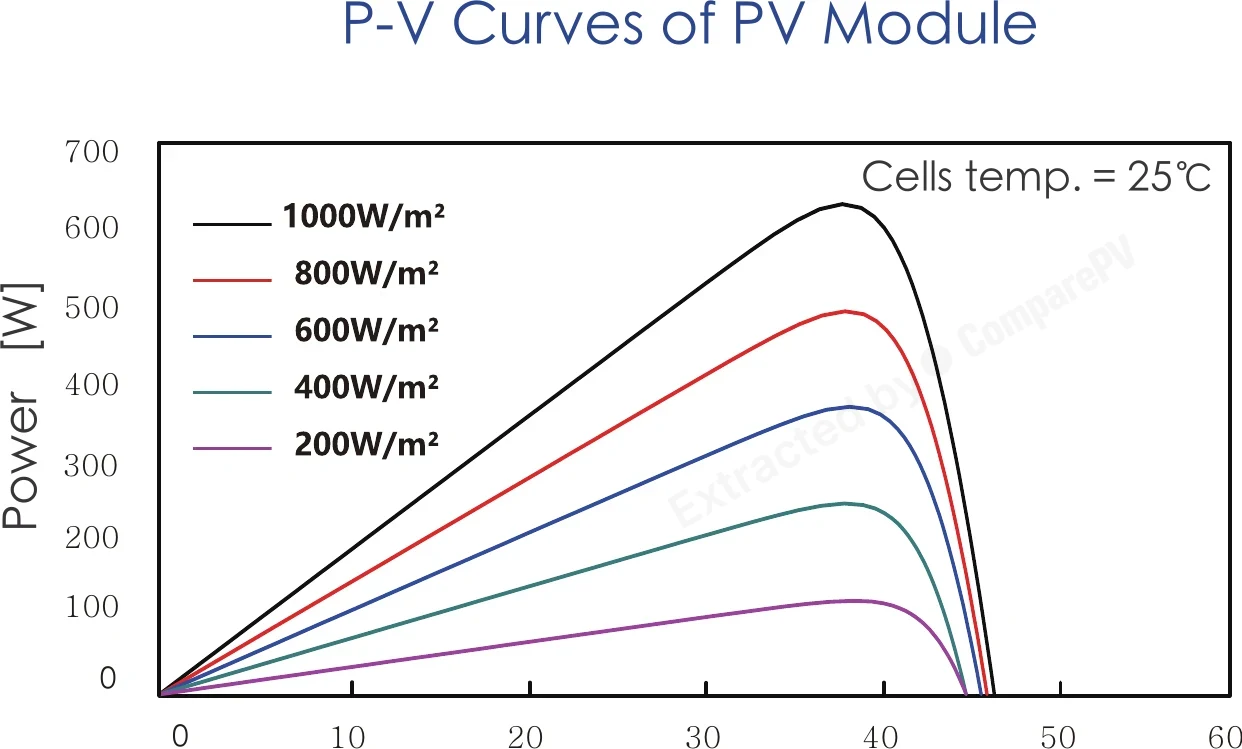
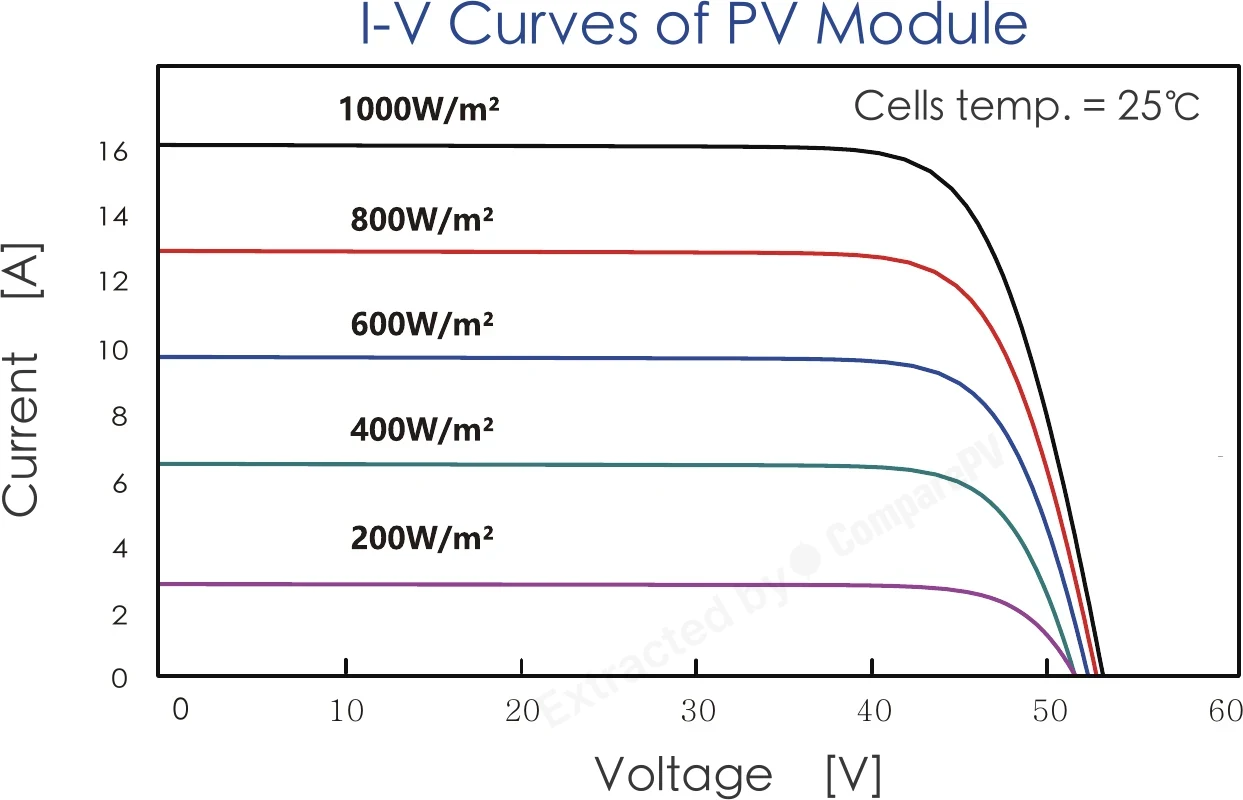
Measured curves published by RedSolar in this model's datasheet. A chart carrying a wattage was measured on that variant alone - only the ones that describe 620 Wp appear here. The rest cover the whole series.
Simulations

Live - change any input
Lifetime output & value
30 years at 1200 kWh/kWp/year and €0.50 per kWh
Power in year 30
-
Lifetime energy
-
Energy value
-
With bifacial gain
-

Degradation from this panel's own datasheet figures. No inverter, soiling or shading losses.

Heat losses
-0.300 %/°C against a segment median of -0.290
-
Bifacial gain
Rear gain over light concrete: -
-

Model: bifaciality × albedo × 0.6 view factor. A first-order estimate, not a yield simulation.

Alternatives

All RedSolar panels
Filter these
Size
Panel Power Eff. Temp. Weight Difference
RedSolar M10R-620TR 620 W 22.95% -0.300 32.5 kg You are here
AIKO-A650-MAE72Mw 650 W 25.20% -0.260 27.0 kg Cooler, lighter, +2.2 pp
AIKO-A645-MAE72Mw 645 W 25.00% -0.260 27.0 kg Cooler, lighter, +2.1 pp
AIKO-G670-MCH72Mw 670 W 24.80% -0.260 28.2 kg +50 W, lighter, +1.9 pp
LR7-72HVHF-670M 670 W 24.80% -0.260 28.5 kg +50 W, lighter, +1.9 pp
AIKO-A640-MAE72Mw 640 W 24.80% -0.260 27.0 kg Cooler, lighter, +1.9 pp
JKM650-670N-66QL6-BDV (670W class) 670 W 24.80% -0.260 32.5 kg +50 W, cooler, +1.9 pp
CETC-600TR(GDF)/132 600 W 22.20% -0.290 32.5 kg -20 W, cooler, -0.8 pp
CETC-605TR(GDF)/132 605 W 22.40% -0.290 32.5 kg -15 W, cooler, -0.6 pp
CETC-610TR(GDF)/132 610 W 22.60% -0.290 32.5 kg -10 W, cooler, -0.3 pp
CETC-615TR(GDF)/132 615 W 22.80% -0.290 32.5 kg Cooler
AIKO-A680-MDE72Mw 680 W 25.20% -0.260 29.0 kg +60 W, cooler, +2.2 pp
AIKO-A675-MDE72Mw 675 W 25.00% -0.260 29.0 kg +55 W, cooler, +2.1 pp
AIKO-A700-MAE78Dw 700 W 25.00% -0.260 34.5 kg +80 W, cooler, +2.1 pp
AIKO-A695-MAE78Dw 695 W 24.90% -0.260 34.5 kg +75 W, cooler, +1.9 pp

Found 1119 panels of the same or similar size to this one, within ±10 mm. See them here Found 1125 panels of the same or similar size to this one, within ±25 mm. See them here Found 1236 panels of the same or similar size to this one, within ±50 mm. See them here Found 1917 panels of the same or similar size to this one, within ±100 mm. See them here

Common questions

6 answered
How does TOPCon technology in RedSolar M10R-TR panels differ from classic PERC cells?
TOPCon (Tunnel Oxide Passivated Contact) uses an additional N-type passivation layer that reduces carrier recombination at the cell surface. This gives M10R-TR modules higher efficiency and better power stability over time compared to traditional P-type PERC cells. In practice, this means higher energy yield from the same roof area and slower degradation over years of operation.
How much extra energy do you actually get from the bifacial design of the M10R-TR panel?
The extra rear-side yield depends on ground albedo and mounting configuration, but for typical ground-mounted installations on light-colored soil or gravel it usually adds several to over a dozen percent more energy than a monofacial module. The greatest gains come from elevated mounting structures with good light circulation beneath the panel, such as PV farms or solar carports.
What warranty does RedSolar offer on M10R-TR panels and what does it cover?
The manufacturer provides a 12-year product warranty covering material and workmanship defects, plus a 30-year linear power warranty guaranteeing limited annual output degradation. The panels are also resistant to LID and PID degradation, reducing the risk of sudden power drops in the early years of operation and under the high system voltages found in large installations.
Does the 620 Wp M10R-TR panel require a special inverter?
No dedicated inverter is required, but given the high unit power, it's worth choosing an inverter with an appropriate MPPT current range and string count matched to the panel's open-circuit voltage. The rectangular cell shape used in the M10R-TR lowers Voc while keeping current high, which simplifies inverter selection and helps reduce BoS costs compared to modules with standard cell geometry.
Is the M10R-TR series suited for large solar farms or is it better for residential rooftops?
Thanks to its high unit power of 620 Wp and bifacial technology, the M10R-TR series is best suited for commercial projects and larger prosumer installations where maximizing yield from limited space matters. It also performs well in ground-mounted PV farms, where the bifacial effect delivers real benefits, though it works equally well on large commercial rooftops.
Do the half-cut cells in the M10R-TR panels handle partial shading better?
Yes, the 132 half-cut cells arranged in a multi-busbar (MBB) layout divide the panel into smaller electrical segments, so shading part of the module, for example from leaves or a chimney, causes a smaller overall power drop than in designs with full-size cells. This also lowers the risk of hotspots in shaded areas and extends the module's operating lifespan.
Add to compare