
TWMPF-66HD675

675 Wp PERC Bifacial 70%
ComparePV verdict

Space saver, no clear weak spot

Rank 2,198 of 14,005
Compare panels Datasheet PDF
Power (Wp)
675
Strong · top 6%
Efficiency (%)
21.70
Strong · top 8%
Density (Wp/m²)
217.3
Strong · top 6%
Temp (%/°C)
-0.330
Strong · top 6%
Weight (kg)
37.9
Typical · median 34.5 kg
Warranty (yrs)
30
Typical · median 30 yrs

The Tongwei TWMPF series utilizes innovative shingled technology, which completely eliminates traditional ribbon connections between cells, replacing them with conductive adhesive. Thanks to this, these modules are characterized by exceptional resistance to micro-cracks and significantly lower resistance losses inside the panel. The unique design allows for maximum silicon density, which translates into generating more energy from every square meter of the roof. For the system owner, this means significantly better performance in partial shading conditions, as the specific connection layout makes TWMPF panels less sensitive to shadows cast by chimneys, leaves, or satellite dishes. It is a solution dedicated primarily to modern residential buildings, where high aesthetics must go hand in hand with maximum durability. Compared to the competition, this series offers a deep, uniform design without visible silver paths, giving the roof surface a luxurious character. Additionally, reinforced mechanical stability and lower cell operating temperatures effectively extend the lifespan of the entire system, protecting it from degradation caused by strong winds or accumulated snow. Choosing TWMPF is an investment in stable yields and trouble-free operation for decades, placing this series at the forefront of the most efficient photovoltaic solutions on the Polish market.

Ranking

320 panels in the segment PERC 650-700 W
Metric This panel Median Position in segment Overall rank
Module efficiency 21.70% 21.25% Strong · top 8% 7,421
Power density 217.3 212.5 Strong · top 6% 7,349
Temperature coefficient -0.330 -0.340 Strong · top 6% 8,545
Weight per kWp 56.1 52.3 Typical 10,438
Performance warranty 30 yrs 30 yrs Typical 21
Colour key Strong - top 25% Typical - middle 50% Weak - bottom 25%

Signals from the data

3 positive · 0 caution
Best for

Residential, commercial and shaded-installations.

Strengths
217.3 watts per square metre

Top 6% of the PERC 650-700 W segment, against a median of 212.5. Ranked 7,349th in the whole database.

-0.330 %/°C temperature coefficient

Top 6% of the PERC 650-700 W segment, against a median of -0.340. Ranked 8,545th in the whole database.

21.70% module efficiency

Top 8% of the PERC 650-700 W segment, against a median of 21.25%. Ranked 7,421st in the whole database.

Notes from the database
  • Efficiency of 21.7% matches the PERC 650-700W median
  • Power density of 217.3 W/m² packs 4.8 W/m² more into the same footprint vs PERC 650-700W median (212.5 W/m²)
  • Temperature coefficient of -0.33%/°C matches the PERC 650-700W median
  • At 37.9 kg, this panel is 3.4 kg heavier than the PERC 650-700W median (34.5 kg) - more demanding for installation crews
  • 70% bifaciality enables rear-side power generation, boosting yield by 4-10% on reflective surfaces

Specifications

Open datasheet PDF
Nominal power (Pmax) 675 Wp Nameplate at 1000 W/m², 25 °C
Module efficiency 21.70 % Strong Segment median 21.25%
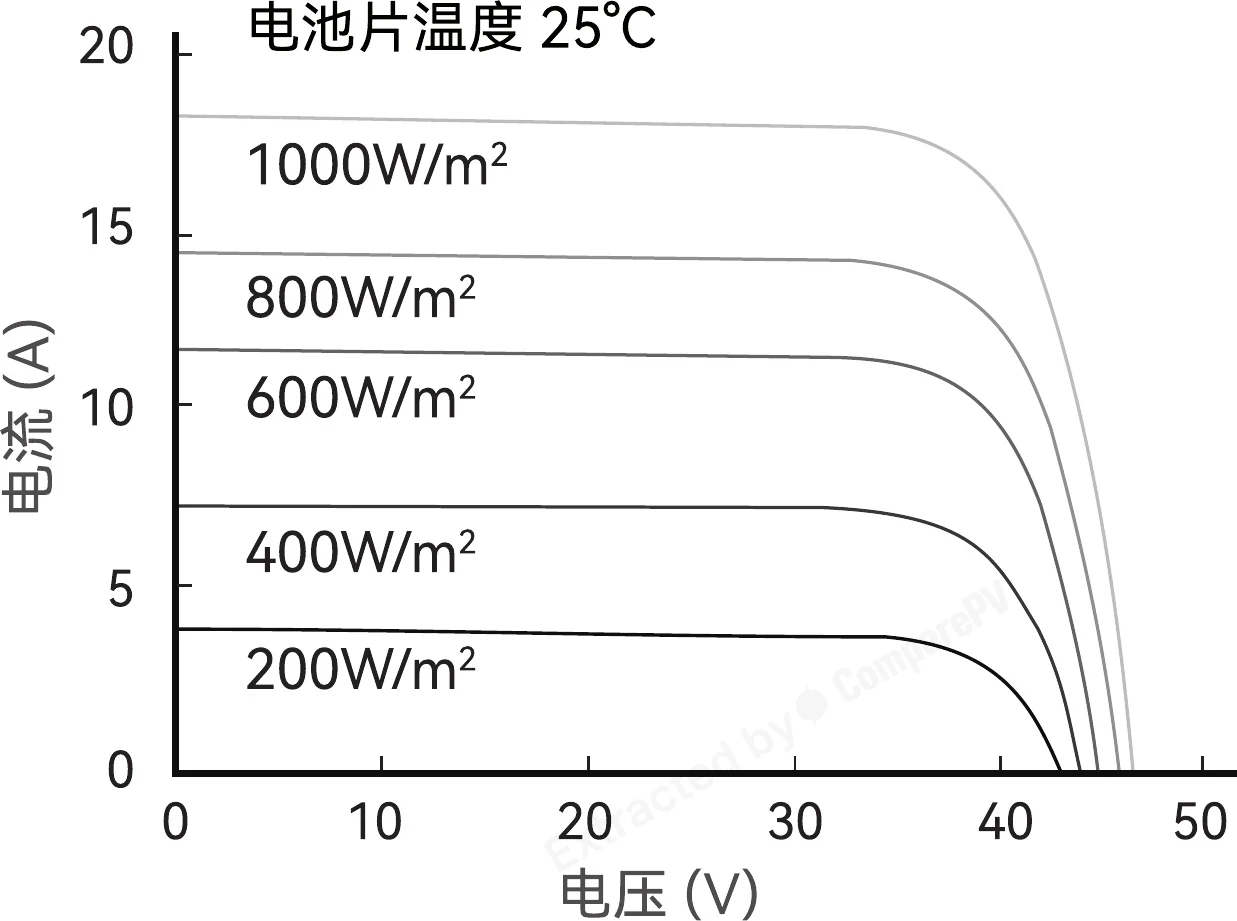
Vmpp · Impp 38.60 V · 17.49 A Operating point at max power
Voc · Isc 46.40 V · 18.46 A Sizes the string length
Max system voltage 1500 V Longer strings than 1000 V modules
Dimensions 2384×1303×33 mm · 3.11 m² of roof
Weight 37.9 kg Typical Typical · median 34.5 kg
Cells 132 · PERC Monocrystalline
Bifaciality 70 % Rear output as a share of front
Coefficient Pmax -0.330 %/°C Strong top 6% of its segment
Coefficient Voc · Isc -0.270 · 0.050 %/°C
NOCT 45 °C At 800 W/m², 20 °C ambient
Product warranty 12 years Hardware defects only
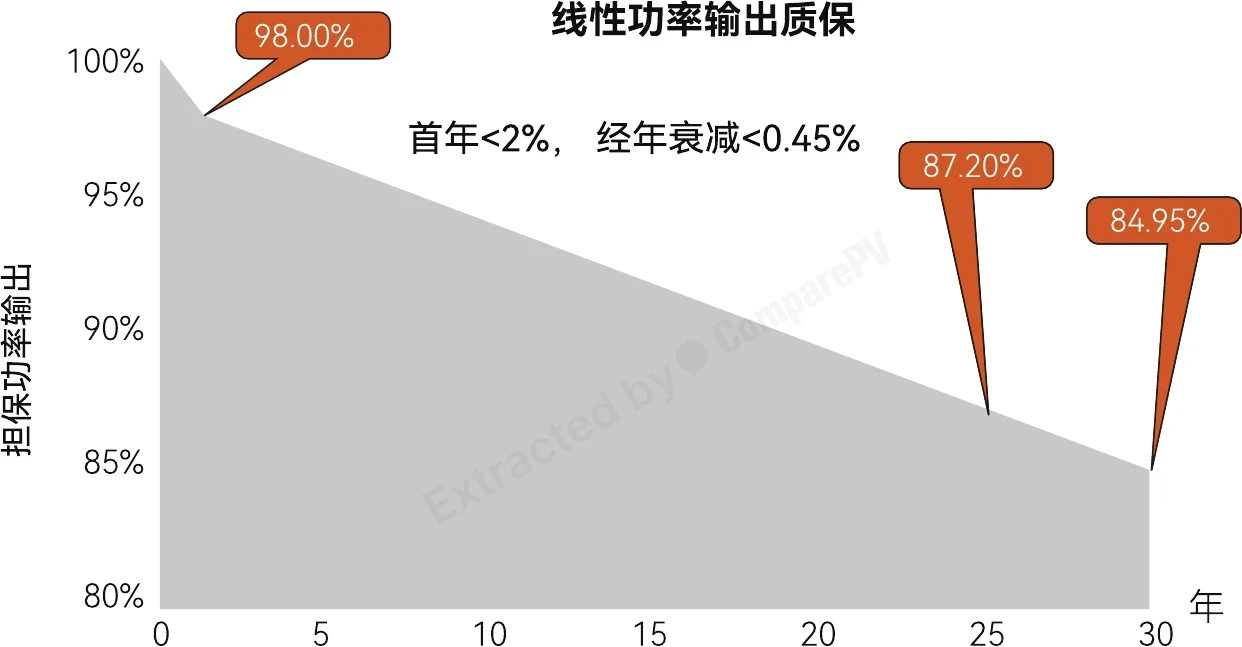
Performance warranty 30 years Typical median 30 yrs · median 30 yrs
End-of-warranty output 85.0 % Equals 573 W guaranteed
Degradation 2.00 → 0.45 % First year, then annual

Datasheet charts

Open datasheet PDF

Measured curves published by Tongwei in this model's datasheet. A chart carrying a wattage was measured on that variant alone - only the ones that describe 675 Wp appear here. The rest cover the whole series.
Simulations

Live - change any input
Lifetime output & value
30 years at 1200 kWh/kWp/year and €0.50 per kWh
Power in year 30
-
Lifetime energy
-
Energy value
-
With bifacial gain
-

Degradation from this panel's own datasheet figures. No inverter, soiling or shading losses.

Heat losses
-0.330 %/°C against a segment median of -0.340
-
Bifacial gain
Rear gain over light concrete: -
-

Model: bifaciality × albedo × 0.6 view factor. A first-order estimate, not a yield simulation.

Filter these
Size
Panel Power Eff. Temp. Weight Difference
Tongwei TWMPF-66HD675 675 W 21.70% -0.330 37.9 kg You are here
AIKO-A650-MAE72Mw 650 W 25.20% -0.260 27.0 kg Cooler, lighter, +3.5 pp
AIKO-A680-MDE72Mw 680 W 25.20% -0.260 29.0 kg Cooler, lighter, +3.5 pp
AIKO-A675-MDE72Mw 675 W 25.00% -0.260 29.0 kg Cooler, lighter, +3.3 pp
AIKO-A645-MAE72Mw 645 W 25.00% -0.260 27.0 kg Cooler, lighter, +3.3 pp
AIKO-A700-MAE78Dw 700 W 25.00% -0.260 34.5 kg Cooler, lighter, +3.3 pp
AIKO-A695-MAE78Dw 695 W 24.90% -0.260 34.5 kg Cooler, lighter, +3.2 pp
AIKO-G670-MCH72Mw 670 W 24.80% -0.260 28.2 kg Cooler, lighter, +3.1 pp
TWMPF-66HD655 655 W 21.10% -0.330 37.9 kg -20 W, -0.6 pp
TWMPF-66HD660 660 W 21.20% -0.330 37.9 kg -15 W, -0.5 pp
TWMPF-66HD665 665 W 21.40% -0.330 37.9 kg -10 W, -0.3 pp
TWMPF-66HD670 670 W 21.60% -0.330 37.9 kg Very close match
TWMNF-66HD700XX 700 W 22.50% -0.280 37.9 kg +25 W, cooler, +0.8 pp
TWMNF-66HD705 705 W 22.70% -0.280 37.9 kg +30 W, cooler, +1.0 pp
AIKO-A805-GRH78Dw 805 W 25.10% -0.260 39.8 kg +130 W, cooler, +3.4 pp
AIKO-A800-GRH78Dw 800 W 24.90% -0.260 39.8 kg +125 W, cooler, +3.2 pp
AIKO-A795-GRH78Dw 795 W 24.80% -0.260 39.8 kg +120 W, cooler, +3.1 pp

Found 1390 panels of the same or similar size to this one, within ±10 mm. See them here Found 1400 panels of the same or similar size to this one, within ±25 mm. See them here Found 1400 panels of the same or similar size to this one, within ±50 mm. See them here Found 1432 panels of the same or similar size to this one, within ±100 mm. See them here

Common questions

6 answered
Is the Tongwei TWMPF series still available for purchase?
No, production of the TWMPF series has been discontinued and these modules are no longer manufactured by Tongwei. Some distributors may still offer remaining warehouse stock, but availability is limited. Anyone planning a larger installation should be aware that matching additional identical modules later on may not be possible and should consider Tongwei's current lineup, such as its TOPCon series.
What is the shingled cell technology used in TWMPF panels, and how does it differ from standard solder-ribbon cells?
In shingled technology, cells are cut into narrower strips and overlapped, bonded together with conductive adhesive instead of traditional solder ribbons connecting whole cells. This eliminates the mechanical stress at solder joints that is a primary cause of microcracks in conventional modules. It also allows for denser packing of silicon on the panel surface, increasing the power output per unit of roof area.
Are Tongwei TWMPF panels with up to 675 Wp suitable for a residential pitched roof?
TWMPF panels are large-format modules, roughly 2384x1303 mm and about 38 kg, designed primarily for commercial, industrial, and utility-scale PV installations rather than typical residential sloped roofs. Their size and weight require a reinforced roof structure and specialized installation, making them better suited to large flat rooftops or ground-mounted systems than a standard family home.
What warranty applies to Tongwei TWMPF series solar panels?
TWMPF panels come with a 12-year product warranty covering material and workmanship defects, along with a 30-year linear power output warranty ensuring high performance over decades of operation. This is standard for a tier 1 manufacturer, though since production has ended, warranty claims in practice may need to be handled through local distributors rather than directly with the factory.
What does it mean that TWMPF panels are bifacial, and how much extra energy does this generate?
Bifacial TWMPF modules use a double-glass rear surface that lets light pass through and reach the back of the cells. This allows the panel to capture light reflected off the ground, such as light gravel, snow, or a white roof, generating a few to several percent more energy compared to a monofacial module, provided the installation allows light access to the rear side.
What cell technology delivers up to 675 Wp in Tongwei TWMPF panels, and is it PERC-based?
Yes, the TWMPF series uses PERC silicon cells connected via the shingled method instead of conventional ribbons. Combining rear-surface passivation with dense cell packing allowed the series to reach up to 675 Wp with high module efficiency, placing it among the more powerful PERC-based options on the market at the time of its release.
Add to compare
