SL6N132D-695W

695 Wp HJT Bifacial
ComparePV verdict

Space saver, no clear weak spot

Rank 1,084 of 14,005
Compare panels Datasheet PDF
Power (Wp)
695
Strong · top 15%
Efficiency (%)
22.40
Strong · top 17%
Density (Wp/m²)
223.7
Strong · top 16%
Temp (%/°C)
-0.240
Typical · median -0.240
Weight (kg)
38.3
Typical · median 38.5 kg
Warranty (yrs)
30
Typical · median 30 yrs

The SunLink SL6N132D series is a range of modules designed for maximum performance in large-scale installations, where stability and predictable production over many years are key. The use of N-type TOPCon technology helps to minimize losses over time and maintain efficiency even under strong sunlight, resulting in a more consistent energy generation during the summer season. The design based on half-cut SMBB cells improves current collection and reduces sensitivity to local shading, making the module better suited for systems with varying orientations or infrastructure elements on the roof.

In practice, the SL6N132D solves common problems for PV farms: temperature-related losses, performance degradation over time, and the risk of downtime. This is achieved through low temperature coefficients and robust protection of connections and junction boxes, with an IP68 rating. This makes it a good choice for PV farms, carports, and industrial projects where high power density, durability, and efficient installation logistics are priorities.

Ranking

61 panels in the segment HJT 650-700 W
Metric This panel Median Position in segment Overall rank
Module efficiency 22.40% 22.20% Strong · top 17% 4,774
Power density 223.7 222.1 Strong · top 16% 4,877
Temperature coefficient -0.240 -0.240 Typical 13
Weight per kWp 55.1 55.7 Typical 9,532
Performance warranty 30 yrs 30 yrs Typical 21
Colour key Strong - top 25% Typical - middle 50% Weak - bottom 25%

Signals from the data

2 positive · 0 caution
Best for

Utility-scale, commercial, shaded-installations and hot-climate.

Strengths
223.7 watts per square metre

Top 16% of the HJT 650-700 W segment, against a median of 222.1.

22.40% module efficiency

Top 17% of the HJT 650-700 W segment, against a median of 22.20%.

Notes from the database
  • At 22.4% efficiency, this panel is on par with typical HJT 650-700W modules
  • Power density of 223.7 W/m² matches the HJT 650-700W median
  • At -0.24%/°C, hot weather performance is typical for HJT 650-700W panels
  • Ranked #4774 out of 14005 panels for efficiency in the database

Specifications

Open datasheet PDF
Nominal power (Pmax) 695 Wp Nameplate at 1000 W/m², 25 °C
Module efficiency 22.40 % Strong Segment median 22.20%
Vmpp · Impp 41.95 V · 16.57 A Operating point at max power
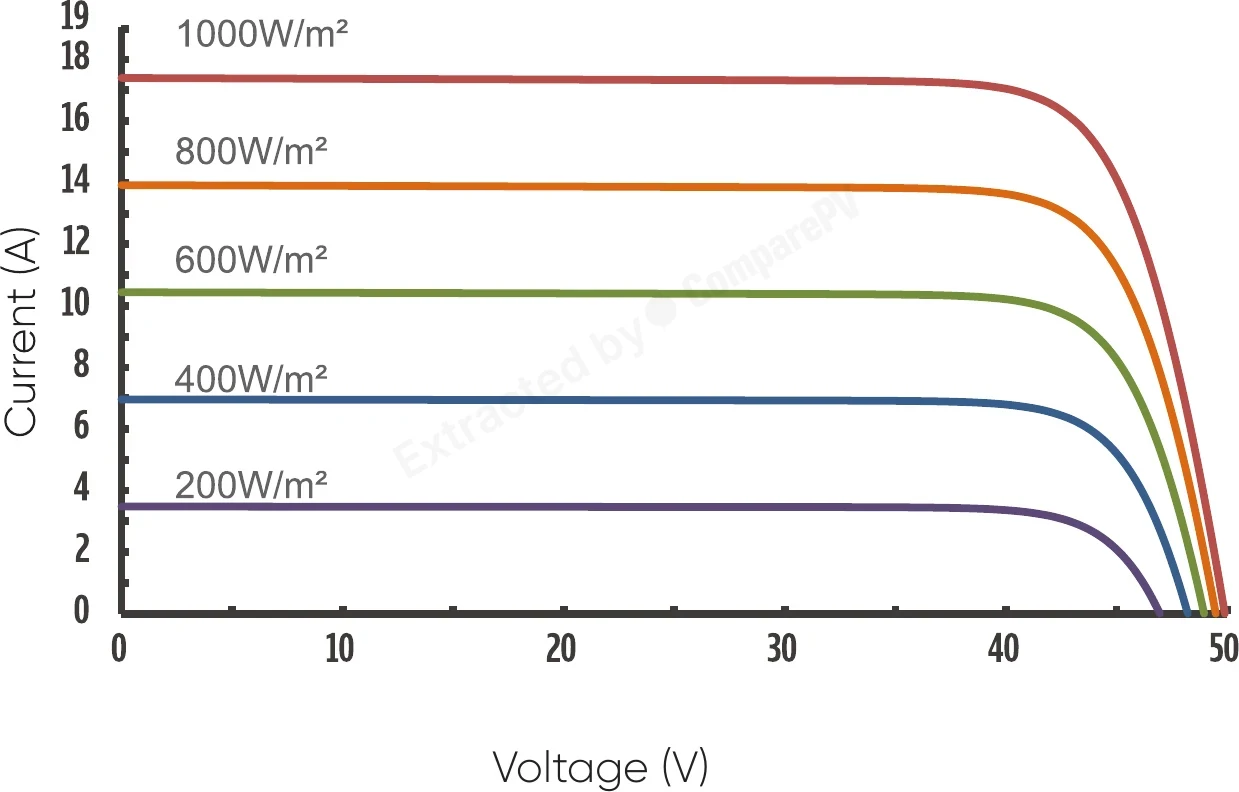
Voc · Isc 49.85 V · 17.37 A Sizes the string length
Max system voltage 1500 V Longer strings than 1000 V modules
Dimensions 2384×1303×33 mm · 3.11 m² of roof
Weight 38.3 kg Typical Typical · median 38.5 kg
Cells 132 · HJT Monocrystalline
Coefficient Pmax -0.240 %/°C Typical median -0.240 of its segment
Coefficient Voc · Isc -0.260 · 0.040 %/°C
NOCT 44 °C At 800 W/m², 20 °C ambient
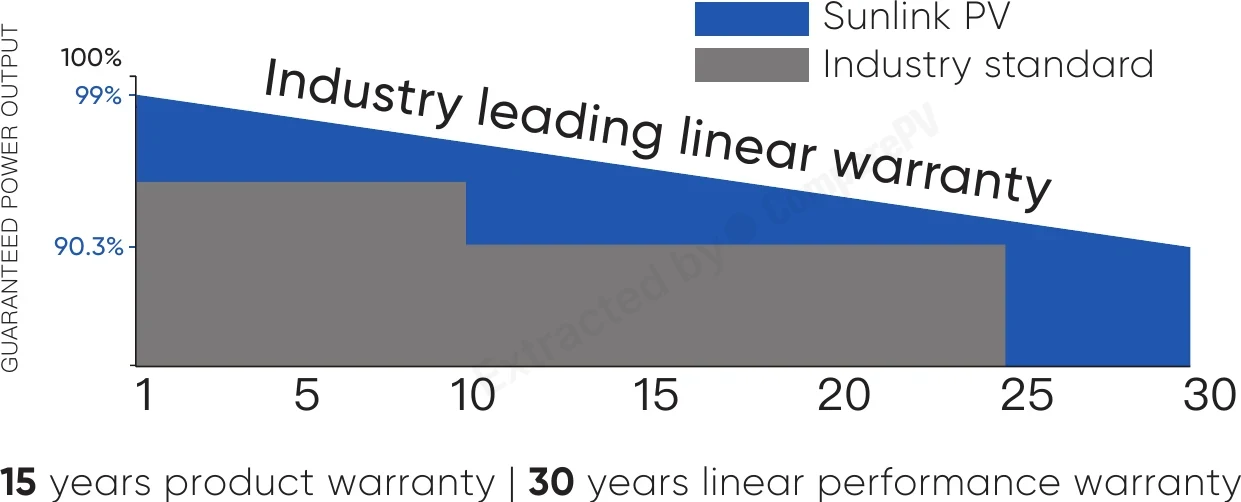
Product warranty 15 years Hardware defects only
Performance warranty 30 years Typical median 30 yrs · median 30 yrs
End-of-warranty output 90.3 % Equals 628 W guaranteed
Degradation 1.00 → 0.30 % First year, then annual

Datasheet charts

Open datasheet PDF

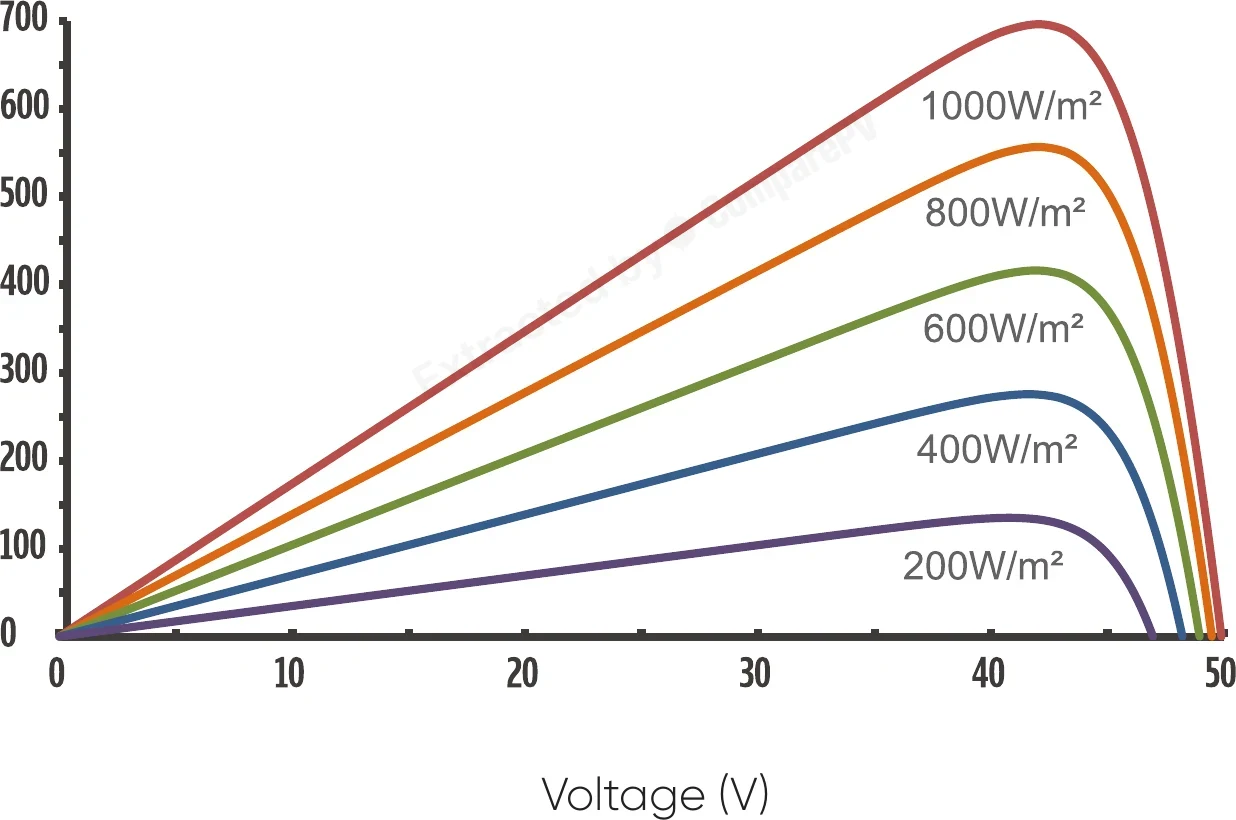
Measured curves published by SunLink in this model's datasheet. A chart carrying a wattage was measured on that variant alone - only the ones that describe 695 Wp appear here. The rest cover the whole series.
Simulations

Live - change any input
Lifetime output & value
30 years at 1200 kWh/kWp/year and €0.50 per kWh
Power in year 30
-
Lifetime energy
-
Energy value
-

Degradation from this panel's own datasheet figures. No inverter, soiling or shading losses.

Heat losses
-0.240 %/°C against a segment median of -0.240
-
Filter these
Size
Panel Power Eff. Temp. Weight Difference
SunLink SL6N132D-695W 695 W 22.40% -0.240 38.3 kg You are here
AIKO-A650-MAE72Mw 650 W 25.20% -0.260 27.0 kg -45 W, lighter, +2.8 pp
AIKO-A680-MDE72Mw 680 W 25.20% -0.260 29.0 kg Hotter, lighter, +2.8 pp
AIKO-A675-MDE72Mw 675 W 25.00% -0.260 29.0 kg Hotter, lighter, +2.6 pp
AIKO-A645-MAE72Mw 645 W 25.00% -0.260 27.0 kg -50 W, lighter, +2.6 pp
AIKO-A700-MAE78Dw 700 W 25.00% -0.260 34.5 kg Hotter, lighter, +2.6 pp
AIKO-A695-MAE78Dw 695 W 24.90% -0.260 34.5 kg Hotter, lighter, +2.5 pp
AIKO-G670-MCH72Mw 670 W 24.80% -0.260 28.2 kg -25 W, lighter, +2.4 pp
SL6N132D-700W 700 W 22.50% -0.240 38.3 kg Very close match
AIKO-A805-GRH78Dw 805 W 25.10% -0.260 39.8 kg +110 W, hotter, +2.7 pp
AIKO-A800-GRH78Dw 800 W 24.90% -0.260 39.8 kg +105 W, hotter, +2.5 pp
AIKO-A795-GRH78Dw 795 W 24.80% -0.260 39.8 kg +100 W, hotter, +2.4 pp
AIKO-A790-GRH78Dw 790 W 24.60% -0.260 39.8 kg +95 W, hotter, +2.2 pp
TSM-NEG21C.20Q-760 760 W 24.50% -0.260 38.3 kg +65 W, hotter, +2.1 pp
AIKO-A785-GRH78Dw 785 W 24.40% -0.260 39.8 kg +90 W, hotter, +2.0 pp
GK-4-78HGBD-780M 780 W 24.30% -0.260 38.7 kg +85 W, hotter, +1.9 pp
AIKO-A780-GRH78Dw 780 W 24.30% -0.260 39.8 kg +85 W, hotter, +1.9 pp

Found 1390 panels of the same or similar size to this one, within ±10 mm. See them here Found 1400 panels of the same or similar size to this one, within ±25 mm. See them here Found 1400 panels of the same or similar size to this one, within ±50 mm. See them here Found 1432 panels of the same or similar size to this one, within ±100 mm. See them here

Common questions

6 answered
What is HJT technology and why is it used in the SunLink SL6N132D series?
HJT (Heterojunction Technology) combines a thin amorphous silicon layer with a monocrystalline cell, achieving module efficiency up to 23.2%. This means more energy from the same roof or ground area. HJT also delivers one of the lowest temperature coefficients in the industry (-0.24%/°C), significantly reducing output losses during hot weather — a critical advantage for large-scale PV farms and commercial rooftop installations.
What warranty does the SunLink SL6N132D come with?
The SL6N132D series carries a 15-year product warranty covering manufacturing defects and material faults, plus a 30-year linear power output warranty. The extended power guarantee reflects HJT's low LID (light-induced degradation) characteristics compared to PERC modules, allowing SunLink to commit to predictable energy generation across three decades of operation.
How does the bifacial design of the SunLink SL6N132D affect real-world energy yield?
With 90% bifaciality, the SL6N132D rear side captures up to 90% of the energy relative to the front side. In ground-mounted systems over reflective surfaces such as concrete or gravel, this can increase total yield by several percentage points. Carports and agrivoltaic installations benefit most from the bifacial gain due to strong irradiance reflected from paved or open surfaces beneath the modules.
Is SunLink a Tier 1 manufacturer, and does it matter when specifying the SL6N132D?
SunLink is not currently listed among Tier 1 manufacturers by Bloomberg NEF. For large commercial projects, this may mean lenders require an additional manufacturer risk assessment before approving project financing. It is advisable to confirm eligibility with your bank or project investor before specifying these modules for a utility-scale or commercially financed PV installation.
How does the SunLink SL6N132D perform during high summer temperatures?
HJT technology gives the SL6N132D a temperature coefficient of Pmax of just -0.24%/°C — measurably better than standard PERC modules at -0.35%/°C. For every 10°C rise in module temperature, power loss is only 2.4%, resulting in higher midday output during heat waves and improved annual LCOE for projects in warm climates. This benefit is especially relevant in uncooled ground-mount and industrial rooftop deployments.
What installations are SunLink SL6N132D 700 Wp panels best suited for, and are they right for residential rooftops?
At 700 Wp, the SL6N132D is optimized for large commercial and industrial applications: utility-scale PV farms, multi-bay carports, and rooftops of warehouses or manufacturing facilities. The high power density reduces total module count and simplifies BoS (balance of system), lowering the per-MW installation cost. These modules are too large and heavy for typical single-family residential rooftops — smaller formats up to 450 Wp are better suited for prosumer systems.
Add to compare