SPV730-66SN210

730 Wp TOPCon Bifacial
ComparePV verdict

Space saver, modest efficiency

Rank 630 of 14,005
Compare panels Datasheet PDF
Power (Wp)
730
Strong · top 11%
Efficiency (%)
22.70
Weak · bottom 23%
Density (Wp/m²)
235.0
Strong · top 11%
Temp (%/°C)
-
Not published
Weight (kg)
37.8
Typical · median 38.0 kg
Warranty (yrs)
30
Typical · median 30 yrs

Solar Power Vietnam photovoltaic panels from the SPVXXX-66SN210 series represent a technological breakthrough in the large-scale installation sector, basing their design on 210 mm silicon cells. The use of such large wafers allows for achieving a unit power exceeding 700 Wp, which directly translates into a smaller number of modules needed to obtain the planned farm capacity. A key distinguishing feature of the series is N-type TOPCon technology, which, compared to traditional P-type cells, offers significantly better resistance to LID degradation and higher energy yield at high temperatures. Thanks to the bifacial dual-glass construction, these systems effectively utilize reflected light, which in optimal ground conditions generates a significant additional energy profit. The utilized SMBB (Super Multi-Busbar) architecture improves current flow and increases mechanical resistance to micro-cracks, which is critical during long-term operation in difficult weather conditions. This series addresses the problem of high balance of system (BOS) costs, reducing expenditures on cabling and mounting structures. It is a solution dedicated to professional investors and photovoltaic farm developers seeking maximum profitability and a 30-year power output warranty. This is an uncompromising proposition that stands out from the competition with unprecedented power density and the highest durability in the long-term perspective.

Ranking

420 panels in the segment TOPCon 700-750 W
Metric This panel Median Position in segment Overall rank
Module efficiency 22.70% 23.00% Weak · bottom 23% 3,307
Power density 235.0 230.2 Strong · top 11% 800
Temperature coefficient - -0.290 Not published 13,924
Weight per kWp 51.8 52.9 Typical 5,151
Performance warranty 30 yrs 30 yrs Typical 21
Colour key Strong - top 25% Typical - middle 50% Weak - bottom 25%

Signals from the data

1 positive · 1 caution
Best for

Roofs where every square metre counts.

Not ideal for

Tight roof space.

Strengths
235.0 watts per square metre

Top 11% of the TOPCon 700-750 W segment, against a median of 230.2.

Watch-outs
22.70% module efficiency

Bottom 23% of the TOPCon 700-750 W segment, against a median of 23.00%.

Notes from the database
  • Efficiency of 22.7% matches the TOPCon 700-750W median
  • Power density of 235.0 W/m² packs 4.8 W/m² more into the same footprint vs TOPCon 700-750W median (230.2 W/m²)
  • Ranked #3307 out of 14005 panels for efficiency in the database

Specifications

Open datasheet PDF
Nominal power (Pmax) 730 Wp Nameplate at 1000 W/m², 25 °C
Module efficiency 22.70 % Weak Segment median 23.00%
Vmpp · Impp 41.37 V · 17.65 A Operating point at max power
Voc · Isc 49.55 V · 18.68 A Sizes the string length
Max system voltage 1500 V Longer strings than 1000 V modules
Dimensions 2384×1303×30 mm · 3.11 m² of roof
Weight 37.8 kg Typical Typical · median 38.0 kg
Cells 132 · TOPCon Monocrystalline
Product warranty 12 years Hardware defects only
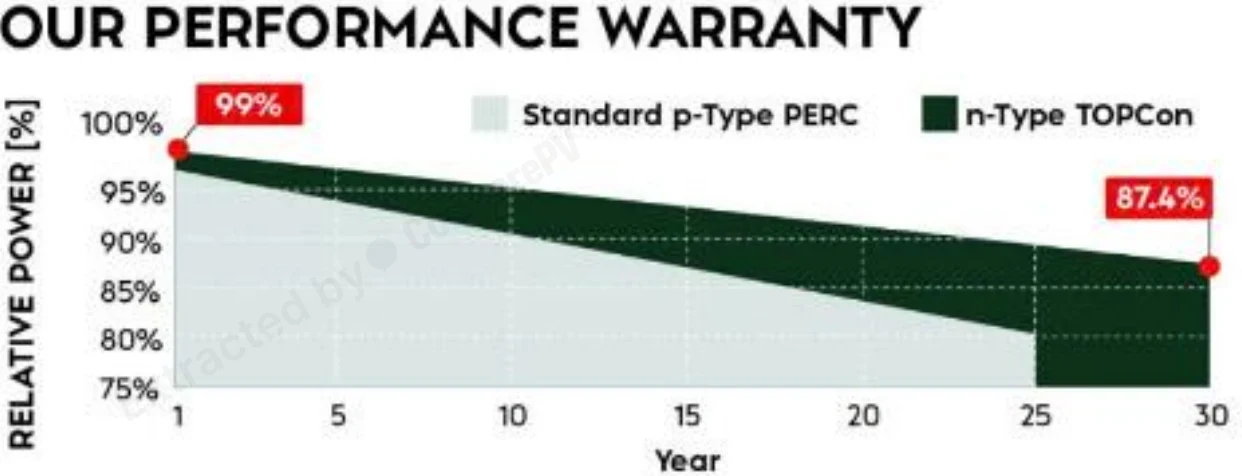
Performance warranty 30 years Typical median 30 yrs · median 30 yrs
End-of-warranty output 87.4 % Equals 638 W guaranteed
Degradation 1.00 → 0.40 % First year, then annual

Datasheet charts

Open datasheet PDF

Measured curves published by Solar Power Vietnam in this model's datasheet. A chart carrying a wattage was measured on that variant alone - only the ones that describe 730 Wp appear here. The rest cover the whole series.
Simulations

Live - change any input
Lifetime output & value
30 years at 1200 kWh/kWp/year and €0.50 per kWh
Power in year 30
-
Lifetime energy
-
Energy value
-

Degradation from this panel's own datasheet figures. No inverter, soiling or shading losses.

Heat losses
-
-
Filter these
Size
Panel Power Eff. Temp. Weight Difference
Solar Power Vietnam SPV730-66SN210 730 W 22.70% - 37.8 kg You are here
AIKO-A680-MDE72Mw 680 W 25.20% -0.260 29.0 kg -50 W, lighter, +2.5 pp
AIKO-A700-MAE78Dw 700 W 25.00% -0.260 34.5 kg -30 W, lighter, +2.3 pp
AIKO-A695-MAE78Dw 695 W 24.90% -0.260 34.5 kg -35 W, lighter, +2.2 pp
AIKO-A690-MAE78Dw 690 W 24.70% -0.260 34.5 kg -40 W, lighter, +2.0 pp
AIKO-A685-MAE78Dw 685 W 24.50% -0.260 34.5 kg -45 W, lighter, +1.8 pp
TSM-NEG21C.20Q-760 760 W 24.50% -0.260 38.3 kg +30 W, +1.8 pp
AIKO-A680-MAH78Dw 680 W 24.30% -0.260 34.7 kg -50 W, lighter, +1.6 pp
GK-4-78HGBD-780M 780 W 24.30% -0.260 38.7 kg +50 W, +1.6 pp
AIKO-A780-GRH78Dw 780 W 24.30% -0.260 39.8 kg +50 W, heavier, +1.6 pp
SPV715-66SN210 715 W 22.30% - 37.8 kg -15 W, -0.4 pp
SPV720-66SN210 720 W 22.40% - 37.8 kg -10 W, -0.3 pp
SPV725-66SN210 725 W 22.60% - 37.8 kg Very close match
SPV735-66SN210 735 W 22.90% - 37.8 kg Very close match
AIKO-A805-GRH78Dw 805 W 25.10% -0.260 39.8 kg +75 W, heavier, +2.4 pp
AIKO-A800-GRH78Dw 800 W 24.90% -0.260 39.8 kg +70 W, heavier, +2.2 pp
AIKO-A795-GRH78Dw 795 W 24.80% -0.260 39.8 kg +65 W, heavier, +2.1 pp

Found 1390 panels of the same or similar size to this one, within ±10 mm. See them here Found 1400 panels of the same or similar size to this one, within ±25 mm. See them here Found 1400 panels of the same or similar size to this one, within ±50 mm. See them here Found 1432 panels of the same or similar size to this one, within ±100 mm. See them here

Common questions

6 answered
What is the maximum power output of Solar Power Vietnam SPVXXX-66SN210 panels?
The SPVXXX-66SN210 series delivers up to 735 Wp per module, achieved through large-format 210 mm silicon wafers. This high watt-per-module rating means fewer modules are required to reach the target farm capacity compared to standard 400–500 Wp panels, directly reducing balance-of-system (BoS) costs for racking structures and cabling.
What warranties come with the SPVXXX-66SN210 — product and power output?
Solar Power Vietnam provides a 12-year product warranty covering material and workmanship defects, plus a 30-year linear power output warranty. The extended power warranty is critical for utility-scale PV investors, as it supports reliable long-term energy yield projections and simplifies project bankability assessments with lenders and financial institutions.
Does the N-type TOPCon technology in the SPVXXX-66SN210 series actually reduce panel degradation?
Yes. N-type TOPCon cells are significantly less susceptible to light-induced degradation (LID) than conventional P-type PERC cells. This means lower power losses in the initial years of operation and better performance retention across the full 30-year warranty period. TOPCon also delivers superior temperature coefficients, maintaining higher output efficiency during peak solar irradiance on large ground-mounted farms.
Do the bifacial dualglass modules in the SPVXXX-66SN210 series pay off on a grass-surface ground-mounted farm?
Bifacial modules capture reflected irradiance from the ground surface. Grass typically has an albedo of 15–25%, which — with proper module clearance height of roughly 0.5–1 m above ground — translates into a measurable energy yield gain. Compared to monofacial panels, the bifacial gain can range from a few to over ten percent, meaningfully improving the overall LCOE of the investment.
Is Solar Power Vietnam a Tier 1 manufacturer, and does it matter for project financing?
Solar Power Vietnam is not currently listed as a Tier 1 manufacturer by agencies such as Bloomberg NEF. For projects relying on bank financing or leasing, this may require additional documentation — such as factory inspection reports or extended insurance policies — to meet lender acceptance criteria. Investors should verify module eligibility with their financing institution during due diligence before signing any EPC contract.
How does the SMBB architecture in the SPVXXX-66SN210 panels affect long-term durability?
Super Multi-Busbar (SMBB) technology uses a higher number of thinner busbars across the cell surface. Shorter current paths reduce resistive losses and — more importantly — lower mechanical stress within the cell, reducing the risk of microcracks. Over decades of thermal cycling (day/night, seasonal temperature swings), this directly translates to slower degradation and sustained output performance throughout the full 30-year power warranty.
Add to compare