Q-SUN Solar QN-635HT-06

QN-635HT-06

635 Wp N-type Bifacial 80%
ComparePV verdict

Middle of its segment, weak in heat

Rank 1,903 of 14,005
Compare panels Datasheet PDF
Power (Wp)
635
Strong · top 22%
Efficiency (%)
22.72
Typical · median 22.77%
Density (Wp/m²)
227.2
Typical · median 227.7
Temp (%/°C)
-0.300
Weak · bottom 11%
Weight (kg)
33.7
Typical · median 32.5 kg
Warranty (yrs)
30
Typical · median 30 yrs

The Q-SUN Solar Crystal N8 615-635W series is designed for installations where maximizing energy production from a given area is the primary goal. The use of N-type cells in TOPCon technology helps to minimize losses and maintain stable module performance even in more challenging temperature conditions, resulting in more predictable annual yields. This is a good solution for investors who want to improve their LCOE and reduce the risk of performance degradation over time.

Compared to many standard modules, it stands out due to its high module efficiency and refined design for large-scale projects, including PV farms, carport structures, and industrial rooftops, where both parameters and installation speed are important. Depending on the system configuration and substrate, it can also offer additional gains from the back side (bifacial design).

For commercial and utility projects, resistance to loads and a demanding working environment and appropriate warranty protection are also crucial, as they support the long-term profitability of the investment.

Ranking

359 panels in the segment N-type 600-650 W
Metric This panel Median Position in segment Overall rank
Module efficiency 22.72% 22.77% Typical 3,245
Power density 227.2 227.7 Typical 3,252
Temperature coefficient -0.300 -0.290 Weak · bottom 11% 6,093
Weight per kWp 53.1 52.7 Typical 6,835
Performance warranty 30 yrs 30 yrs Typical 21
Colour key Strong - top 25% Typical - middle 50% Weak - bottom 25%

Signals from the data

5 positive · 3 caution
Best for

Commercial and utility-scale.

Not ideal for

Hot climates.

Watch-outs
-0.300 %/°C temperature coefficient

Bottom 11% of the N-type 600-650 W segment, against a median of -0.290.

What owners get
N-type TOPCon cells

N-type TOPCon technology reduces LID/LeTID degradation and delivers a low temperature coefficient of Pmax at -0.30%/°C, translating into more stable yields under high temperatures compared to older PERC modules.

Bifacial construction

The double-glass bifacial design enables additional rear-side energy gain, a meaningful advantage for ground-mount installations, carports, and sites with high-albedo surfaces.

High unit power up to 635 Wp

Power up to 635 Wp with 156 cells and efficiency up to 22.72% means fewer modules are needed for a given system capacity, cutting installation time and reducing racking and wiring (BoS) costs in large-scale projects.

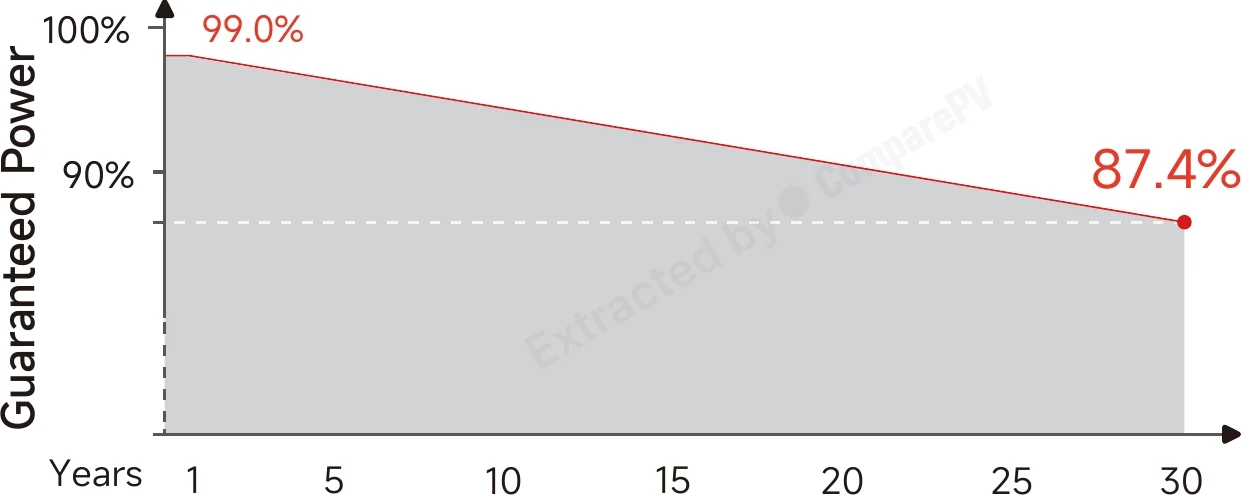
30-year linear power warranty

The manufacturer provides a 30-year linear power warranty alongside a standard 15-year product warranty, favorable for investors calculating long-term LCOE, though the 15-year product warranty is typical for non-Tier-1 manufacturers.

PID and hot-spot resistance

The datasheet cites enhanced resistance to Potential Induced Degradation (PID) and reduced hot-spot loss, relevant for stable operation in demanding environments such as utility-scale projects.

Trade-offs
Efficiency below top peers

Maximum efficiency of 22.72% matches Talesun's TM7G78M but trails Sunpro Power TOPCon 210R (23.51%) and Longi Hi-MO X10 (23.5%) at the same 635 Wp power class, meaning a somewhat larger installed area is needed for the same capacity.

Manufacturer outside BNEF Tier-1

Q-SUN Solar (founded 2014) is not listed as a BNEF Tier-1 manufacturer, unlike some competing premium brands, which can complicate financing for projects requiring bankable modules.

Notes from the database
  • At 22.7% efficiency, this panel is on par with typical N-type 600-650W modules
  • At 227.2 W/m² power density, roof space requirements are typical for N-type 600-650W panels
  • Temperature coefficient of -0.30%/°C matches the N-type 600-650W median
  • At 33.7 kg (1.2 kg above N-type 600-650W median of 32.5 kg), requires checking roof load capacity
  • Bifacial design (80% factor) captures reflected light - adds 4-12% yield on ground-mount or white roof

Specifications

Open datasheet PDF
Nominal power (Pmax) 635 Wp Nameplate at 1000 W/m², 25 °C
Module efficiency 22.72 % Typical Segment median 22.77%
Vmpp · Impp 47.53 V · 13.36 A Operating point at max power
Voc · Isc 55.99 V · 14.36 A Sizes the string length
Max system voltage 1500 V Longer strings than 1000 V modules
Dimensions 2465×1134×30 mm · 2.80 m² of roof
Weight 33.7 kg Typical Typical · median 32.5 kg
Cells 156 · N-type Monocrystalline
Bifaciality 80 % Rear output as a share of front
Coefficient Pmax -0.300 %/°C Weak bottom 11% of its segment
Coefficient Voc · Isc -0.250 · 0.040 %/°C
NOCT 42 °C At 800 W/m², 20 °C ambient
Product warranty 15 years Hardware defects only
Performance warranty 30 years Typical median 30 yrs · median 30 yrs
End-of-warranty output 87.4 % Equals 555 W guaranteed
Degradation 1.00 → 0.40 % First year, then annual

Datasheet charts

Open datasheet PDF

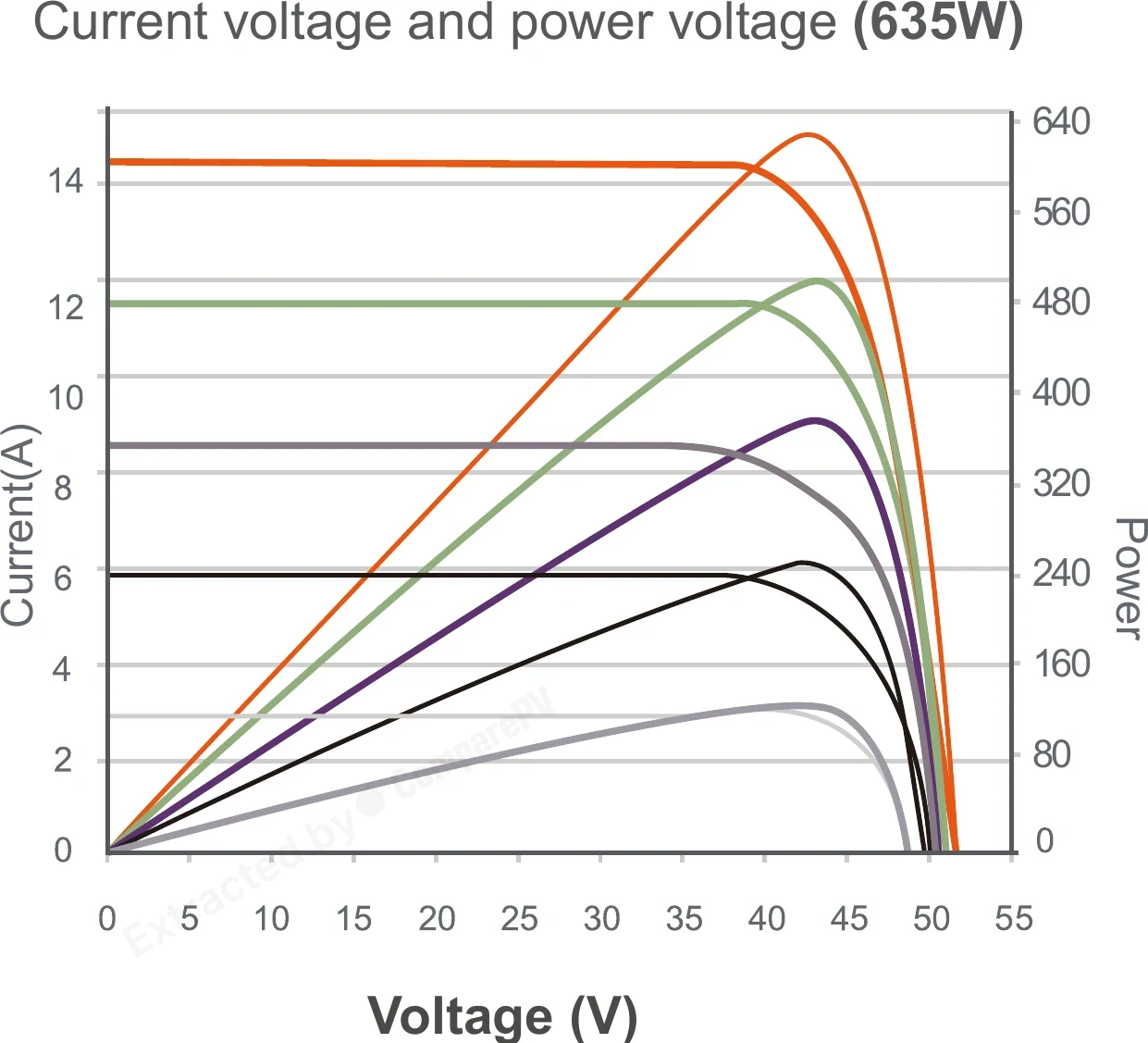
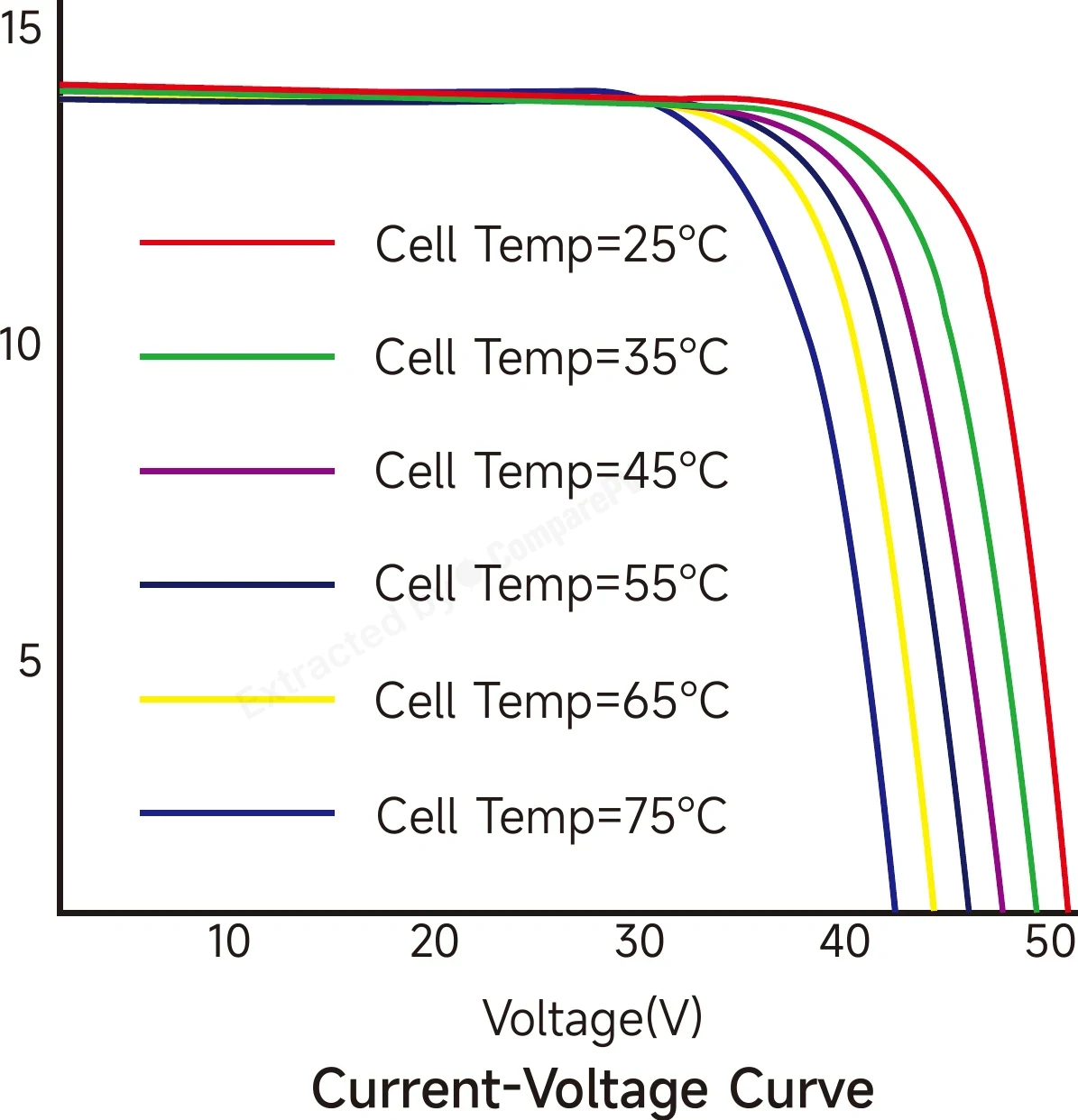
Measured curves published by Q-SUN Solar in this model's datasheet. A chart carrying a wattage was measured on that variant alone - only the ones that describe 635 Wp appear here. The rest cover the whole series.
Simulations

Live - change any input
Lifetime output & value
30 years at 1200 kWh/kWp/year and €0.50 per kWh
Power in year 30
-
Lifetime energy
-
Energy value
-
With bifacial gain
-

Degradation from this panel's own datasheet figures. No inverter, soiling or shading losses.

Heat losses
-0.300 %/°C against a segment median of -0.290
-
Bifacial gain
Rear gain over light concrete: -
-

Model: bifaciality × albedo × 0.6 view factor. A first-order estimate, not a yield simulation.

Alternatives

All Q-SUN Solar panels
Filter these
Size
Panel Power Eff. Temp. Weight Difference
Q-SUN Solar QN-635HT-06 635 W 22.72% -0.300 33.7 kg You are here
AIKO-A650-MAE72Mw 650 W 25.20% -0.260 27.0 kg Cooler, lighter, +2.5 pp
AIKO-A680-MDE72Mw 680 W 25.20% -0.260 29.0 kg +45 W, lighter, +2.5 pp
AIKO-A675-MDE72Mw 675 W 25.00% -0.260 29.0 kg +40 W, lighter, +2.3 pp
AIKO-A645-MAE72Mw 645 W 25.00% -0.260 27.0 kg Cooler, lighter, +2.3 pp
AIKO-G670-MCH72Mw 670 W 24.80% -0.260 28.2 kg Cooler, lighter, +2.1 pp
LR7-72HVHF-670M 670 W 24.80% -0.260 28.5 kg Cooler, lighter, +2.1 pp
AIKO-A640-MAE72Mw 640 W 24.80% -0.260 27.0 kg Cooler, lighter, +2.1 pp
QN-615HT-06 615 W 22.20% -0.300 33.7 kg -20 W, -0.5 pp
QN-620HT-06 620 W 22.40% -0.300 33.7 kg -15 W, -0.3 pp
QN-625HT-06 625 W 22.50% -0.300 33.7 kg -10 W, -0.2 pp
QN-630HT-06 630 W 22.70% -0.300 33.7 kg Very close match
AIKO-A700-MAE78Dw 700 W 25.00% -0.260 34.5 kg +65 W, cooler, +2.3 pp
AIKO-A695-MAE78Dw 695 W 24.90% -0.260 34.5 kg +60 W, cooler, +2.2 pp
JKM650-670N-66QL6-BDV (670W class) 670 W 24.80% -0.260 32.5 kg +35 W, cooler, +2.1 pp

Found 616 panels of the same or similar size to this one, within ±10 mm. See them here Found 616 panels of the same or similar size to this one, within ±25 mm. See them here Found 616 panels of the same or similar size to this one, within ±50 mm. See them here Found 1813 panels of the same or similar size to this one, within ±100 mm. See them here

Common questions

6 answered
What is TOPCon technology and why is it used in the Q-SUN Solar Crystal N8 series?
TOPCon (Tunnel Oxide Passivated Contact) is an advanced N-type cell technology that reduces charge carrier recombination through a thin tunnel oxide layer. In the Crystal N8 615–635W series, this translates to module efficiency of approximately 22–22.7%, a low temperature coefficient of −0.30%/°C, and better output at high temperatures compared to conventional PERC modules. For investors, this means more kilowatt-hours from the same roof or ground area.
What warranty is included with Q-SUN Solar Crystal N8 615–635W panels?
The manufacturer provides a 15-year product warranty covering defects and workmanship, along with a 30-year linear power warranty guaranteeing that modules retain a specified minimum percentage of their rated output over time. These are standard terms for N-type TOPCon products and provide a solid basis for long-term ROI and LCOE calculations, particularly in commercial and utility-scale projects.
How much additional yield can the bifacial Q-SUN Solar Crystal N8 generate?
As a bifacial module, the Crystal N8 captures reflected light on its rear side. The actual albedo gain depends on ground surface material — light gravel, concrete, or snow reflect more than dark soil — as well as mounting height and tilt angle. In typical ground-mount or carport installations, the bifacial bonus ranges from a few percent to over 10% compared to a monofacial module with the same nameplate power.
What types of installations are Q-SUN Solar Crystal N8 635W panels best suited for?
With up to 635 Wp per module, the Crystal N8 series is optimized for high power-density projects: utility-scale PV farms, industrial and warehouse rooftops, and carports. The large module format (2465×1134 mm, approx. 33.7 kg) reduces the module count per MW of installed capacity, shortening installation time and lowering overall BoS costs. For small residential rooftops, a smaller-format panel would be a better fit.
How do Q-SUN Solar Crystal N8 panels perform in high summer temperatures?
The power temperature coefficient for the Crystal N8 series is approximately −0.30%/°C, meaning lower thermal losses than typical PERC modules (usually −0.35%/°C). N-type TOPCon technology helps maintain stable output during hot weather. In warm climates or on heavily sun-exposed industrial rooftops, this can translate to several additional MWh per year compared to previous-generation modules.
Is Q-SUN Solar a Tier 1 manufacturer and does it matter when buying?
Q-SUN Solar is not currently listed as a Tier 1 manufacturer in Bloomberg NEF rankings. It is worth noting that Tier 1 is a financial classification based on production scale and creditworthiness — not a direct measure of panel quality. When selecting this brand, it is advisable to review the warranty terms carefully, assess the financial stability of the local distributor handling warranty claims, and consider available product insurance options to mitigate counterparty risk.
Add to compare