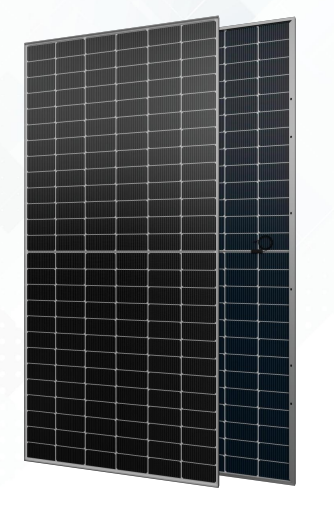
Strong in heat, no clear weak spot
The Jolywood JW Pro series, including the JW-HD156N-R0 model, was designed for maximum energy yield in real installation operating conditions - not just in the lab. These modules are based on N-type TOPCon cells, known for their excellent long-term parameter stability and high resistance to typical operational losses. Thanks to their bifacial construction, the panels can utilize reflected light from the ground surface, providing additional yield where every kWh counts - on light-colored roofs, ground-mounted structures, and installations with high albedo.
The glass-glass dual-string construction enhances durability and operational reliability in harsher conditions (humidity, temperature variations), while the modern cell string architecture minimizes the impact of partial shading on energy production. This is an excellent choice for investors seeking low degradation and reliable performance over many years - particularly suitable for C&I projects, utility-scale PV farms, and high-power-density installations with long payback periods.
Ranking
Price offers
| Shop | Country | Price | Per kWp | Stock | Offer updated | Link to shop |
|---|---|---|---|---|---|---|
| Panele-Sloneczne.com | Poland | 339.20 zł net | 530 zł/kWp | In stock | 11h ago | Visit shop |
| Megawat Elektrohurt | Poland | 432.96 zł incl. VAT | 676.50 zł/kWp | In stock | 9h ago | Visit shop |
| TIM SA | Poland | 464.45 zł incl. VAT | 725.70 zł/kWp | In stock | 11h ago | Visit shop |
Signals from the data
Commercial, utility-scale, shaded-installations and hot-climate.
Top 7% of the TOPCon 600-650 W segment, against a median of -0.290. Ranked 1,309th in the whole database.
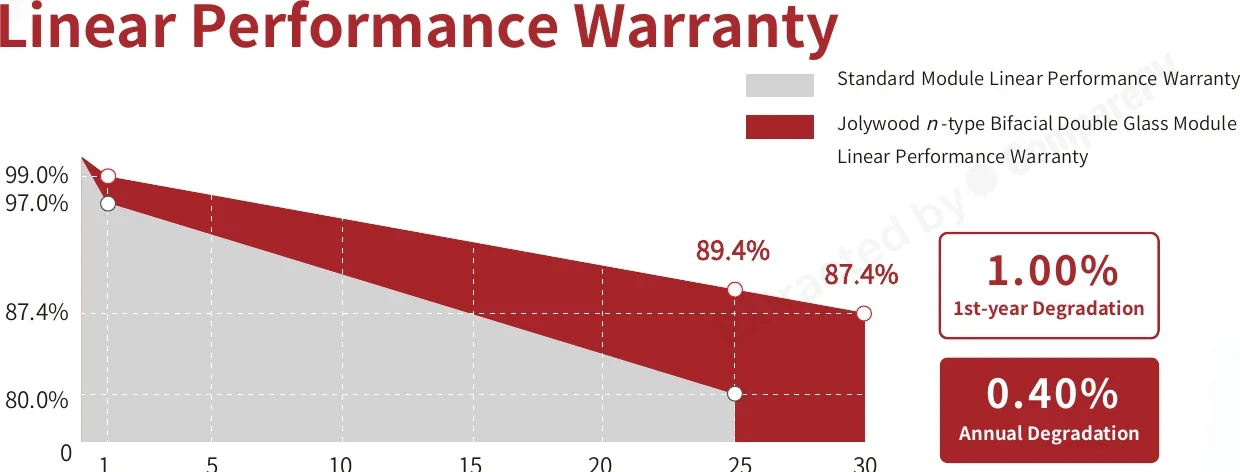
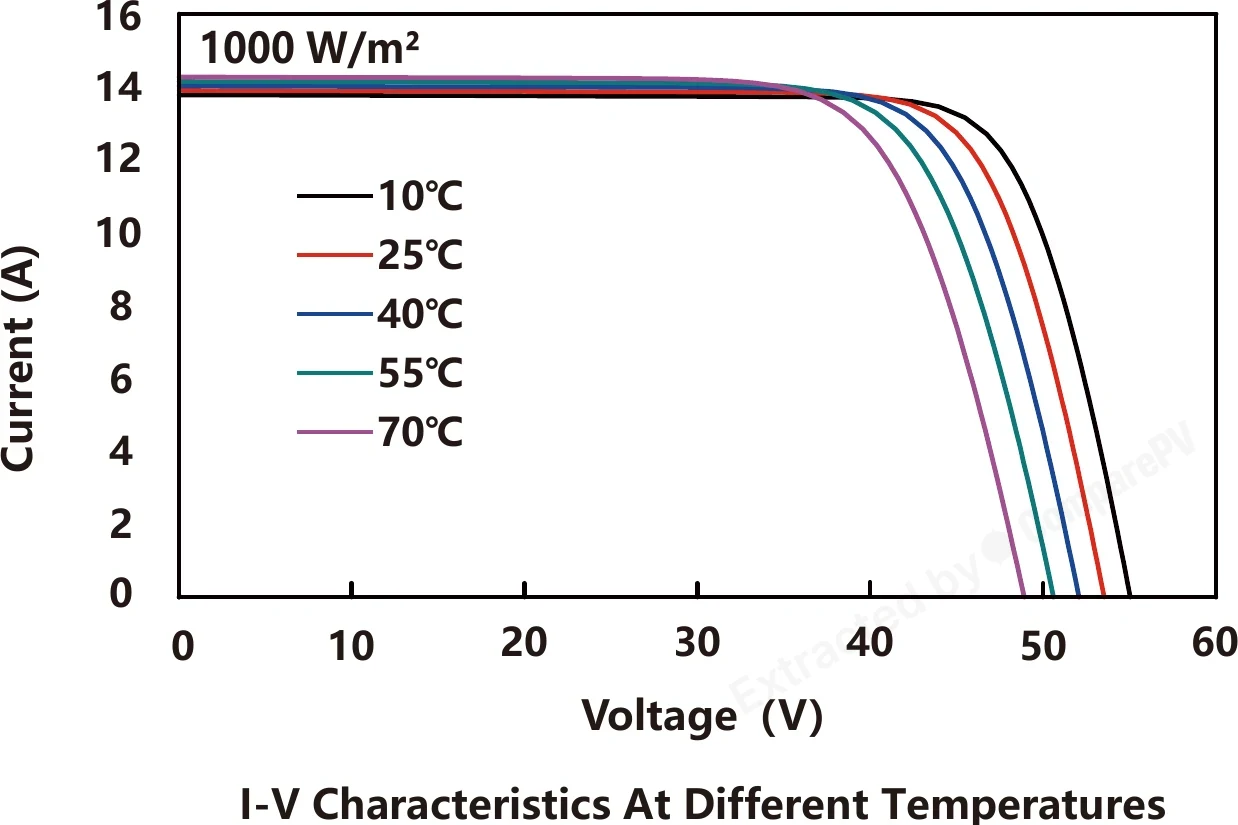
N-type TOPCon cells exhibit zero Light-Induced Degradation (LID) as confirmed by Jolywood in PVEL testing, with an annual degradation rate of 0.40%/yr versus ~0.45%/yr for standard PERC. The temperature coefficient of -0.32%/°C outperforms typical PERC (-0.35%/°C), delivering measurably higher real-world energy yield on warm days.
The module achieves 80% bifaciality, providing up to +25% additional yield over the front-side rating on high-albedo surfaces (snow, white membrane, gravel). The dual-glass 2mm+2mm tempered construction delivers resistance to humidity, salt mist, and ammonia — critical for C&I rooftop and utility-scale PV farms with long operational horizons.
The 22.0–23.1% efficiency range places this series at the top of the 615–645 Wp segment. The peak 645 Wp / 23.1% variant directly matches Runergy HY-DH156N8 (645 Wp, 23.1%) and clearly outperforms BYD HALO (645 Wp, 22.79%), reducing the required roof or ground area per unit of installed power.
Jolywood guarantees a linear power degradation schedule to ≥87.4% after 30 years — a longer horizon than the 25-year standard offered by most Tier-1 manufacturers (Trina, JA Solar). The extended warranty reduces perceived risk for project-finance lenders, a meaningful advantage in externally funded C&I projects.
Jolywood appears on the BNEF Tier-1 list (confirmed Q2 2026), meeting the criteria of supplying own-brand, self-manufactured modules to at least 6 projects ≥1.5 MW each and being accepted by project-finance banks. Annual production capacity of 10 GW/yr mitigates supply-chain risk for large-scale procurement.
The JW-HD156N-R0 series ended production in 2024 after approximately two years on the market. Limited availability of new modules complicates system expansions and power-class matching, while the lack of ongoing production may create difficulties sourcing warranty replacement units in future years.
The workmanship and materials warranty covers only 12 years, whereas peer comparables in this power class — Canadian Solar HiHero+ HJT and BYD HALO — typically offer 15–25 years. For C&I projects with a 25–30-year asset life, this gap increases exposure to out-of-warranty replacement costs.
In the same power class (645 Wp), peer comparable Canadian Solar HiHero+ HJT achieves 23.9% module efficiency versus a maximum of 23.1% for the JW-HD156N-R0 — a gap of ~0.8 percentage points. On space-constrained installations (industrial rooftops, carports), this difference may favor HJT technology despite its higher BoS-adjusted cost.
- Efficiency of 22.9% matches the TOPCon 600-650W median
- At 228.9 W/m² power density, roof space requirements are typical for TOPCon 600-650W panels
- At -0.28%/°C, hot weather performance is typical for TOPCon 600-650W panels
- At 34.5 kg, this panel is 1.8 kg heavier than the TOPCon 600-650W median (32.7 kg) - more demanding for installation crews
- 80% bifaciality enables rear-side power generation, boosting yield by 4-12% on reflective surfaces
Specifications
Datasheet charts
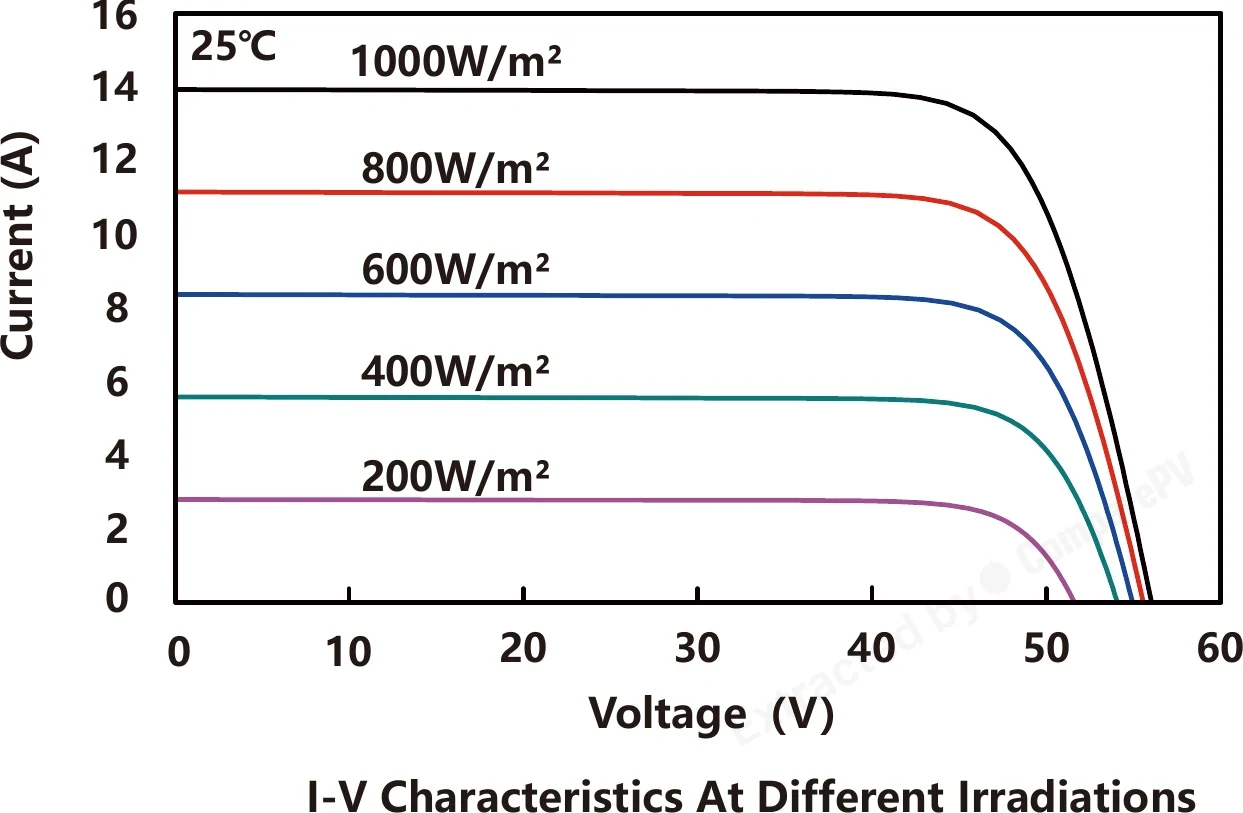
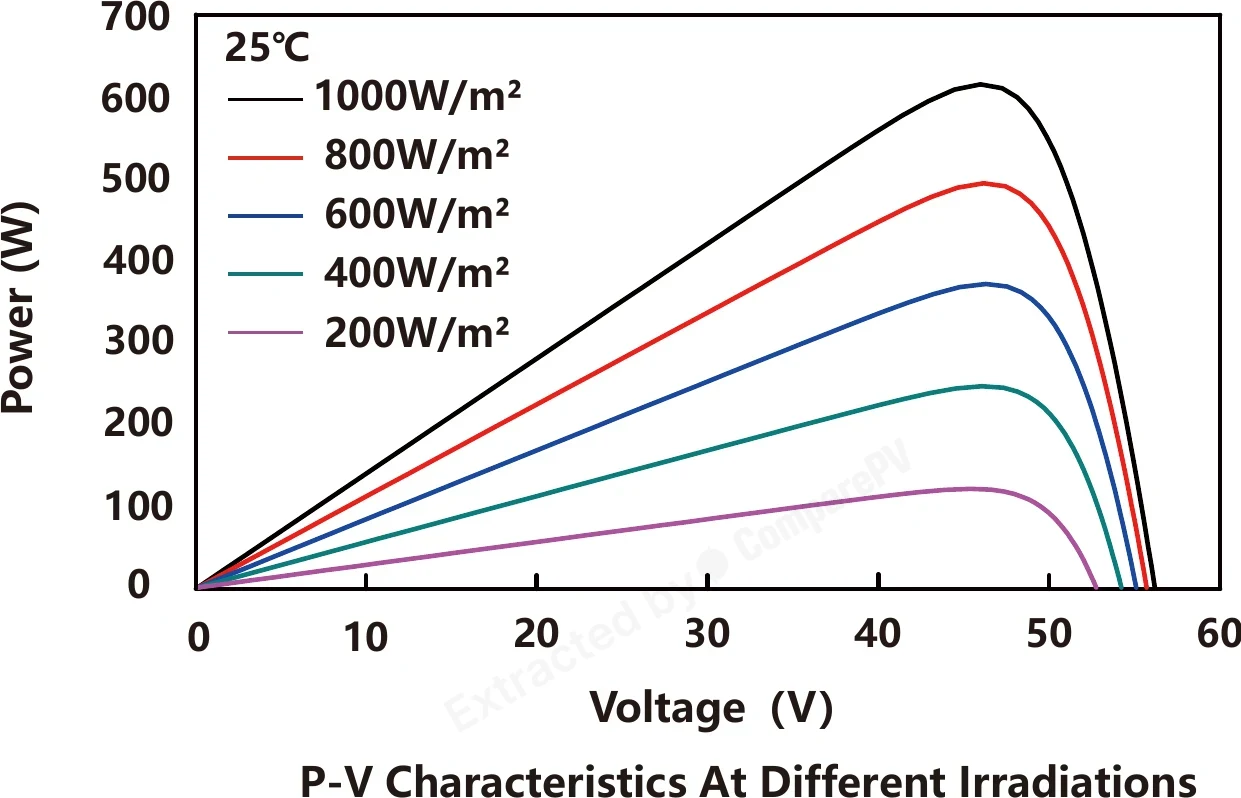
Measured curves published by Jolywood in this model's datasheet. A chart carrying a wattage was measured on that variant alone - only the ones that describe 640 Wp appear here. The rest cover the whole series.
Simulations
Degradation from this panel's own datasheet figures. No inverter, soiling or shading losses.
Model: bifaciality × albedo × 0.6 view factor. A first-order estimate, not a yield simulation.




Found 616 panels of the same or similar size to this one, within ±10 mm. See them here Found 616 panels of the same or similar size to this one, within ±25 mm. See them here Found 616 panels of the same or similar size to this one, within ±50 mm. See them here Found 1813 panels of the same or similar size to this one, within ±100 mm. See them here