Middle of its segment, weak in heat
Jolywood JW Plus Series JW-HD132N-R2 photovoltaic panels are an advanced solution based on innovative N-type TOPCon technology, which provides significantly higher efficiency compared to traditional cells. Thanks to the bifacial glass-glass design, these modules can absorb light from both sides, which translates into additional energy yield from radiation reflected from the ground. This series effectively eliminates the problem of light-induced degradation, offering no LID effect, which guarantees stable power and a longer lifespan for the entire installation. These panels are designed for both modern home micro-installations and large commercial projects, where maximizing yield on a limited roof area is key. They are distinguished by excellent performance in low-light conditions and a low temperature coefficient, which makes them operate efficiently even on hot days. The robust double-glass construction provides extraordinary mechanical resistance to extreme weather events such as hail or strong wind. By choosing this series, investors receive a product with minimal annual performance loss, which represents a clear advantage over standard market offerings and ensures the highest energy security for many years of operation.
Ranking
Signals from the data
Residential, commercial, utility-scale, hot-climate and shaded-installations.
Hot climates.
Bottom 19% of the TOPCon 600-650 W segment, against a median of -0.290.
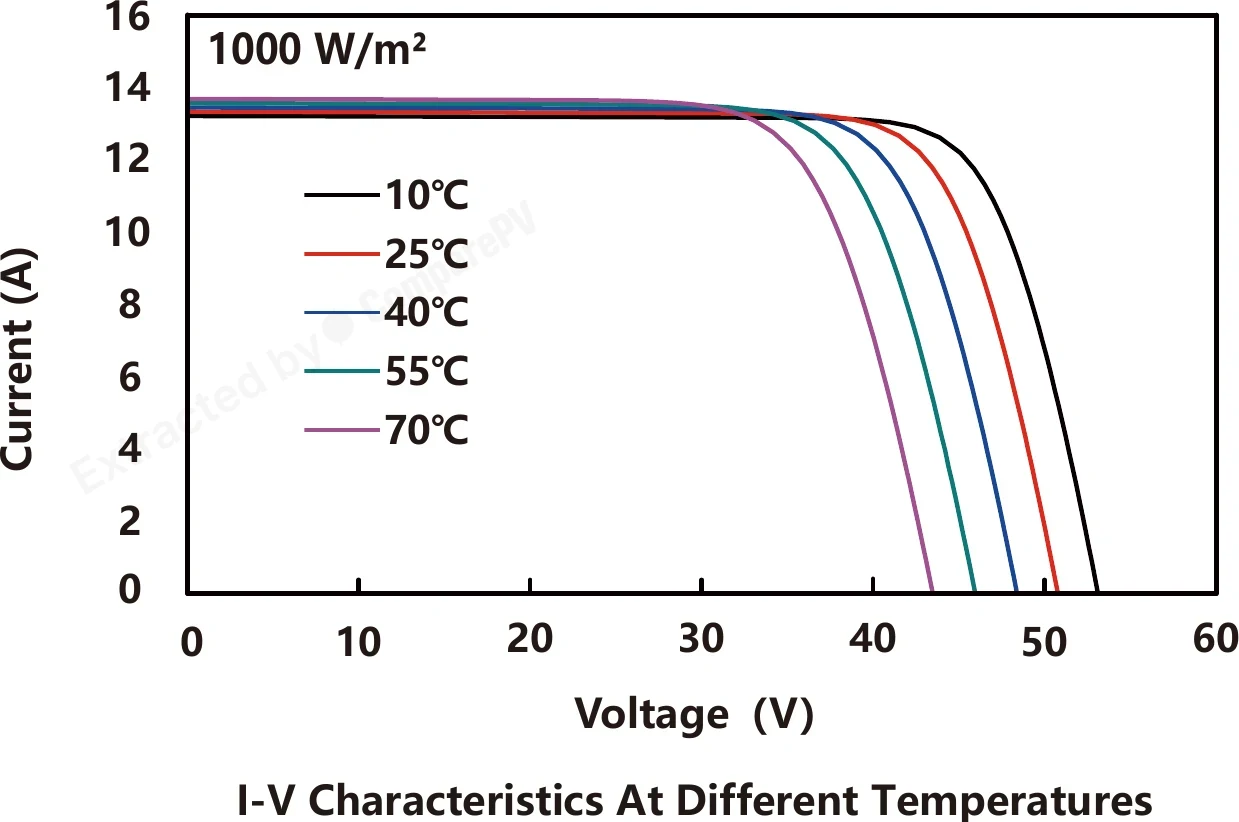
N-type cells eliminate LID/LeTID degradation, ensuring full rated power from day one. The temperature coefficient of Pmax is -0.28 %/°C versus -0.35 to -0.40 %/°C for standard PERC cells, translating into measurably higher energy yield during peak summer months.
The dual-glass bifacial construction captures reflected irradiance from the rear side, boosting energy yield by up to 30% under optimal installation conditions (high-albedo ground surface, elevated racking). Both glass layers simultaneously hermetically seal the cells, preventing moisture ingress and EVA creep.
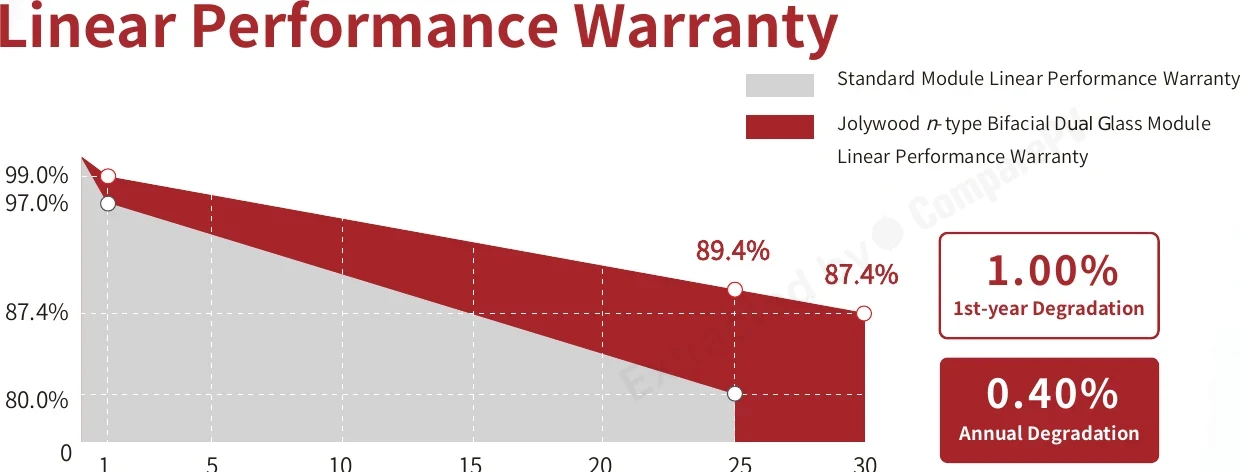
Jolywood guarantees ≥89.4% of rated power after 25 years and ≥87.4% after 30 years, with ~0.40%/yr degradation after year one. This extended warranty horizon reduces financial risk over the full asset life compared to 25-year standards common among glass-backsheet peers.
The datasheet certifies the module for snow loads up to 5,400 Pa and wind loads up to 2,400 Pa. The dual-glass construction provides superior hail impact resistance compared to backsheet-based modules, making it well-suited for climate zones with severe weather events.
Peak efficiency of 23.14% places the module on par with DAH Solar DHN-66Z16/DG (23.14%) and meaningfully above Leapton LP182×182-M-78-NH (22.36%). The manufacturer holds Tier-1 BNEF status (confirmed Q3 2024), minimizing bankability risk for project financing.
The dual-glass construction results in a module weight of 33.3 kg, approximately 20–25% more than comparable glass-backsheet modules of similar wattage (typically 26–29 kg). Rooftop installations may require reinforced racking and substructure, increasing BoS costs and complicating at-height logistics.
Jolywood guarantees ≥87.4% power after 30 years (degradation ~0.40%/yr), while the LONGi Hi-MO 7 LR8-66HGD declares a 0.35%/yr degradation rate, implying approximately 88.85% retention at year 30. The 1.45 pp gap translates to roughly 145 Wp of real-world advantage for the competitor at the end of the warranty period on a 10 kWp system.
- At 22.9% efficiency, this panel is on par with typical TOPCon 600-650W modules
- At 229.5 W/m² power density, roof space requirements are typical for TOPCon 600-650W panels
- At -0.30%/°C, hot weather performance is typical for TOPCon 600-650W panels
- Bifacial design (80% factor) captures reflected light - adds 4-12% yield on ground-mount or white roof
- In the top 16% for efficiency among all TOPCon panels
Specifications
Datasheet charts
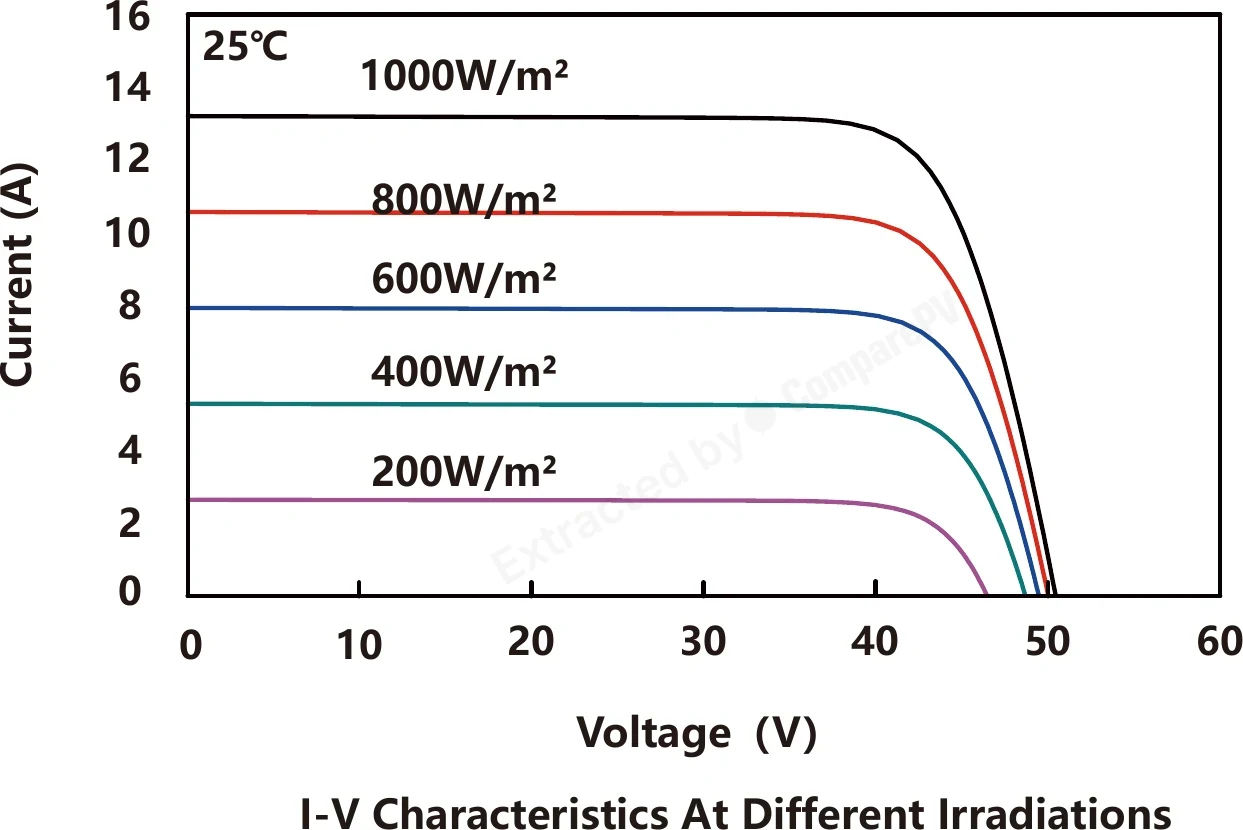
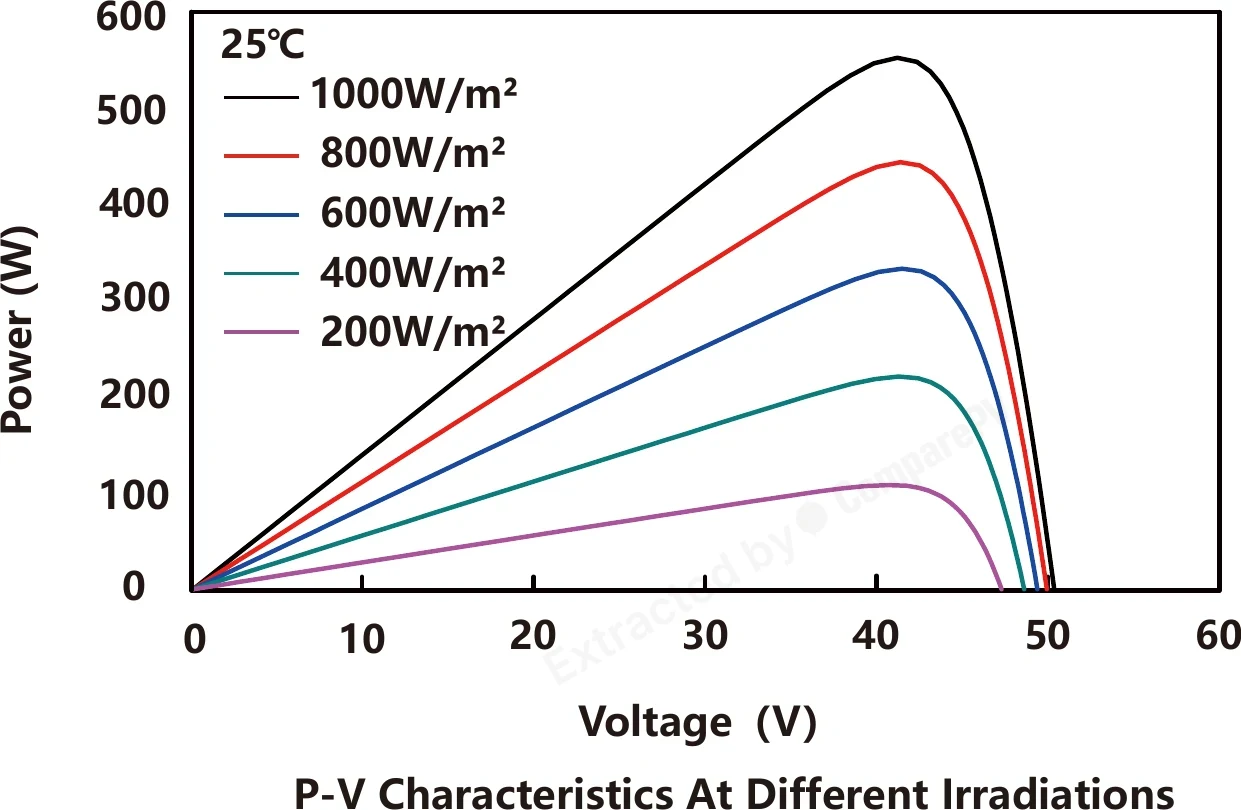
Measured curves published by Jolywood in this model's datasheet. A chart carrying a wattage was measured on that variant alone - only the ones that describe 620 Wp appear here. The rest cover the whole series.
Simulations
Degradation from this panel's own datasheet figures. No inverter, soiling or shading losses.
Model: bifaciality × albedo × 0.6 view factor. A first-order estimate, not a yield simulation.




Found 1119 panels of the same or similar size to this one, within ±10 mm. See them here Found 1125 panels of the same or similar size to this one, within ±25 mm. See them here Found 1236 panels of the same or similar size to this one, within ±50 mm. See them here Found 1917 panels of the same or similar size to this one, within ±100 mm. See them here