Efficiency leader, weak in heat
The Hiwatt Solar HW-M10/144H series is based on advanced M10-type cells with a 182 mm side, which translates to optimal use of available roof space while maintaining the highest energy efficiency. The use of multi-busbar (MBB) technology allows for a significant shortening of the current flow path, which effectively reduces resistance losses and minimizes the risk of micro-cracks in the silicon structure. Thanks to a refined design based on half-cut cells, these panels show significantly higher resistance to partial shading effects, which is a key advantage in variable weather conditions typical for Poland. These modules are an ideal solution for large commercial installations and modern prosumer systems, where the priority is maximizing yields per square meter. They solve the common problem of performance drops during heatwaves thanks to low temperature coefficients, which puts them a step ahead of standard market solutions. The reinforced frame construction guarantees increased resistance to mechanical loads, such as accumulated snow or strong wind, ensuring investment security for decades. Choosing this series is a guarantee of stable operation and protection against PID-type degradation, making these modules one of the most cost-effective propositions in the professional photovoltaics segment.
Ranking
Signals from the data
Commercial, utility-scale and shaded-installations.
Hot climates and owners who want a long output guarantee.
Top 16% of the N-type 600-650 W segment, against a median of 22.77%.
Top 18% of the N-type 600-650 W segment, against a median of 227.7.
Bottom 1% of the N-type 600-650 W segment, against a median of -0.290. Ranked 8,778th in the whole database.
Bottom 4% of the N-type 600-650 W segment, against a median of 30 yrs. Ranked 9,798th in the whole database.
The top-rated variant reaches 23.32% module efficiency — identical to the Jinko Solar Tiger Neo 66HL4M-BDV (23.32%) and clearly above Leapton LP182*199-M-72-NH and AUSTA AU-156MH (both 22.54%). This translates to approximately 3.5% more energy from the same roof area compared to the two other direct peers.
The half-cut configuration (2×72 cells) combined with multi-busbar architecture reduces resistive I²R losses by an estimated 1.5–2%. Splitting the module into two independent electrical halves limits power loss under partial shading — a key advantage on rooftops with chimneys or dormers.
N-type cells are inherently immune to Light-Induced Degradation (LID), which causes a permanent 1–2% power loss in standard P-type PERC modules during the first weeks of operation. N-type annual degradation is typically ≤0.45%/year versus ≥0.55%/year for P-type PERC, resulting in measurably higher cumulative energy yield over a 25-year system life.
The 182×182 mm (M10) cell format is the current industry standard in the high-power segment, ensuring good compatibility with inverters in the 530–700 V MPPT range. With 10 power classes spanning 530–630 Wp, the series gives installers flexibility for both residential prosumer and commercial C&I string design.
The HW-M10/144H series carries a discontinued status, eliminating the possibility of ordering additional modules for system expansion and increasing the risk of unavailable replacement units in case of mechanical failure. For multi-megawatt installations with PPA agreements extending beyond 2030, this represents a material operational risk.
Hiwatt Solar does not appear on the BNEF bankable Tier-1 list (Q1 2026), unlike peer Jinko Solar. This effectively excludes or significantly complicates non-recourse project finance and may increase insurance premiums by 10–20 bps compared to modules from recognized bankable manufacturers.
Despite using an N-type substrate, the series employs PERC architecture rather than TOPCon (used by the competing Jinko Tiger Neo). TOPCon delivers superior surface passivation, lower degradation (~0.40%/year vs ~0.45%/year for N-PERC), and higher bifacial potential — the absence of this architecture limits the long-term performance advantage over premium P-type modules.
The product warranty covers 12 years, while LONGi Hi-MO X6, Trina Vertex S+, and Q CELLS Q.PEAK DUO now offer a standard 15-year product warranty in 2025/2026. In commercial installations financed with 15+ year loans, the shorter product warranty may be treated by lenders as a risk factor affecting DSCR calculations.
- Efficiency of 23.3% is 0.6pp above the N-type 600-650W median (22.8%)
- 233.2 W/m² power density - 5.5 W/m² more than N-type 600-650W median (227.7 W/m²), more power per roof area
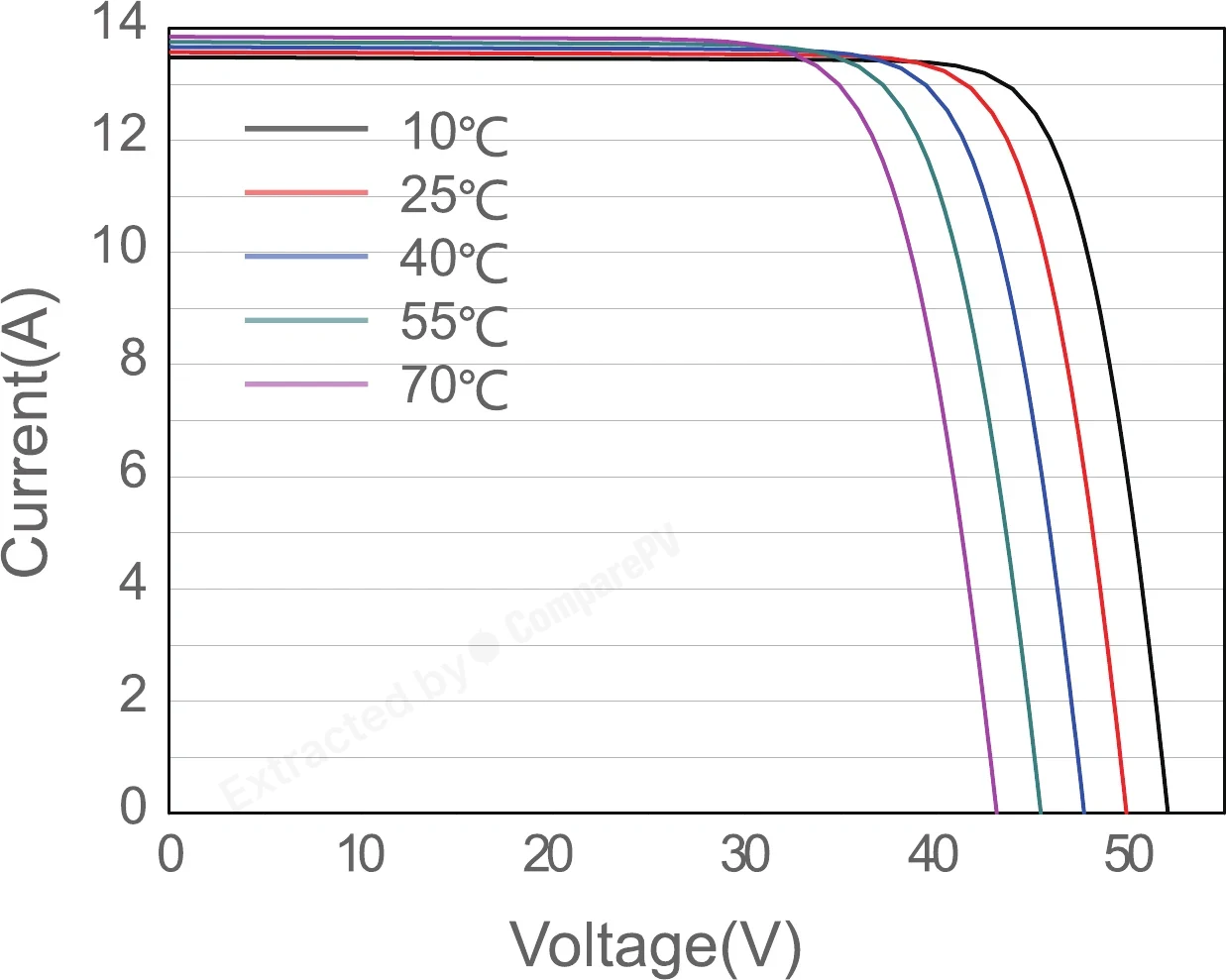
- -0.34%/°C temperature coefficient - 0.05pp worse than N-type 600-650W median (-0.29%/°C), expect higher hot weather losses
- Ranked #973 out of 14005 panels for efficiency in the database
Specifications
Datasheet charts
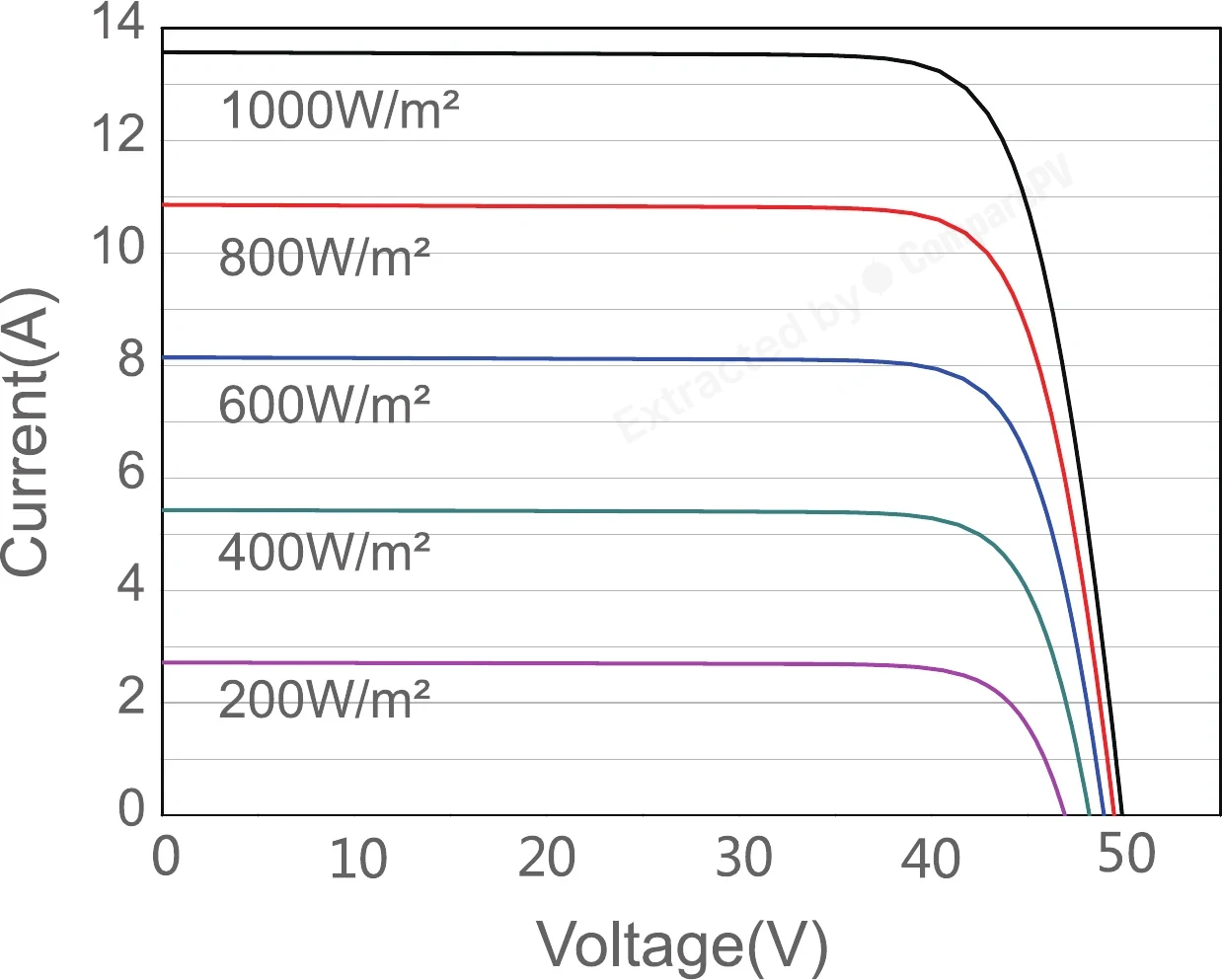
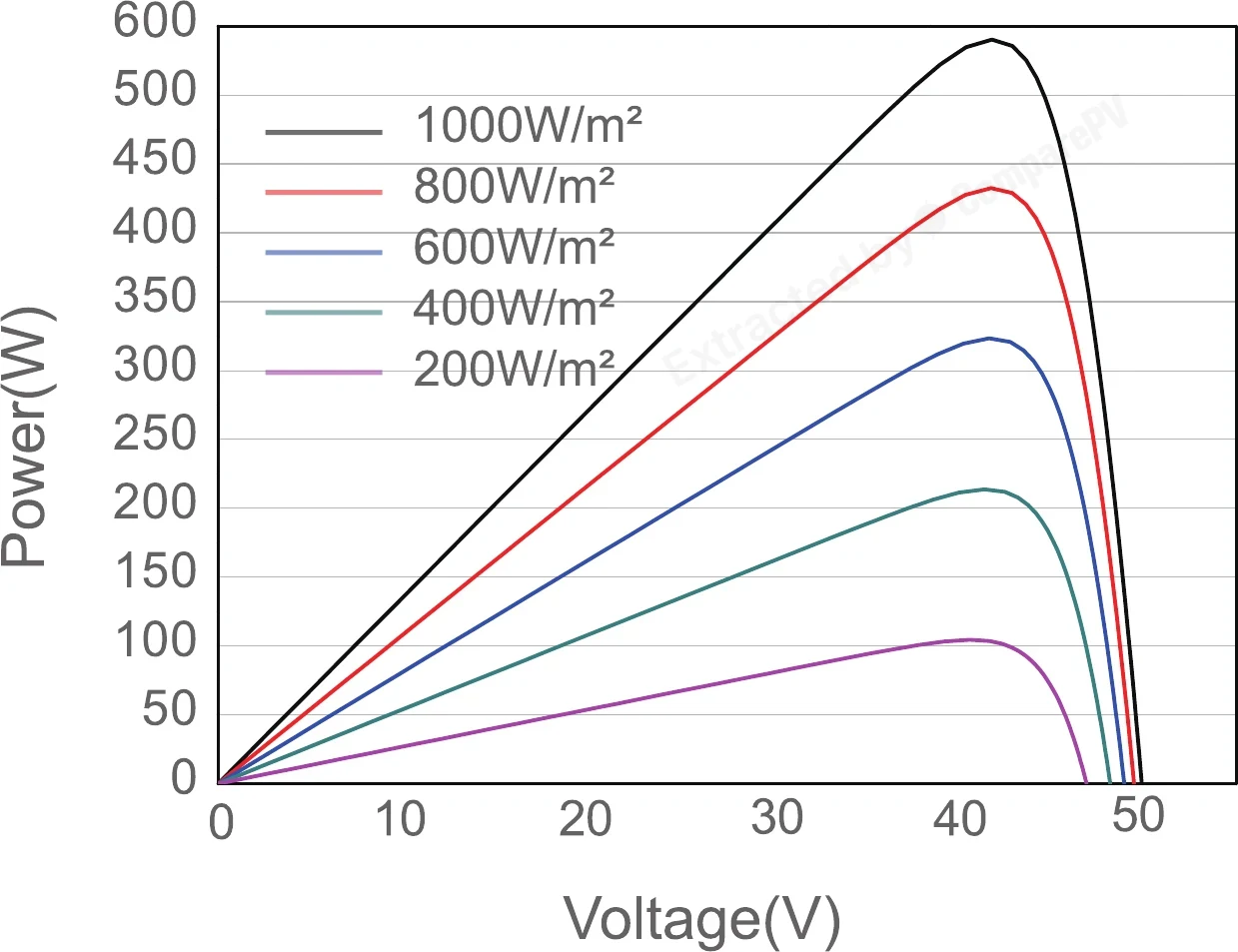
Measured curves published by Hiwatt Solar in this model's datasheet. A chart carrying a wattage was measured on that variant alone - only the ones that describe 630 Wp appear here. The rest cover the whole series.
Simulations
Degradation from this panel's own datasheet figures. No inverter, soiling or shading losses.
Alternatives




Found 1119 panels of the same or similar size to this one, within ±10 mm. See them here Found 1125 panels of the same or similar size to this one, within ±25 mm. See them here Found 1236 panels of the same or similar size to this one, within ±50 mm. See them here Found 1917 panels of the same or similar size to this one, within ±100 mm. See them here