Solid all-round for its segment
The EGing PV Aurora series redefines performance standards through the extensive use of N-type TOPCon cell technology, which directly translates into higher energy conversion efficiency and a significantly lower degradation rate over time. These panels eliminate the problem of power loss at high temperatures, offering stable operation even during hot days, which is becoming an increasing challenge for prosumer and commercial installations in the Polish climate. Their innovative SMBB architecture optimizes current paths, increasing module reliability and resistance to micro-cracks. For investors, the bifacial option is key, allowing for the generation of additional energy from reflected light, which makes the Aurora series unrivaled for ground-mounted structures or light-colored roof coverings. A standout feature compared to the competition is its excellent low-light performance, ensuring a longer period of effective power production throughout the day. This solution is dedicated to demanding large-scale projects and modern homes, where maximizing yields from every square meter of surface area matters. By choosing the Aurora series, you are opting for exceptional mechanical durability and technology that realistically accelerates the return on investment in photovoltaics.
Ranking
Signals from the data
Commercial and utility-scale.
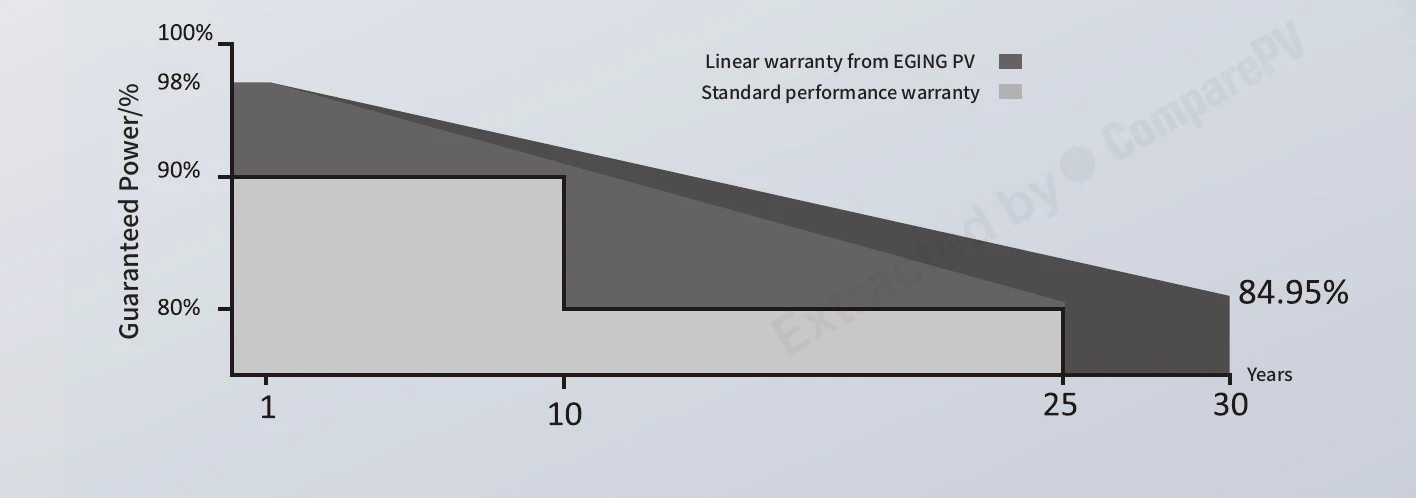
A 30-year performance warranty places the Aurora series above many competitors in this power class (650–670 Wp), where 25 years remains the standard. For commercial and ground-mount installations, this translates into an extended financial planning horizon without the risk of the manufacturer failing to meet guaranteed output parameters.
EGing PV has been operating since 2003 and is listed as a bankable Tier-1 manufacturer under the BloombergNEF methodology (threshold: 6 projects ≥10 MW, non-recourse financing from 6 banks). This provides confidence in warranty continuity and service availability over a 25–30-year operational lifetime.
The bifacial module design enables additional energy generation from reflected (albedo) irradiance. At a typical ground albedo of ~20–30%, bifacial PERC panels achieve approximately 5–10% higher annual energy yield compared to monofacial equivalents, which is particularly valuable in ground-mount applications or installations over light-colored surfaces.
The 650–670 Wp power range reduces the module count per MW of installed capacity, directly lowering balance-of-system (BoS) costs: less cabling, fewer MC4 connectors, fewer racking components, and reduced labor. For utility-scale projects, the difference between 650 W and 500 W modules translates to approximately 23% fewer modules per megawatt.
The highest-efficiency variant in the series achieves 21.56%, placing it among the leading 132-cell PERC modules currently available and on par with direct peer benchmarks: Hiwatt HW-M12/132H (21.6%), Techwise Summit (21.57%), and ZNShine ZXM8-TP132 (21.57%).
PERC cells carry a typical temperature coefficient of −0.38%/°C versus −0.30–0.32%/°C for N-type TOPCon, which at a cell temperature of 65°C (typical summer conditions in Poland) results in approximately 0.8–1.0% lower energy yield on hot days. The bifaciality factor of PERC cells is approximately 70% compared to ~85% for TOPCon, limiting the effectiveness of the bifacial design. Several competing series in this power range already utilize TOPCon technology, including EGing PV's own Aurora Pro lineup.
The 12-year product warranty (covering material and workmanship defects) falls below the premium segment standard: Jinko Tiger Neo, LONGi Hi-MO 6, and JA Deep Blue 4.0 all offer 15-year product warranties at comparable price points. Should a module fail after year 12, the investor bears the full cost of replacement.
The maximum efficiency of the 670 Wp model stands at 21.56%, while direct comparators reach 21.57–21.60% (Techwise Summit 21.57%, Hiwatt HW-M12/132H 21.60%). The ~0.04 percentage-point gap is negligible in most contexts, but in high-density rooftop installations where every cm² counts, it may be a deciding factor in product selection.
- Efficiency of 21.4% matches the PERC 650-700W median
- At 214.1 W/m² power density, roof space requirements are typical for PERC 650-700W panels
- Temperature coefficient of -0.34%/°C matches the PERC 650-700W median
- At 38.3 kg (3.8 kg above PERC 650-700W median of 34.5 kg), requires checking roof load capacity
- Bifacial design (100% factor) captures reflected light - adds 5-15% yield on ground-mount or white roof
Specifications
Datasheet charts
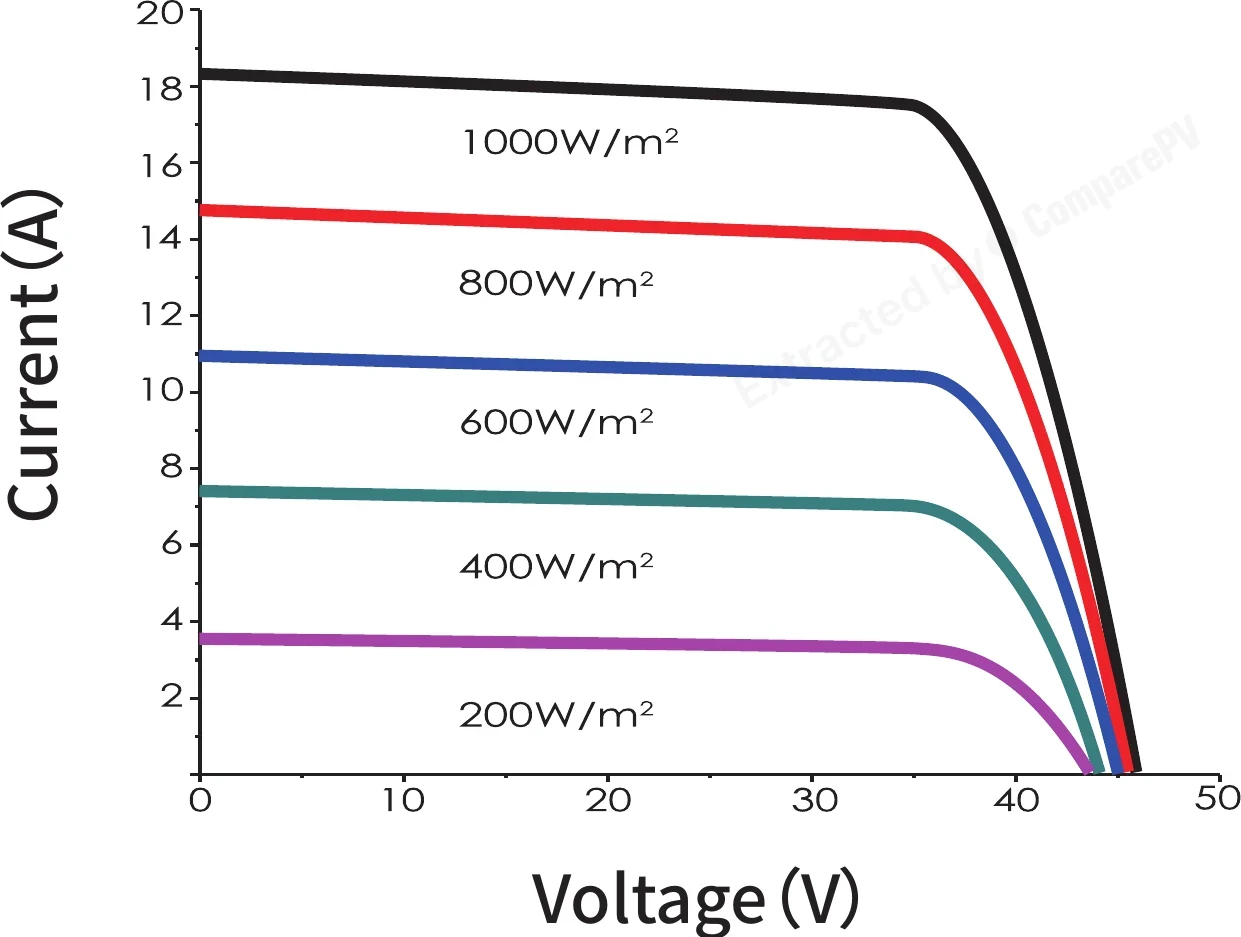
Measured curves published by EGing PV in this model's datasheet. A chart carrying a wattage was measured on that variant alone - only the ones that describe 665 Wp appear here. The rest cover the whole series.
Simulations
Degradation from this panel's own datasheet figures. No inverter, soiling or shading losses.
Model: bifaciality × albedo × 0.6 view factor. A first-order estimate, not a yield simulation.



Found 1390 panels of the same or similar size to this one, within ±10 mm. See them here Found 1400 panels of the same or similar size to this one, within ±25 mm. See them here Found 1400 panels of the same or similar size to this one, within ±50 mm. See them here Found 1432 panels of the same or similar size to this one, within ±100 mm. See them here