Strong in heat, heavy for its output
Photovoltaic panels from the DAS-DH132NC series utilize advanced N-type TOPCon cell technology, which forms the foundation of their advantage over older P-type solutions. Thanks to the near-total elimination of light-induced degradation, these modules guarantee exceptionally stable energy production for many years, which directly translates into a faster return on investment. A key differentiator of this series is the bifacial glass-glass design, which ensures not only extreme resistance to external factors but also enables active energy harvest from both sides of the module. This solves the problem of limited performance in difficult conditions, offering a high bifaciality factor that outperforms single-sided counterparts in ground-mounted installations. This series also stands out for its excellent efficiency under low light intensity, which is critical for yields in the Polish climate, especially during transitional periods. The product is dedicated to large commercial projects and solar farms, where the priority is minimizing the LCOE cost. Robust construction and innovative cell architecture make the DAS-DH132NC a solution that sets new standards for durability and efficiency in modern photovoltaics, offering significantly higher yields than standard monocrystalline panels.
Ranking
Signals from the data
Commercial and utility-scale.
Weight-limited structures.
Top 11% of the TOPCon 700-750 W segment, against a median of -0.290.
Bottom 21% of the TOPCon 700-750 W segment, against a median of 52.9.
The DAS-DH132NC series achieves a peak efficiency of 23.0%, matching direct peers such as BECSA BEC-HJT (23.0%) and Becquer BEC-HJT (23.0%), and trailing only marginally behind the segment leader New East Solar NESE 66THB-G12 (23.02%). This places the module firmly among the highest-performing large-format panels currently available on the market.
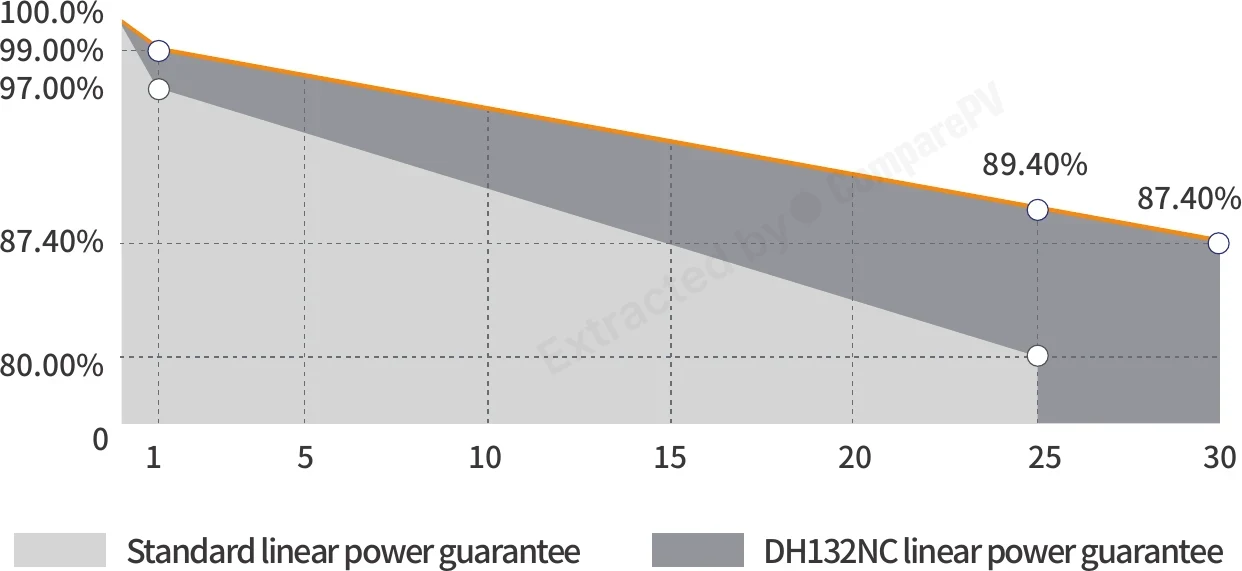
N-type TOPCon cells exhibit an annual power degradation rate of –0.40% and a first-year LID of just –1.0%, compared to –~0.55%/year and –2–3% in the first year for standard P-type PERC modules. Over a 30-year project lifetime, the difference in cumulative energy yield can amount to several percentage points, with a direct impact on the project's LCOE.
The glass-glass construction with a bifaciality factor of up to 80% enables absorption of reflected albedo irradiance, which in ground-mounted applications (utility-scale PV farms, agrivoltaic systems) can translate into an additional 10–30% energy yield compared to monofacial modules. The dual-glass encapsulation also provides resistance to snow loads of 5,400 Pa and wind loads of 2,400 Pa, critical for projects in challenging climatic locations.
The manufacturer offers a 30-year linear power output warranty (alongside a 15-year product warranty), which meets the standard required for utility-scale project financing by banks and infrastructure funds. This confirms the module's bankability status: DAS Solar appears on the BNEF Tier 1 list and received an 'A' rating in the PV ModuleTech Bankability Ratings Q2 2025 report (PV Tech).
Independent verification of financial credibility through two distinct methodologies — BloombergNEF Tier 1 (criteria: module supply to ≥6 projects ≥10 MW financed on a non-recourse basis by ≥6 banks) and an 'A' rating in PV ModuleTech Q2 2025 — reduces project risk and facilitates debt financing for large commercial installations.
DAS Solar has been in operation for approximately 7 years while offering a 30-year power output warranty. By comparison, direct segment competitors such as Jinko Solar (2006), Trina Solar (1997), and Canadian Solar (2001) have significantly longer documented operational histories. For large externally financed projects (project finance), the manufacturer's short operational track record may be flagged as a risk factor during lender due diligence, despite the company's BNEF Tier 1 status.
The glass-glass construction results in a module weight of approximately 37.1 kg, roughly 30–40% heavier than comparable glass-backsheet modules (approx. 26–28 kg). For rooftop applications, this requires structural load capacity assessment and often reinforcement of the mounting system, increasing the CAPEX of residential and commercial rooftop installations. The series is positioned by the manufacturer as dedicated to ground-mounted projects (utility-scale PV farms), where this factor does not represent a barrier.
- At 22.9% efficiency, this panel is on par with typical TOPCon 700-750W modules
- At 228.6 W/m² power density, roof space requirements are typical for TOPCon 700-750W panels
- At -0.28%/°C, hot weather performance is typical for TOPCon 700-750W panels
- Bifaciality factor of 80% can add 4-12% extra yield with reflective mounting surface
- Ranked #2359 out of 14005 panels for efficiency in the database
Specifications
Datasheet charts
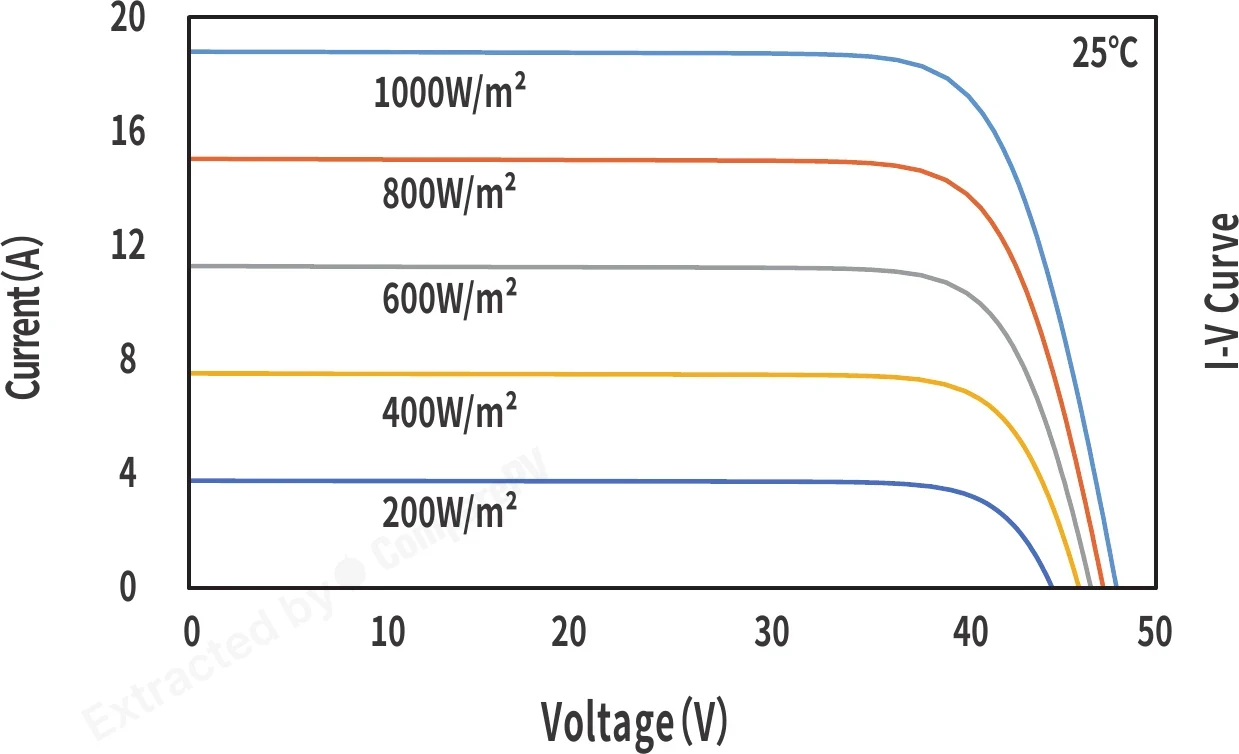
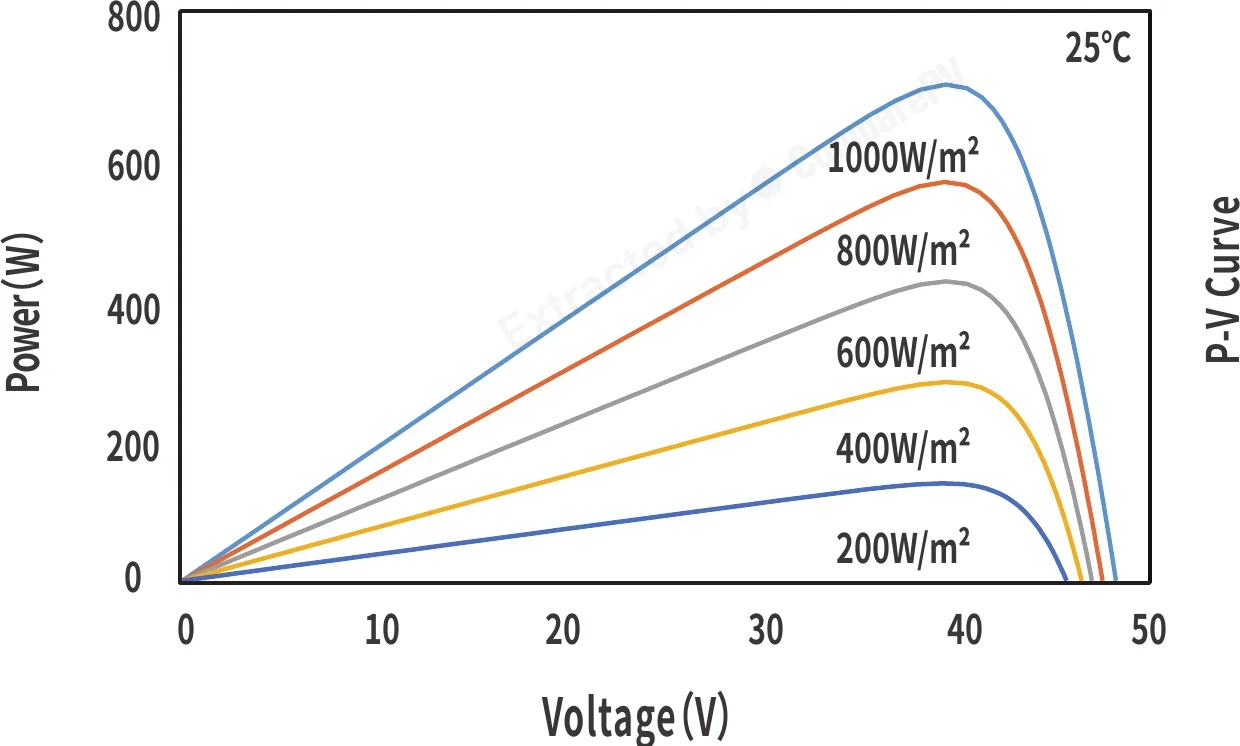
Measured curves published by DAS Solar in this model's datasheet. A chart carrying a wattage was measured on that variant alone - only the ones that describe 710 Wp appear here. The rest cover the whole series.
Simulations
Degradation from this panel's own datasheet figures. No inverter, soiling or shading losses.
Model: bifaciality × albedo × 0.6 view factor. A first-order estimate, not a yield simulation.





Found 1390 panels of the same or similar size to this one, within ±10 mm. See them here Found 1400 panels of the same or similar size to this one, within ±25 mm. See them here Found 1400 panels of the same or similar size to this one, within ±50 mm. See them here Found 1432 panels of the same or similar size to this one, within ±100 mm. See them here