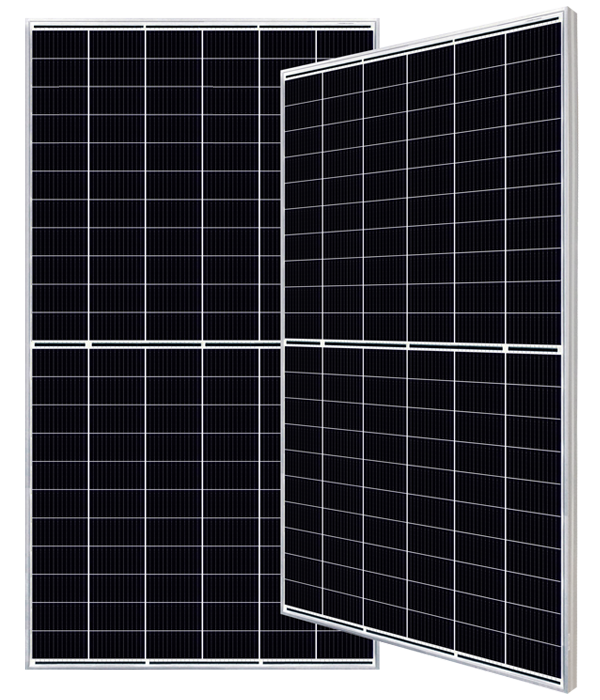
Canadian Solar CS7N-665MS

CS7N-665MS

665 Wp PERC
ComparePV verdict

Middle of its segment, short guarantee

Rank 3,807 of 14,005
Compare panels Datasheet PDF
Power (Wp)
665
Typical for its class
Efficiency (%)
21.40
Typical · median 21.25%
Density (Wp/m²)
214.1
Typical · median 212.5
Temp (%/°C)
-0.340
Typical · median -0.340
Weight (kg)
33.9
Typical · median 34.5 kg
Warranty (yrs)
25
Weak · bottom 21%

The Canadian Solar HiKu7 Mono PERC series are modules based on dual cell and PERC technology, designed for high power per panel and efficient system scaling. In practice, this translates to fewer modules needed to achieve the target power output, resulting in a simpler design for construction, wiring, and logistics - particularly advantageous for large rooftops and PV farms.

The HiKu7 series distinguishes itself through its commitment to longevity: limitations have been implemented for LID and LeTID degradation, which helps stabilize energy yields over the long term and reduces the risk of performance drops typical for PERC modules. The series also focuses on hot-spot resistance and improved performance under partial shading, offering a real advantage in projects with topological obstructions or uneven exposure.

This is an excellent choice for investors, EPCs, and installation companies seeking to lower the energy cost-of-electricity (LCOE) over time and optimize system costs without compromising on reliability. The modules are also designed for compatibility with popular inverters, simplifying equipment selection in standard projects.

Ranking

320 panels in the segment PERC 650-700 W
Metric This panel Median Position in segment Overall rank
Module efficiency 21.40% 21.25% Typical 8,323
Power density 214.1 212.5 Typical 8,250
Temperature coefficient -0.340 -0.340 Typical 8,778
Weight per kWp 51.0 52.3 Typical 4,337
Performance warranty 25 yrs 30 yrs Weak · bottom 21% 9,798
Colour key Strong - top 25% Typical - middle 50% Weak - bottom 25%

Signals from the data

5 positive · 3 caution
Best for

Utility-scale, commercial and shaded-installations.

Not ideal for

Owners who want a long output guarantee.

Watch-outs
25 year performance warranty

Bottom 21% of the PERC 650-700 W segment, against a median of 30 yrs.

What owners get
Module Power Up to 675 Wp — On Par with Segment Leaders

The 675 Wp upper limit matches the maximum output of direct competitors in this segment (BYD AURO MSTK-33, Neo Solar NESE, Trina Vertex TSM-DE21). Fewer modules per installed MW translates to lower structural, wiring, and logistics costs — a particularly significant advantage in utility-scale PV plants and rooftop systems above 500 kWp.

Industrial-Grade Mechanical Resilience

Datasheet V2.81 (July 2024) confirms a snow load rating of up to 5,400 Pa and wind load of up to 2,400 Pa. These values are typical for the industrial segment and allow installation in climate zones I–III per PN-EN standards without additional structural reinforcement.

LID/LeTID Reduction of Up to 50%

Canadian Solar employs active mitigation of light-induced degradation (LID) and light- and elevated temperature-induced degradation (LeTID), claiming up to 50% lower losses from these mechanisms compared to standard PERC modules. This results in more stable energy yield during the first 3–5 years of operation, when LID effects are most pronounced.

Tier-1 Bankable — Streamlined Project Financing

Canadian Solar (founded 2001) has maintained continuous Tier-1 status on BNEF rankings for years, facilitating access to project finance and leasing arrangements. For EPC contractors and utility-scale PV developers, this shortens the due diligence process and reduces required risk spreads.

25-Year Linear Power Warranty

The industry-standard 25-year linear power warranty guarantees annual degradation of ≤0.55% after year 1. This provides predictable energy production inputs for DCF models and is accepted by the majority of lenders financing renewable energy projects.

Trade-offs
PERC, Not TOPCon — Higher Annual Degradation Rate

PERC technology carries a degradation rate of ≤0.55%/year, whereas N-type TOPCon modules — including Canadian Solar's own TOPBiHiKu7 — degrade at approximately 0.25–0.30%/year. Over a 25-year horizon on a 1 MWp installation, this difference amounts to a real 3–5% gap in cumulative energy production, translating into a material revenue shortfall for large-scale PV farms.

Monofacial Design — No Bifacial Gain

The series is monofacial and therefore cannot capture ground-reflected irradiance (albedo). Competing TOPCon series — such as Canadian Solar's own TOPBiHiKu7 and the BYD AURO bifacial lineup — offer 10–20% additional rear-side yield in ground-mounted installations with high-albedo surfaces, directly improving LCOE in utility-scale projects.

Notes from the database
  • Efficiency of 21.4% matches the PERC 650-700W median
  • At 214.1 W/m² power density, roof space requirements are typical for PERC 650-700W panels
  • At -0.34%/°C, hot weather performance is typical for PERC 650-700W panels
  • Ranked #8323 out of 14005 panels for efficiency in the database

Specifications

Open datasheet PDF
Nominal power (Pmax) 665 Wp Nameplate at 1000 W/m², 25 °C
Module efficiency 21.40 % Typical Segment median 21.25%
Vmpp · Impp 38.50 V · 17.28 A Operating point at max power
Voc · Isc 45.60 V · 18.51 A Sizes the string length
Max system voltage 1500 V Longer strings than 1000 V modules
Dimensions 2384×1303×35 mm · 3.11 m² of roof
Weight 33.9 kg Typical Typical · median 34.5 kg
Cells 132 · PERC Monocrystalline
Coefficient Pmax -0.340 %/°C Typical median -0.340 of its segment
Coefficient Voc · Isc -0.260 · 0.050 %/°C
NOCT 41 °C At 800 W/m², 20 °C ambient
Product warranty 12 years Hardware defects only
Performance warranty 25 years Weak bottom 21% · median 30 yrs
End-of-warranty output 84.8 % Equals 546 W guaranteed
Degradation 2.00 → 0.55 % First year, then annual

Simulations

Live - change any input
Lifetime output & value
30 years at 1200 kWh/kWp/year and €0.50 per kWh
Power in year 30
-
Lifetime energy
-
Energy value
-

Degradation from this panel's own datasheet figures. No inverter, soiling or shading losses.

Heat losses
-0.340 %/°C against a segment median of -0.340
-
Filter these
Size
Panel Power Eff. Temp. Weight Difference
Canadian Solar CS7N-665MS 665 W 21.40% -0.340 33.9 kg You are here
AIKO-A650-MAE72Mw 650 W 25.20% -0.260 27.0 kg Cooler, lighter, +3.8 pp
AIKO-A680-MDE72Mw 680 W 25.20% -0.260 29.0 kg Cooler, +3.8 pp, +5 yr warranty
AIKO-A675-MDE72Mw 675 W 25.00% -0.260 29.0 kg Cooler, +3.6 pp, +5 yr warranty
AIKO-A645-MAE72Mw 645 W 25.00% -0.260 27.0 kg Cooler, lighter, +3.6 pp
AIKO-A700-MAE78Dw 700 W 25.00% -0.260 34.5 kg Cooler, +3.6 pp, +5 yr warranty
AIKO-A695-MAE78Dw 695 W 24.90% -0.260 34.5 kg Cooler, +3.5 pp, +5 yr warranty
AIKO-G670-MCH72Mw 670 W 24.80% -0.260 28.2 kg Cooler, lighter, +3.4 pp
CS7N-640MB-AG 640 W 20.60% -0.340 37.9 kg Heavier, -0.8 pp, +5 yr warranty
CS7N-645MS 645 W 20.80% -0.340 33.9 kg -20 W, -0.6 pp
CS7N-650MS 650 W 20.90% -0.340 33.9 kg -15 W, -0.5 pp
CS7N-655MB-AG 655 W 21.10% -0.340 37.9 kg Heavier, -0.3 pp, +5 yr warranty
CS7N-660MS 660 W 21.20% -0.340 33.9 kg Very close match
AIKO-A805-GRH78Dw 805 W 25.10% -0.260 39.8 kg +140 W, cooler, +3.7 pp
AIKO-A800-GRH78Dw 800 W 24.90% -0.260 39.8 kg +135 W, cooler, +3.5 pp
AIKO-A795-GRH78Dw 795 W 24.80% -0.260 39.8 kg +130 W, cooler, +3.4 pp
AIKO-A790-GRH78Dw 790 W 24.60% -0.260 39.8 kg +125 W, cooler, +3.2 pp

Found 1390 panels of the same or similar size to this one, within ±10 mm. See them here Found 1400 panels of the same or similar size to this one, within ±25 mm. See them here Found 1400 panels of the same or similar size to this one, within ±50 mm. See them here Found 1432 panels of the same or similar size to this one, within ±100 mm. See them here

Common questions

6 answered
What warranty does Canadian Solar offer on the HiKu7 Mono PERC series?
Canadian Solar provides a 12-year product warranty covering materials and workmanship, along with a 25-year linear power output warranty for the HiKu7 Mono PERC series. Under the linear power warranty, first-year degradation must not exceed 2%, with a maximum annual degradation of 0.55% in subsequent years. This means that after 25 years, the module should retain at least approximately 84.8% of its nominal rated power.
What are LID and LeTID technologies, and why do they matter for the HiKu7 series?
LID (Light Induced Degradation) and LeTID (Light and Elevated Temperature Induced Degradation) are phenomena that cause power loss in PERC modules during the first months of operation. In the HiKu7 series, Canadian Solar has implemented active mitigation of both effects, which stabilizes energy yield and reduces the risk of unexpected performance drops — particularly during hot, sunny periods.
How many Canadian Solar HiKu7 675 W panels do I need for a 10 kW system?
With a peak power rating of 675 Wp, only 15 HiKu7 modules are required to achieve a 10 kW system. By comparison, standard 400 W panels would require 25 units. The reduced module count simplifies the structural design, shortens installation time, and lowers Balance of System (BoS) wiring costs — benefits that are especially significant on large industrial rooftops or utility-scale PV farms.
Are the HiKu7 Mono PERC panels rated for snow loads and high wind speeds under Polish climate conditions?
Yes, the HiKu7 series is engineered for demanding climatic conditions. The modules withstand snow loads of up to 5,400 Pa and wind pressure of 2,400–3,600 Pa, depending on the mounting configuration. This ensures compliance with Polish construction standards for the majority of regions in the country, including mountainous areas and the highly wind-exposed Baltic coastal zone.
Which inverters are compatible with the Canadian Solar HiKu7 Mono PERC panels?
The HiKu7 series is compatible with most mainstream inverters available on the market, including solutions from SMA, Fronius, Huawei, SolarEdge, and GoodWe. The system voltage is rated up to 1,500 V DC, enabling longer string configurations and simplifying the electrical design of the installation. When in doubt, compatibility should be verified using the specific inverter manufacturer's string sizing or configuration tool.
Will the Canadian Solar HiKu7 Mono PERC perform well in partial shading conditions?
Thanks to the half-cut cell technology, the HiKu7 series handles partial shading significantly better than conventional full-cell modules. Splitting the cells in half reduces power losses when shade falls on part of the module, while the integrated bypass diode circuits minimize the risk of hot-spot formation. This is a notable advantage for rooftop installations affected by chimneys, dormers, or nearby vegetation.
Add to compare