CETC-690T(GDF)/132

690 Wp N-type Bifacial 80%
ComparePV verdict

Middle of its segment, weak in heat

Rank 1,540 of 14,005
Compare panels Datasheet PDF
Power (Wp)
690
Strong · top 14%
Efficiency (%)
22.21
Typical · median 23.30%
Density (Wp/m²)
222.1
Typical · median 233.2
Temp (%/°C)
-0.310
Weak · bottom 16%
Weight (kg)
38.0
Weak · 4.5 kg above median
Warranty (yrs)
30
Typical · median 30 yrs

The RedSolar G12-MBB N-type Mono Bifacial series delivers modern photovoltaic modules that combine N-type TOPCon cells with dual-sided energy generation. The panels use large-format G12 silicon wafers together with a half-cut cell architecture, which reduces resistive losses, improves shading tolerance, and lowers the risk of hot spots. The multi-busbar (MBB) technology enhances current collection across the cell surface, improving module stability even under high-temperature conditions. Thanks to their bifacial design, the panels capture additional energy from reflected light reaching the rear side of the module, making them especially effective on light-colored surfaces, ground-mount installations, or tracker systems. N-type cells offer lower degradation over time and reduced sensitivity to LID compared to older cell technologies, resulting in longer service life and more stable energy yield throughout the system's operating period. This series is a strong choice for large commercial installations and solar farms, as well as demanding industrial projects where high power density per square meter and low levelized cost of energy (LCOE) are priorities. The module's robust construction and materials ensure resilience against harsh weather conditions and long-term installation reliability.

Ranking

109 panels in the segment N-type 650-700 W
Metric This panel Median Position in segment Overall rank
Module efficiency 22.21% 23.30% Typical 5,754
Power density 222.1 233.2 Typical 5,734
Temperature coefficient -0.310 -0.290 Weak · bottom 16% 8,005
Weight per kWp 55.1 50.9 Weak · bottom 16% 9,477
Performance warranty 30 yrs 30 yrs Typical 21
Colour key Strong - top 25% Typical - middle 50% Weak - bottom 25%

Signals from the data

5 positive · 5 caution
Best for

Utility-scale and commercial.

Not ideal for

Hot climates and weight-limited structures.

Watch-outs
-0.310 %/°C temperature coefficient

Bottom 16% of the N-type 650-700 W segment, against a median of -0.290.

55.1 kg per kWp

Bottom 16% of the N-type 650-700 W segment, against a median of 50.9.

What owners get
N-type TOPCon technology with half-cut and MBB

The combination of N-type TOPCon cells, half-cut architecture, and multi-busbar (MBB) design reduces resistive losses and hot-spot risk while improving current collection across the cell surface, even at elevated operating temperatures.

Dual-side energy generation (bifacial)

The bifacial construction enables additional energy yield from reflected light reaching the module's rear side, which is particularly beneficial for ground-mount, tracker, or high-albedo surface installations - typically 5-15% extra output compared to mono-facial panels.

High unit power up to 695 Wp

Maximum power of 695 Wp with efficiency up to 22.37% provides high power density per square meter, translating into lower BoS costs (wiring, mounting structures) per installed watt.

30-year linear power warranty

The 30-year power warranty aligns with the standard offered by leading N-type cell manufacturers and exceeds the typical 25-year warranties of older PERC technology, indicating lower annual degradation of the module.

Low degradation thanks to N-type cells

N-type cells show lower sensitivity to LID (Light Induced Degradation) than older P-type/PERC technologies, resulting in more stable energy yield throughout the installation's operational lifetime.

Trade-offs
Efficiency below top competitors

Maximum efficiency of 22.37% is lower than comparable models - Sunket SKT680~700M12-132D5 achieves 22.5% at up to 700 Wp, and Sunova TS-BGT66-G12 reaches 22.4% at the same 695 Wp maximum power.

12-year product warranty - below market trend

The 12-year product warranty is shorter than the current standard offered by many N-type module manufacturers, where 15 years (and in some cases 20-25 years) is becoming the new norm for this technology class.

Limited brand recognition and bankability

RedSolar does not have confirmed presence on publicly available BNEF Tier-1 lists, unlike global brands (e.g., Canadian Solar) offering similar 690-695 Wp N-type bifacial specs. This may matter for bank financing of large commercial projects.

Notes from the database
  • Module efficiency of 22.2% is 1.1pp below average for N-type 650-700W panels (median: 23.3%)
  • 222.1 W/m² power density is 11.1 W/m² below N-type 650-700W median (233.2 W/m²) - requires larger installation area
  • Temperature coefficient of -0.31%/°C is 0.02pp worse than N-type 650-700W median (-0.29%/°C) - higher losses in summer heat
  • At 38.0 kg (4.5 kg above N-type 650-700W median of 33.5 kg), requires checking roof load capacity
  • Bifaciality factor of 80% can add 4-12% extra yield with reflective mounting surface

Specifications

Open datasheet PDF
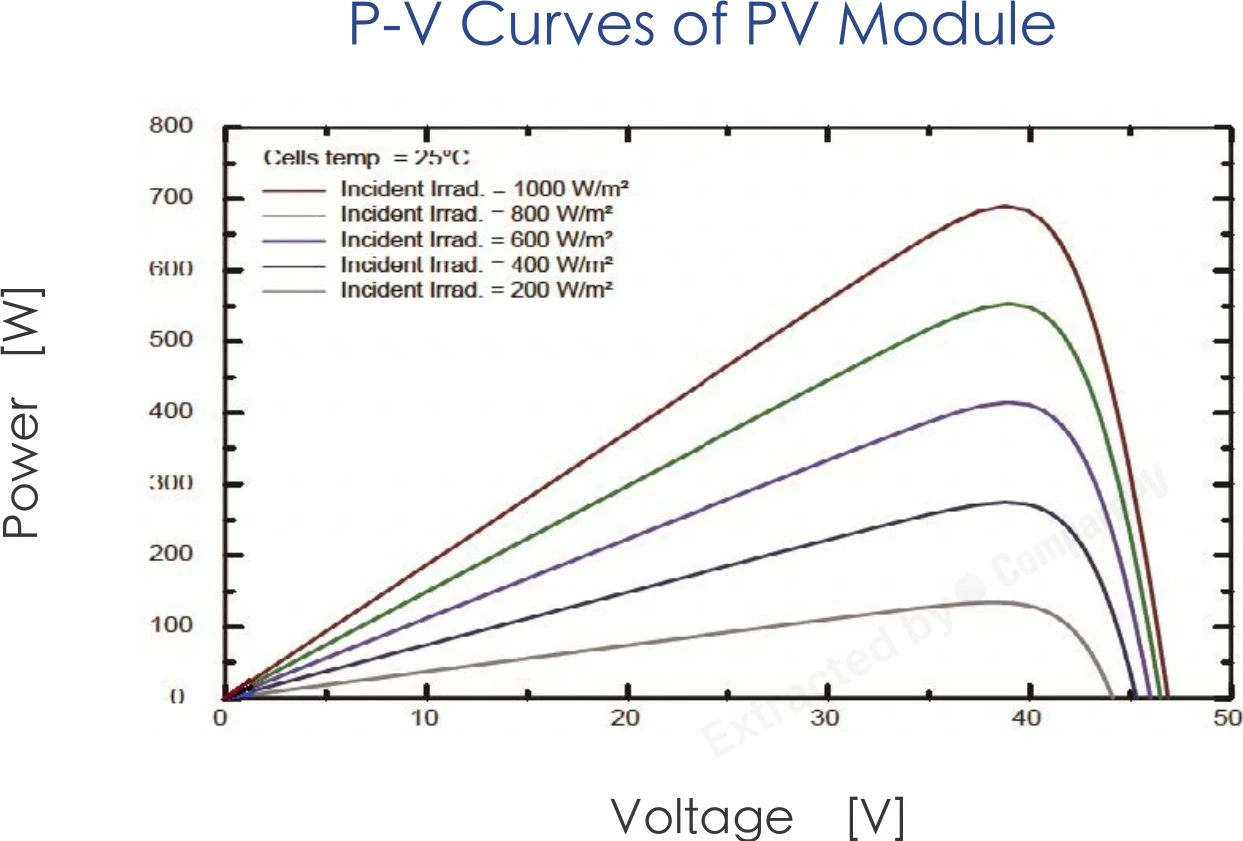
Nominal power (Pmax) 690 Wp Nameplate at 1000 W/m², 25 °C
Module efficiency 22.21 % Typical Segment median 23.30%
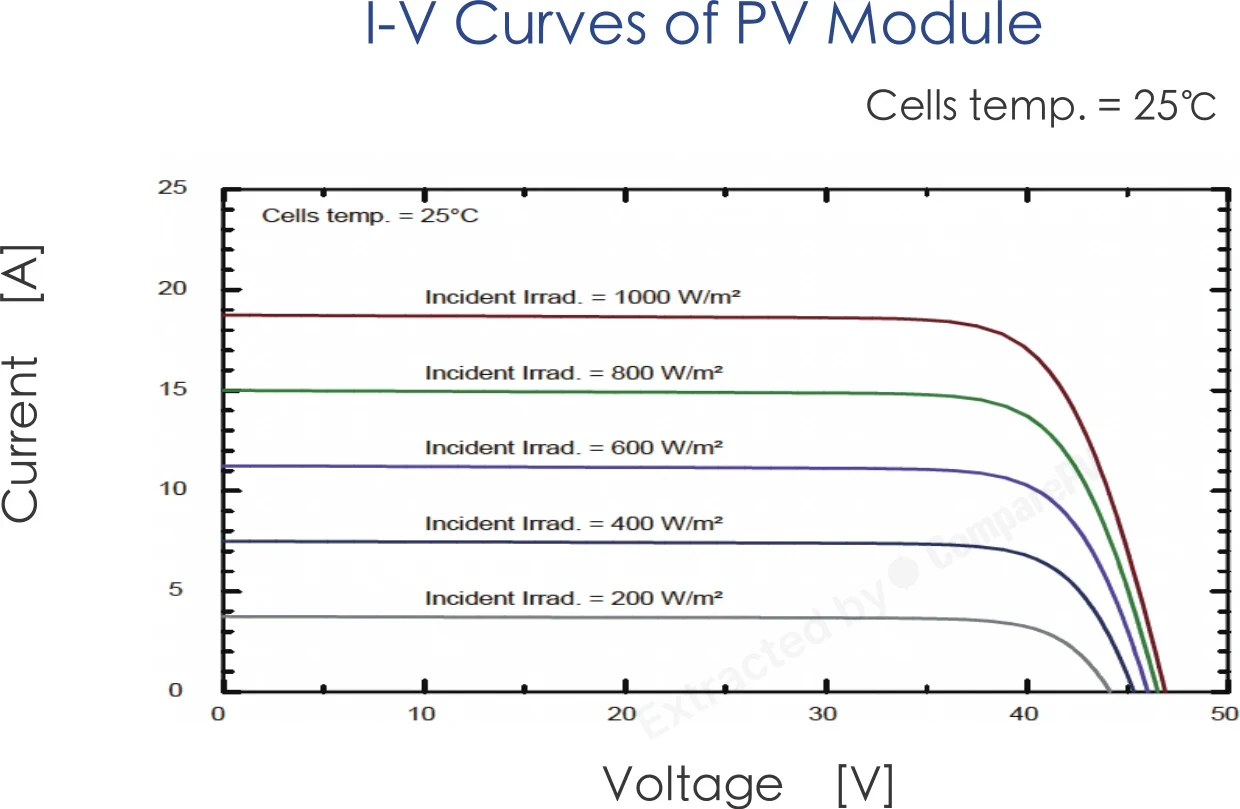
Vmpp · Impp 38.94 V · 17.72 A Operating point at max power
Voc · Isc 46.88 V · 18.78 A Sizes the string length
Max system voltage 1500 V Longer strings than 1000 V modules
Dimensions 2384×1303×33 mm · 3.11 m² of roof
Weight 38.0 kg Weak Weak · 4.5 kg above median
Cells 132 · N-type Monocrystalline
Bifaciality 80 % Rear output as a share of front
Coefficient Pmax -0.310 %/°C Weak bottom 16% of its segment
Coefficient Voc · Isc -0.260 · 0.046 %/°C
NOCT 42 °C At 800 W/m², 20 °C ambient
Product warranty 12 years Hardware defects only
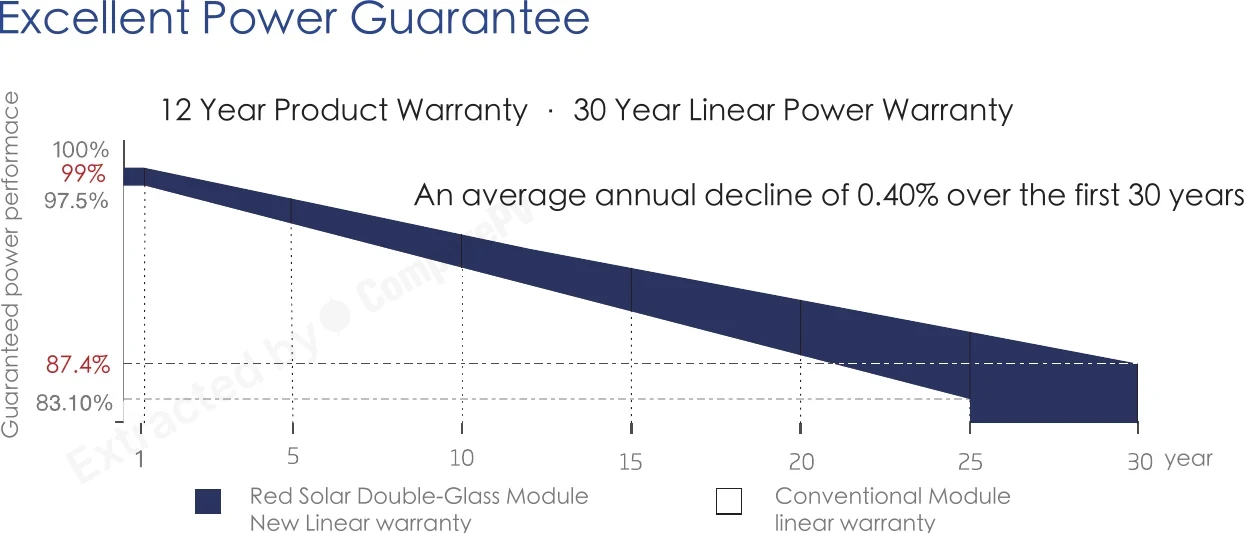
Performance warranty 30 years Typical median 30 yrs · median 30 yrs
End-of-warranty output 87.4 % Equals 603 W guaranteed
Degradation 1.00 → 0.40 % First year, then annual

Datasheet charts

Open datasheet PDF

Measured curves published by RedSolar in this model's datasheet. A chart carrying a wattage was measured on that variant alone - only the ones that describe 690 Wp appear here. The rest cover the whole series.
Simulations

Live - change any input
Lifetime output & value
30 years at 1200 kWh/kWp/year and €0.50 per kWh
Power in year 30
-
Lifetime energy
-
Energy value
-
With bifacial gain
-

Degradation from this panel's own datasheet figures. No inverter, soiling or shading losses.

Heat losses
-0.310 %/°C against a segment median of -0.290
-
Bifacial gain
Rear gain over light concrete: -
-

Model: bifaciality × albedo × 0.6 view factor. A first-order estimate, not a yield simulation.

Alternatives

All RedSolar panels
Filter these
Size
Panel Power Eff. Temp. Weight Difference
RedSolar CETC-690T(GDF)/132 690 W 22.21% -0.310 38.0 kg You are here
AIKO-A650-MAE72Mw 650 W 25.20% -0.260 27.0 kg Cooler, lighter, +3.0 pp
AIKO-A680-MDE72Mw 680 W 25.20% -0.260 29.0 kg Cooler, lighter, +3.0 pp
AIKO-A675-MDE72Mw 675 W 25.00% -0.260 29.0 kg Cooler, lighter, +2.8 pp
AIKO-A645-MAE72Mw 645 W 25.00% -0.260 27.0 kg Cooler, lighter, +2.8 pp
AIKO-A700-MAE78Dw 700 W 25.00% -0.260 34.5 kg Cooler, lighter, +2.8 pp
AIKO-A695-MAE78Dw 695 W 24.90% -0.260 34.5 kg Cooler, lighter, +2.7 pp
AIKO-G670-MCH72Mw 670 W 24.80% -0.260 28.2 kg Cooler, lighter, +2.6 pp
CETC-695T(GDF)/132 695 W 22.37% -0.310 38.0 kg Very close match
CETC-700T(GDF)/132 700 W 22.50% -0.290 38.5 kg +10 W, cooler, +0.3 pp
CETC-705T(GDF)/132 705 W 22.70% -0.290 38.5 kg +15 W, cooler, +0.5 pp
CETC-710T(GDF)/132 710 W 22.90% -0.290 38.5 kg +20 W, cooler, +0.7 pp
CETC-715T(GDF)/132 715 W 23.00% -0.290 38.5 kg +25 W, cooler, +0.8 pp
CETC-720T(GDF)/132 720 W 23.20% -0.290 38.5 kg +30 W, cooler, +1.0 pp
AIKO-A805-GRH78Dw 805 W 25.10% -0.260 39.8 kg +115 W, cooler, +2.9 pp
AIKO-A800-GRH78Dw 800 W 24.90% -0.260 39.8 kg +110 W, cooler, +2.7 pp
AIKO-A795-GRH78Dw 795 W 24.80% -0.260 39.8 kg +105 W, cooler, +2.6 pp

Found 1390 panels of the same or similar size to this one, within ±10 mm. See them here Found 1400 panels of the same or similar size to this one, within ±25 mm. See them here Found 1400 panels of the same or similar size to this one, within ±50 mm. See them here Found 1432 panels of the same or similar size to this one, within ±100 mm. See them here

Common questions

6 answered
How do N-type TOPCon cells in the RedSolar G12-MBB panels differ from older P-type panels?
The N-type cells used in the G12-MBB series feature lower annual degradation and virtually eliminate LID, which used to reduce output on older P-type panels within the first months of operation. This keeps the module's efficiency higher throughout its service life and enables a longer, more stable power warranty of up to 30 years.
How much extra energy can I gain from the bifacial design of the G12-MBB panels?
The bifacial design lets the rear side of the module capture light reflected off the ground, typically adding a few to over ten percent extra energy yield compared to monofacial panels. Best results come from installation over light-colored gravel, white roofing membrane, ground-mount structures, or trackers with adequate clearance beneath the module.
What warranty comes with the RedSolar G12-MBB N-type panels?
The manufacturer provides a 12-year product warranty covering material and workmanship defects, plus a 30-year power output warranty. This warranty structure is typical of the latest generation N-type panels and reflects their slower degradation compared to conventional PERC technology.
Is the 695 Wp RedSolar G12-MBB panel suitable for large-scale solar farms or industrial projects?
Yes, with output up to 695 Wp and large G12 wafers, this series is designed for high power density per square meter, lowering installation cost per watt. This makes the panels well suited for large solar farms and commercial projects where minimizing LCOE and reducing the total module count for a given capacity are priorities.
What is multi-busbar (MBB) and half-cut technology in the RedSolar G12-MBB panels?
Half-cut technology splits each cell into two halves, reducing resistive losses and improving resistance to partial shading and the risk of hot spots. Multi-busbar increases the number of current-collecting pathways across the cell surface, improving conductivity and keeping the module's performance more stable even at higher operating temperatures.
Do RedSolar G12-MBB panels perform well in high summer temperatures?
Yes, the multi-busbar technology combined with the half-cut architecture helps the module dissipate heat more effectively and maintain more stable output at high temperatures than traditional panels. N-type cells also have a lower efficiency drop as temperature rises compared to older P-type technology, resulting in more predictable energy yield on hot days.
Add to compare