Jolywood JW-HD144N-R0-585W

JW-HD144N-R0-585W

585 Wp TOPCon Bifacial 80%
ComparePV verdict

Strong in heat, no clear weak spot

Rank 4,041 of 14,005
Compare panels Datasheet PDF
Power (Wp)
585
Typical for its class
Efficiency (%)
22.70
Strong · top 25%
Density (Wp/m²)
226.5
Typical · median 224.4
Temp (%/°C)
-0.280
Strong · top 4%
Weight (kg)
31.5
Typical · median 31.2 kg
Warranty (yrs)
30
Typical · median 30 yrs

The Jolywood JW Pro Series JW-HD144N-R0 (570-595W) was designed to maximize energy yield in every square meter. This is a bifacial module with dual glass construction, enabling it to truly utilize reflected light and boost energy production without expanding the installation. The application of n-type TOPCon cells translates to more stable performance over time - lower degradation rates and better resilience in demanding conditions, such as high temperatures and low irradiance.

In practice, this series addresses typical investor concerns: rapid power degradation over the years, sensitivity to micro-cracks, and PID risk. Features like high anti-PID resistance and a refined half-cell design with multiple busbars help improve performance under partial shading. This is a targeted choice for commercial installations, PV farms, carports, and flat roofs, where durability and long-term yield outperform specifications listed in the catalog.

Ranking

1,018 panels in the segment TOPCon 550-600 W
Metric This panel Median Position in segment Overall rank
Module efficiency 22.70% 22.44% Strong · top 25% 3,307
Power density 226.5 224.4 Typical 3,500
Temperature coefficient -0.280 -0.290 Strong · top 4% 1,309
Weight per kWp 53.8 53.8 Typical 7,897
Performance warranty 30 yrs 30 yrs Typical 21
Colour key Strong - top 25% Typical - middle 50% Weak - bottom 25%

Signals from the data

7 positive · 1 caution
Best for

Commercial, utility-scale and shaded-installations.

Strengths
-0.280 %/°C temperature coefficient

Top 4% of the TOPCon 550-600 W segment, against a median of -0.290. Ranked 1,309th in the whole database.

22.70% module efficiency

Top 25% of the TOPCon 550-600 W segment, against a median of 22.44%.

What owners get
Module efficiency up to 23% — top-tier segment

The module delivers 22.1–23.0% efficiency, outperforming the direct peer Sunova TS-BW78 (21.3%) and matching top comparables Solarspace Lumina II and Ulica Solar TOPCon (both at 23.03%). This translates into higher energy yield per square meter of roof or ground area.

N-type TOPCon: low temperature coefficient

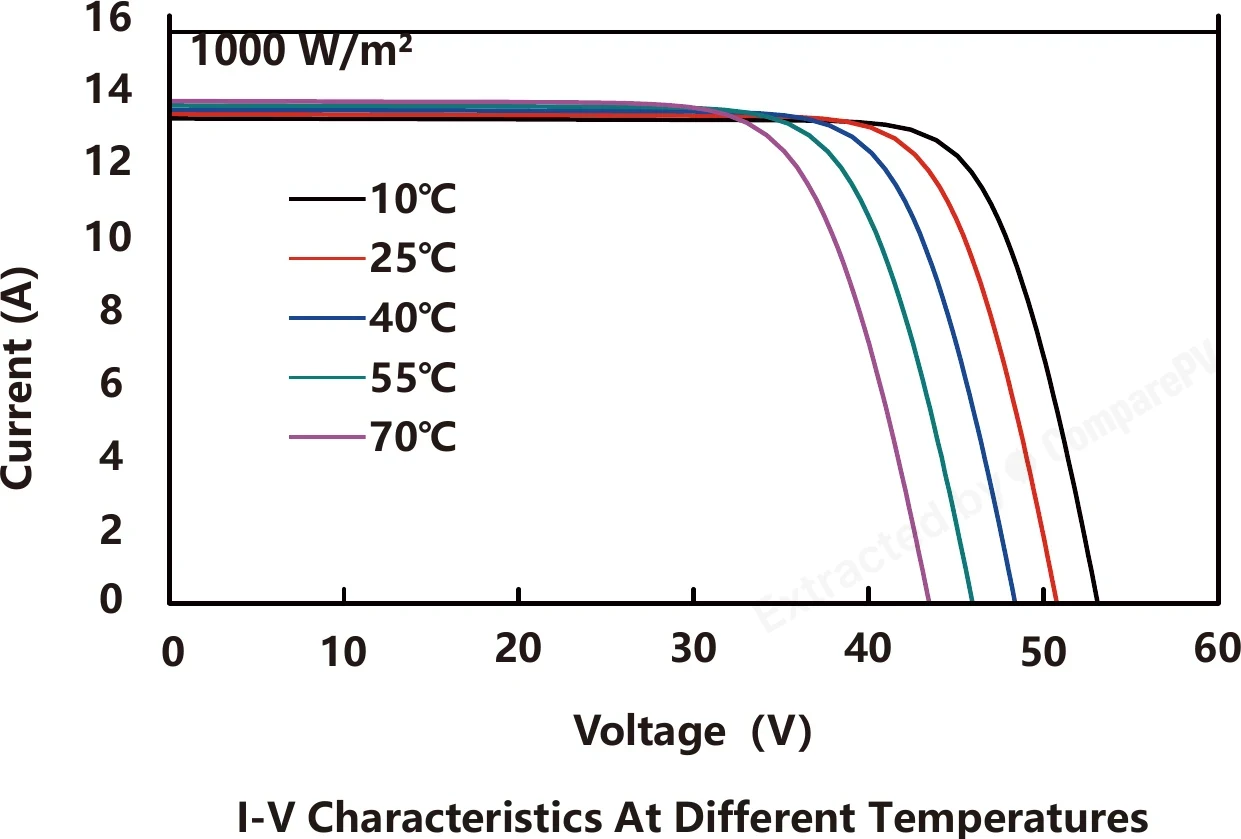
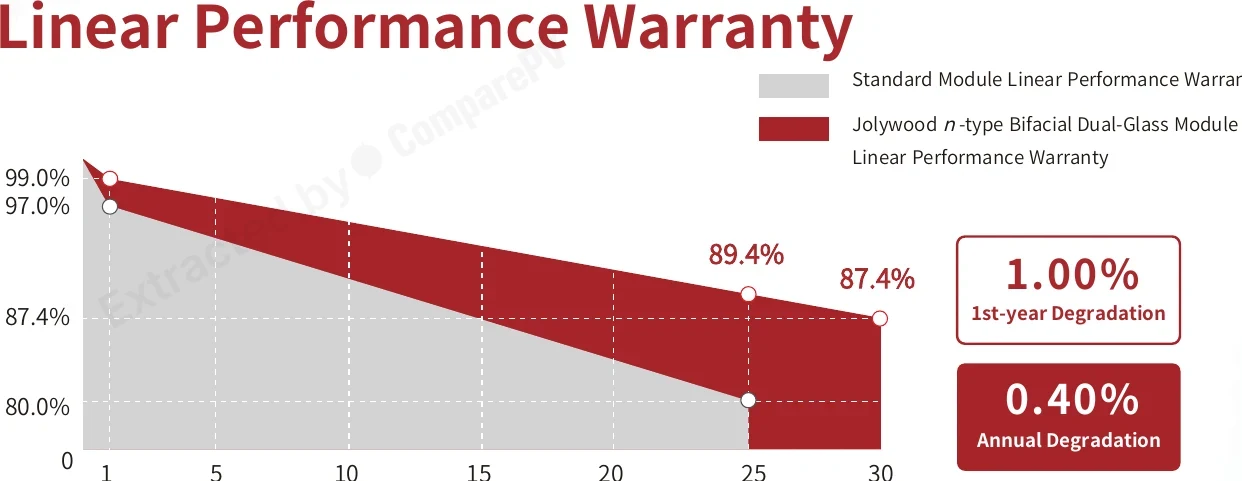
Temperature coefficient of −0.28%/°C and annual linear degradation ≤0.40% (1.00% year-one). For a 1 MWp commercial installation, this results in tens of MWh more cumulative output over 25 years compared to older PERC modules with typical 0.55%/year degradation.

Bifacial dual-glass — rear-side energy gain

The dual-glass bifacial construction captures albedo light reflected from the ground. Under typical ground-mount conditions (light-colored surface), rear-side gain adds 5–15% relative to the nameplate front-side output, increasing system yield without expanding the installation footprint.

30-year linear power warranty ≥87.4%

Jolywood guarantees ≥99.0% power retention after year 1, ≥97.0% after year 5, and ≥87.4% after year 30 at 0.40%/year degradation — per the official Jolywood warranty document (jolywood.com). Many standard Tier-1 PERC competitors offer only a 25-year warranty with an 84.8% end-of-life floor.

BNEF Tier 1 — confirmed bankability

Jolywood is listed on the BloombergNEF Tier 1 module manufacturers list (confirmed Q2 2026), enabling independent commercial bank financing of utility-scale projects. This reduces the cost of capital for PV farm developers and eliminates the risk of lender rejection based on manufacturer bankability.

Trade-offs
12-year product warranty

The product workmanship warranty is 12 years, below the 15-year standard offered by leading Tier-1 manufacturers such as JA Solar, LONGi, and Trina Solar. For commercial investors with a 12–15 year payback horizon, this gap may affect risk assessments by insurers and project finance lenders.

Notes from the database
  • At 22.7% efficiency, this panel is on par with typical TOPCon 550-600W modules
  • At 226.5 W/m² power density, roof space requirements are typical for TOPCon 550-600W panels
  • Temperature coefficient of -0.28%/°C matches the TOPCon 550-600W median
  • Bifacial design (80% factor) captures reflected light - adds 4-12% yield on ground-mount or white roof
  • #3307 for efficiency, #1309 for temperature performance out of 14005 panels

Specifications

Open datasheet PDF
Nominal power (Pmax) 585 Wp Nameplate at 1000 W/m², 25 °C
Module efficiency 22.70 % Strong Segment median 22.44%
Vmpp · Impp 44.61 V · 13.11 A Operating point at max power
Voc · Isc 51.97 V · 13.88 A Sizes the string length
Max system voltage 1500 V Longer strings than 1000 V modules
Dimensions 2278×1134×30 mm · 2.58 m² of roof
Weight 31.5 kg Typical Typical · median 31.2 kg
Cells 144 · TOPCon Monocrystalline
Bifaciality 80 % Rear output as a share of front
Coefficient Pmax -0.280 %/°C Strong top 4% of its segment
Coefficient Voc · Isc -0.250 · 0.045 %/°C
NOCT 42 °C At 800 W/m², 20 °C ambient
Product warranty 12 years Hardware defects only
Performance warranty 30 years Typical median 30 yrs · median 30 yrs
End-of-warranty output 87.4 % Equals 511 W guaranteed
Degradation 1.00 → 0.40 % First year, then annual

Datasheet charts

Open datasheet PDF

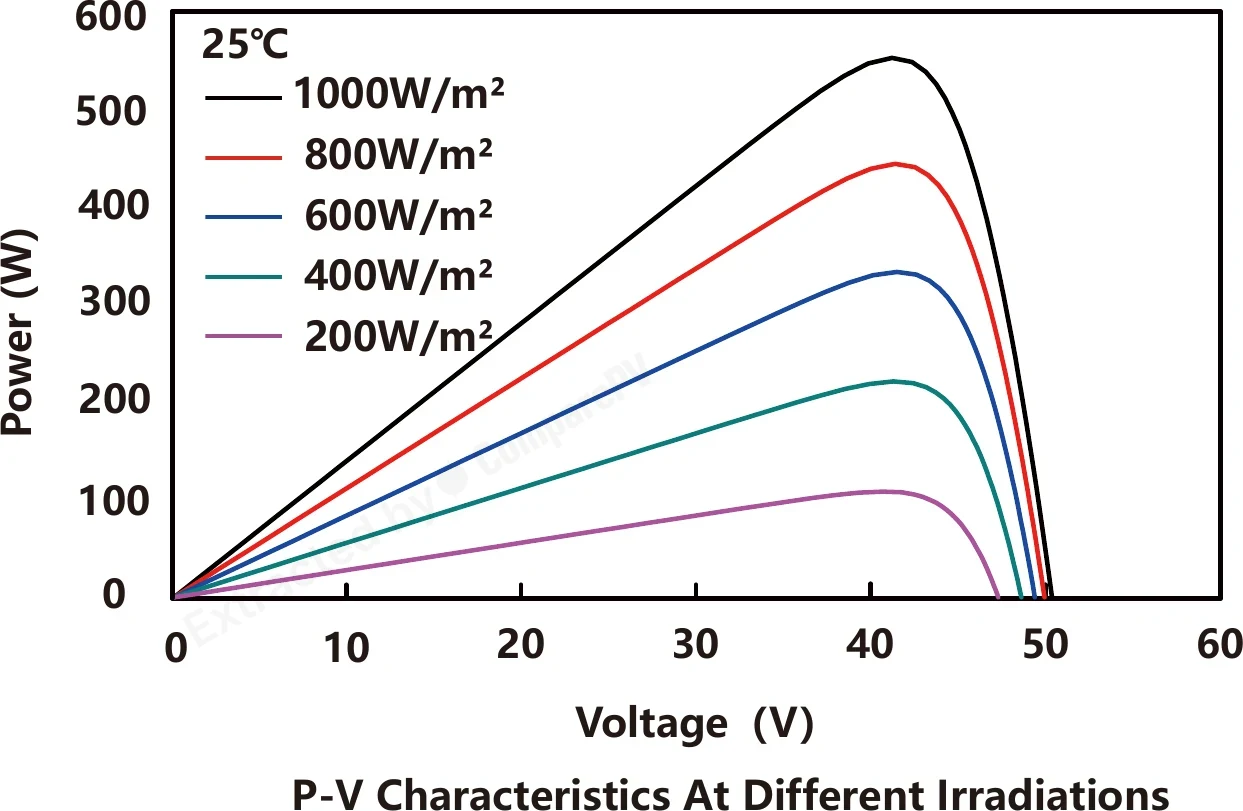
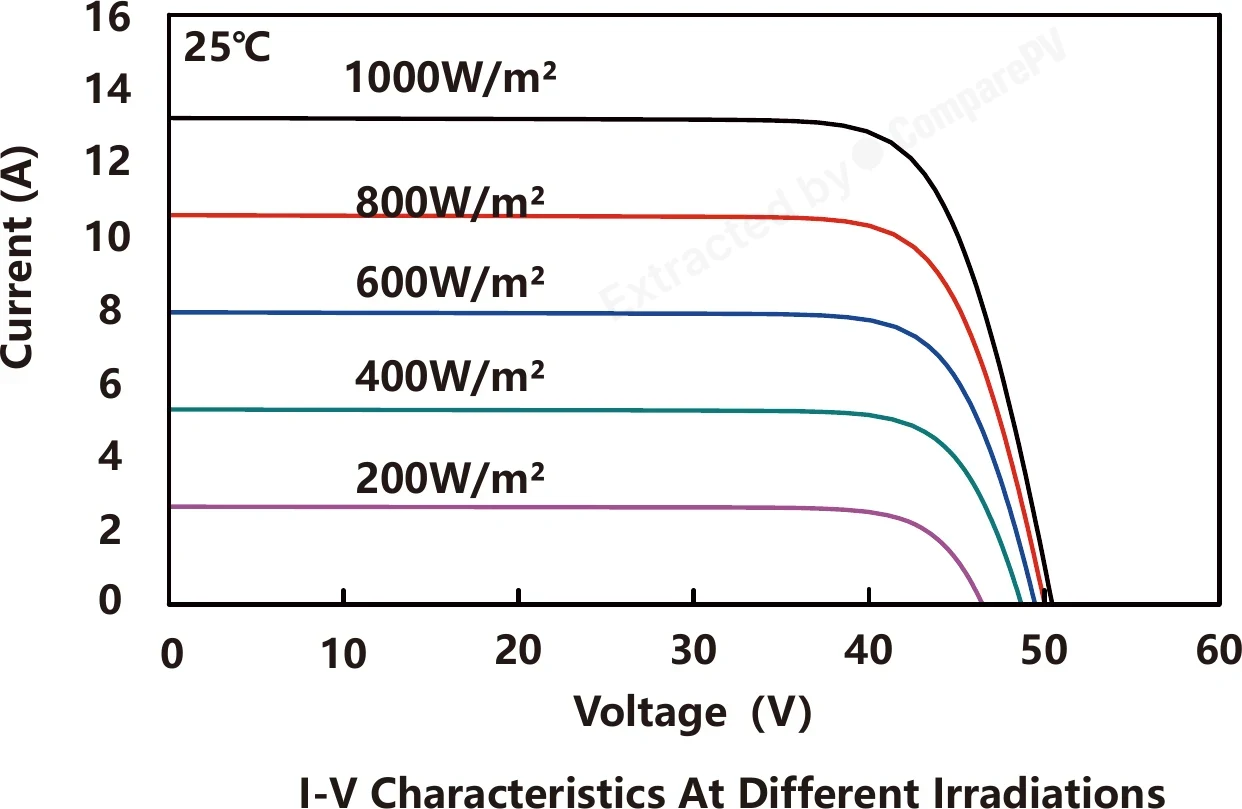
Measured curves published by Jolywood in this model's datasheet. A chart carrying a wattage was measured on that variant alone - only the ones that describe 585 Wp appear here. The rest cover the whole series.
Simulations

Live - change any input
Lifetime output & value
30 years at 1200 kWh/kWp/year and €0.50 per kWh
Power in year 30
-
Lifetime energy
-
Energy value
-
With bifacial gain
-

Degradation from this panel's own datasheet figures. No inverter, soiling or shading losses.

Heat losses
-0.280 %/°C against a segment median of -0.290
-
Bifacial gain
Rear gain over light concrete: -
-

Model: bifaciality × albedo × 0.6 view factor. A first-order estimate, not a yield simulation.

Filter these
Size
Panel Power Eff. Temp. Weight Difference
Jolywood JW-HD144N-R0-585W 585 W 22.70% -0.280 31.5 kg You are here
LR7-60HVH-560M 560 W 24.80% -0.260 25.0 kg -25 W, lighter, +2.1 pp
LR7-60HVH-555M 555 W 24.60% -0.260 25.0 kg -30 W, lighter, +1.9 pp
AIKO-A635-MAE72Mw 635 W 24.60% -0.260 27.0 kg +50 W, lighter, +1.9 pp
AIKO-A630-MAH72Dw 630 W 24.40% -0.260 32.5 kg +45 W, cooler, +1.7 pp
LR7-60HVHL-550M 550 W 24.40% -0.260 16.3 kg -35 W, 15 kg lighter, +1.7 pp
JW-HT144N-565 565 W 21.87% -0.300 27.5 kg -20 W, lighter, -0.8 pp
JW-HD144N-R0-570W 570 W 22.10% -0.280 31.5 kg -15 W, -0.6 pp
JW-HD144N-R0-575W 575 W 22.30% -0.280 31.5 kg -10 W, -0.4 pp
JW-HD144N-R0-580W 580 W 22.50% -0.280 31.5 kg Very close match
AIKO-A650-MAE72Mw 650 W 25.20% -0.260 27.0 kg +65 W, lighter, +2.5 pp
AIKO-A645-MAE72Mw 645 W 25.00% -0.260 27.0 kg +60 W, lighter, +2.3 pp
AIKO-A640-MAE72Mw 640 W 24.80% -0.260 27.0 kg +55 W, lighter, +2.1 pp

Found 2326 panels of the same or similar size to this one, within ±10 mm. See them here Found 2368 panels of the same or similar size to this one, within ±25 mm. See them here Found 2382 panels of the same or similar size to this one, within ±50 mm. See them here Found 2547 panels of the same or similar size to this one, within ±100 mm. See them here

Common questions

6 answered
What warranty does the Jolywood JW Pro Series JW-HD144N-R0 come with?
The JW-HD144N-R0 series includes a 12-year product warranty and a 30-year linear power output warranty. Jolywood guarantees at least 97% of rated power after 5 years and a minimum of 80% after 30 years, with an annual degradation rate of just 0.4%. This is among the longest warranties available in the bifacial dual glass premium module segment.
Do the Jolywood JW-HD144N-R0 panels actually generate more energy thanks to their bifacial design?
Yes. The bifacial dual glass construction allows the module to capture light reflected from the ground surface — concrete, gravel, white membranes, or snow — which can boost energy yield by up to 30%, depending on ground albedo and mounting configuration. The highest gains are seen on utility-scale PV farms with light-colored surfaces and in carport installations with open space beneath the modules.
How do the n-type TOPCon cells in the JW-HD144N-R0 series compare to standard PERC cells?
N-type TOPCon cells offer higher module efficiency (up to 23.2%), lower first-year degradation (approx. 1% vs. 2-3% for PERC), and lower annual degradation (0.4% vs. 0.5-0.7%). They are also inherently resistant to PID (Potential Induced Degradation) and perform better in low-light conditions and at high temperatures, resulting in significantly higher total energy yield over a 30-year system lifetime.
How do the Jolywood JW-HD144N-R0 panels perform in very high temperatures during summer?
These modules feature a power temperature coefficient of -0.30%/°C, which is lower than typical PERC cells (-0.35% to -0.40%/°C). In practical terms, at a cell temperature of 65°C the JW-HD144N-R0 loses approximately 7.5% of rated power, whereas a PERC module may lose 9-10%. This advantage compounds over hot summer months, delivering meaningfully higher seasonal energy output.
Is the Jolywood JW-HD144N-R0 series suitable for utility-scale PV farms or flat commercial rooftops?
Yes, this series is specifically designed for commercial installations, utility-scale PV farms, carports, and flat rooftops. With up to 595 W output and module efficiency reaching 23.2%, it maximizes power density on limited surface areas. The 1500 V DC system voltage rating allows for longer strings and reduced BoS costs, while the dual glass construction extends module longevity under demanding environmental conditions.
Are the Jolywood JW-HD144N-R0 panels compatible with popular inverters such as Fronius, SMA, or Huawei?
Yes. The JW-HD144N-R0 modules are rated for up to 1500 V DC system voltage and are fully compatible with standard three-phase MPPT inverters from Fronius, SMA, Huawei, Solis, and Growatt. Before finalizing your design, verify that the string's Isc and Voc values fall within the input window of your specific inverter model to ensure safe and optimal operation.
Add to compare