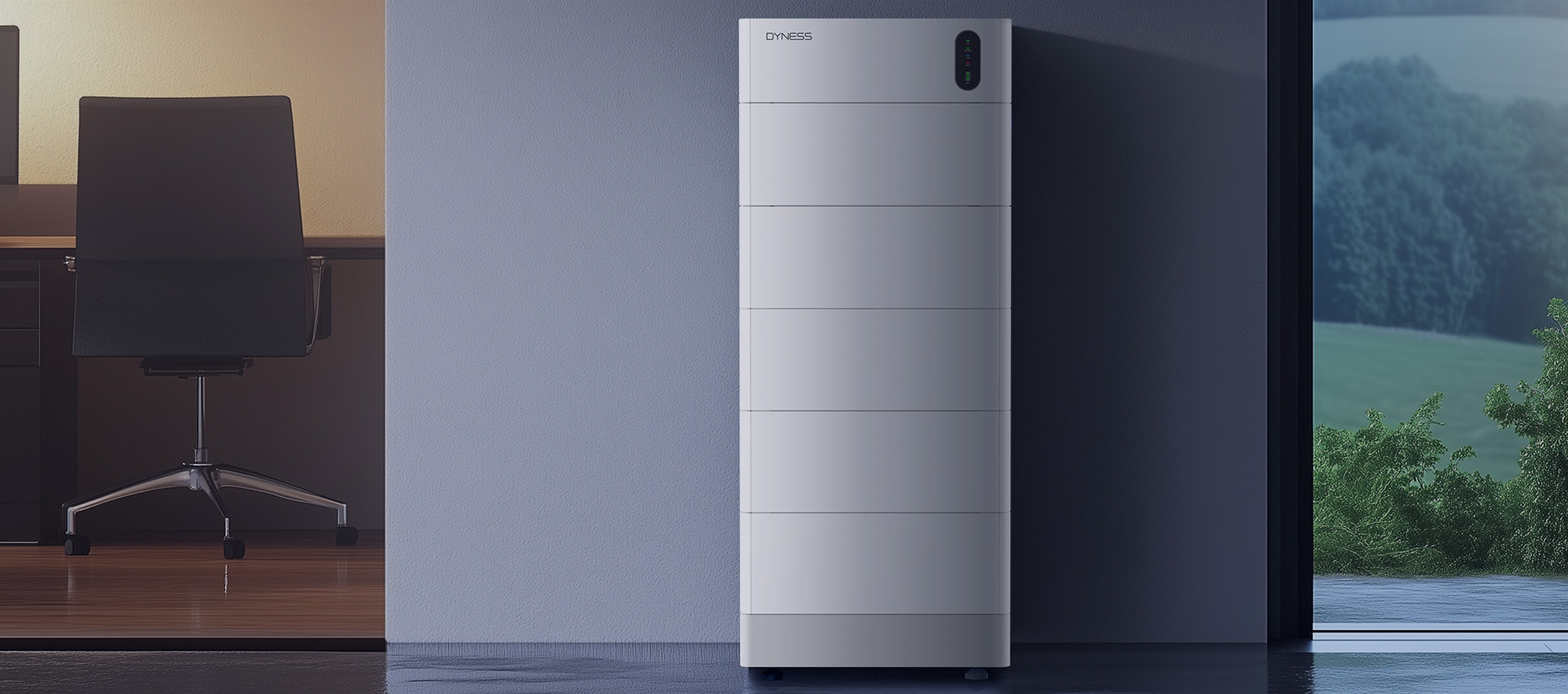

Dyness Tower Pro TP15
The Dyness Tower Pro series comprises high-voltage energy storage systems in tower form, precisely tailored to the needs of PV installations thanks to its modular structure and automatic configuration upon adding subsequent segments. Its key advantage lies in the LiFePO4 (LFP) chemistry - practically, this translates to enhanced thermal safety, stable operation, and long lifespan compared to many NMC solutions, especially under intensive daily cycling.
The Tower Pro stands out with its high environmental resistance for indoor and outdoor mounting, along with refined safety features, including an integrated fire-suppression system using an aerosol. The declared high cycle life and long warranty translate into a truly lower cost of stored energy - the system is designed to operate reliably for years without noticeable degradation.
A key feature is scalability: from smaller towers for homes to expandable parallel setups for larger facilities or small businesses. Communication via CAN and RS485 facilitates integration with multiple inverters and hybrid systems, including backup configurations and selected off-grid applications.
Ranking
Price offers
| Shop | Country | Price | Per kWh | Stock | Offer updated | Link to shop |
|---|---|---|---|---|---|---|
| Sklep Soltech | Poland | 12 990.88 zł net | 890.40 zł/kWh | Not stated | 3h ago | Visit shop |
Specifications
Pros and cons
The declared lifespan of ≥8000 cycles at a 95% depth of discharge exceeds typical NMC batteries (3000-5000 cycles) and is comparable to BYD Battery-Box flagship systems (~6000 cycles). This translates to over 20 years of real-world operation with a per-cycle cost of less than 0.05 EUR/kWh.
Each tower consists of 2-6 modules with a capacity of 3.84 kWh, with the ability to connect up to 12 clusters (maximum 276.48 kWh) in parallel. Automatic BMS configuration upon adding another module eliminates the need for manual system reconfiguration - a significant advantage when expanding prosumer and small-scale commercial installations incrementally.
The built-in fire suppression system, activated automatically within 5 seconds, is primarily found in more expensive commercial systems and is rarely offered in residential settings. It enhances the safety of internal installations and reduces the risk of property damage in the event of a thermal incident.
IP55 protection (dust-tight and water-resistant) allows for installation both indoors and outdoors - a significant advantage over many competing products in the IP21-IP44 class. Operating temperature range of -20°C to +55°C covers all typical climatic conditions in Poland without the need for additional heating.
The manufacturer's warranty for the battery modules is 15 years, compared to the industry standard of 10 years (Pylontech, BYD Battery-Box). The official compatibility list, updated in May 2025, includes Goodwe, Growatt, SMA, Solis, Kostal, Deye, and others - the CAN and RS485 communication protocols facilitate integration with both existing and new hybrid systems.
The BMS (Battery Management System) comes with a 10-year warranty, while the individual battery cells are covered by a 15-year warranty. In the 11th to 15th years of operation, any failure of the control system generates costs for the user - this asymmetry is not present, for example, in the BYD Battery-Box Premium, where the entire system is covered by a consistent 10-year warranty.
Dyness has been operating since 2017, giving it just under 10 years of market history compared to Pylontech (2009) or BYD (which has been in the B2B market for decades). In the context of a 15-year warranty period, this is a measurable factor related to the continuity of service and the availability of spare parts, which should be considered when calculating long-term total cost of ownership (TCO).
Alternatives




About the Dyness Tower Pro series
These answers cover the whole series. Where a figure differs, the specification above is this model's own.