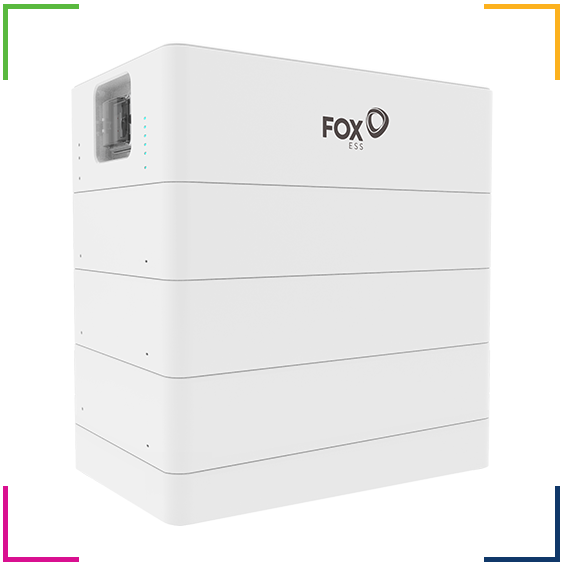

FoxESS ECS4300H-H4

FoxESS ECS4300H-H4

14.93 kWh usable LFP High voltage Outdoor-rated
Compare with closest alternative Datasheet PDF
Usable (kWh)
14.93
Typical for its class
Round-trip (%)
95.0
Typical · median 95.0%
Power (kW)
-
Not published
Cycles
6000
Typical · median 6000
Weight (kg)
152.5
Strong · 37.2 kg below median
Warranty (yrs)
-
Not published

The FoxESS ECS series (ECS4300H high-voltage) are modular energy storage units designed for reliable operation in hybrid installations and modern PV systems. The key advantage lies in the LiFePO4 (LFP) chemistry, which ensures a high level of thermal safety, robustness against intensive operation, and predictable capacity degradation over time - making it a practical solution for both homes and small businesses.

The system features a high-voltage architecture, which facilitates efficient operation with inverters and minimizes energy losses. The storage unit is modularly scalable - you can expand it in stages to match your current needs without replacing the entire battery. The plug-and-play installation type reduces setup time and minimizes the risk of wiring errors.

Declared longevity, measured in thousands of cycles, along with a multi-year warranty, ensures genuine long-term profitability - especially relevant for self-consumption and dynamic tariff systems. The FoxESS ECS series is designed for collaboration with compatible FoxESS hybrid inverters and backup power systems, and with proper configuration, it is also suitable for off-grid applications.

Ranking

36 batteries from 12 to 20 kWh
Metric This battery Median Position in class Rank in class
Round-trip efficiency 95.0% 95.0% Typical 5
Power per kWh - 0.68 Not published -
Cycle life 6000 6000 Typical 5
Weight per kWh 10.2 12.4 Strong · top 15% 5
Warranty - 10 yrs Not published -
Colour key Strong - top 25% Typical - middle 50% Weak - bottom 25%

See 21 FoxESS offers

Specifications

Open datasheet PDF
Usable energy 14.93 kWh What the battery delivers, full to empty
Nominal energy 16.59 kWh What the cells hold
Depth of discharge 90 %
Module energy 4.14 kWh
Modules per stack 2 to 7
Max system capacity 29.0 kWh
Max discharge current 50 A
Max charge current 50 A
Peak discharge current 65 A
Round-trip efficiency 95.0 %
Cycle life 6000 cycles At 90 % depth of discharge
Voltage class High voltage
Nominal voltage 230.4 V
Operating voltage 194 to 263 V
Cell technology LFP LiFePO4 (LFP)
Cell management Cobalt-free
Dimensions 622 × 570 × 380 mm Height × width × depth
Weight 152.5 kg 10.2 kg per kWh
Enclosure IP65
Mounting floor
Outdoor installation Yes
Cooling passive
Operating temperature -20 to 55 °C
Protocols CANRS485
Certifications IEC 62619EN IEC 61000-6-1/2/3/4UN38.3

Pros and cons

5 positive · 2 caution
What owners get
LiFePO4: 6000 cycles at 90% Depth of Discharge

LFP chemistry guarantees the stated 6000 cycles at a 90% depth of discharge (datasheet V1.8, 2025-02-24), which translates to over 16 years of operation with a single charge and discharge cycle per day. Competitors using NMC technology (e.g., older Pylontech US5000 modules) typically offer 4000-6000 cycles at 80% DoD - the ECS4300H performs at least as well, even at a higher depth of discharge.

High round-trip efficiency ≥95%

High-voltage architecture (nominal voltage of 102.4 V/module, up to 403.2 V) minimizes current conversion losses in the inverter. The declared round-trip efficiency of ≥95% places the ECS series above the median of the residential HV segment (approximately 92-94% for comparable LFP batteries), which translates to a realistically lower cost per kWh drawn from the storage system.

Modularity: 4.14-29.03 kWh

The system can be expanded from 1 to 7 modules (H1-H7) without replacing existing units - each module has a capacity of 4.14 kWh. This allows you to tailor the investment to your current budget and add capacity as your needs grow, which is a significant advantage over monobloc systems (e.g., BYD Battery-Box Premium HVS), where expansion requires installing an additional set.

Thermal safety - no risk of NMC

LiFePO4 has an ignition temperature above 270°C (compared to ~150-200°C for NMC), which eliminates the risk of a cascading thermal runaway. UN38.3 and IEC 62619 certifications, as stated in the datasheets for the series, are a key argument for installation in residential enclosed spaces and for insurance requirements.

10-year warranty from Tier-1 manufacturer

FoxESS is listed on Tier-1 BNEF's list; the 10-year warranty on the ECS series covers both manufacturing defects and capacity retention (with a capacity retention rate of ≥70% after the warranty period). Competitive products in a similar price range (e.g., Sofar Energy GBLI6532) typically offer 5-10 years, but often with limitations regarding the number of cycles.

Trade-offs
Isolated inverters system

The ECS4300H series communicates via CAN/RS485 and is optimized for use with hybrid inverters from FoxESS (H1, H3, AIO). Integration with inverters from other manufacturers (SolarEdge, Fronius, SMA) is limited or not officially supported, which restricts the choice when upgrading an existing installation with a third-party inverter.

Stack dimensions - installation requirements

A fully configured 7-module (H7) system weighs approximately 257 kg (datasheet V1.8), which requires a dedicated, reinforced base or support wall. In older buildings or when mounting on a partition wall, a structural assessment is necessary, which adds to the cost and time required compared to lighter systems (e.g., BYD HVS 5.1 kWh ~75 kg).

Alternatives

All FoxESS batteries
Battery Usable Round-trip Power Voltage Difference
FoxESS ECS4300H-H4 14.93 kWh 95.0% - High voltage You are here
LUNA2000-15-S0 15 kWh - 5.0 kW HV Similar on paper
GB-L16 14.72 kWh - 16.4 kW HV -0.2 kWh
GB-SL-EU (4 modules in series) 14.72 kWh - - HV -0.2 kWh
Tower Pro TP15 14.59 kWh 95.0% 15.4 kW HV -0.3 kWh
ECS2900-H6 15.55 kWh 95.0% - HV +0.6 kWh
HS15 14.29 kWh - - HV -0.6 kWh
Tower T14 14.21 kWh - 8.5 kW HV -0.7 kWh
Ai-HB 150A 13.82 kWh 95.0% 9.2 kW HV -1.1 kWh

About the Fox ESS ECS (ECS4300H high-voltage) series

6 answered

These answers cover the whole series. Where a figure differs, the specification above is this model's own.

What is the storage capacity of the FoxESS ECS4300H and how much can it be expanded?
The individual ECS4300H module offers a usable capacity of 4.14 kWh. The system is scalable from H2 to H7 configurations, which means that it is possible to combine 2 to 7 modules and achieve a total capacity of up to approximately 29 kWh. Expansion is done in stages - you purchase additional slave modules without replacing the existing battery, allowing you to adapt the system to the growing needs of a home or small business.
What is the warranty on the FoxESS ECS4300H battery, and how many cycles will it last?
FoxESS guarantees a minimum of 6000 cycles for the ECS series at a 90% Depth of Discharge (DoD), while maintaining at least 70% of its nominal capacity. The manufacturer's warranty typically covers 10-12 years (after product registration). For comparison, with one cycle per day, this battery could last for over 16 years, making it one of the most durable options available on the market.
Why is the ECS4300H a high-voltage battery, and does this matter when choosing an inverter?
The ECS series operates within a voltage range of 115.2-403.2 V, which qualifies it as a high-voltage system. The high voltage rating translates to lower operating currents, reduced losses in the wiring, and higher overall system efficiency. This is a key consideration when selecting an inverter - the ECS4300H battery requires a compatible hybrid inverter from FoxESS (e.g., from the H or AIO series), and will not work with any low-voltage inverter.
Is the FoxESS ECS battery safe - what advantages does the LiFePO4 technology offer?
The LiFePO4 (lithium iron phosphate) chemistry used in the ECS series is considered the safest variant of lithium-ion batteries. It does not produce oxygen at high temperatures, which eliminates the risk of self-sustaining combustion. In practice, this means stable operation under intensive use, no thermal runaway, and predictable and gradual capacity degradation over the entire lifespan.
Can the FoxESS ECS4300H storage system be used in an off-grid configuration or as a backup power source?
Yes, with proper configuration, the ECS series is suitable for both backup power (UPS) and off-grid operation. It works with compatible hybrid inverters from FoxESS that support both EPS and full off-grid modes. Off-grid operation requires selecting the appropriate inverter and system settings - it's advisable to consult with a certified FoxESS installer to determine the appropriate power and capacity for your intended load.
What is the installation process for the FoxESS ECS4300H battery system - is the installation complicated?
The ECS series is designed according to a plug-and-play standard, which significantly simplifies installation. The modules are connected to each other and to the inverter using dedicated connectors, without the need for manual voltage configuration or cell balancing. Communication with the inverter takes place via a CAN interface. Despite the simplified assembly, the installation should be carried out by a qualified person - this is a requirement to maintain the manufacturer's warranty.
Compare with alternative