TS-BGT66(715)-G12

715 Wp N-type Bifacial 80%
ComparePV verdict

Middle of its segment, weak in heat

Rank 450 of 14,005
Compare panels Datasheet PDF
Power (Wp)
715
Typical for its class
Efficiency (%)
23.00
Typical · median 22.88%
Density (Wp/m²)
230.2
Typical · median 228.6
Temp (%/°C)
-0.300
Weak · bottom 16%
Weight (kg)
37.8
Typical · median 38.0 kg
Warranty (yrs)
30
Typical · median 30 yrs

The Sunova Tangra L Pro HD solar panel series represents a breakthrough in energy yield optimization through the use of advanced N-type TOPCon cell technology. The use of this solution allows for the near-complete elimination of the LID degradation phenomenon, which, combined with excellent PID resistance, guarantees stable power for decades. These modules are characterized by a high bifaciality factor, meaning they can generate additional energy from reflected radiation, which is key to increasing the profitability of ground-mounted farms and large commercial roofs. The Bifacial Double Glass construction not only reinforces the mechanical structure of the panel but also provides extreme resistance to harsh weather conditions, including high humidity and snow loads. The Tangra L Pro HD series addresses the issue of performance drops at high temperatures through an exceptionally low temperature coefficient, distinguishing it from standard market solutions. Thanks to the use of precision Half-Cut cell technology, these panels perform excellently in partial shading conditions, minimizing internal losses. It is a product dedicated to demanding business investors and developers who care about the lowest Levelized Cost of Energy (LCOE) and maximum reliability of PV systems.

Ranking

90 panels in the segment N-type 700-750 W
Metric This panel Median Position in segment Overall rank
Module efficiency 23.00% 22.88% Typical 1,919
Power density 230.2 228.6 Typical 2,018
Temperature coefficient -0.300 -0.290 Weak · bottom 16% 6,093
Weight per kWp 52.9 53.5 Typical 6,576
Performance warranty 30 yrs 30 yrs Typical 21
Colour key Strong - top 25% Typical - middle 50% Weak - bottom 25%

Signals from the data

0 positive · 1 caution
Best for

Commercial, utility-scale, hot-climate and shaded-installations.

Not ideal for

Hot climates.

Watch-outs
-0.300 %/°C temperature coefficient

Bottom 16% of the N-type 700-750 W segment, against a median of -0.290.

Notes from the database
  • At 23.0% efficiency, this panel is on par with typical N-type 700-750W modules
  • At 230.2 W/m² power density, roof space requirements are typical for N-type 700-750W panels
  • Temperature coefficient of -0.30%/°C matches the N-type 700-750W median
  • Bifaciality factor of 80% can add 4-12% extra yield with reflective mounting surface
  • Ranked #1919 out of 14005 panels for efficiency in the database

Specifications

Open datasheet PDF
Nominal power (Pmax) 715 Wp Nameplate at 1000 W/m², 25 °C
Module efficiency 23.00 % Typical Segment median 22.88%
Vmpp · Impp 41.10 V · 17.39 A Operating point at max power
Voc · Isc 49.20 V · 18.44 A Sizes the string length
Max system voltage 1500 V Longer strings than 1000 V modules
Dimensions 2384×1303×35 mm · 3.11 m² of roof
Weight 37.8 kg Typical Typical · median 38.0 kg
Cells 132 · N-type Monocrystalline
Bifaciality 80 % Rear output as a share of front
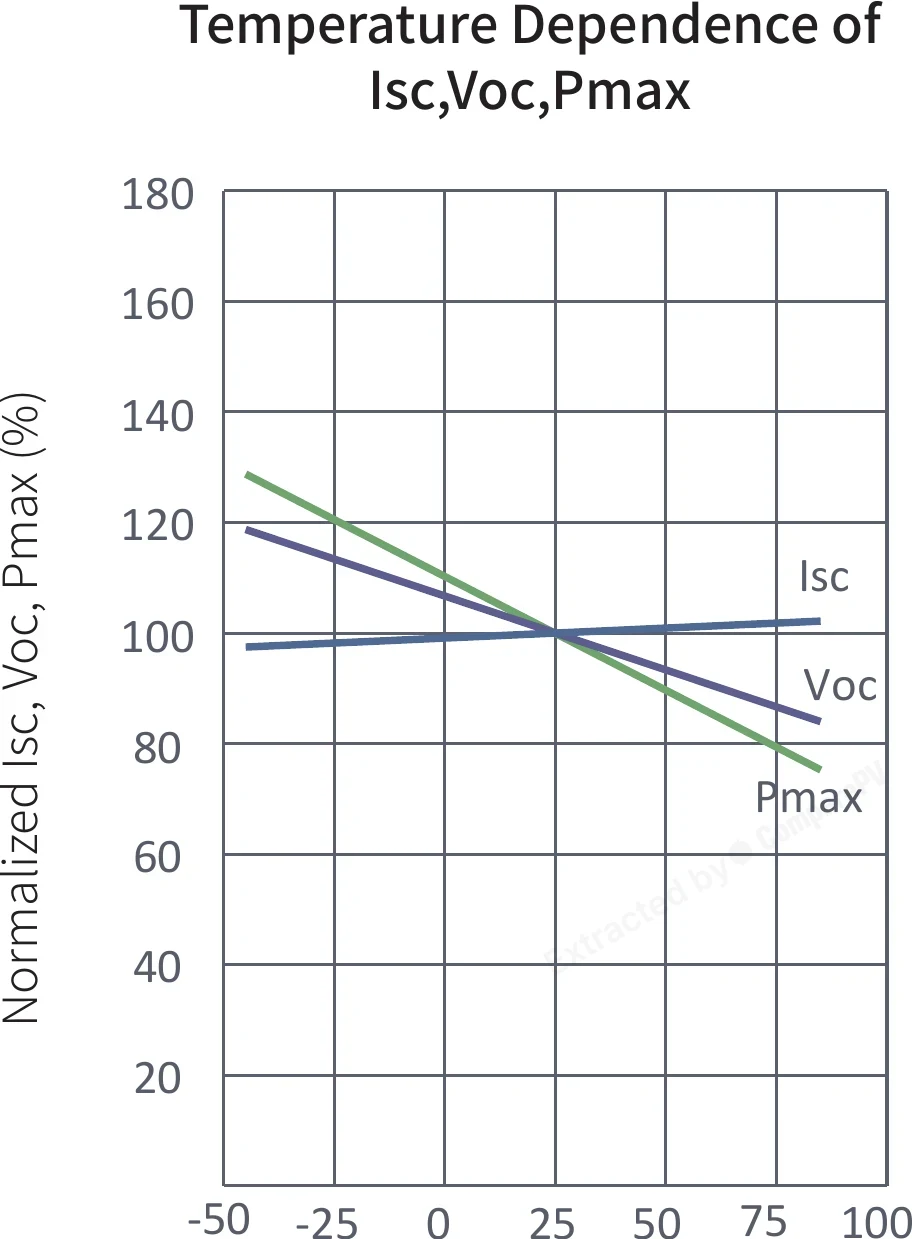
Coefficient Pmax -0.300 %/°C Weak bottom 16% of its segment
Coefficient Voc · Isc -0.280 · 0.040 %/°C
NOCT 43 °C At 800 W/m², 20 °C ambient
Product warranty 15 years Hardware defects only
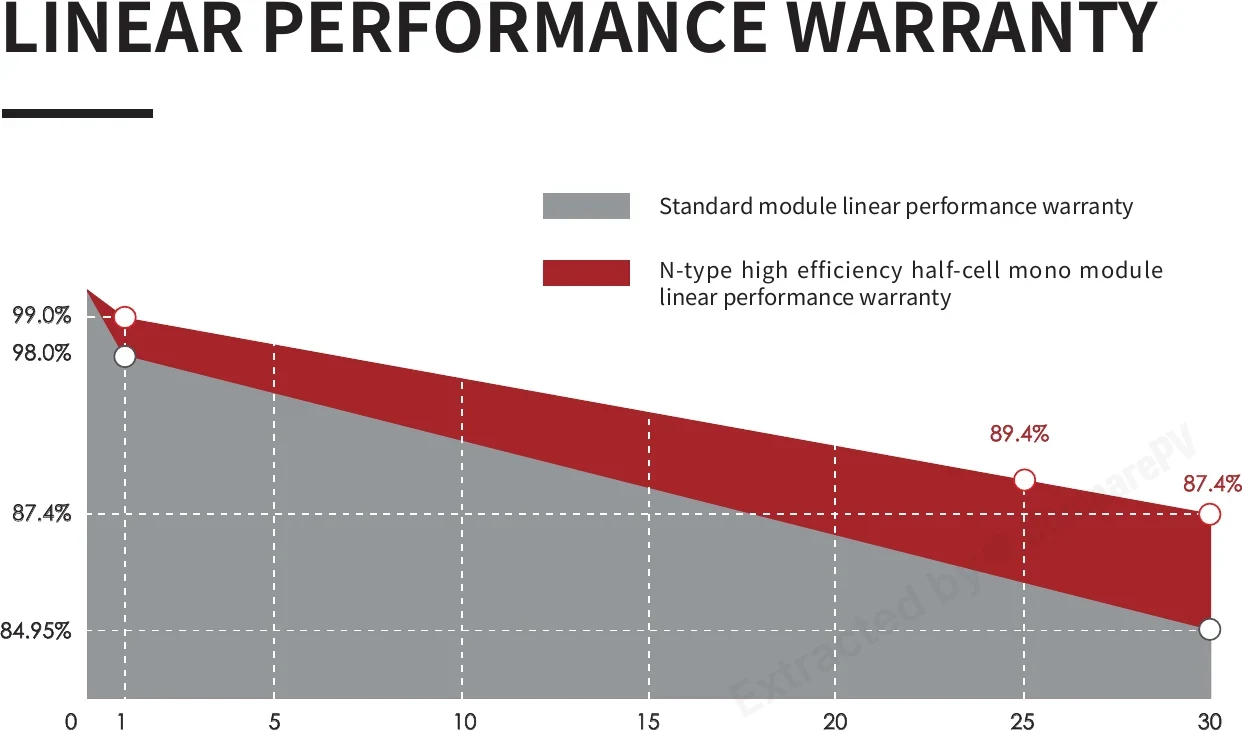
Performance warranty 30 years Typical median 30 yrs · median 30 yrs
End-of-warranty output 87.4 % Equals 625 W guaranteed
Degradation 1.00 → 0.40 % First year, then annual

Datasheet charts

Open datasheet PDF

Measured curves published by Sunova in this model's datasheet. A chart carrying a wattage was measured on that variant alone - only the ones that describe 715 Wp appear here. The rest cover the whole series.
Simulations

Live - change any input
Lifetime output & value
30 years at 1200 kWh/kWp/year and €0.50 per kWh
Power in year 30
-
Lifetime energy
-
Energy value
-
With bifacial gain
-

Degradation from this panel's own datasheet figures. No inverter, soiling or shading losses.

Heat losses
-0.300 %/°C against a segment median of -0.290
-
Bifacial gain
Rear gain over light concrete: -
-

Model: bifaciality × albedo × 0.6 view factor. A first-order estimate, not a yield simulation.

Alternatives

All Sunova panels
Filter these
Size
Panel Power Eff. Temp. Weight Difference
Sunova TS-BGT66(715)-G12 715 W 23.00% -0.300 37.8 kg You are here
AIKO-A680-MDE72Mw 680 W 25.20% -0.260 29.0 kg Cooler, lighter, +2.2 pp
AIKO-A675-MDE72Mw 675 W 25.00% -0.260 29.0 kg -40 W, lighter, +2.0 pp
AIKO-A700-MAE78Dw 700 W 25.00% -0.260 34.5 kg Cooler, lighter, +2.0 pp
AIKO-A695-MAE78Dw 695 W 24.90% -0.260 34.5 kg Cooler, lighter, +1.9 pp
AIKO-G670-MCH72Mw 670 W 24.80% -0.260 28.2 kg -45 W, lighter, +1.8 pp
LR7-72HVHF-670M 670 W 24.80% -0.260 28.5 kg -45 W, lighter, +1.8 pp
JKM650-670N-66QL6-BDV (670W class) 670 W 24.80% -0.260 32.5 kg -45 W, lighter, +1.8 pp
RS645~665S9B-132 (645W) 645 W 20.80% -0.354 33.0 kg -70 W, hotter, -2.2 pp
RS645~665S9B-132 (650W) 650 W 20.90% -0.354 33.0 kg -65 W, hotter, -2.1 pp
RS645~665S9B-132 (655W) 655 W 21.10% -0.354 33.0 kg -60 W, hotter, -1.9 pp
RS645~665S9B-132 (660W) 660 W 21.20% -0.354 33.0 kg -55 W, hotter, -1.8 pp
RS645~665S9B-132 (665W) 665 W 21.40% -0.354 33.0 kg -50 W, hotter, -1.6 pp
AIKO-A805-GRH78Dw 805 W 25.10% -0.260 39.8 kg +90 W, cooler, +2.1 pp
AIKO-A800-GRH78Dw 800 W 24.90% -0.260 39.8 kg +85 W, cooler, +1.9 pp
AIKO-A795-GRH78Dw 795 W 24.80% -0.260 39.8 kg +80 W, cooler, +1.8 pp
AIKO-A790-GRH78Dw 790 W 24.60% -0.260 39.8 kg +75 W, cooler, +1.6 pp

Found 1390 panels of the same or similar size to this one, within ±10 mm. See them here Found 1400 panels of the same or similar size to this one, within ±25 mm. See them here Found 1400 panels of the same or similar size to this one, within ±50 mm. See them here Found 1432 panels of the same or similar size to this one, within ±100 mm. See them here

Common questions

6 answered
What is the maximum power output of the Sunova Tangra L Pro HD panels?
The Tangra L Pro HD series reaches a maximum power output of up to 720 Wp. This high output is achieved through N-type TOPCon cell technology combined with precise Half-Cut cell cutting, which minimizes internal losses. A higher power rating per module means fewer panels are needed to reach a target system size, reducing mounting structure and installation labor costs.
What warranty comes with the Sunova Tangra L Pro HD panels?
The manufacturer provides a 15-year product warranty and a 30-year linear power output warranty. This means that even after three decades of operation, the panel is expected to retain a significant share of its original rated power. This level of coverage is typical for modern N-type modules and reflects the manufacturer's confidence in the durability of the cell technology used.
What is bifaciality, and do the Tangra L Pro HD panels have it?
Yes, the Tangra L Pro HD modules are bifacial, meaning they generate electricity from both the front and rear side of the panel by capturing reflected light from the surrounding surface. Thanks to the Bifacial Double Glass construction, the additional energy yield can range from a few to over ten percent, especially in ground-mounted installations over bright or reflective surfaces such as gravel or white roofing membrane.
Are the Sunova Tangra L Pro HD panels suitable for solar farms and large commercial roofs?
Yes, this series is designed for large ground-mount installations and commercial flat roofs where minimizing the levelized cost of energy (LCOE) is a priority. The high per-module power output, bifacial design, and robust Bifacial Double Glass construction resistant to humidity and snow loads make it a strong choice for investors seeking maximum reliability at utility scale.
Does N-type TOPCon technology in the Tangra L Pro HD reduce power degradation?
Yes, the N-type TOPCon cells virtually eliminate light-induced degradation (LID), the power loss that typically occurs during a panel's first hours of operation. The technology also offers excellent PID resistance, allowing the module to maintain stable performance over many years, which translates into higher real-world energy yield compared to conventional P-type panels.
Do the Sunova Tangra L Pro HD panels perform well in high temperatures?
Yes, the Tangra L Pro HD series features an exceptionally low temperature coefficient, resulting in smaller power losses on hot days compared to standard market modules. This is a key advantage in high-irradiance regions with elevated ambient temperatures, where modules regularly operate well above the STC reference test temperature.
Add to compare