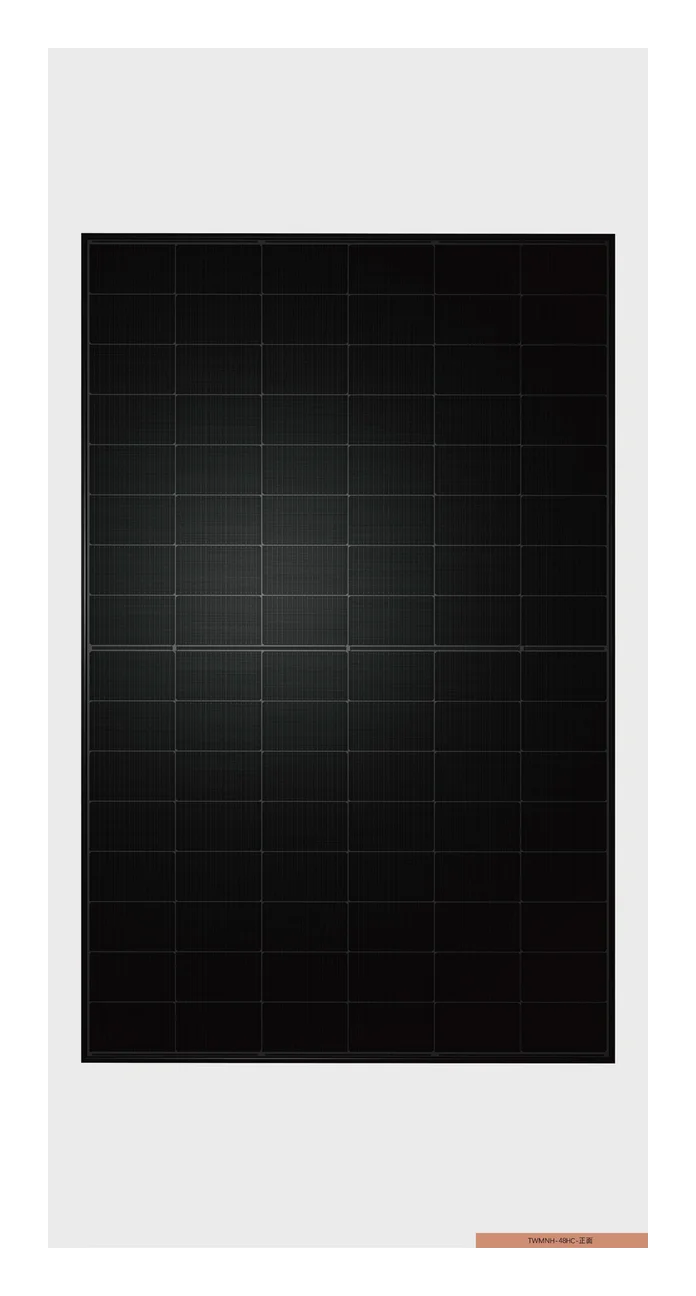
Solarever SE-182*105-460M-96-BD

SE-182*105-460M-96-BD

460 Wp TOPCon Bifacial 2500%
ComparePV verdict

Efficiency leader, weak in heat

Rank 7,382 of 14,005
Compare panels Datasheet PDF
Power (Wp)
460
Typical for its class
Efficiency (%)
23.02
Strong · top 17%
Density (Wp/m²)
230.2
Strong · top 20%
Temp (%/°C)
-0.300
Weak · bottom 20%
Weight (kg)
23.0
Typical · median 24.0 kg
Warranty (yrs)
30
Typical · median 30 yrs

The Solarever HC 96 series is a line of photovoltaic modules built on 96 half-cut monocrystalline cells, which reduces current losses and improves panel performance under partial shading conditions. The half-cut technology combined with PERC cells results in more stable energy production even under lower irradiance, which matters both for residential installations and larger commercial systems. The panels use a bifacial design, allowing the rear side of the module to also generate energy from light reflected off the ground or roof surface, increasing total yield without expanding the installation footprint. In addition, versions with dual glass construction and a full black frame combine aesthetics with enhanced mechanical durability, moisture resistance, and resistance to UV degradation. The design was engineered to withstand harsh climate conditions - heavy snow loads and strong winds - making it a versatile choice for installers looking for a solution that performs well on both sloped roofs and ground-mount farms. The HC 96 series stands out from the competition by combining high power density, mounting flexibility, and long-term reliability, translating into a lower levelized cost of energy (LCOE) and reduced demands on the rest of the balance of system (BoS).

Ranking

1,089 panels in the segment TOPCon 450-500 W
Metric This panel Median Position in segment Overall rank
Module efficiency 23.02% 22.52% Strong · top 17% 1,797
Power density 230.2 225.2 Strong · top 20% 1,876
Temperature coefficient -0.300 -0.290 Weak · bottom 20% 6,093
Weight per kWp 50.0 52.2 Typical 3,317
Performance warranty 30 yrs 30 yrs Typical 21
Colour key Strong - top 25% Typical - middle 50% Weak - bottom 25%

Signals from the data

7 positive · 2 caution
Best for

Residential, commercial, shaded-installations and cold-climate.

Not ideal for

Hot climates.

Strengths
23.02% module efficiency

Top 17% of the TOPCon 450-500 W segment, against a median of 22.52%.

230.2 watts per square metre

Top 20% of the TOPCon 450-500 W segment, against a median of 225.2.

Watch-outs
-0.300 %/°C temperature coefficient

Bottom 20% of the TOPCon 450-500 W segment, against a median of -0.290.

What owners get
Efficiency matching segment leaders

Peak efficiency of 23.52% ties Recom Lynx and exceeds Trina Vertex S+ (23.5%) and Astronergy ASTRO N7s 2.0 (23.5%), placing the HC 96 series at the very top of the compared TOPCon models.

N-type TOPCon cells in half-cut design

96 half-cut monocrystalline cells reduce resistive losses and improve performance under partial shading, while N-type TOPCon technology delivers lower LID/LETID degradation than older PERC cells.

Dual 15/30-year warranty

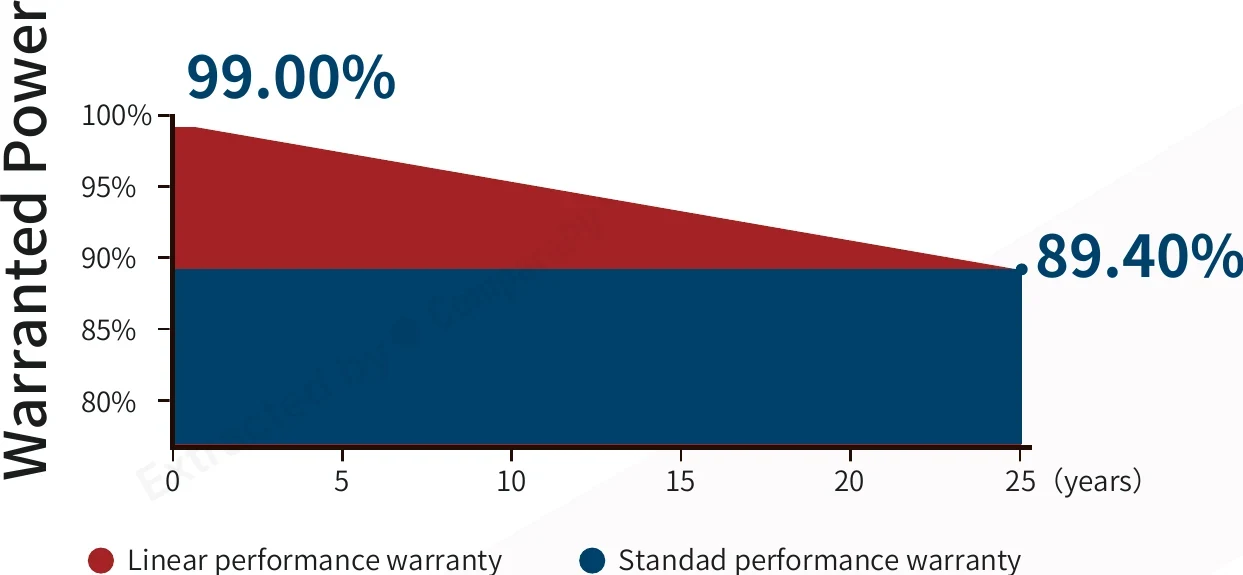
A 15-year product warranty combined with a 30-year linear power warranty (87.4% of nominal power retained) matches or exceeds most tier-1 manufacturers, many of which still cap warranties at 25 years.

Bifacial design with dual glass

Bifacial construction paired with dual tempered glass enables additional rear-side energy yield while improving mechanical durability and moisture resistance compared to backsheet-based modules.

High power density in a compact footprint

Up to 470 Wp within roughly 2.0 m² (1762×1134 mm) gives a competitive power density, reducing mounting structure and BoS requirements per kWp installed.

Trade-offs
No confirmed BNEF Tier 1 status

Unlike peer manufacturer Trina Solar (Tier 1), Solarever does not appear on the BNEF Tier 1 solar module methodology list for 2026, which can be a significant factor for bank-financed commercial and utility-scale PV projects.

Notes from the database
  • Efficiency of 23.0% matches the TOPCon 450-500W median
  • Power density of 230.2 W/m² packs 5.0 W/m² more into the same footprint vs TOPCon 450-500W median (225.2 W/m²)
  • At -0.30%/°C, hot weather performance is typical for TOPCon 450-500W panels
  • Weight of 23.0 kg is typical for TOPCon 450-500W panels
  • In the top 13% for efficiency among all TOPCon panels

Specifications

Open datasheet PDF
Nominal power (Pmax) 460 Wp Nameplate at 1000 W/m², 25 °C
Module efficiency 23.02 % Strong Segment median 22.52%
Vmpp · Impp 30.44 V · 15.11 A Operating point at max power
Voc · Isc 35.39 V · 16.15 A Sizes the string length
Max system voltage 1500 V Longer strings than 1000 V modules
Dimensions 1762×1134×30 mm · 2.00 m² of roof
Weight 23.0 kg Typical Typical · median 24.0 kg
Cells 96 · TOPCon Monocrystalline
Bifaciality 2500 % Rear output as a share of front
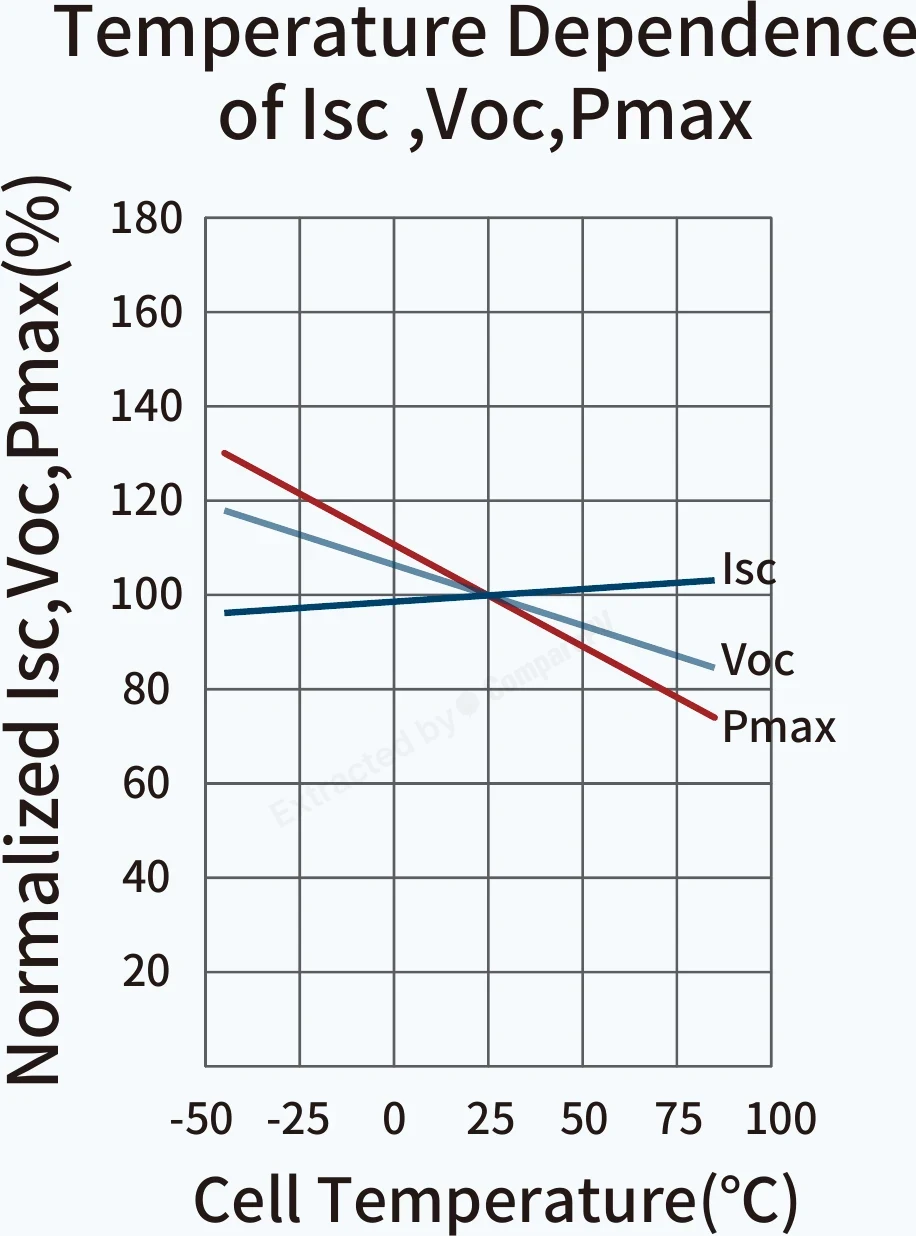
Coefficient Pmax -0.300 %/°C Weak bottom 20% of its segment
Coefficient Voc · Isc -0.250 · 0.046 %/°C
NOCT 41 °C At 800 W/m², 20 °C ambient
Product warranty 15 years Hardware defects only
Performance warranty 30 years Typical median 30 yrs · median 30 yrs
Degradation 1.00 → 0.40 % First year, then annual

Datasheet charts

Open datasheet PDF

Measured curves published by Solarever in this model's datasheet. A chart carrying a wattage was measured on that variant alone - only the ones that describe 460 Wp appear here. The rest cover the whole series.
Simulations

Live - change any input
Lifetime output & value
30 years at 1200 kWh/kWp/year and €0.50 per kWh
Power in year 30
-
Lifetime energy
-
Energy value
-
With bifacial gain
-

Degradation from this panel's own datasheet figures. No inverter, soiling or shading losses.

Heat losses
-0.300 %/°C against a segment median of -0.290
-
Bifacial gain
Rear gain over light concrete: -
-

Model: bifaciality × albedo × 0.6 view factor. A first-order estimate, not a yield simulation.

Filter these
Size
Panel Power Eff. Temp. Weight Difference
Solarever SE-182*105-460M-96-BD 460 W 23.02% -0.300 23.0 kg You are here
LR7-54HJD-510M 510 W 25.00% -0.240 23.5 kg +50 W, cooler, +2.0 pp
AIKO-A495-MCE54Mw 495 W 24.80% -0.260 21.0 kg +35 W, cooler, +1.8 pp
LR7-54HJD-505M 505 W 24.70% -0.240 23.5 kg +45 W, cooler, +1.7 pp
AIKO-A490-MCE54Mw 490 W 24.50% -0.260 21.0 kg +30 W, cooler, +1.5 pp
LR7-54HJD-500M 500 W 24.50% -0.240 23.5 kg +40 W, cooler, +1.5 pp
CIPRO-TN9C54M-500W 500 W 24.50% -0.260 21.4 kg +40 W, cooler, +1.5 pp
SE-182*105-450M-96-BD 450 W 22.52% -0.300 23.0 kg -10 W, -0.5 pp
SE-182*105-455M-96-BD 455 W 22.77% -0.300 23.0 kg -0.2 pp
SE-182*105-465M-96-BD 465 W 23.27% -0.300 23.0 kg +0.2 pp
SE-182*105-470M-96-BD 470 W 23.52% -0.300 23.0 kg +10 W, +0.5 pp

Found 1395 panels of the same or similar size to this one, within ±10 mm. See them here Found 1425 panels of the same or similar size to this one, within ±25 mm. See them here Found 3614 panels of the same or similar size to this one, within ±50 mm. See them here Found 3962 panels of the same or similar size to this one, within ±100 mm. See them here

Common questions

6 answered
How does TOPCon cell technology in the Solarever HC 96 panels differ from standard PERC cells?
TOPCon cells used in the HC 96 series feature an additional passivation layer that reduces electron recombination, delivering higher efficiency than conventional PERC cells. In practice, this means more power from the same panel footprint, a smaller efficiency drop at high temperatures, and slower power degradation over time, resulting in a better lifetime energy yield for the installation.
Are Solarever HC 96 panels suitable for mounting on a pitched residential roof?
Yes, HC 96 modules with up to 470 Wp of power work well on both pitched roofs and ground-mounted systems. Half-cut technology reduces losses from partial shading caused by chimneys or dormers, and the sturdy full black frame provides mechanical stability under typical snow and wind loads found on residential roofs.
What warranty comes with Solarever HC 96 panels and what does it cover?
The manufacturer provides a 15-year product warranty covering material and workmanship defects, plus a 30-year power output warranty guaranteeing a defined production level throughout that period. This is standard for modern TOPCon panels and lets investors plan the return on their installation over the long term.
Is it worth paying extra for the bifacial version of HC 96 panels instead of a standard monofacial module?
The bifacial design of the HC 96 series lets the rear side of the module generate extra energy from light reflected off the roof, ground, or a bright surface. Actual gains depend on mounting height and ground albedo - on pitched roofs with limited clearance underneath the panel, the gain can be modest, while ground-mounted or tilted installations over reflective surfaces can see a few percent extra yield without increasing the installed area.
Are dual glass Solarever HC 96 panels heavier and harder to install than standard modules?
The dual glass version is somewhat heavier than modules with a rear polymer backsheet, but the difference does not complicate standard installation on typical roof or ground-mount structures. In exchange, the module gains higher resistance to moisture and UV degradation and longer mechanical lifespan, which matters especially for bifacial installations where both sides of the panel are exposed to weather.
What is the maximum power rating of the Solarever HC 96 series, and how many panels are needed for a 10 kWp installation?
The strongest variants in the HC 96 series reach up to 470 Wp. At that rating, a 10 kWp installation needs roughly 21-22 modules, though the exact number depends on the power variant chosen, available mounting area, and inverter configuration.
Add to compare