Efficiency leader, no clear weak spot
The Meyer Burger Glass (MB_TG120ByB_XXX) series are glass-glass modules with a transparent back, designed to realistically increase energy yield even when conditions are not ideal. The use of heterojunction (HJT) cells ensures stable performance in high temperatures and high efficiency in low light conditions, which is important in the Polish climate. A key feature is the SmartWire connection technology, which reduces the risk of microcracks and power losses due to stress - this is a common problem in modules that operate for years in wind and snow.
The glass-glass construction increases resistance to moisture and material aging, and thanks to the bifacial nature of the module, it can utilize light from the back side (e.g., from a light surface or roof). This series is a good choice for investors looking for long-term lifespan and predictable production - both in premium rooftop installations and in commercial projects where durability and stability of parameters over time are important.
Ranking
Signals from the data
Residential, commercial and hot-climate.
Top 1% of the HJT 350-400 W segment, against a median of 20.90%. Ranked 7,022nd in the whole database.
Top 1% of the HJT 350-400 W segment, against a median of 209.3. Ranked 7,309th in the whole database.
Module efficiency reaches up to 21.8% (top variant), placing the series above comparable models - JA Solar JAM60S21 (21%), Phono Solar Twinplus (21.3%) and LG NeON R Prime (21.5%). Heterojunction (HJT) cells also have a low power temperature coefficient of -0.259%/°C, reducing power losses on hot days.
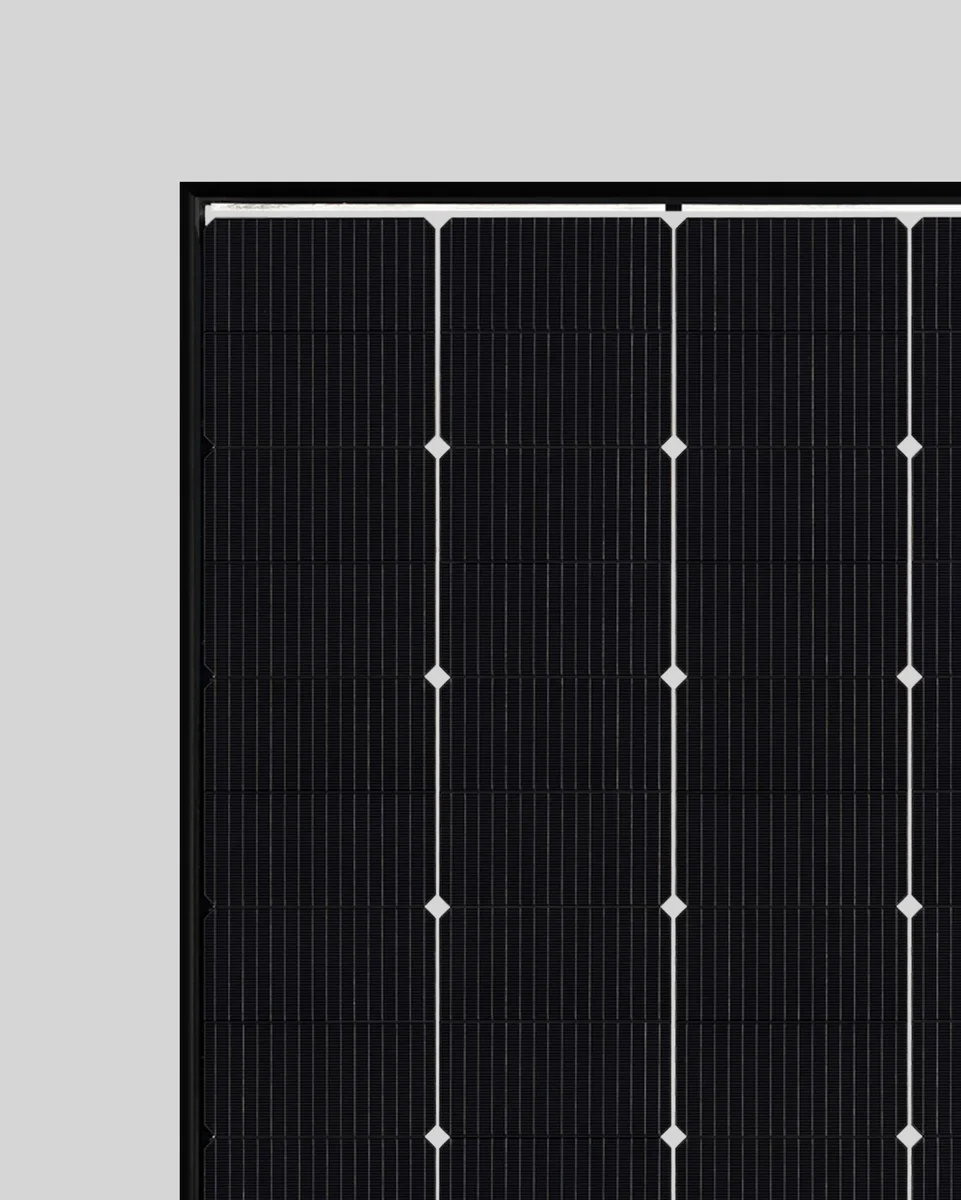
Instead of conventional busbars, the module uses a multi-wire SWCT grid that reduces mechanical stress between cells and lowers the risk of microcracks causing power degradation under wind and snow loads.
The manufacturer states 30 years of warranty for both the product and power output - longer than the standard 25 years offered by most tier-1 manufacturers, including several comparable series in the peer comparables list (JA Solar, Phono Solar).
Bifaciality allows the module to capture light reaching the rear side (e.g., from a light-colored roof or ground), increasing real-world energy yield, while the glass-glass construction with a 3.2 mm front glass improves resistance to moisture and material aging compared to standard backsheet modules.
Meyer Burger is a tier-1 (bankable) manufacturer headquartered in Switzerland, operating since 1953, which has historically translated into high manufacturing quality and brand reputation in the premium HJT module segment.
The series was manufactured from 2023 to 2025, after which the manufacturer ended production. This limits the availability of service, spare parts, and up-to-date technical documentation for already installed modules.
In 2025, Meyer Burger Technology AG and Meyer Burger GmbH filed for insolvency, and module production at the Arizona factory was halted in May 2025. Despite the stated 30-year product and power warranty, its actual enforceability over the coming decades is uncertain given the manufacturer's financial difficulties.
The glass-glass construction (3.2 mm front glass) results in a weight of about 19.7 kg at dimensions of 1767 x 1041 mm, more than typical glass-backsheet modules of similar power. This requires an adequately reinforced roof structure and mounting system.
- 21.8% module efficiency - 1.2pp better than the HJT 0-400W median of 20.6%
- Power density of 217.6 W/m² packs 11.2 W/m² more into the same footprint vs HJT 0-400W median (206.4 W/m²)
- Temperature coefficient of -0.26%/°C matches the HJT 0-400W median
- At 24.4 kg (2.9 kg above HJT 0-400W median of 21.5 kg), requires checking roof load capacity
- Bifacial design (90% factor) captures reflected light - adds 4-14% yield on ground-mount or white roof
Specifications
Datasheet charts
Measured curves published by Meyer Burger in this model's datasheet. A chart carrying a wattage was measured on that variant alone - only the ones that describe 390 Wp appear here. The rest cover the whole series.

Simulations
Degradation from this panel's own datasheet figures. No inverter, soiling or shading losses.
Model: bifaciality × albedo × 0.6 view factor. A first-order estimate, not a yield simulation.






Found 12 panels of the same or similar size to this one, within ±10 mm. See them here Found 26 panels of the same or similar size to this one, within ±25 mm. See them here Found 438 panels of the same or similar size to this one, within ±50 mm. See them here Found 4350 panels of the same or similar size to this one, within ±100 mm. See them here