Middle of its segment, needs the roof space
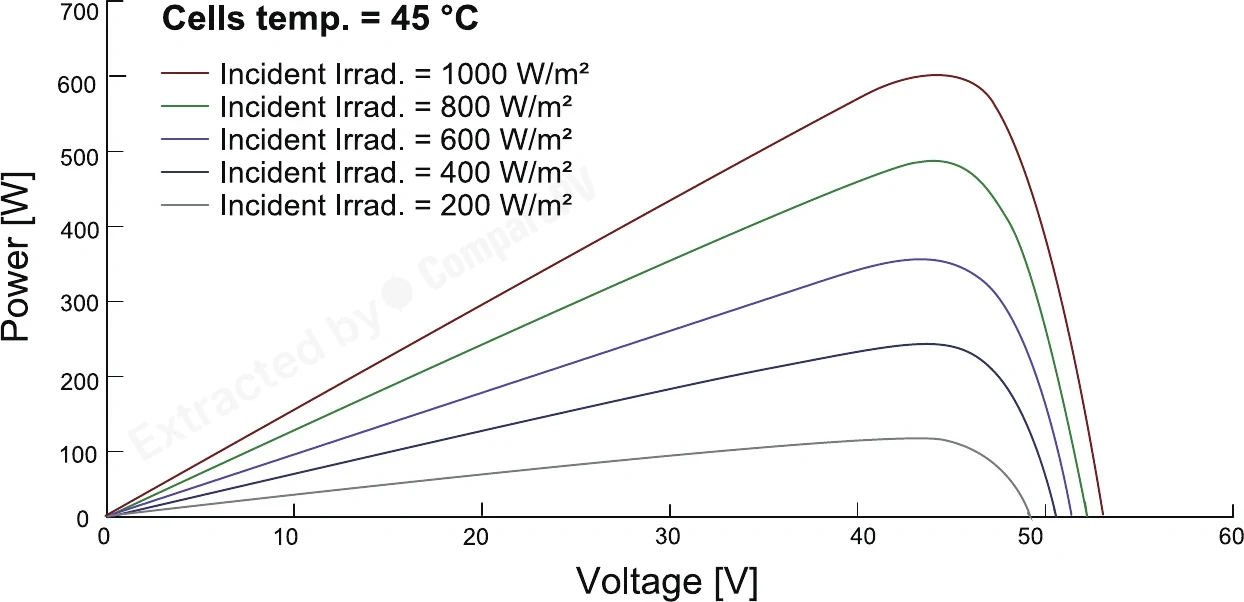
The HNM7-UHLDD156 series comprises photovoltaic modules built using N-type monocrystalline silicon technology, featuring an advanced 16-busbar (16BB) design that significantly reduces the distance between the busbars and the finger grid - resulting in a marked increase in energy yield compared to conventional cells. The bifacial panels with tempered double glass (Double Glass) construction capture additional energy reflected from the ground, with the actual rear-side gain depending on the albedo coefficient of the installation's surroundings. Thanks to their PID resistance and sealed IP68 connector housing, the modules perform excellently in demanding climatic conditions - salt, ammonia, sand, high humidity, and wide temperature fluctuations do not adversely affect their long-term durability. The series also stands out for its improved response to low irradiance - fog, cloud cover, or early morning hours are conditions in which the HNM7-UHLDD156 continues to generate electricity efficiently. This makes it an ideal solution both for large commercial and industrial installations and for demanding investors who value reliability backed by a 30-year power warranty.
Ranking
Signals from the data
Commercial and utility-scale.
Roofs where every square metre has to count, tight roof space and hot climates.
Bottom 6% of the N-type 600-650 W segment, against a median of 227.7. Ranked 6,655th in the whole database.
Bottom 7% of the N-type 600-650 W segment, against a median of 22.77%. Ranked 6,517th in the whole database.
Bottom 11% of the N-type 600-650 W segment, against a median of -0.290.
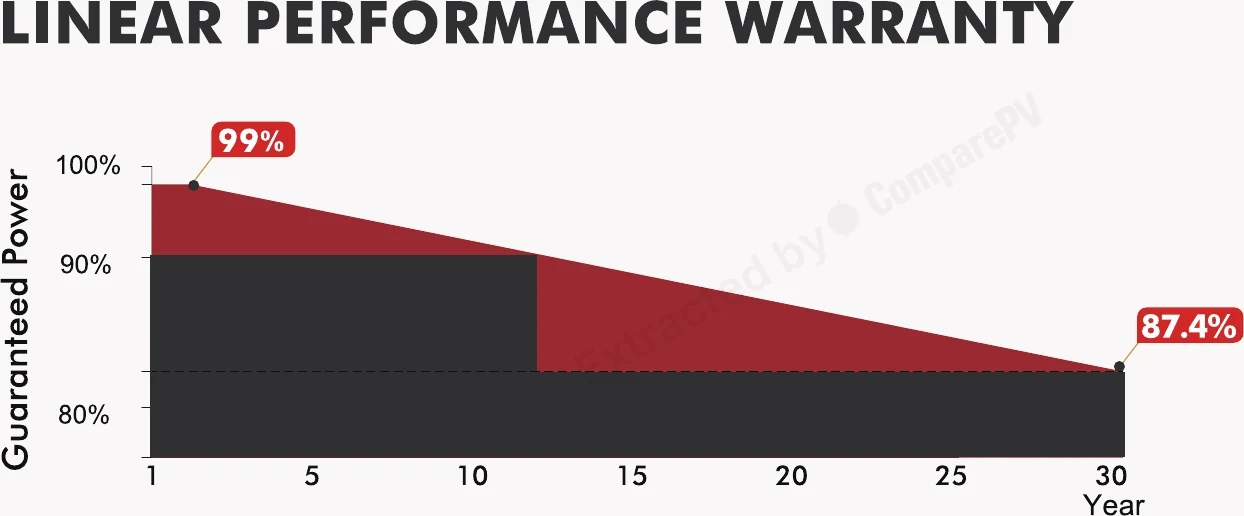
Hounen guarantees a linear output for 30 years, whereas direct peer comparables — Jinko Tiger Neo 66HL4M-BDV and Canadian Solar TOPBiHiKu6 Anti-Dust — ship with a standard 25-year performance warranty. The extended horizon lowers LCOE and improves bankability for debt-financed projects.
N-type cells exhibit LID degradation close to 0% (vs. 0.5–1% annually for PERC), and 16 busbars shorten the current path, cutting resistive losses by ~2% compared to standard 9BB configurations. Independent testing shows N-type TOPCon bifacial modules generate an average of 1.5–2.5% more annual energy yield than comparable PERC.
The double-glass bifacial design captures rear-side yield (5–15% depending on ground albedo), eliminates EVA yellowing, and extends mechanical service life. An IP68-rated junction box with resistance to salt, ammonia, and sand makes the series a solid fit for agriPV, port-side, and industrial rooftop installations.
The 610–630 Wp range matches the highest-rated peer comparables (Jinko, Canadian Solar). In C&I and utility-scale segments, higher Wp-per-panel directly reduces BoS costs: fewer mounting points, less cabling, and shorter installation time for the same MW capacity.
The series peaks at 22.54% efficiency, while Jinko Tiger Neo 66HL4M-BDV reaches 23.32% and Canadian Solar TOPBiHiKu6 Anti-Dust reaches 23.3%. The 0.78 pp gap (~3.5% relative) translates to a real yield penalty on space-constrained rooftops or ground-mount sites; for a 1 MWp project, the competing modules require roughly 340 m² less area.
The declared Pmax temperature coefficient is –0.35%/°C, while Jinko Tiger Neo and Canadian Solar TOPBiHiKu6 achieve –0.29%/°C. At a typical summer cell temperature of 70°C (Δ = 30°C above STC), the HNM7-UHLDD156 loses ~1.8% more power relative to those competitors — a meaningful disadvantage for industrial rooftop installs and warm climates.
Hounen Solar does not appear on the BloombergNEF Tier 1 list as of Q1 2026. In utility-scale projects financed by banks or infrastructure funds, manufacturer bankability is a standard due-diligence requirement. The absence of Tier 1 status may disqualify the series from tenders that require production insurance or bank guarantees.
- Module efficiency of 22.0% is 0.8pp below average for N-type 600-650W panels (median: 22.8%)
- Power density of 220.0 W/m² is 7.7 W/m² below N-type 600-650W median (227.7 W/m²) - needs more roof space
- At -0.30%/°C, hot weather performance is typical for N-type 600-650W panels
- At 34.0 kg, this panel is 1.5 kg heavier than the N-type 600-650W median (32.5 kg) - more demanding for installation crews
- 80% bifaciality enables rear-side power generation, boosting yield by 4-12% on reflective surfaces
Specifications
Datasheet charts
Measured curves published by Hounen Solar in this model's datasheet. A chart carrying a wattage was measured on that variant alone - only the ones that describe 615 Wp appear here. The rest cover the whole series.
Simulations
Degradation from this panel's own datasheet figures. No inverter, soiling or shading losses.
Model: bifaciality × albedo × 0.6 view factor. A first-order estimate, not a yield simulation.
Alternatives






Found 616 panels of the same or similar size to this one, within ±10 mm. See them here Found 616 panels of the same or similar size to this one, within ±25 mm. See them here Found 616 panels of the same or similar size to this one, within ±50 mm. See them here Found 1813 panels of the same or similar size to this one, within ±100 mm. See them here