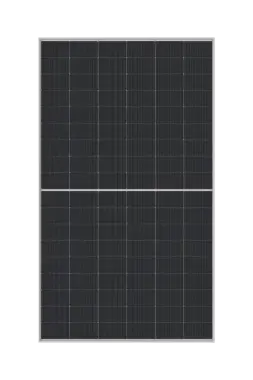
Middle of its segment, weak in heat
Series GCL GCL ROOF are modules designed for stable operation on roofs, where reliable yield, easy installation, and peace of mind during years of operation matter. The use of monocrystalline cells in PERC technology helps better utilize light in less-than-ideal conditions - such as partial cloudiness, low sun angles, or in installations with less favorable exposure. The construction with the classic glass-backsheet arrangement facilitates adaptation to popular mounting systems and minimizes the risk of compatibility issues on-site.
In practice, these panels address typical challenges of rooftop installations: the need for high power density on limited surfaces, a mechanically robust frame, and reliable protection for electrical components (connection box with enhanced sealing). For investors, this translates to fewer service downtimes and a more predictable energy balance.
GCL GCL ROOF is suitable for residential and commercial rooftop installations on pitched and flat roofs, especially where you expect tested PERC cells, roof-mounting compatibility, solid frame construction, and better performance in low light conditions.
Ranking
Signals from the data
Residential and commercial.
Hot climates, owners who want a long output guarantee and roofs where every square metre has to count.
Bottom 3% of the 445-645 W band, against a median of -0.300. Ranked 12,345th in the whole database.
Bottom 11% of the 445-645 W band, against a median of 30 yrs.
Bottom 11% of the 445-645 W band, against a median of 222.7.
GCL System Integration (GCL-SI) has maintained BNEF Tier-1 status for many years and ranks as the world's second-largest module manufacturer by installed capacity. Bankable status enables access to non-recourse project financing, a critical factor for commercial installations and development projects requiring debt funding.
A single series spanning 15 variants from 400 to 560 Wp allows module wattage to be matched to a specific roof area and target yield without switching suppliers between prosumer and commercial installations. This reduces the number of line items in the project BOM and simplifies logistics.
Select variants in the series carry a 30-year linear power output warranty, exceeding the 25-year standard offered by many Tier-1 peers in this price segment. For installations with a financial horizon beyond 25 years, this translates into measurably lower exposure to unwarranted degradation risk.
The BIPV (Building Integrated PV) designation indicates that the modules are certified for structural roof integration rather than rack-mounted overlay installation only. In practice, this streamlines building permit approvals on architecturally sensitive projects and reduces the risk of mounting system compatibility issues.
PERC cells benefit from an extensive field track record and a well-characterized degradation curve (~0.6–0.7% per year). Research published in 2025 (SolarQuarter, ScienceDirect) indicates that newer TOPCon modules may exhibit significantly higher power loss following moisture exposure (4–65% after 1,000 h damp heat), making PERC a safer choice for temperate climates with elevated humidity.
The series peaks at 21.3% module efficiency, while direct competitors in the same wattage segment achieve higher ratings: Luxor Solar Eco Line M144 – 21.92%, Premier Energies 144 PERC Bifacial – 21.67%, Sunova TS-BW72 – 21.68%. The 0.4–0.6 percentage-point gap translates into measurably lower power output from an identical roof area.
The product warranty stands at 12 years, whereas leading Tier-1 manufacturers (Trina Solar, JA Solar, LONGi) currently offer 15-year product warranties in a comparable price segment. The shorter warranty horizon increases the risk of out-of-pocket service costs during the mid-life phase of the installation.
The series is strictly monofacial, whereas direct competitor Premier Energies 144 PERC Bifacial offers bifacial modules in the same wattage segment. On light-colored rooftops or installations with favorable albedo angles, bifacial technology typically delivers 5–15% additional energy yield — an advantage the GCL ROOF series structurally foregoes.
- Efficiency of 20.8% matches the BIPV 500-550W median
- At 207.7 W/m² power density, roof space requirements are typical for BIPV 500-550W panels
- -0.36%/°C temperature coefficient - 0.06pp worse than BIPV 500-550W median (-0.30%/°C), expect higher hot weather losses
- Weight of 27.6 kg is 1.1 kg above BIPV 500-550W median (26.5 kg) - verify structural support
- Ranked #10457 out of 14005 panels for efficiency in the database
Specifications
Simulations
Degradation from this panel's own datasheet figures. No inverter, soiling or shading losses.



Found 20 panels of the same or similar size to this one, within ±10 mm. See them here Found 2368 panels of the same or similar size to this one, within ±25 mm. See them here Found 2426 panels of the same or similar size to this one, within ±50 mm. See them here Found 3654 panels of the same or similar size to this one, within ±100 mm. See them here