
Light for its output, no clear weak spot
The Gamko New Energy GKA210M120 series redefines performance standards through the use of large-format 210 mm cells, which form the foundation of modern energy systems. The use of Multi-busbar (MBB) technology and a precise Half-cut design significantly reduces internal losses and resistance, resulting in stable operation even under intense sunlight and elevated ambient temperatures. These modules effectively solve the problem of limited installation space by offering maximum power density from every square meter, which directly reduces the structural and installation costs of the entire system. Exceptional resistance to potential-induced degradation (PID) and certified durability against extreme snow and wind loads make this a solution dedicated primarily to large-scale commercial projects and photovoltaic farms. Compared to the competition, these panels stand out with an optimal balance between innovative technology and mechanical durability, which guarantees long-term stability of energy yields in the Polish climate. By choosing this series, investors gain operational certainty with minimal risk of micro-cracks, which ultimately allows for achieving the lowest levelized cost of energy (LCOE) while maintaining the highest fire and electrical safety standards. The GKA210M120 series is synonymous with technological advancement for the most demanding professionals in the PV industry.
Ranking
Signals from the data
Commercial, utility-scale and shaded-installations.
Top 1% of the PERC 600-650 W segment, against a median of 55.7. Ranked 1,298th in the whole database.
The combination of large-format 210 mm cells, 12-busbar (12BB) multi-busbar technology, and half-cut cell architecture minimizes resistive and thermal losses, delivering a peak power output of up to 610 Wp and a module efficiency of up to 21.55% - on par with direct competitors Seraphim Seco and Techwise Summit Series (both at 21.55%).
The bifacial construction enables albedo harvesting, which under typical ground-mount conditions (light gravel, concrete) yields an additional 5-15% in annual energy output compared to monofacial modules. For utility-scale farms, this directly reduces LCOE without increasing mounting costs.
The manufacturer provides a 30-year performance warranty, matching peer comparables such as GCL and Seraphim. For projects seeking financing from green banks and infrastructure funds, the length of the power output warranty is a critical risk assessment criterion.
Per Gamko's GKA210M series datasheet, the modules are certified to IEC 61215 and IEC 61730, rated for snow loads of 5,400 Pa and wind loads of 2,400 Pa, and carry a certified resistance to PID degradation. These ratings satisfy the requirements of large commercial installations within Poland's climate zones (I-III per PN-EN).
The 610 Wp format's high power density reduces the number of modules, mounting structures, and cabling runs per MW of installed capacity. Industry estimates indicate BoS cost savings of 3-7% compared to legacy 400-500 Wp formats - a material advantage for utility-scale projects.
In 2025-2026, the utility-scale market is increasingly dominated by N-type TOPCon cells (degradation ~0.4%/year, bifaciality ~85%) and HJT. The GKA210M120 series is based on P-type PERC (industry-reported degradation of 0.6-0.8%/year, bifaciality ~70%), resulting in measurably lower 25-30-year energy yield compared to peer modules at the same price point that have transitioned to next-generation cell technologies.
Gamko New Energy does not appear on the BNEF Tier 1 module manufacturer list as of Q1 2026 (which includes Jinko, LONGi, Trina, JA Solar, GCL, and others). The absence of a BNEF bankability rating may be a barrier for projects requiring financing from commercial banks or EU funds, which frequently apply Tier 1 status as an eligibility condition.
The 12-year product warranty (covering material and workmanship defects) falls short of the benchmark set by leading manufacturers: Jinko, JA Solar, Trina, and LONGi offer 15-25 years. In due diligence assessments for debt-financed PV farms, this gap may affect lenders' valuation of residual risk.
- At 21.2% efficiency, this panel is on par with typical PERC 600-650W modules
- Power density of 212.0 W/m² matches the PERC 600-650W median
- At -0.34%/°C, hot weather performance is typical for PERC 600-650W panels
- Weight of 28.0 kg (6.0 kg below PERC 600-650W median of 34.0 kg) allows easier transport and roof mounting
- In the top 65% for efficiency among all PERC panels
Specifications
Datasheet charts
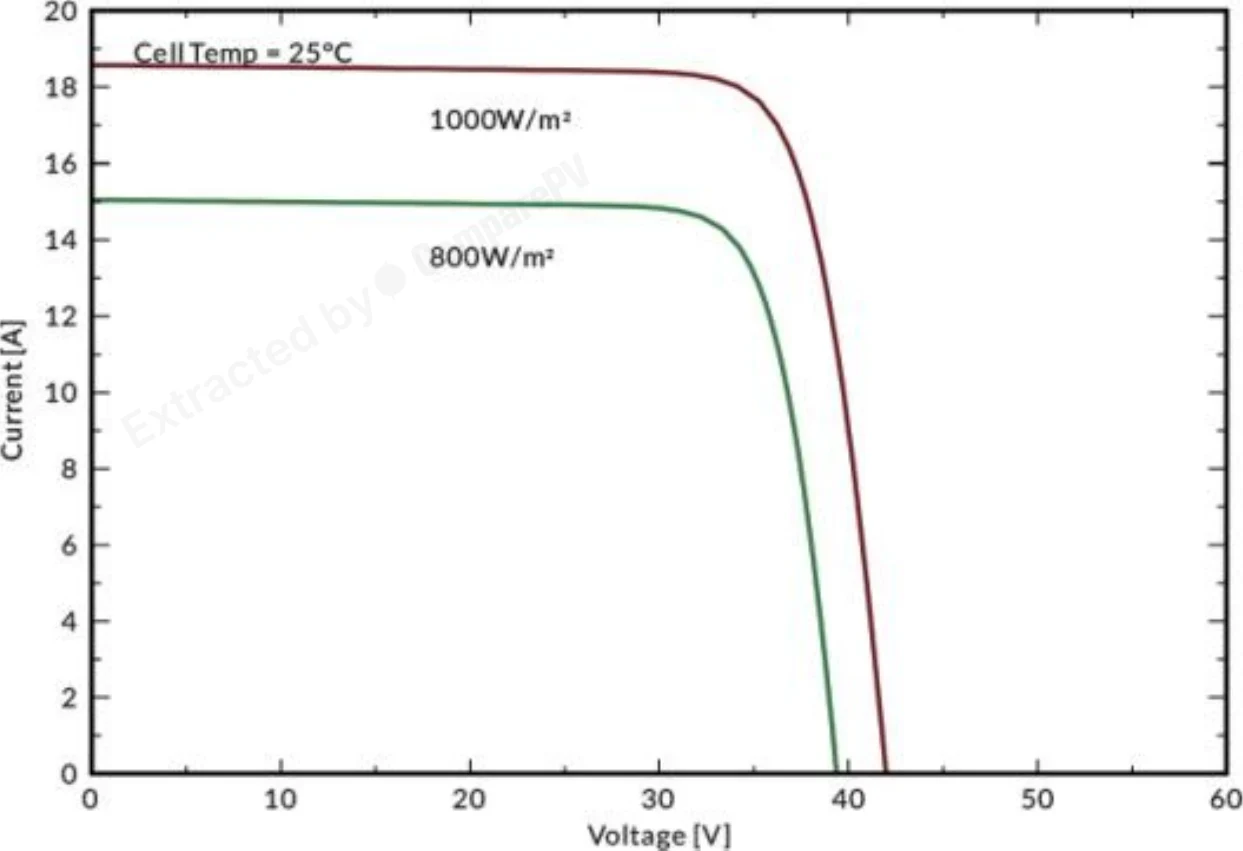
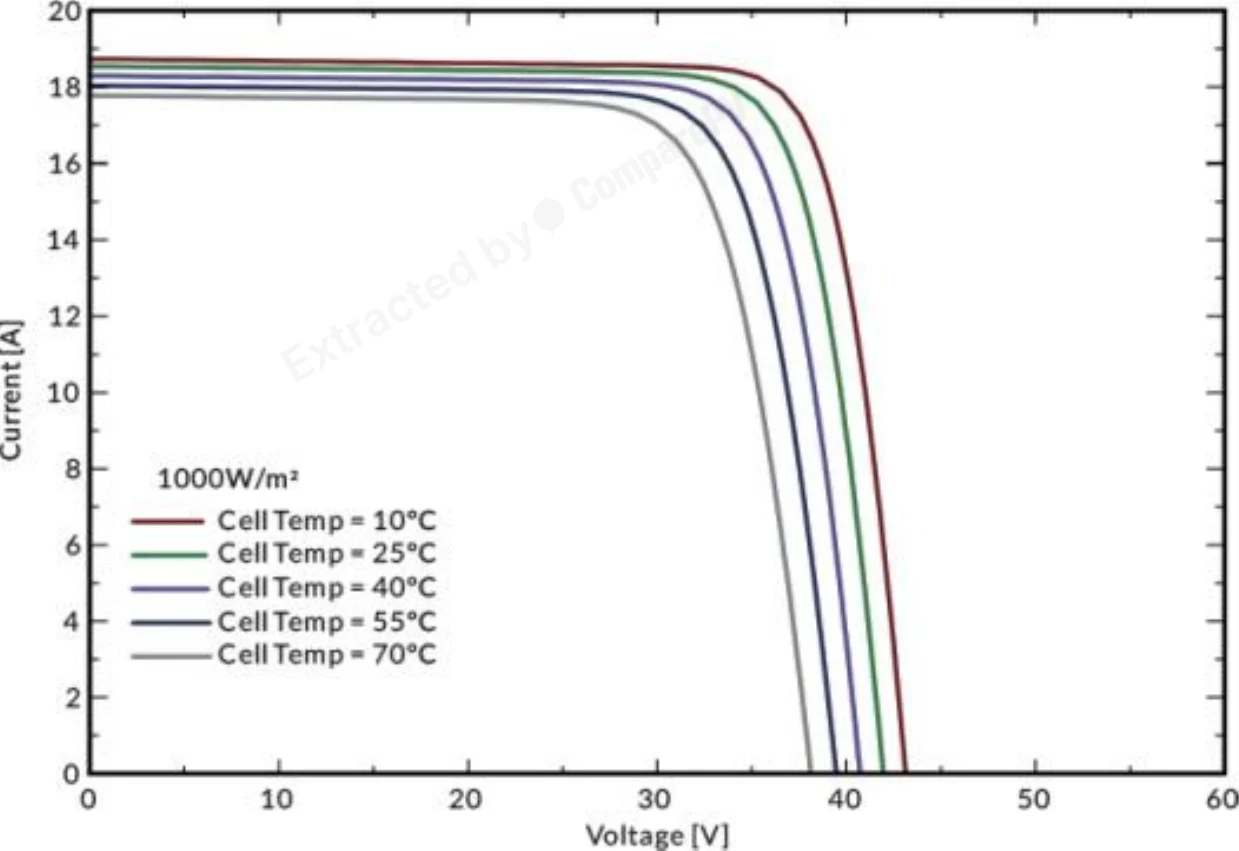
Measured curves published by Gamko New Energy in this model's datasheet. A chart carrying a wattage was measured on that variant alone - only the ones that describe 600 Wp appear here. The rest cover the whole series.
Simulations
Degradation from this panel's own datasheet figures. No inverter, soiling or shading losses.
Model: bifaciality × albedo × 0.6 view factor. A first-order estimate, not a yield simulation.
Alternatives




Found 497 panels of the same or similar size to this one, within ±10 mm. See them here Found 502 panels of the same or similar size to this one, within ±25 mm. See them here Found 502 panels of the same or similar size to this one, within ±50 mm. See them here Found 502 panels of the same or similar size to this one, within ±100 mm. See them here
About the GKA210M120 series
These answers cover the whole series. Where a figure differs, the specification above is this module's own.