Strong in heat, no clear weak spot
AU-156MH series photovoltaic panels utilize advanced monocrystalline cells in Half-cut technology, which translates into significantly higher energy efficiency even in demanding lighting conditions. Thanks to the use of large-format silicon wafers, this design effectively minimizes power losses on internal connections, offering stable operation for decades. A key differentiator is excellent resistance to the PID phenomenon and degradation caused by external factors, which guarantees security and predictability of yields for investors. This series solves the problem of limited installation space, generating more energy per square meter compared to older types of modules. The innovative frame design ensures high resistance to snow and wind loads, making them an ideal choice for the Polish climate. AU-156MH panels are dedicated to both extensive home installations and commercial farms, where a quick return on investment matters. They are distinguished from the competition by an optimal balance between high efficiency and system costs, as well as a reduced power temperature coefficient, allowing for effective operation on hot days. This is a solid solution for investors focusing on proven PERC technology in a modern edition.
Ranking
Signals from the data
Commercial, utility-scale, shaded-installations and hot-climate.
Top 1% of the PERC 600-650 W segment, against a median of -0.340. Ranked 6,093rd in the whole database.
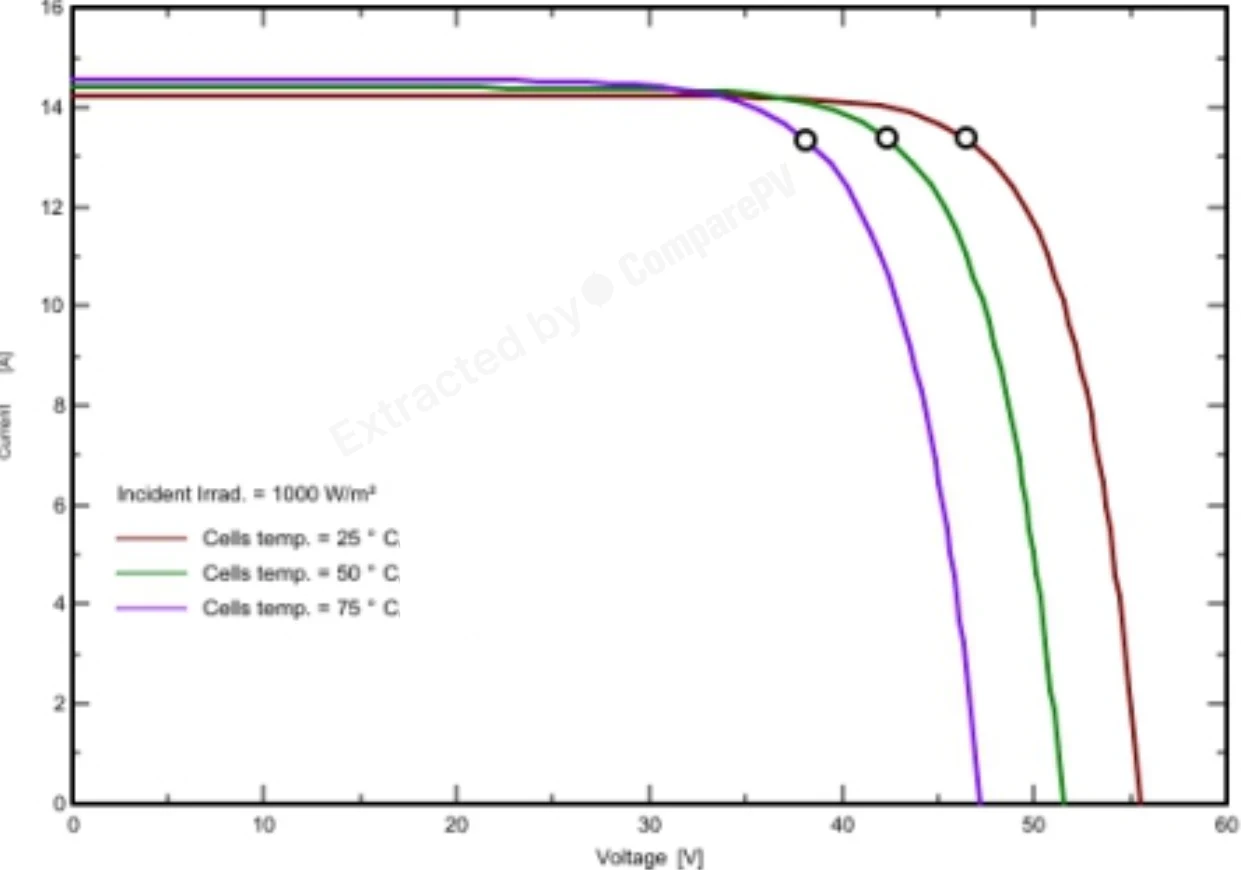
N-type TOPCon cells exhibit LID degradation below 2% (compared to ~3% for P-type PERC), while maintaining higher efficiency at elevated temperatures. The temperature coefficient of -0.30%/°C for Pmax is approximately 0.04–0.06 percentage points better than typical PERC modules (-0.34 to -0.36%/°C), which, in the Polish climate during the summer (30°C above STC), results in a real increase of approximately 1.2–1.8% in power output on hot days.
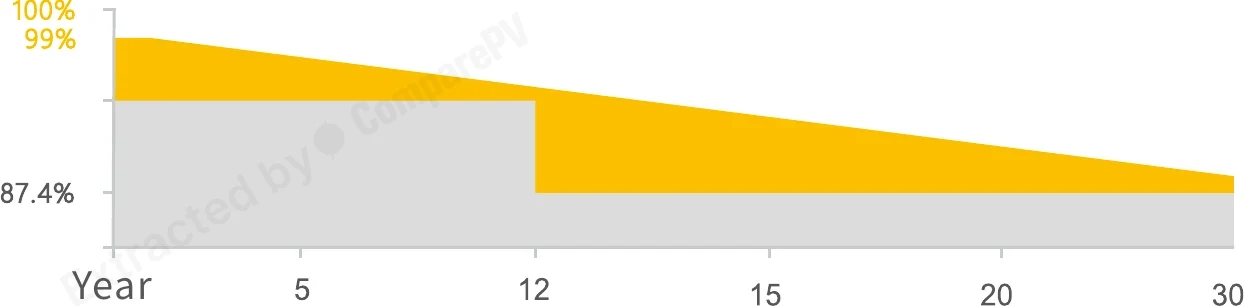
The manufacturer guarantees a minimum power retention of 87.4% after 30 years of operation under linear power warranty – the same level of retention as Jinko Solar Tiger Neo 66HL4M-BDV (30 years / 87.4%), which places the series among the global leaders in the segment.
The maximum power output of 630 Wp matches that of direct competitors (Canadian Solar TOPBiHiKu6 630 Wp, Jinko Tiger Neo 66HL4M-BDV 630 Wp), reducing the number of modules required in the installation and lowering BOS (Balance of System) costs – which is particularly important in large-scale PV farm projects.
The N-type architecture in TOPCon technology exhibits structural resistance to PID (Potential Induced Degradation) without the need for additional anti-degradation coatings, which stabilizes annual yields in string configurations at high system voltages (up to 1500 V DC).
The maximum efficiency of the AU-156MH series is 22.54% – 0.76% less than Canadian Solar TOPBiHiKu6 (23.3%) and Jinko Tiger Neo 66HL4M-BDV (23.32%) at the same maximum power of 630 Wp. For this same power output, the series requires approximately 3–4% more roof space than the modules of its main competitors.
AU-156MH is a monofacial module (is_bifacial: false), while all comparable modules in the 630 Wp segment – including Canadian Solar TOPBiHiKu6 Anti-Dust and Jinko Tiger Neo 66HL4M-BDV – offer bifacial technology. The potential energy gain from the rear side of the module typically ranges from 5–30%, depending on the albedo of the surface and the mounting angle.
The producer (Austa Energy) is not listed on the BNEF Tier 1 Q1 2026 list as a standalone, bankable entity. This could pose a barrier to project financing of solar farms by independent commercial banks, which typically require confirmation of Tier-1 bankability from the module supplier.
- At 21.5% efficiency, this panel is on par with typical PERC 600-650W modules
- At 214.7 W/m² power density, roof space requirements are typical for PERC 600-650W panels
- -0.30%/°C temperature coefficient (median: -0.34%/°C) - retains ~2% more power at high temperatures
- 30.7 kg weight - 3.3 kg lighter than PERC 600-650W median (34.0 kg), reducing installation effort
- In the top 59% for efficiency among all PERC panels
Specifications
Datasheet charts
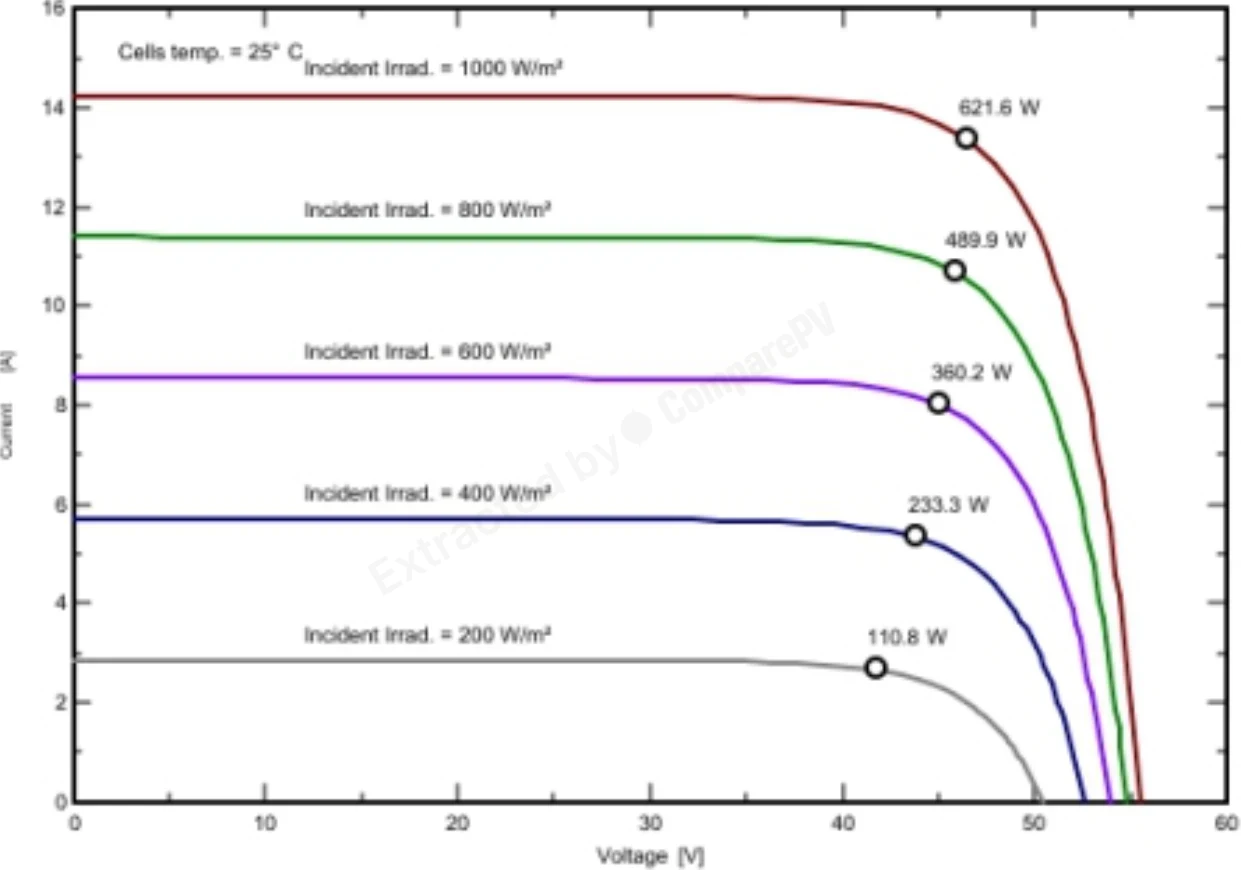
Measured curves published by AUSTA ENERGY in this model's datasheet. A chart carrying a wattage was measured on that variant alone - only the ones that describe 600 Wp appear here. The rest cover the whole series.
Simulations
Degradation from this panel's own datasheet figures. No inverter, soiling or shading losses.



Found 616 panels of the same or similar size to this one, within ±10 mm. See them here Found 616 panels of the same or similar size to this one, within ±25 mm. See them here Found 616 panels of the same or similar size to this one, within ±50 mm. See them here Found 1813 panels of the same or similar size to this one, within ±100 mm. See them here