
Space saver, no clear weak spot
The Astronergy ASTRO N5 solar panel series represents a breakthrough in performance thanks to the use of advanced N-type TOPCon cells. This modern architecture effectively eliminates the problem of light-induced degradation (LID) and guarantees stable system operation even at high temperatures, which directly translates into higher annual energy yields. Models from this line are characterized by exceptional efficiency exceeding 22 percent, which allows for maximum utilization of limited roof space while maintaining high generator power. Thanks to the use of multi-busbar SMBB connections, the panels handle current flow better and show less susceptibility to micro-cracks. Excellent low-light performance ensures that the installation works effectively even on cloudy days, which is key for investments in Polish climate conditions. It is a solution dedicated to both individual prosumers and business projects looking for the best price-to-quality ratio. The use of bifacial technology in selected variants further increases energy production from the back of the module, making the ASTRO N5 series a leader in terms of LCOE cost optimization. The entire structure features increased mechanical resistance to extreme snow loads and strong wind gusts.
Ranking
Signals from the data
Residential, commercial and utility-scale.
Top 17% of the TOPCon 550-600 W segment, against a median of 224.4.
Top 22% of the TOPCon 550-600 W segment, against a median of 22.44%.
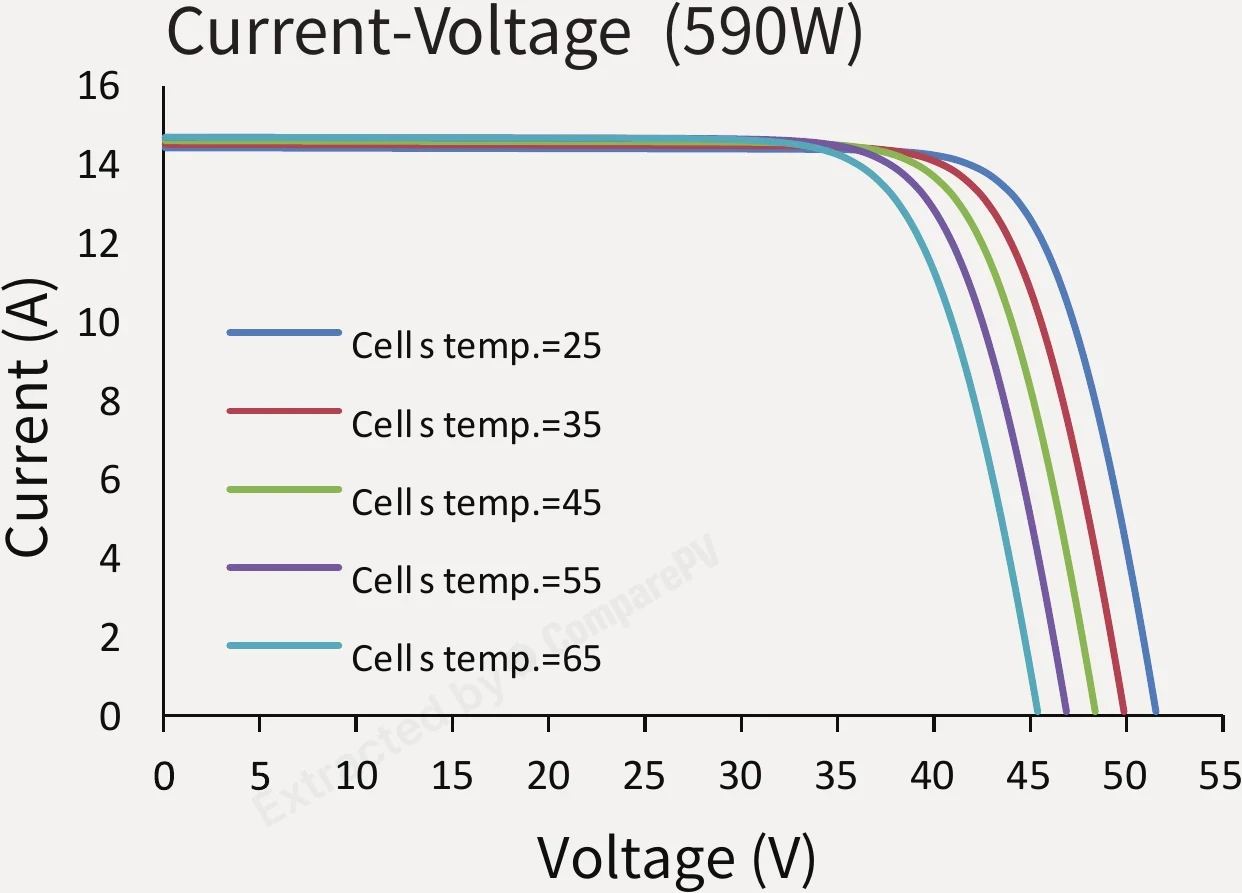
The N-type TOPCon technology achieves a temperature coefficient of -0.29%/°C, compared to the typical -0.35 to -0.40%/°C for PERC cells. On hot days (e.g., 60°C surface temperature), this difference results in approximately 3% higher hourly energy yield compared to older technologies.
The upper limit of 23.2% efficiency exceeds the Talesun BISTAR TP7F78M by 1.7pp (21.5%), and is equal to the Tongwei TWMND (23.2%). Furthermore, Astronergy is a Tier 1 BNEF manufacturer with a production capacity of 56 GW, making it a significant player in the industry, which is important for ensuring consistent performance across different batches.
The manufacturer guarantees a degradation rate of ≤1.0% in the first year and ≤0.4%/year in years 2-30, resulting in an 87.4% retention rate after 25 years and 84.95% after 30 years. Talesun and Lexron do not publish equivalent 30-year linear warranties, making ASTRO N5 a safer choice for long-term LCOE analysis.
Astronergy ranked 6th in the BloombergNEF 2023 bankability ranking, which is crucial for projects financed by banks or covered by investment insurance. LeXron and smaller brands in this category do not have this ranking, which could hinder external financing when using their products.
The bifacial design allows for an additional gain of typically 10-20% from the rear side of the module (depending on the albedo of the substrate). SMBB (Selective Metal Back Contact) connections reduce the current flow resistance and limit the propagation of microcracks, which translates to a longer lifespan for the cells under variable thermal loads.
- At 22.8% efficiency, this panel is on par with typical TOPCon 550-600W modules
- At 228.4 W/m² power density, this panel generates 4.0 W/m² more per unit area than TOPCon 550-600W median (224.4 W/m²)
- Temperature coefficient of -0.29%/°C matches the TOPCon 550-600W median
- #2769 for efficiency, #2220 for temperature performance out of 14129 panels
Specifications
Datasheet charts
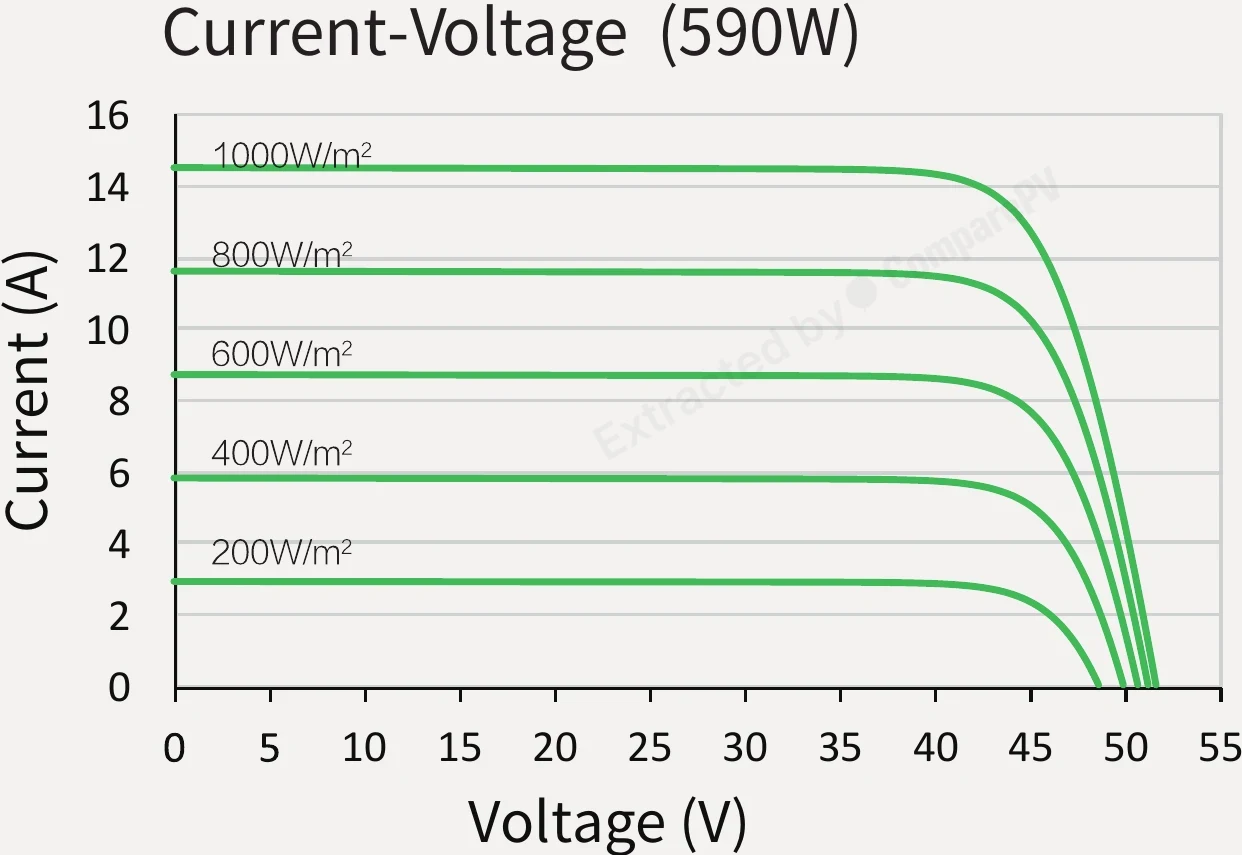
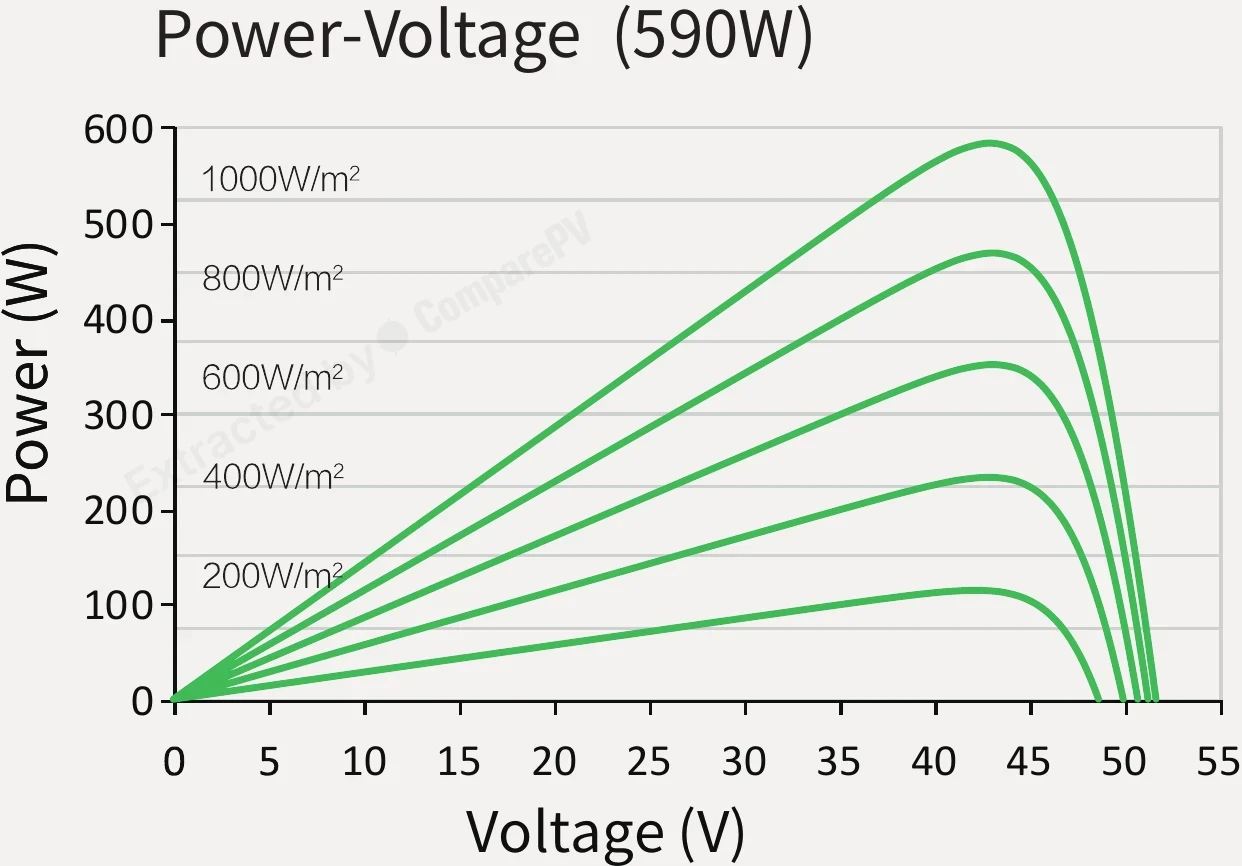
Measured curves published by Astronergy in this model's datasheet. A chart carrying a wattage was measured on that variant alone - only the ones that describe 590 Wp appear here. The rest cover the whole series.

Simulations
Degradation from this panel's own datasheet figures. No inverter, soiling or shading losses.
Model: bifaciality × albedo × 0.6 view factor. A first-order estimate, not a yield simulation.


Found 2327 panels of the same or similar size to this one, within ±10 mm. See them here Found 2369 panels of the same or similar size to this one, within ±25 mm. See them here Found 2383 panels of the same or similar size to this one, within ±50 mm. See them here Found 2548 panels of the same or similar size to this one, within ±100 mm. See them here
About the ASTRO N5 series
These answers cover the whole series. Where a figure differs, the specification above is this module's own.