Light for its output, needs the roof space
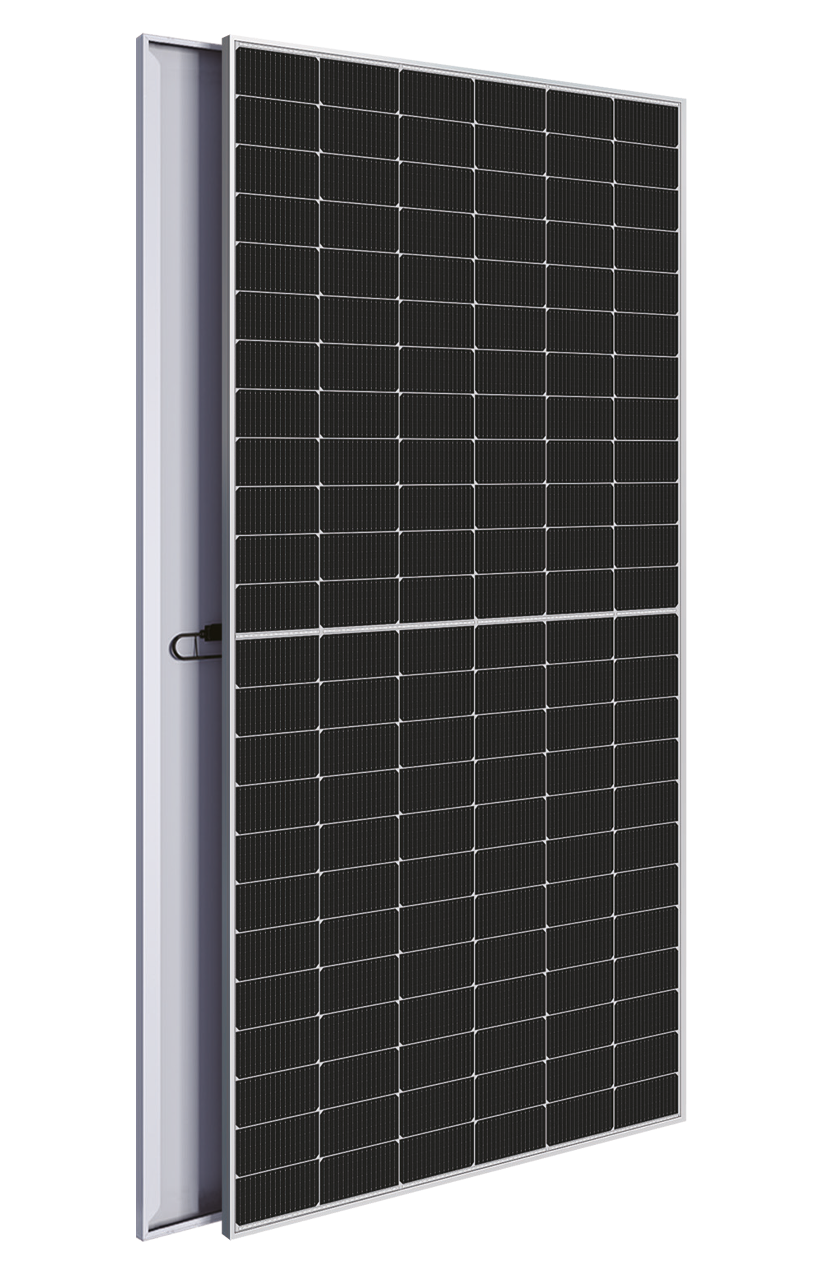
The Astronergy ASTRO N5 / CHSM72N-HC Monofacial (182) series was designed for high energy yield from classic installations - without the need for bifacial modules. Key to this is the combination of n-type TOPCon cells and half-cut architecture, translating to more stable performance over time and reduced sensitivity to typical operational losses. In practice, this means greater output when rooftop or ground conditions aren't ideal, meeting investors' expectations for predictable results.
Against the competition, the series stands out for its refined current collection thanks to the SMBB construction, improving performance under partial shading and minimizing risks of micro-cracking during transportation and installation. An additional advantage is its low sensitivity to high temperatures, which is crucial during summer months on roofs with limited ventilation.
This is an excellent choice for C&I installations, PV farms, and larger rooftops, where low LCOE and reduced BOS costs matter, and investors seek cutting-edge technology without compromising on reliability.
Ranking
Signals from the data
Commercial, utility-scale, shaded-installations and hot-climate.
Roofs where every square metre has to count and tight roof space.
Top 18% of the TOPCon 550-600 W segment, against a median of 53.8.
Bottom 20% of the TOPCon 550-600 W segment, against a median of 224.4.
Bottom 21% of the TOPCon 550-600 W segment, against a median of 22.44%.
The temperature coefficient for Pmpp is -0.29%/°C (data from the official Astronergy datasheet), which is significantly better than typical PERC modules (-0.34%/°C). In the summer, when the module temperature on the roof exceeds 60°C, this difference translates into a significantly higher daily energy yield.
The performance range of 21.9–22.5% places the ASTRO N5 series in the top decile of the monofacial 182 mm segment available at its launch (2022). Comparable bifacial products from Emvee and ZNShine achieve a maximum of 22.44–22.45%, meaning that the ASTRO N5 does not lose efficiency even when compared to bifacial competitors.
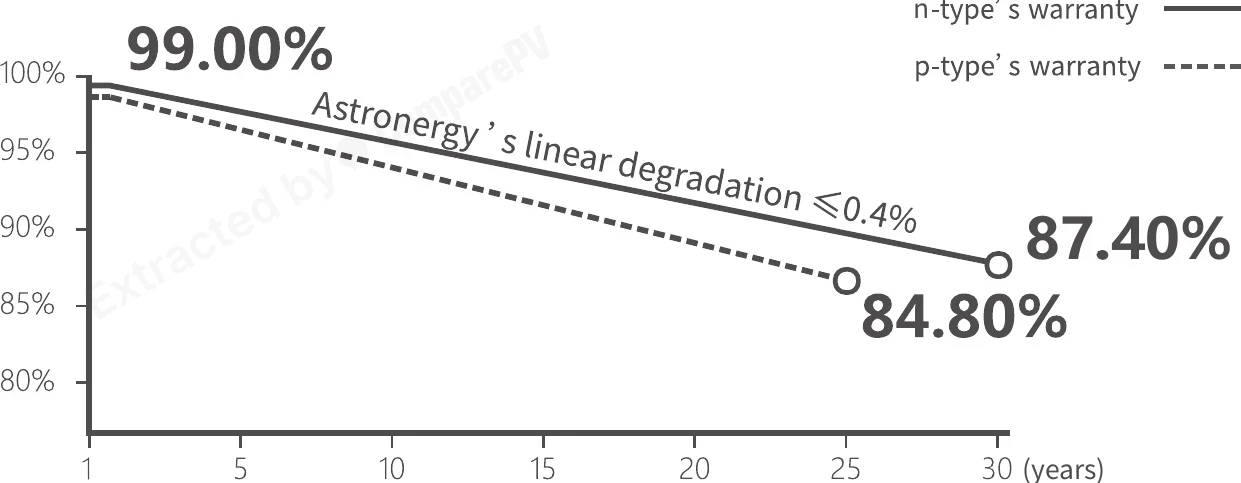
The official datasheet (astronergy.com, April 2023) confirms that the module retains ≥87.40% of its nominal power after 30 years of operation. This is a more favorable threshold than the typical 25-year warranties offered for PERC modules, which guarantee approximately 84–85% performance, and it provides coverage for 5 additional years.
Astronergy (Chint New Energy) has maintained its BNEF Tier 1 status consistently, including in Q1 2026 (56 GW of installed capacity). This means that for C&I and PV farm projects, financing is readily available without the need for additional technical due diligence to verify the manufacturer's credibility.
The half-cut design reduces the working current in the cell halves, lowering resistive losses and improving performance under partial shading. The SMBB (Super Multi Busbar) technology reduces mechanical stress, which limits the risk of microcracks during transport and assembly – this is particularly important for modules with an area of approximately 2.58 m².
The ASTRO N5 CHSM72N-HC monofacial (182) series is designated as discontinued (introduced in 2022). This means that the availability of these modules on the secondary market is limited, there is a risk of not being able to find identical replacements in case of a single module failure, and there may be difficulties in fulfilling the 30-year warranty service in terms of power.
All three bifacial modules (Emmvee Titanium Duo, Emmvee Titanium Clear, ZNShine ZXM7-UHLD144) have comparable efficiency rates of 22.44–22.45%. In utility-scale installations with a clear surface, bifacial modules typically generate 5–15% additional power from the rear side – an advantage that monofacial ASTRO N5 modules cannot provide.
- Module efficiency of 21.9% is 0.5pp below average for TOPCon 550-600W panels (median: 22.4%)
- At 218.7 W/m², this panel generates 5.7 W/m² less per unit area than TOPCon 550-600W median (224.4 W/m²)
- At -0.29%/°C, hot weather performance is typical for TOPCon 550-600W panels
- Weight of 26.9 kg (4.3 kg below TOPCon 550-600W median of 31.2 kg) allows easier transport and roof mounting
- Ranked #6783 out of 14005 panels for efficiency in the database
Specifications
Datasheet charts
Measured curves published by Astronergy in this model's datasheet. A chart carrying a wattage was measured on that variant alone - only the ones that describe 565 Wp appear here. The rest cover the whole series.
Simulations
Degradation from this panel's own datasheet figures. No inverter, soiling or shading losses.






Found 2326 panels of the same or similar size to this one, within ±10 mm. See them here Found 2368 panels of the same or similar size to this one, within ±25 mm. See them here Found 2382 panels of the same or similar size to this one, within ±50 mm. See them here Found 2547 panels of the same or similar size to this one, within ±100 mm. See them here