Astronergy CHSM72N(DG)/F-BH-605

Astronergy CHSM72N(DG)/F-BH-605

605 Wp TOPCon Bifacial 80%
ComparePV verdict

Space saver, no clear weak spot

Rank 2,084 of 14,129
Compare panels Datasheet PDF
Power (Wp)
605
Weak · bottom 15%
Efficiency (%)
23.40
Strong · top 12%
Density (Wp/m²)
234.2
Strong · top 11%
Temp (%/°C)
-0.290
Typical · median -0.290
Weight (kg)
31.1
Typical · median 32.8 kg
Warranty (yrs)
30
Typical · median 30 yrs

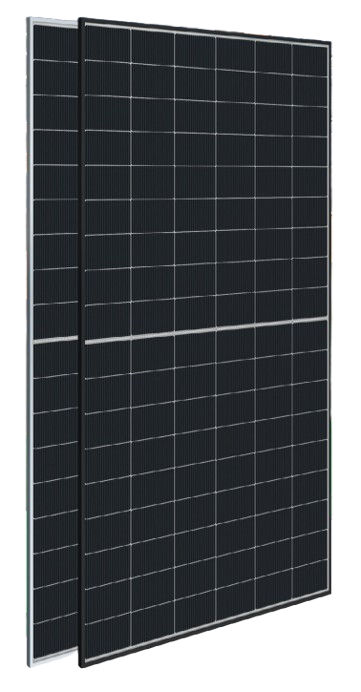
Astronergy ASTRO N5 Bifacial (CHSM72N(DG)/F-BH) are glass-glass bifacial modules engineered for maximum energy yield where every square meter counts, alongside long-term operational stability. The implementation of n-type TOPCon cells helps mitigate common losses found in older technologies and maintains high efficiency even under low irradiance conditions. A key advantage is bifaciality-the module harnesses reflected light off the ground, thereby significantly boosting energy production on bright roofs, gravel surfaces, or ground-mounted installations without additional panels. Thanks to double-sided glass, this series is better equipped for challenging environmental conditions and long-term operation, making it appealing to investors seeking reliable performance. It's an excellent choice for utility-scale PV farms, commercial and industrial installations, and large rooftop systems-especially when aiming to reduce Balance of System (BOS) costs through high single-module power and simplifying string designs.

Ranking

1,085 panels in the segment TOPCon 600-650 W
Metric This panel Median Position in segment Overall rank
Module efficiency 23.40% 22.80% Strong · top 12% 919
Power density 234.2 227.7 Strong · top 11% 900
Temperature coefficient -0.290 -0.290 Typical 2,220
Weight per kWp 51.4 53.1 Typical 4,824
Performance warranty 30 yrs 30 yrs Typical 21
Colour key Strong - top 25% Typical - middle 50% Weak - bottom 25%

Signals from the data

7 positive · 2 caution
Best for

Commercial and utility-scale.

Strengths
234.2 watts per square metre

Top 11% of the TOPCon 600-650 W segment, against a median of 227.7.

23.40% module efficiency

Top 12% of the TOPCon 600-650 W segment, against a median of 22.80%.

What owners get
Efficiency of 23.4% - leading among comparable figures

With a 23.4% efficiency, the ASTRO N5 (605 W) module directly outperforms comparable models such as JS Solar JS210MHC120 and LEDVANCE M585~605P60UB by approximately 2 percentage points (21.37-21.40%), resulting in a significantly higher energy yield for the same roof area. This performance is close to that of the GCL SIROT NT10/72GDF (23.42%), placing the series at the top of the 605 W segment.

Low temperature coefficient of Pmax: -0.29%/°C

n-type TOPCon cells exhibit a temperature coefficient of -0.29%/°C, compared to the typical -0.35%/°C for PERC technology. Under Polish conditions (module temperatures of 60-75°C during the summer), this translates to approximately 1.5-2.5% lower power losses at high solar irradiance compared to older technologies.

30-year linear warranty on power output, degradation ≤0.40%/year

The manufacturer guarantees ≥87.4% power output after 30 years, with an annual degradation of ≤0.40% (years 2-30). Solar panels with PERC technology typically offer 25-year warranties with a power output of approximately 84.8% after that period. Therefore, the ASTRO N5 offers both a longer lifespan and a higher final power output.

Glass-glass + bifaciality: higher efficiency and durability

The dual-layer construction (2 mm + 2 mm) eliminates the risk of delamination of the rear foil and significantly reduces moisture penetration, thereby extending the lifespan of the module. The bifacial design allows for the recovery of an additional 5-25% of energy (depending on the albedo of the substrate: light gravel ~0.35, TPO membrane ~0.20) without increasing the occupied surface area.

Astronergy - Ranked among the top 6 most bankable projects in the BNEF 2023 report

Astronergy ranked 6th in the BloombergNEF 2023 bankability ranking for all PV module manufacturers worldwide, which confirms its ability to secure financing from independent commercial banks and facilitates the acquisition of project finance for PV farms and industrial installations.

Trade-offs
Weight ~32 kg - roof load

The glass-glass (2+2 mm glass) construction increases the module's weight to approximately 31-32 kg, compared to approximately 28 kg for a glass-backsheet module. For roof-mounted installations, it is necessary to verify the roof's load-bearing capacity, and installation typically requires the work of two installers or the use of specialized mounting systems, which can increase labor costs.

One power variant (605 W) - limited flexibility

The series offers only one power option (605 W), which makes it difficult to optimally match the number of modules in a string to inverters with smaller voltage ranges (MPPT) or to small-scale (prosumer) installations with an area of less than approximately 20 m². Competitive series (e.g., GCL SIROT NT10/72GDF) offer a wider range of power options.

Notes from the database
  • 23.4% module efficiency - 0.6pp better than the TOPCon 600-650W median of 22.8%
  • At 234.2 W/m² power density, this panel generates 6.5 W/m² more per unit area than TOPCon 600-650W median (227.7 W/m²)
  • Temperature coefficient of -0.29%/°C matches the TOPCon 600-650W median
  • Weight of 31.1 kg (1.7 kg below TOPCon 600-650W median of 32.8 kg) allows easier transport and roof mounting
  • Bifacial design (80% factor) captures reflected light - adds 4-12% yield on ground-mount or white roof

Specifications

Open datasheet PDF
Nominal power (Pmax) 605 Wp Nameplate at 1000 W/m², 25 °C
Module efficiency 23.40 % Strong Segment median 22.80%
Vmpp · Impp 44.55 V · 13.58 A Operating point at max power
Voc · Isc 53.20 V · 14.33 A Sizes the string length
Max system voltage 1500 V Longer strings than 1000 V modules
Dimensions 2278×1134×30 mm · 2.58 m² of roof
Weight 31.1 kg Typical Typical · median 32.8 kg
Cells 144 · TOPCon Monocrystalline
Bifaciality 80 % Rear output as a share of front
Coefficient Pmax -0.290 %/°C Typical median -0.290 of its segment
Coefficient Voc · Isc -0.250 · 0.043 %/°C
Product warranty 15 years Hardware defects only
Performance warranty 30 years Typical median 30 yrs · median 30 yrs
End-of-warranty output 87.4 % Equals 529 W guaranteed
Degradation 1.00 → 0.40 % First year, then annual

Simulations

Live - change any input
Lifetime output & value
30 years at 1200 kWh/kWp/year and €0.50 per kWh
Power in year 30
-
Lifetime energy
-
Energy value
-
With bifacial gain
-

Degradation from this panel's own datasheet figures. No inverter, soiling or shading losses.

Heat losses
-0.290 %/°C against a segment median of -0.290
-
Bifacial gain
Rear gain over light concrete: -
-

Model: bifaciality × albedo × 0.6 view factor. A first-order estimate, not a yield simulation.

Filter these
Size
Panel Power Eff. Temp. Weight Difference
Astronergy CHSM72N(DG)/F-BH-605 605 W 23.40% -0.290 31.1 kg You are here
AIKO-A650-MAE72Mw 650 W 25.20% -0.260 27.0 kg +45 W, lighter, +1.8 pp
AIKO-A645-MAE72Mw 645 W 25.00% -0.260 27.0 kg +40 W, lighter, +1.6 pp
LR7-60HVH-560M 560 W 24.80% -0.260 25.0 kg -45 W, lighter, +1.4 pp
AIKO-A640-MAE72Mw 640 W 24.80% -0.260 27.0 kg +35 W, lighter, +1.4 pp
LR7-60HVH-555M 555 W 24.60% -0.260 25.0 kg -50 W, lighter, +1.2 pp
AIKO-A635-MAE72Mw 635 W 24.60% -0.260 27.0 kg +30 W, lighter, +1.2 pp
CHSM72M-HC-545 545 W 21.10% -0.340 26.9 kg -60 W, hotter, -2.3 pp
CHSM72M-HC-550 550 W 21.30% -0.340 26.9 kg -55 W, hotter, -2.1 pp
CHSM72M-HC-555 555 W 21.50% -0.340 26.9 kg -50 W, hotter, -1.9 pp
CHSM72M-HC-560 560 W 21.70% -0.340 26.9 kg Hotter, -1.7 pp, -5 yr warranty
CHSM72N-HC-565 565 W 21.90% -0.290 26.9 kg -40 W, lighter, -1.5 pp
CHSM72N-HC-570 570 W 22.10% -0.290 26.9 kg -35 W, lighter, -1.3 pp
CHSM72N-HC-575 575 W 22.30% -0.290 26.9 kg -30 W, lighter, -1.1 pp
CHSM72N-HC-580 580 W 22.50% -0.290 26.9 kg -25 W, lighter, -0.9 pp
AIKO-A630-MAH72Dw 630 W 24.40% -0.260 32.5 kg +25 W, cooler, +1.0 pp

Found 2327 panels of the same or similar size to this one, within ±10 mm. See them here Found 2369 panels of the same or similar size to this one, within ±25 mm. See them here Found 2383 panels of the same or similar size to this one, within ±50 mm. See them here Found 2548 panels of the same or similar size to this one, within ±100 mm. See them here

About the ASTRO N5 Bifacial Series (CHSM72N(DG)/F-BH) series

6 answered

These answers cover the whole series. Where a figure differs, the specification above is this module's own.

What warranty is offered on the Astronergy ASTRO N5 Bifacial CHSM72N(DG)/F-BH panels?
The ASTRO N5 Bifacial series comes with a 15-year product warranty covering manufacturing defects and workmanship, along with a 30-year linear power output warranty. After 30 years of operation, the module is guaranteed to retain at least 87.4% of its nominal power. This is one of the longest warranty standards available in the market and is backed by an international insurance provider, which significantly strengthens the credibility of the manufacturer's commitment.
What are the benefits of bifacial technology in the ASTRO N5 panels, and is the premium worth it?
Bifacial technology means the module generates electricity from both its front and rear surfaces by capturing light reflected from the ground or surrounding surfaces. In practice, when installed over light-colored gravel, a white roofing membrane, or as a ground-mounted system with adequate ground clearance, real-world energy yield can increase by 5-15% without adding extra panels. Given a front-side power rating of up to 605 Wp, this translates into measurable savings on balance-of-system (BoS) costs in larger-scale projects.
Will the Astronergy ASTRO N5 605 Wp panels perform well in Poland's climate with frequent overcast skies?
Yes. The n-type TOPCon cells used in this series feature a lower temperature coefficient (-0.29%/°C) and superior response to diffuse irradiance compared to older PERC cells. This means that under typical Polish weather conditions - where partial cloud cover is common throughout the summer - the module maintains a relatively high energy output relative to its rated power, outperforming conventional technologies in low-light scenarios.
How much does a single ASTRO N5 Bifacial module weigh, and will a standard roof structure support it?
A single module weighs approximately 32.1 kg with dimensions of 2278 × 1134 × 30 mm. This is heavier than a typical 60-cell panel, so a structural load assessment of the roof is advisable before installation, particularly on older buildings. On new industrial facilities and steel-frame structures, this weight is generally not a concern; moreover, the large module format reduces the total number of modules required and simplifies load distribution across the mounting system.
How does the glass-glass construction of the ASTRO N5 series differ from a standard module with a polymer backsheet?
In glass-glass modules, the conventional polymer backsheet is replaced with a second pane of tempered glass, eliminating the primary failure modes associated with backsheets: cracking, discoloration, and moisture ingress. The result is enhanced protection of the solar cells against weathering, greater resistance to Potential Induced Degradation (PID), and improved long-term mechanical durability. For installations with a 25-30-year horizon - especially in challenging microclimates - this represents a significant advantage over standard backsheet designs.
Is the Astronergy ASTRO N5 Bifacial CHSM72N(DG)/F-BH series still commercially available?
Yes, the ASTRO N5 Bifacial series is actively manufactured and available on the market. Astronergy is a Tier 1 manufacturer, which ensures consistent module availability through distributors in Poland and across Europe. Prior to purchase, it is advisable to confirm current stock levels with your preferred supplier, as available volumes for specific power variants may vary depending on the season and regional demand.
Add to compare