NS-320MH-80

320 Wp Monocrystalline
ComparePV verdict

Space saver, no clear weak spot

Rank 11,899 of 14,005
Compare panels Datasheet PDF
Power (Wp)
320
Weak · bottom 16%
Efficiency (%)
22.45
Strong · top 1%
Density (Wp/m²)
224.6
Strong · top 1%
Temp (%/°C)
-0.290
Strong · top 10%
Weight (kg)
15.0
Strong · 6.0 kg below median
Warranty (yrs)
25
Typical · median 25 yrs

The PolyCrown Solar Tech Monocrystalline80 solar panel series is a response to the growing demand for high power density modules while maintaining optimal unit dimensions. The use of advanced PERC cell technology allows for significantly higher solar energy conversion efficiency, which directly translates into greater yields from the available mounting area. A key feature of this series is the unique 80-cell design, which ensures stable voltage parameters, perfectly matched to the specific requirements of modern charging and energy storage systems. The application of half-cut cell technology (Half-Cut) effectively reduces resistive losses and eliminates the problem of performance drop resulting from partial shading, making these panels a reliable choice for demanding users. Thanks to high resistance to PID-type degradation and the LID phenomenon, the installation maintains its efficiency through many years of intensive operation. PolyCrown Monocrystalline80 is a solution dedicated primarily to those seeking maximum energy independence in mobile systems, home installations, and specialized off-grid projects. The solid frame construction and reinforced tempered glass distinguish this series from the competition, offering full operational safety even in difficult weather conditions.

Ranking

2,653 panels in the 220-420 W band, all technologies
Metric This panel Median Position in segment Overall rank
Module efficiency 22.45% 20.10% Strong · top 1% 4,620
Power density 224.6 200.6 Strong · top 1% 4,545
Temperature coefficient -0.290 -0.350 Strong · top 10% 2,165
Weight per kWp 46.9 56.5 Strong · top 2% 1,379
Performance warranty 25 yrs 25 yrs Typical 9,798
Colour key Strong - top 25% Typical - middle 50% Weak - bottom 25%

Signals from the data

8 positive · 3 caution
Best for

Roofs where every square metre counts, small roofs that need every watt and weight-limited structures.

Strengths
224.6 watts per square metre

Top 1% of the 220-420 W band, against a median of 200.6. Ranked 4,545th in the whole database.

22.45% module efficiency

Top 1% of the 220-420 W band, against a median of 20.10%. Ranked 4,620th in the whole database.

46.9 kg per kWp

Top 2% of the 220-420 W band, against a median of 56.5. Ranked 1,379th in the whole database.

What owners get
High conversion efficiency up to 23.15%

The maximum efficiency of 23.15% matches JA Solar's Monocrystalline80 series (Tier-1) and clearly outperforms Waaree ARKA (19.81%) and Jinko's 72-cell polycrystalline series (17%) by roughly 3.3 and over 6 percentage points respectively — a result at the very top of the segment.

Half-cut cell technology

Splitting cells in half reduces resistive losses and limits the impact of partial shading on overall module output, which is particularly valuable in installations with uneven irradiance.

Distinctive 80-cell construction

The unusual 80-cell count delivers voltage parameters tailored to charge controllers and energy storage systems, differentiating the series from the standard 72/144-cell layouts that dominate the market.

Wide power range 200-330 Wp

8 power variants within a single series allow the module to be matched to small mobile and off-grid installations as well as larger residential systems, without changing cell technology or voltage parameters.

PID and LID degradation resistance

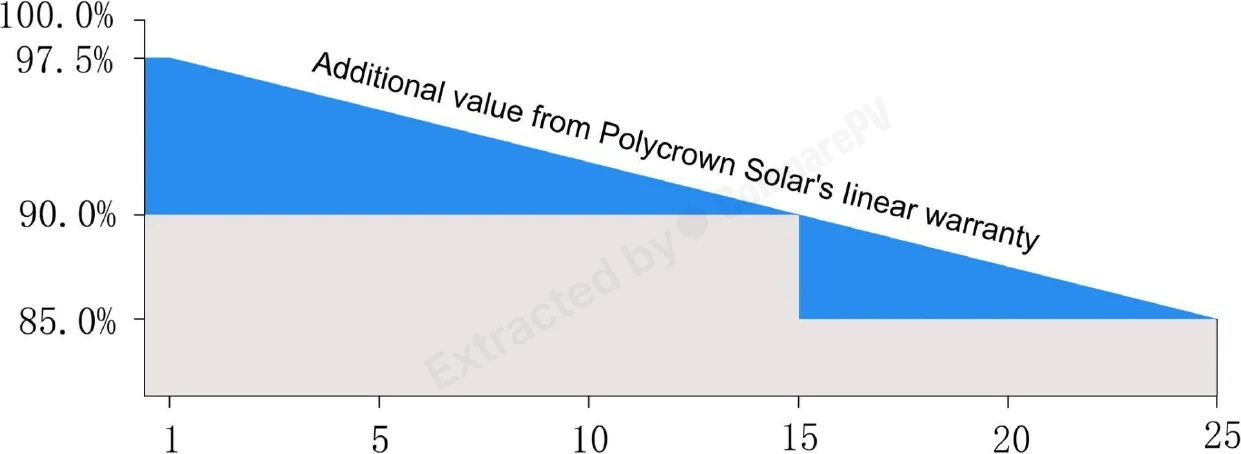
Declared high resistance to Potential Induced Degradation and Light Induced Degradation supports long-term efficiency retention, which matters given the 25-year linear power warranty.

Trade-offs
23.15% efficiency at the PERC technology ceiling

Industry consensus places the theoretical PERC cell limit at roughly 23%, with mass-production efficiency typically at 20.5-22% (TOPCon reaches up to 23.6%). The declared 23.15% for PERC sits at the physical edge of what this technology can achieve, and would benefit from independent module testing verification.

PERC is a legacy technology relative to N-type

By 2026, TOPCon cells surpassed 65% of global production (2024 data) and offer lower degradation plus better high-temperature performance than PERC. Choosing older PERC technology may mean lower real-world annual yield and reduced long-term parts/service availability as manufacturers phase out PERC production lines.

Monofacial only, no bifacial option

The series has no bifacial variant, while N-type technologies increasingly enable an additional 5-15% rear-side yield — the absence of this option limits flexibility for ground-mount projects and high-albedo roof installations.

Notes from the database
  • Efficiency of 22.4% is 0.6pp above the database median (21.8%)
  • 224.6 W/m² power density - 6.5 W/m² more than database median (218.1 W/m²), more power per roof area
  • Temperature coefficient of -0.29%/°C matches the database median
  • 15.0 kg weight - 11.5 kg lighter than database median (26.5 kg), reducing installation effort
  • Ranked #4620 out of 14005 panels for efficiency in the database

Specifications

Open datasheet PDF
Nominal power (Pmax) 320 Wp Nameplate at 1000 W/m², 25 °C
Module efficiency 22.45 % Strong Segment median 20.10%
Vmpp · Impp 23.62 V · 13.55 A Operating point at max power
Voc · Isc 28.06 V · 14.62 A Sizes the string length
Max system voltage 1500 V Longer strings than 1000 V modules
Dimensions 1900×750×30 mm · 1.43 m² of roof
Weight 15.0 kg Strong Strong · 6.0 kg below median
Cells 80 Monocrystalline
Coefficient Pmax -0.290 %/°C Strong top 10% of its segment
Coefficient Voc · Isc -0.250 · 0.045 %/°C
NOCT 45 °C At 800 W/m², 20 °C ambient
Product warranty 15 years Hardware defects only
Performance warranty 25 years Typical median 25 yrs · median 25 yrs
End-of-warranty output 84.6 % Equals 262 W guaranteed
Degradation 2.50 → 0.54 % First year, then annual

Datasheet charts

Open datasheet PDF

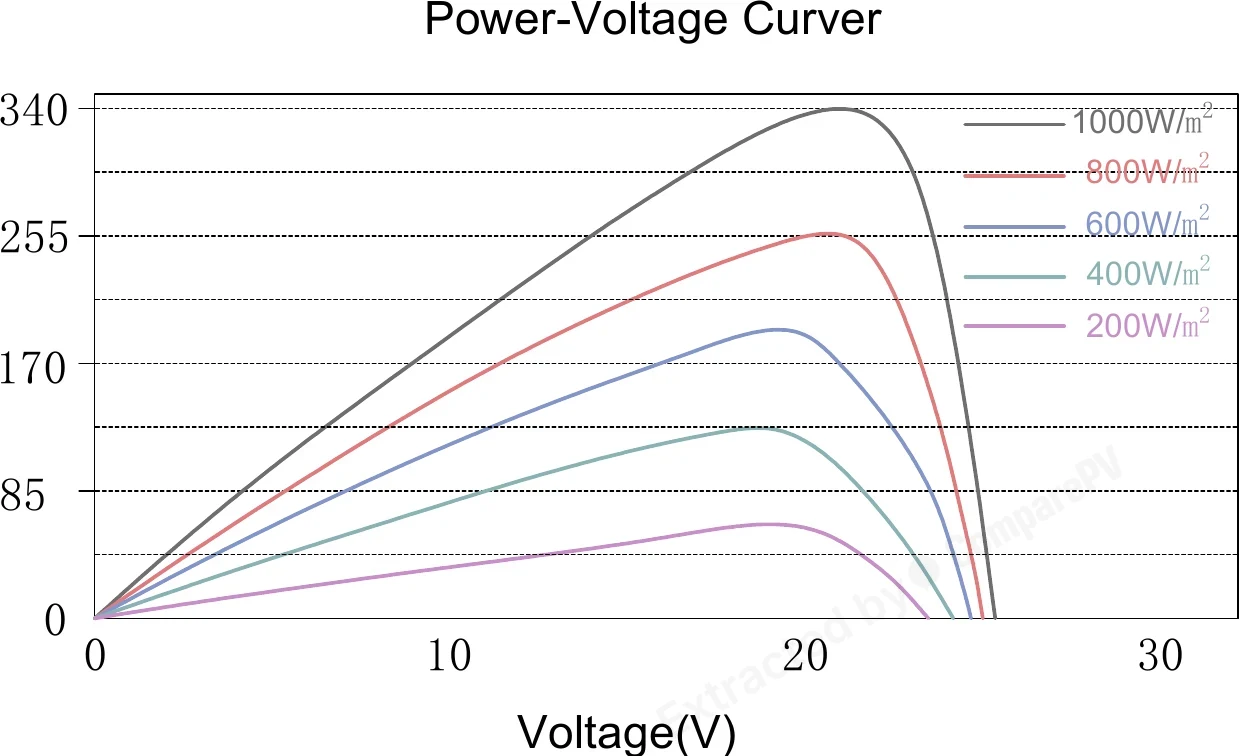
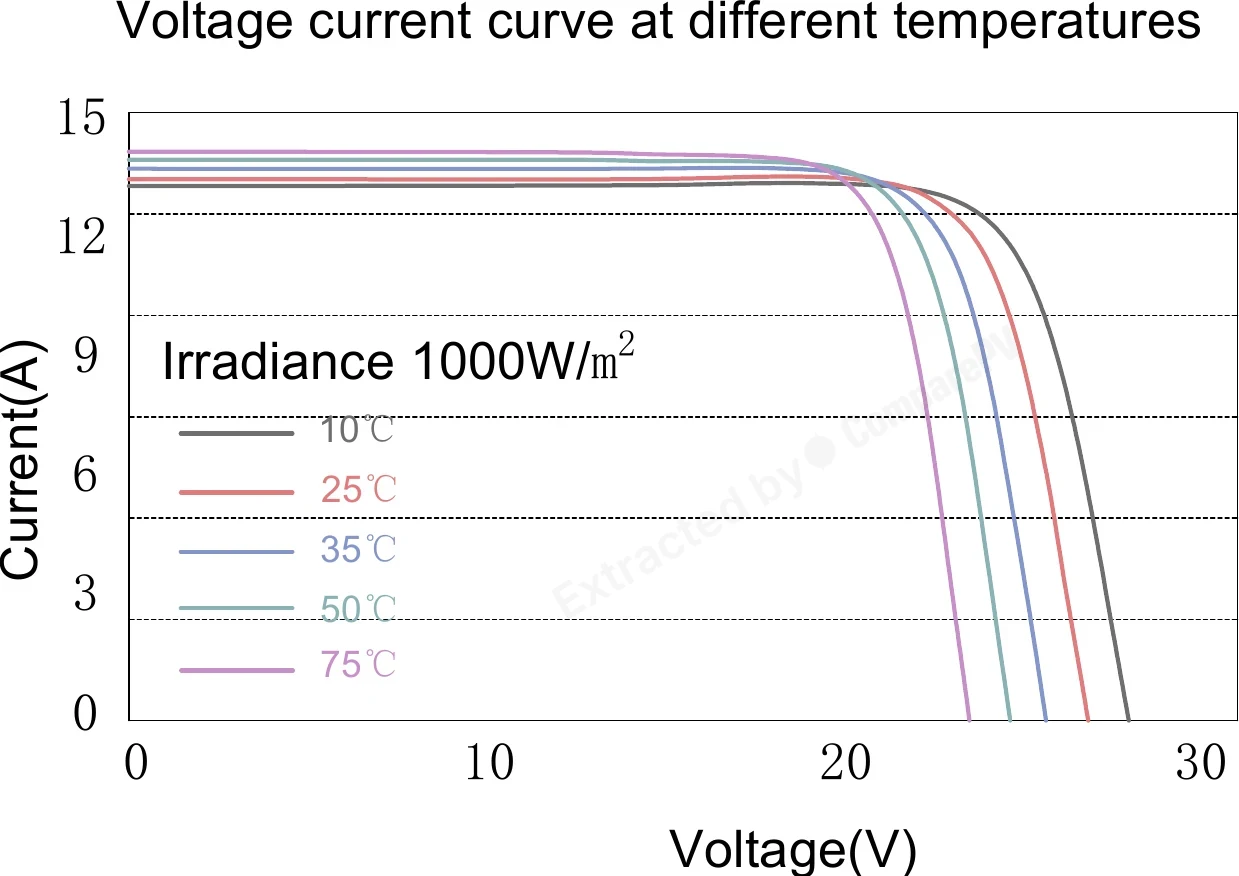
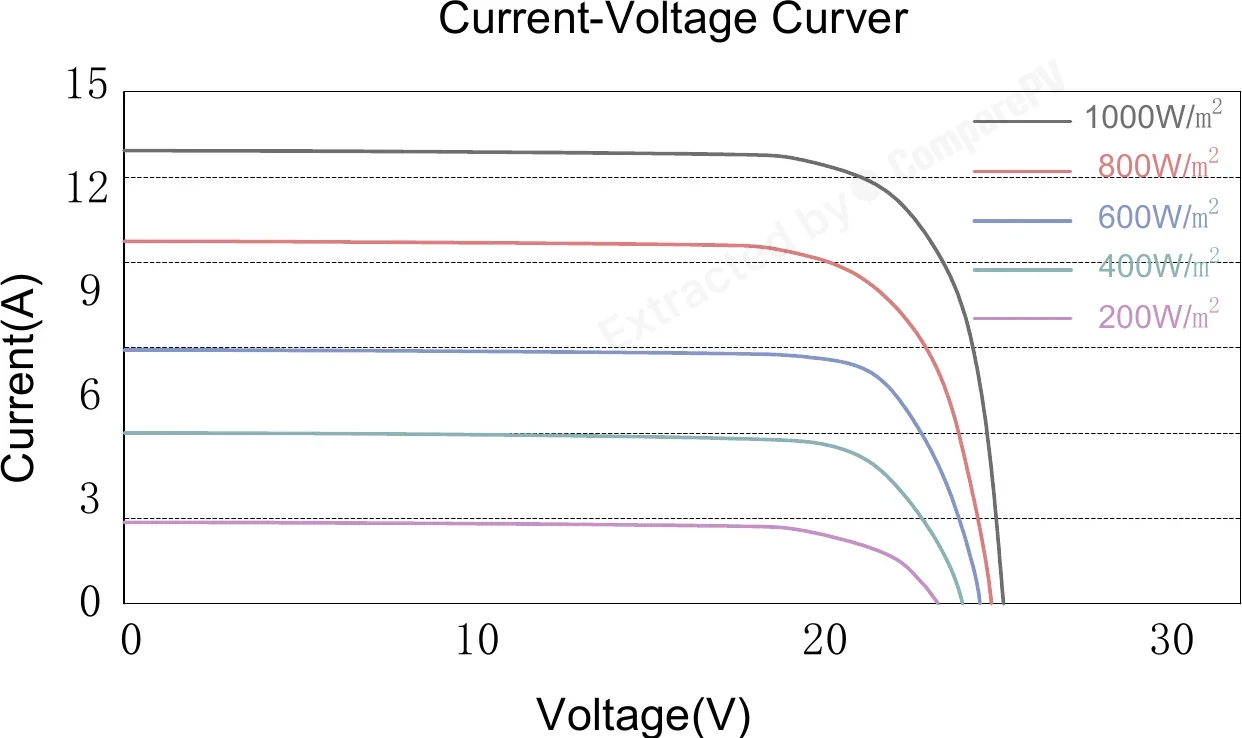
Measured curves published by PolyCrown Solar Tech in this model's datasheet. A chart carrying a wattage was measured on that variant alone - only the ones that describe 320 Wp appear here. The rest cover the whole series.
Simulations

Live - change any input
Lifetime output & value
30 years at 1200 kWh/kWp/year and €0.50 per kWh
Power in year 30
-
Lifetime energy
-
Energy value
-

Degradation from this panel's own datasheet figures. No inverter, soiling or shading losses.

Heat losses
-0.290 %/°C against a segment median of -0.350
-
Filter these
Size
Panel Power Eff. Temp. Weight Difference
PolyCrown Solar Tech NS-320MH-80 320 W 22.45% -0.290 15.0 kg You are here
NS-300MH-72 300 W 23.32% -0.290 12.5 kg -20 W, lighter, +0.9 pp
ZEUS 1.2 FullBlack 280W 280 W 23.31% -0.260 14.3 kg -40 W, +0.9 pp, +5 yr warranty
NS-330MH-80 330 W 23.15% -0.290 15.0 kg +10 W, +0.7 pp
GKA182M285W 285 W 23.00% - 10.8 kg -35 W, lighter, +5 yr warranty
GKA182M270W 270 W 23.00% - 10.8 kg -50 W, lighter, +5 yr warranty
GKA182M300W 300 W 23.00% - 16.2 kg -20 W, +0.6 pp, +5 yr warranty
GKA210M320W 320 W 23.00% - 16.2 kg Heavier, +0.6 pp, +5 yr warranty
NS-290MH-80 290 W 20.35% -0.290 15.0 kg -30 W, -2.1 pp
NS-300MH-80 300 W 21.05% -0.290 15.0 kg -20 W, -1.4 pp
NS-310MH-80 310 W 21.75% -0.290 15.0 kg -10 W, -0.7 pp
NS-320MH-80 320 W 22.45% -0.290 15.0 kg Very close match
NS-310MH-80 310 W 21.75% -0.290 15.0 kg -10 W, -0.7 pp
NS-300MH-80 300 W 21.05% -0.290 15.0 kg -20 W, -1.4 pp
NS-290MH-80 290 W 20.35% -0.290 15.0 kg -30 W, -2.1 pp

Found 10 panels of the same or similar size to this one, within ±10 mm. See them here Found 10 panels of the same or similar size to this one, within ±25 mm. See them here Found 10 panels of the same or similar size to this one, within ±50 mm. See them here Found 10 panels of the same or similar size to this one, within ±100 mm. See them here

Common questions

6 answered
What warranty does the PolyCrown Solar Tech Monocrystalline80 series come with?
The Monocrystalline80 series carries a 15-year product warranty covering material and workmanship defects, plus a 25-year linear power output warranty. The manufacturer guarantees that after 25 years of operation the module will retain at least 80% of its rated power output. This is consistent with premium-tier PERC panel standards.
Is the Monocrystalline80 series suitable for off-grid systems and mobile installations?
Yes, the Monocrystalline80 series is specifically designed for off-grid, RV, and marine applications. Its unique 80-cell architecture produces voltage characteristics optimized for MPPT charge controllers commonly used in off-grid setups. The 330 Wp output in a compact form factor maximizes energy harvest from the limited roof area of a vehicle or trailer.
What does half-cut cell technology in the Monocrystalline80 panels actually do for me?
Half-cut technology splits each PERC cell in half, reducing the current per cell and cutting resistive losses. In real-world terms this means better performance at elevated temperatures and lower energy losses when part of the panel is shaded. For the end user it translates into measurably more kilowatt-hours per year at no extra cost compared to standard full-cell modules.
Do Monocrystalline80 330W panels lose significant output when a chimney or antenna partially shades them?
Thanks to the half-cut cell layout, the Monocrystalline80 series handles partial shading far better than conventional full-cell modules. The top and bottom halves of each panel operate independently, so shade falling on one section does not shut down the entire module's output. This is a key advantage for rooftop installs with architectural obstacles.
Are the PolyCrown Monocrystalline80 panels resistant to PID and LID degradation?
Yes, the manufacturer rates the Monocrystalline80 modules as highly resistant to PID (Potential Induced Degradation), which can reduce efficiency in high-voltage string systems, and to LID (Light Induced Degradation) typical of crystalline silicon cells in the early weeks of operation. This ensures the panels maintain their rated performance throughout the 25-year power warranty period.
How does the 80-cell design of the Monocrystalline80 differ from standard 60- or 72-cell modules?
Conventional residential panels use 60 or 72 full cells, producing open-circuit voltages in the 30–40 V range. The Monocrystalline80 series uses 80 half-cut PERC cells, delivering a higher Voc better matched to the MPPT input requirements of modern battery storage inverters and off-grid charge controllers. This can reduce the number of series-connected modules per string and simplify BoS wiring in smaller installations.
Add to compare