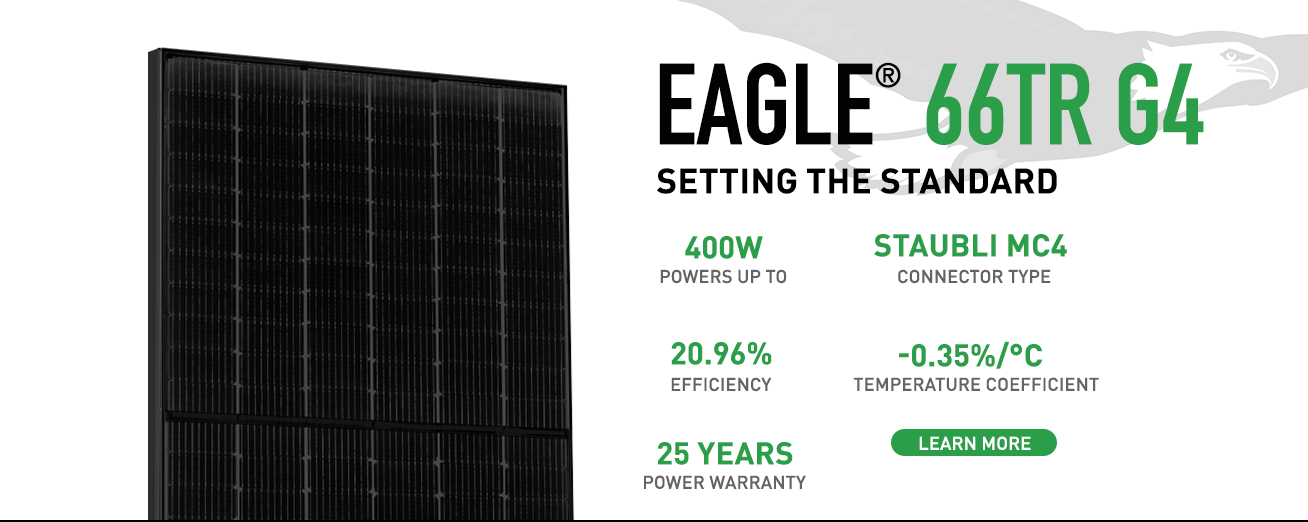
Space saver, no clear weak spot
The Jinko Solar Tiger 66TR series was designed for high installation performance in real-world conditions - not just in the laboratory. Its key advantage lies in combining N-type cells with refined interconnection architecture, resulting in more stable operation across a wide temperature range and better performance under weaker sunlight. Thanks to the Multi Busbar technology, the module collects current from the cells more efficiently, reducing losses and improving long-term reliability. Meanwhile, Hot 2.0 aims to minimize degradation caused by light and temperature, helping maintain higher energy yields year after year. In practice, the Tiger 66TR addresses production drops during hot weather and the risk of faster module aging in demanding environments. The series also stands out for its PID resistance and enhanced resistance to salt fog and ammonia, making it suitable for coastal, agricultural, and industrial sites. This is a smart choice for rooftop installations and PV farms, where predictable yield and long-term reliability matter just as much as catalog specifications.
Ranking
Signals from the data
Residential, commercial and hot-climate.
Top 6% of the PERC 350-400 W segment, against a median of 199.0. Ranked 10,973rd in the whole database.
Top 6% of the PERC 350-400 W segment, against a median of 19.90%. Ranked 11,054th in the whole database.
Top 19% of the PERC 350-400 W segment, against a median of 55.8.
JinkoSolar has ranked #1 in Bloomberg NEF's Bankability Report for 10 consecutive years and was the only module manufacturer to achieve a 100% bankability score in 2024. This ensures project financing eligibility and warranty security throughout the full 25-year power guarantee period.
The top-tier variant reaches 21.48% STC efficiency, outperforming direct comparables: VDS-S144/FNH (20.4%), Sunket SKT410M10-108D4 (21.0%), and Luxor Eco Line N-type TOPCon (21.33%). Within the 410 Wp power class, Tiger 66TR ranks at the top of its segment.
Multi Busbar design reduces series resistance and improves current collection per cell, while Hot 2.0 suppresses LID and LETID degradation inherent to PERC cells. The result is more stable annual energy yield and lower risk of early power drop during the first months of operation.
The series is certified for salt mist (IEC 61701 Class C), ammonia, and PID resistance, with structural ratings of 2400 Pa wind load and 5400 Pa snow load. It is well-suited for coastal rooftops, agricultural facilities, and industrial sites without additional protective measures.
Tiger 66TR reached end-of-production in 2023. New orders rely on residual distributor inventory, which limits availability of matching modules for system expansions and raises the risk of unavailable original replacements during warranty claims further into the system's lifetime.
P-type PERC technology carries higher long-term LID/LETID degradation than N-type TOPCon despite the Hot 2.0 mitigation layer. The series temperature coefficient (-0.34%/°C) lags behind typical N-type TOPCon modules (-0.29 to -0.30%/°C), translating to roughly 4-5% higher power loss at peak summer irradiance compared to competing N-type panels.
Current premium Tier-1 series (e.g., Jinko Tiger Neo, Luxor TOPCon in the same power class) ship with 15-year product warranties. Tiger 66TR's 12-year coverage reflects the 2019-era standard and offers less contractual protection against mechanical failures over a 25+ year rooftop installation lifetime.
- At 20.7% efficiency, this panel is 1.2pp above typical PERC 0-400W modules (median: 19.4%)
- Power density of 206.9 W/m² packs 12.7 W/m² more into the same footprint vs PERC 0-400W median (194.2 W/m²)
- At -0.35%/°C, hot weather performance is typical for PERC 0-400W panels
- Ranked #11054 out of 14129 panels for efficiency in the database
Specifications
Datasheet charts
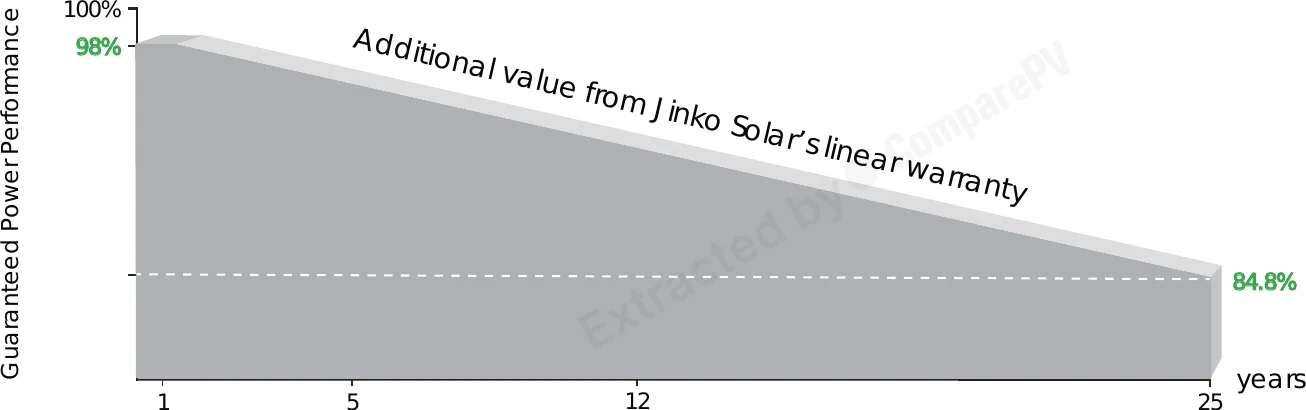
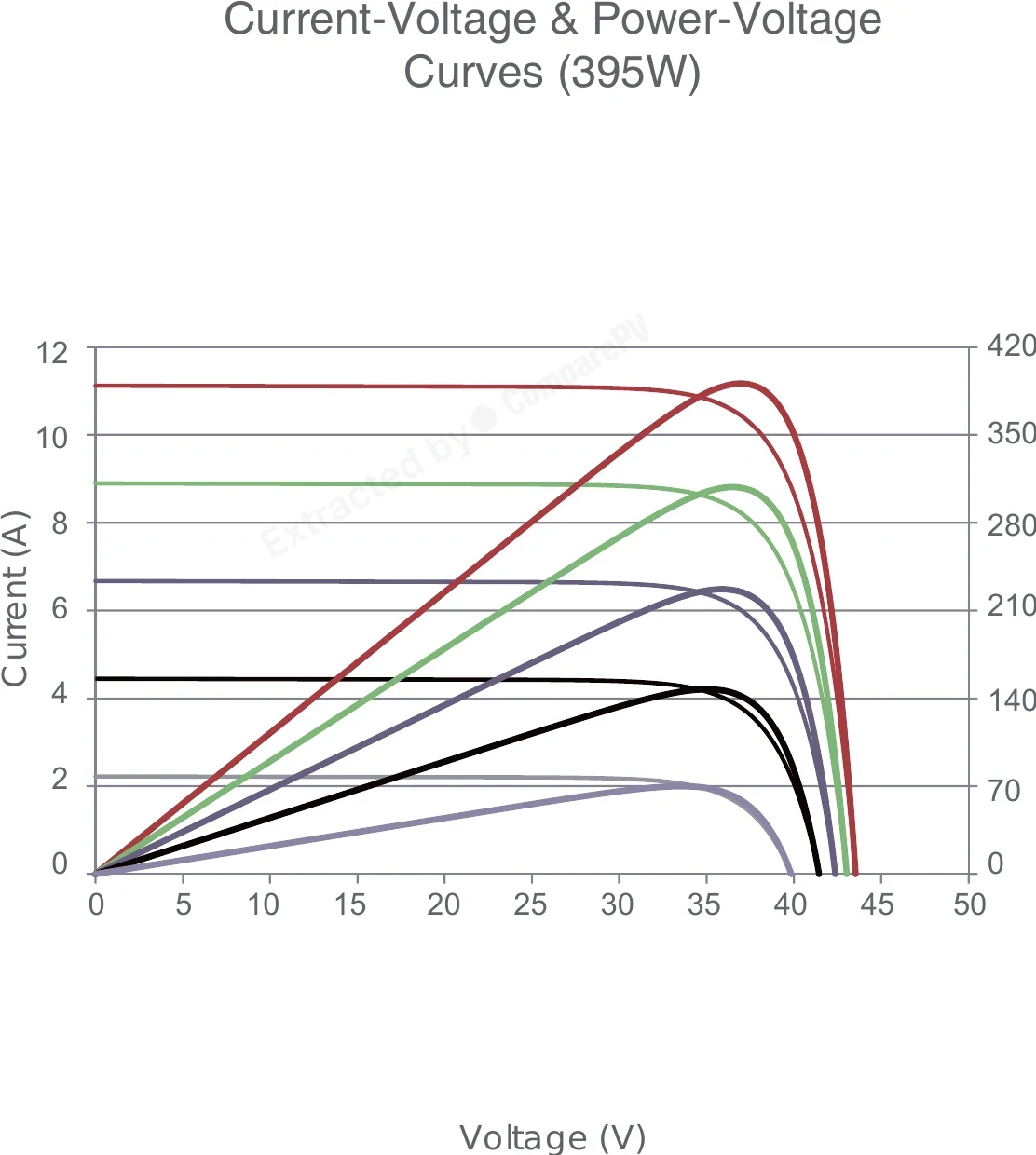
Measured curves published by Jinko Solar in this model's datasheet. A chart carrying a wattage was measured on that variant alone - only the ones that describe 395 Wp appear here. The rest cover the whole series.
Simulations
Degradation from this panel's own datasheet figures. No inverter, soiling or shading losses.





Found 16 panels of the same or similar size to this one, within ±10 mm. See them here Found 48 panels of the same or similar size to this one, within ±25 mm. See them here Found 91 panels of the same or similar size to this one, within ±50 mm. See them here Found 479 panels of the same or similar size to this one, within ±100 mm. See them here
About the Tiger 66TR series
These answers cover the whole series. Where a figure differs, the specification above is this module's own.