
Space saver, no clear weak spot
APOLLON 2.0 is a next-generation bifacial photovoltaic module designed for rooftop installations with high aesthetic and performance demands. The series is built on N-Type TOPCon cells arranged in an innovative, uniform shingle matrix structure that eliminates visible gaps between cells, giving the panel a sleek, seamless appearance. This architecture reduces resistive losses and improves the module's behavior under partial shading conditions, resulting in more consistent energy yields throughout the year. The glass-glass construction increases mechanical durability and extends the panel's service life, while also serving as the foundation for two-sided energy harvesting through bifacial technology, which also captures light reflected from the roof or ground surface. APOLLON 2.0 is aimed at investors seeking a premium solution for roofs with limited surface area, where both aesthetics and maximizing power output per square meter matter. The panel is manufactured in Germany in accordance with strict quality standards, free of lead and PFAS, making it an attractive choice for customers who also value environmental considerations and component origin.
Ranking
Signals from the data
Residential and commercial.
Top 20% of the TOPCon 450-500 W segment, against a median of 225.2.
Top 22% of the TOPCon 450-500 W segment, against a median of 22.52%.
APOLLON 2.0 is manufactured in Germany under strict quality standards, free of lead and PFAS — a rare feature among TOPCon modules on the European market, which is dominated by Asian-made products.
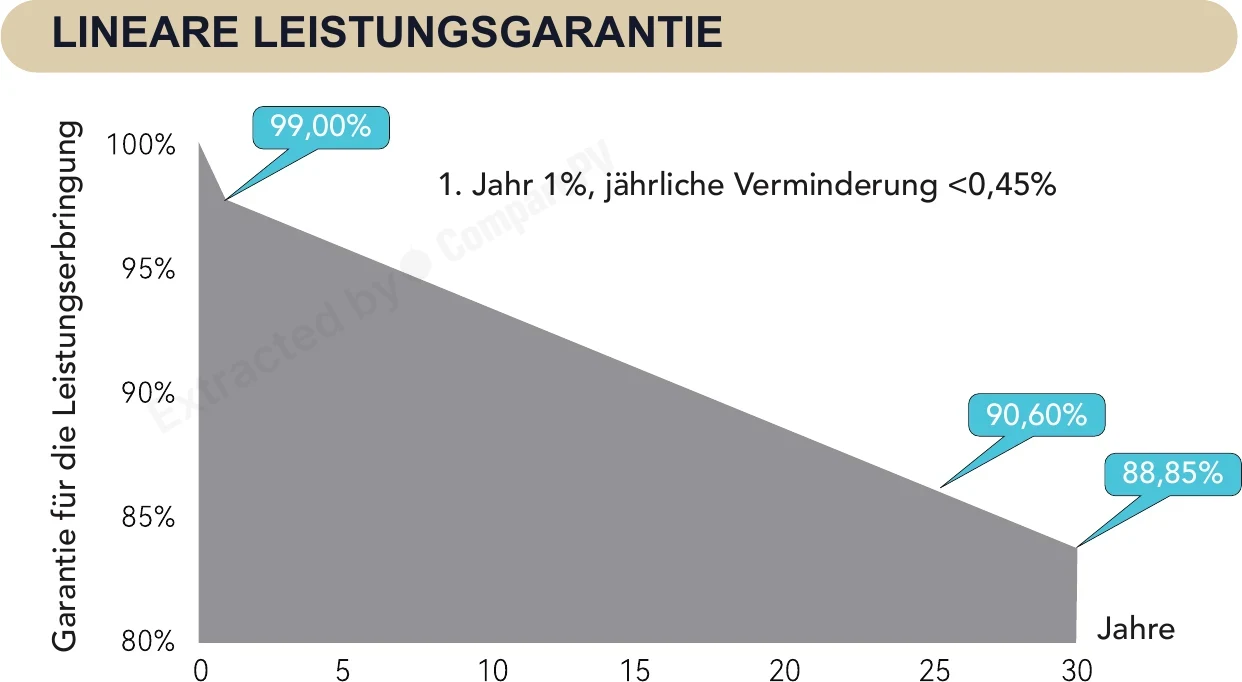
The manufacturer offers 30 years of both product and linear power warranty — significantly above the market standard of 12-15 years for product warranty and 25 years for power warranty, reducing long-term investment risk.
The uniform shingle matrix structure eliminates gaps between cells, reduces resistive losses, and improves partial-shading behavior, resulting in more stable year-round yields and a sleek, uniform aesthetic.
The double-glass build increases mechanical durability and panel lifespan while enabling bifacial energy harvest from light reflected off roofs or ground surfaces — typical bifacial gain ranges 5-15% depending on surface albedo.
Efficiency up to 23.0% places APOLLON 2.0 close to the top of the TOPCon segment alongside SunKean SKT440~460M12-96D4 and Phono Solar Draco (both 23.02%), outperforming Axitec AXIbiperfect GR WB (22.54%) at the same 460 Wp max power.
Maximum efficiency of 23.0% is marginally lower than SunKean SKT440~460M12-96D4 and Phono Solar Draco (23.02%) at the identical 460 Wp max power — a marginal gap, but it puts APOLLON 2.0 at a disadvantage in head-to-head spec comparisons.
The series launched in 2026, so there is no multi-year real-world degradation and durability data available, unlike TOPCon designs that have been on the market since 2022-2023.
Manufacturing in Germany, unlike the mass production of Asian Tier-1 makers (e.g., SunKean, Phono Solar), typically carries a higher cost per Wp, which may limit price competitiveness in CAPEX-sensitive projects.
- Efficiency of 23.0% matches the TOPCon 450-500W median
- Power density of 230.2 W/m² packs 5.0 W/m² more into the same footprint vs TOPCon 450-500W median (225.2 W/m²)
- Temperature coefficient of -0.29%/°C matches the TOPCon 450-500W median
- Ranked #1919 out of 14005 panels for efficiency in the database
Specifications
Datasheet charts
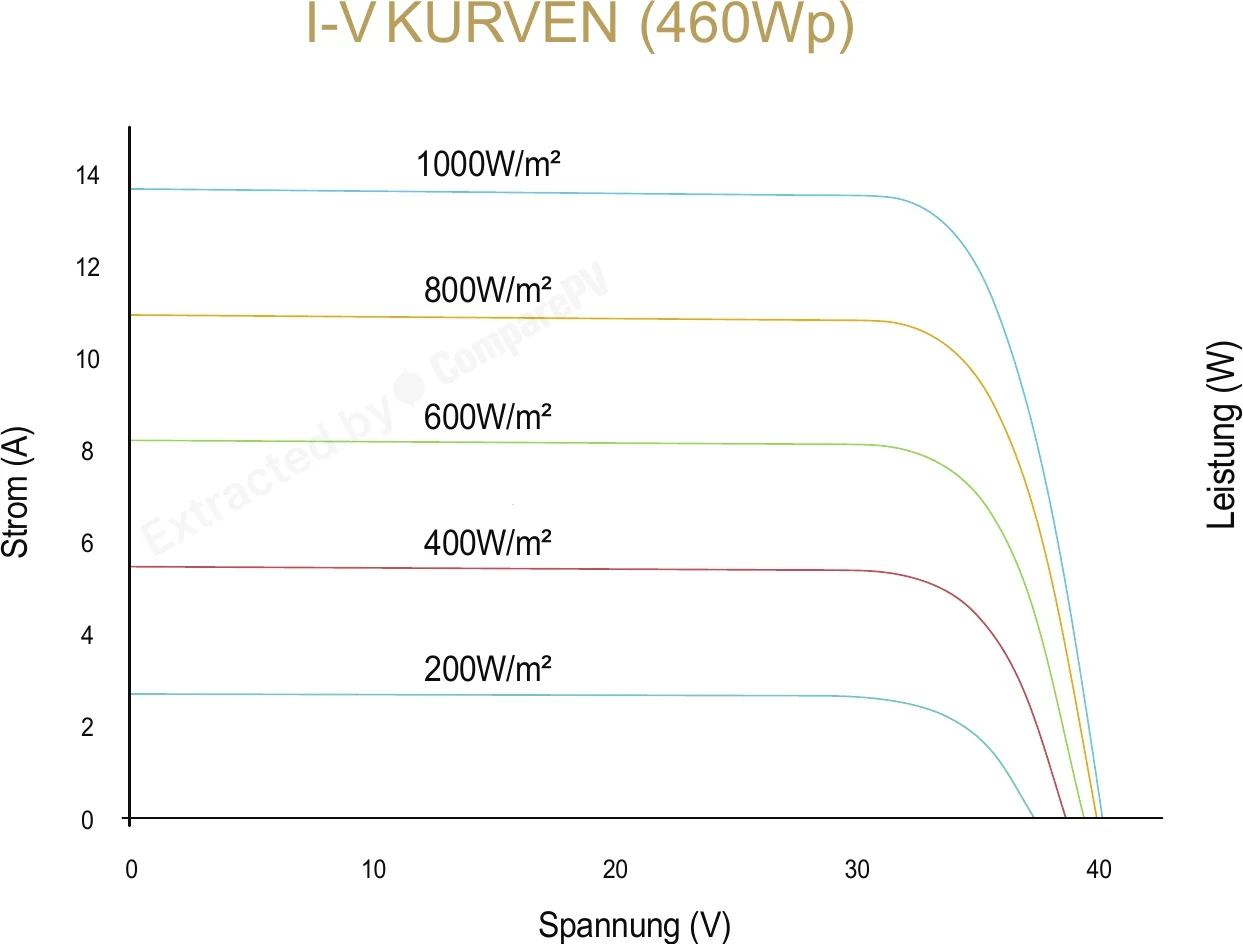
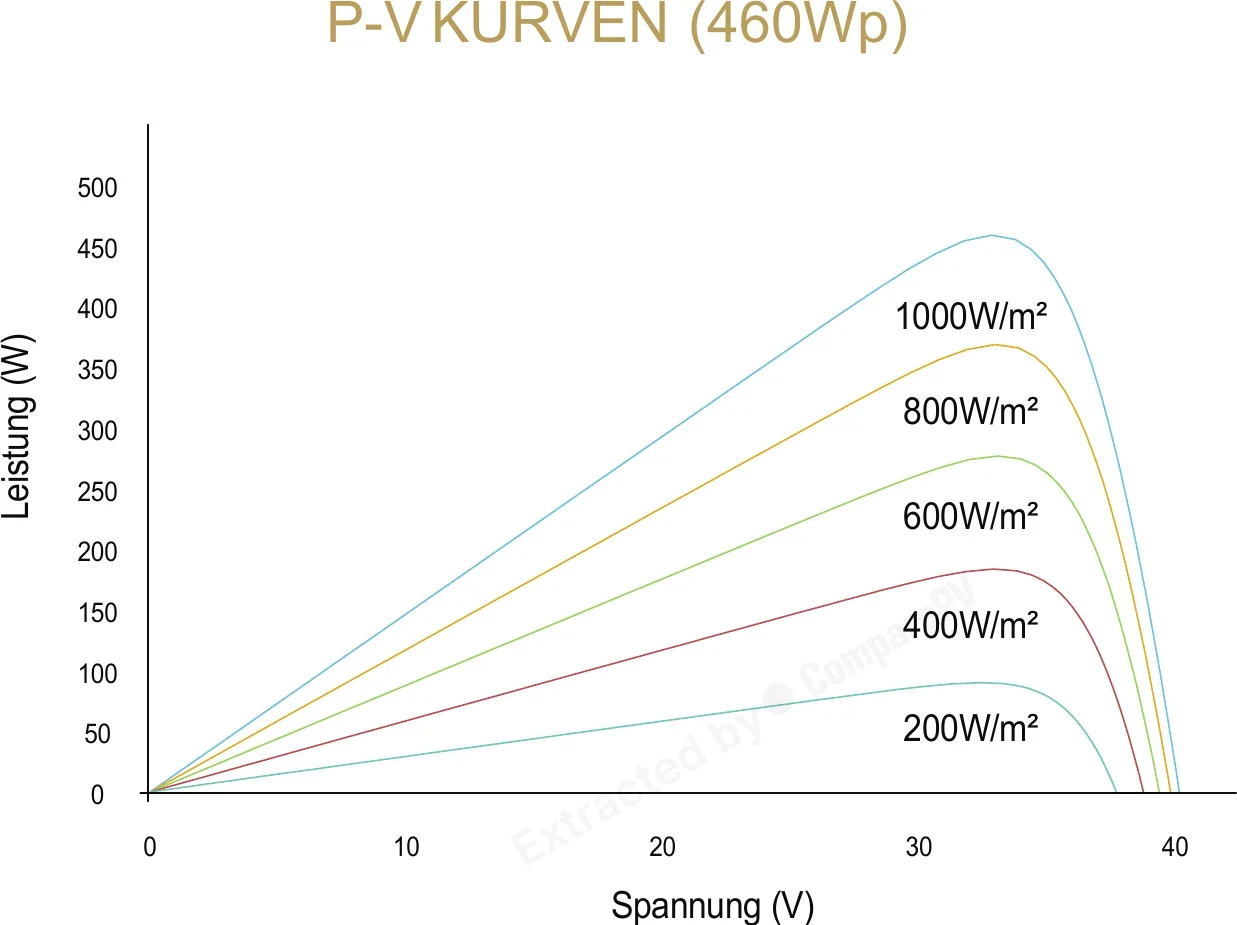
Measured curves published by Heckert Solar in this model's datasheet. A chart carrying a wattage was measured on that variant alone - only the ones that describe 460 Wp appear here. The rest cover the whole series.
Simulations
Degradation from this panel's own datasheet figures. No inverter, soiling or shading losses.




Found 1395 panels of the same or similar size to this one, within ±10 mm. See them here Found 1425 panels of the same or similar size to this one, within ±25 mm. See them here Found 3614 panels of the same or similar size to this one, within ±50 mm. See them here Found 3962 panels of the same or similar size to this one, within ±100 mm. See them here