
Light for its output, no clear weak spot
Gamko GKA210M108 panels utilize technologically advanced, large-format 210 mm cells, which translate into significantly higher efficiency while maintaining optimal dimensions tailored to Polish single-family housing. This series stands out through the use of Half-Cut cell technology, which effectively minimizes energy losses resulting from local shading and drastically reduces the risk of harmful hot-spots. Thanks to the thoughtful 108-cell design, these modules solve the problem of limited installation space on pitched roofs, offering an impressive power density that realistically accelerates the return on the entire investment. The applied multi-busbar (MBB) technology shortens the current flow path, which not only increases overall efficiency but also enhances the panel's mechanical resistance to micro-cracks in difficult weather conditions. This solution is dedicated to modern investors seeking a middle ground between innovation and long-term durability, especially in demanding prosumer installations. Gamko GKA210M108 distinguishes itself from market competitors with an exceptionally favorable temperature coefficient, ensuring stable energy production even during record heatwaves. A solidly reinforced frame and tempered glass with an anti-reflective structure guarantee excellent resistance to extreme snow loads and strong wind gusts, making these modules a safe and effective choice for decades.
Ranking
Signals from the data
Residential and shaded-installations.
Top 1% of the PERC 550-600 W segment, against a median of 52.7. Ranked 1,126th in the whole database.
Top 13% of the PERC 550-600 W segment, against a median of 21.29%.
Top 13% of the PERC 550-600 W segment, against a median of 212.9.
The highest-performing variant, GKA210M108, achieves a module efficiency of 21.54%, surpassing all three peer comparables: Goldi Solar GS10-B144-TF (21.3%), IBC Solar 182M Half Cell (21.28%), and S-Energy SL65-72BGJ (21.3%). The ~0.24 percentage-point advantage translates into meaningfully higher annual energy yield for the same rooftop area.
The combination of bifacial cells with multi-busbar (MBB) technology and half-cut cell architecture reduces resistive losses by approximately 75% compared to full-cell designs. In residential prosumer installations with a light-colored substrate or roofing membrane, bifacial PERC modules generate 11-23% more energy annually than their monofacial counterparts of equivalent rated power.
The manufacturer guarantees linear degradation over 30 years, backed by IEC 61215 and IEC 61730 certifications. A 30-year linear warranty is on par with peer comparables, yet clearly superior to the offering of many Tier-2 manufacturers that provide only 25 years on a stepped degradation curve.
The datasheet confirms a static snow load rating of 5,400 Pa and a wind load rating of 2,400 Pa. Under Polish structural design standards (Snow Load Zone III, up to approximately 2,000 Pa), the module delivers nearly three times the required safety margin-a significant advantage for pitched-roof installations prone to snow accumulation.
Holding both IEC certifications confirms compliance with the qualification requirements of Polish distributors, insurers, and the Mój Prąd subsidy program. IEC 61730 covers electrical safety assessment, simplifying the technical acceptance procedure conducted by distribution system operators.
P-type PERC cells exhibit light-induced degradation (LID) of up to 2% in the first year, whereas competing N-type TOPCon technology-increasingly prevalent in 530-550 W modules in 2025-2026-virtually eliminates LID. Over a 30-year system lifetime, this difference can amount to 2-4 MWh less per 10 kWp of installed capacity.
Gamko New Energy (1.2 GW/year of manufacturing capacity as of 2023) does not appear in publicly available quarterly BNEF Tier 1 Solar Module Manufacturers reports. The absence of bankable manufacturer status may present an obstacle when seeking bank financing or leasing for commercial installations above 50 kWp, where financial institutions routinely require Tier 1 qualification.
- At 21.5% efficiency, this panel is on par with typical PERC 550-600W modules
- At 215.4 W/m² power density, roof space requirements are typical for PERC 550-600W panels
- Temperature coefficient of -0.34%/°C matches the PERC 550-600W median
- Weight of 25.5 kg (5.3 kg below PERC 550-600W median of 30.8 kg) allows easier transport and roof mounting
- In the top 56% for efficiency among all PERC panels
Specifications
Datasheet charts
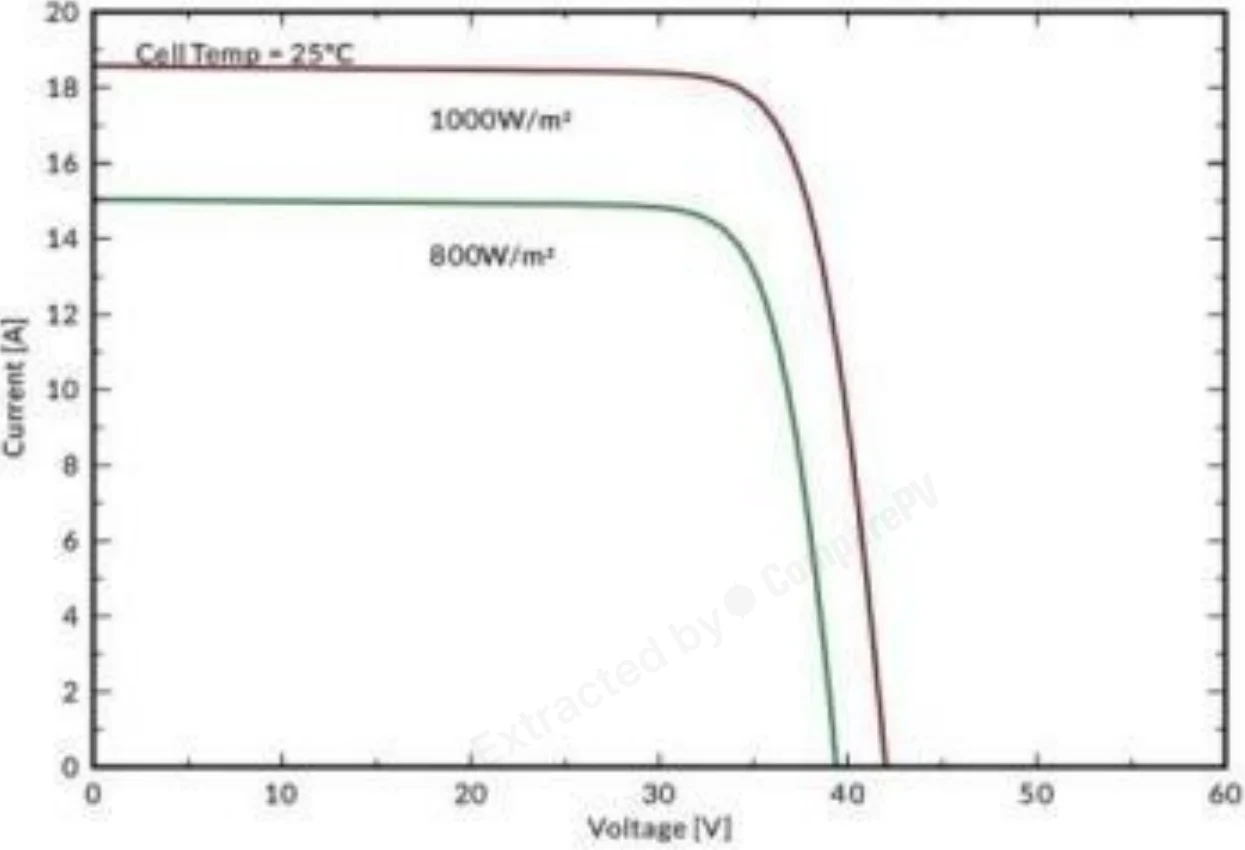
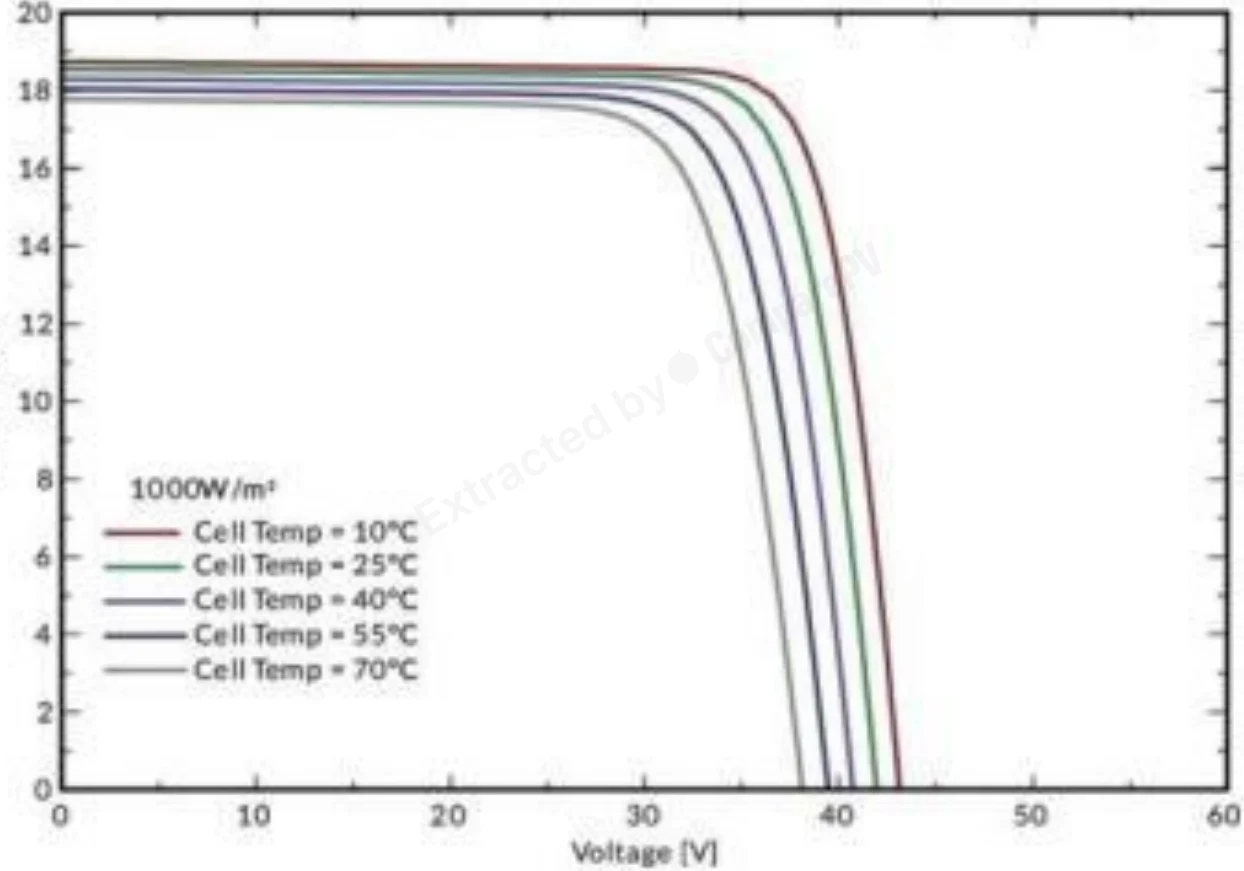
Measured curves published by Gamko New Energy in this model's datasheet. A chart carrying a wattage was measured on that variant alone - only the ones that describe 550 Wp appear here. The rest cover the whole series.
Simulations
Degradation from this panel's own datasheet figures. No inverter, soiling or shading losses.
Model: bifaciality × albedo × 0.6 view factor. A first-order estimate, not a yield simulation.
Alternatives





Found 31 panels of the same or similar size to this one, within ±10 mm. See them here Found 41 panels of the same or similar size to this one, within ±25 mm. See them here Found 41 panels of the same or similar size to this one, within ±50 mm. See them here Found 85 panels of the same or similar size to this one, within ±100 mm. See them here
About the GKA210M108 series
These answers cover the whole series. Where a figure differs, the specification above is this module's own.