Strong in heat, needs the roof space
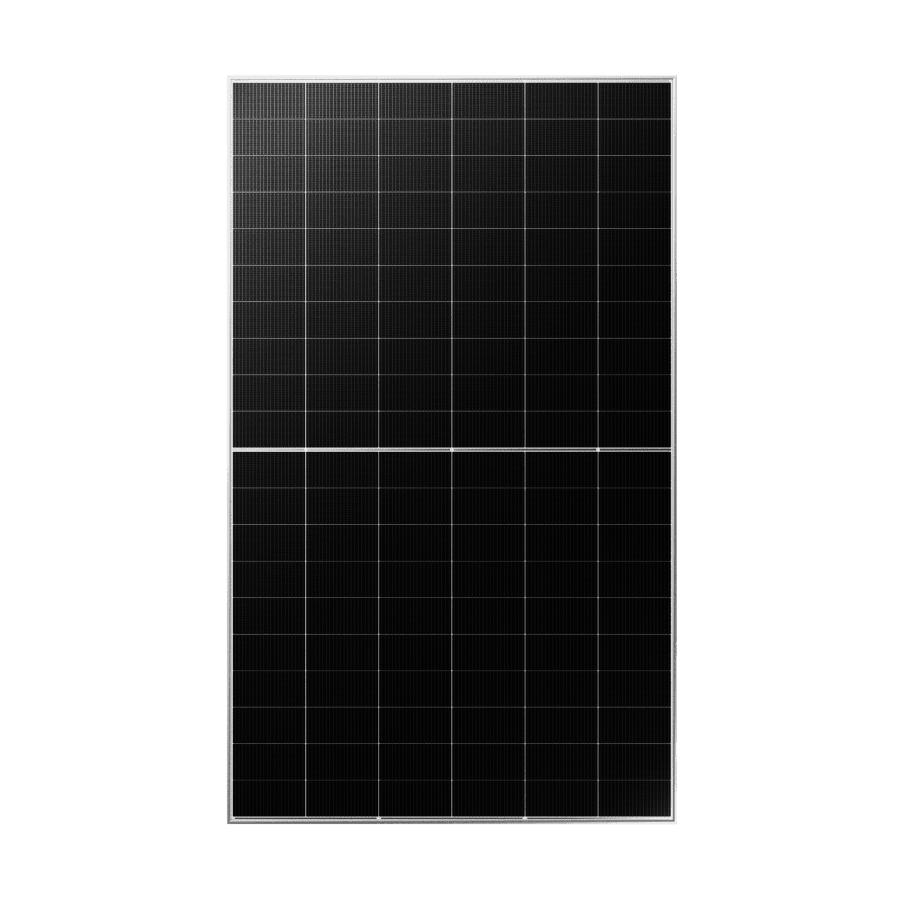
The BYD AURO Mono Bifacial Half Cell Module (MLTK-36 530-555W) series are bifacial modules based on bifacial technology and half-cell technology, designed to maximize energy gains in real-world conditions. By utilizing both sides, the panel can capture reflected radiation from a bright surface, gravel, or roof membranes, resulting in higher output without expanding the installation area. The half-cell design reduces resistive losses and improves performance under partial shading, which is beneficial on roofs with obstructions or in tracker arrays.
Another notable feature is excellent performance in low light - the series maintains a more stable output on cloudy days and in foggy conditions, and the low temperature coefficient helps maintain power generation in the summer, when traditional modules often lose efficiency. This makes it a good choice for solar farms, commercial and industrial installations, and projects where the total cost of energy over the entire lifespan is a key factor, rather than just initial specifications.
Ranking
Signals from the data
Commercial, utility-scale and shaded-installations.
Roofs where every square metre has to count, tight roof space and owners who want a long output guarantee.
Top 11% of the PERC 500-550 W segment, against a median of -0.350.
Top 25% of the PERC 500-550 W segment, against a median of 53.0.
Bottom 15% of the PERC 500-550 W segment, against a median of 209.0.
Bottom 17% of the PERC 500-550 W segment, against a median of 20.90%.
Bottom 23% of the PERC 500-550 W segment, against a median of 30 yrs.
The module harvests energy from both sides via bifacial technology (bifaciality factor ~70%), while the 144 half-cut cell layout reduces resistive losses and mitigates the impact of partial shading — a meaningful advantage in utility-scale PV farms with trackers or rooftop installations with irregular shading profiles.
The upper end of the efficiency range (21.48%) positions the series on par with direct peer comparables: JA Solar Deep Blue 3.0 (21.5%), ET Solar Elite PLUS (21.4%), and above Boviet VEGA (21.3%), meaning no significant power density penalty when choosing BYD over competing products in this segment.
Typical PERC modules exhibit a power temperature coefficient in the range of -0.35 to -0.37%/°C. The MLTK-36 achieves -0.332%/°C, which under Polish summer conditions (module temperature 60–70°C) translates to a real-world 0.5–0.7% higher energy yield compared to lower-performing PERC modules — though still above BYD's own N-type AURO N series at -0.30%/°C.
BYD appears on the BNEF Tier-1 list and has been operating since 1995 as a diversified global conglomerate spanning batteries, electric vehicles, and energy storage — significantly reducing manufacturer bankruptcy risk over a 25-year power output warranty horizon, a key argument in project finance for utility-scale assets.
Certification for 1500V DC enables longer string configurations, reducing the number of inverters and the total length of DC wiring — a direct CAPEX saving in commercial and industrial installations above 100 kWp.
PERC technology limits the bifaciality factor to ~70%, while competing N-type TOPCon modules — including BYD's own AURO N series and JA Solar Deep Blue 4.0 — reach ~85%. Under high-albedo conditions (white membranes, light gravel, snow), this results in a real-world 2–4% lower annual rear-side yield, with the gap widening as the reflectivity of the ground surface improves.
- At 20.5% efficiency, this panel is on par with typical PERC 500-550W modules
- Power density of 205.2 W/m² is 3.8 W/m² below PERC 500-550W median (209.0 W/m²) - needs more roof space
- Temperature coefficient of -0.33%/°C matches the PERC 500-550W median
- Weight of 27.0 kg (1.4 kg below PERC 500-550W median of 28.4 kg) allows easier transport and roof mounting
- 70% bifaciality enables rear-side power generation, boosting yield by 4-10% on reflective surfaces
Specifications
Simulations
Degradation from this panel's own datasheet figures. No inverter, soiling or shading losses.
Model: bifaciality × albedo × 0.6 view factor. A first-order estimate, not a yield simulation.
Alternatives



Found 2326 panels of the same or similar size to this one, within ±10 mm. See them here Found 2368 panels of the same or similar size to this one, within ±25 mm. See them here Found 2382 panels of the same or similar size to this one, within ±50 mm. See them here Found 2547 panels of the same or similar size to this one, within ±100 mm. See them here