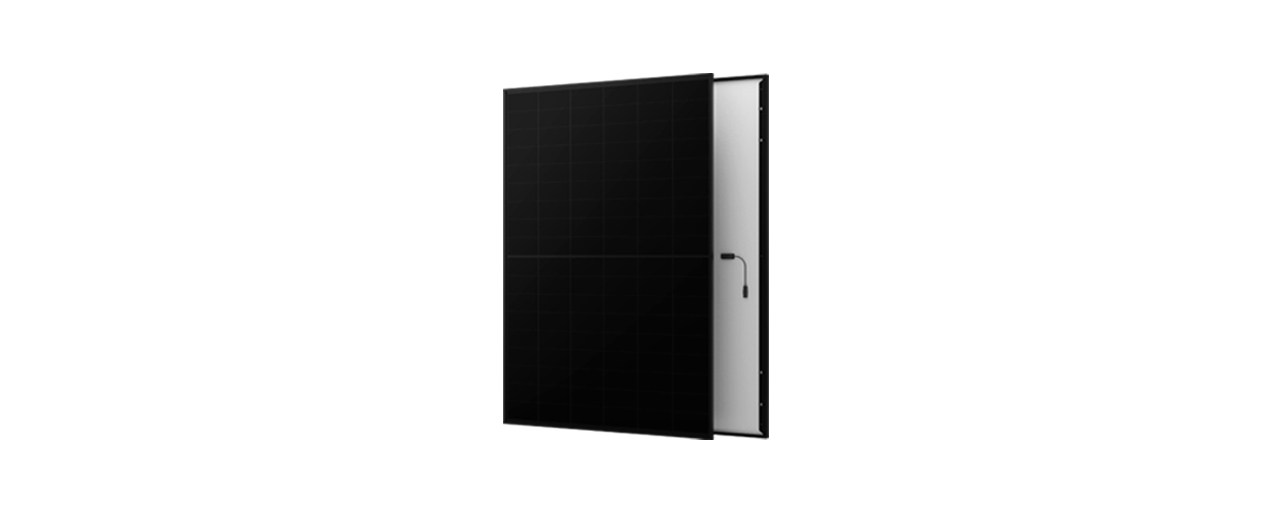
Solid all-round for its segment
The AIKO Neostar 2S (AIKO-A-MAH54Mb) series was designed for maximum yield from every square meter of roof - especially where aesthetics and reliable performance in real conditions matter. Central to this is the N-type ABC (All Back Contact) technology, which moves the connections to the rear of the cell. The result is a uniform black front surface, free from visible ribbons, while simultaneously optimizing light capture on the active surface. ([solarvie.at](https://www.solarvie.at/en-eu/products/aiko-neostar-2s-aiko-a460-mah54mb-abc-technologie?utm_source=openai))
In practice, the Neostar 2S strongly defends where other modules falter - under partial shading and panel mismatch conditions. The built-in cell-level optimization helps minimize losses from mismatch, translating to more predictable energy production throughout the day. ([acsolarwarehouse.com](https://www.acsolarwarehouse.com/shop/aiko-440w-neostar-2s-with-cell-optimisation-n-type-abc-all-black-25111?utm_source=openai))
This makes it an excellent choice for investors seeking more output from limited roof space, while maintaining the premium look of the installation - the full black appearance without grid lines complements modern rooftops. The series also offers high resistance to micro-cracking and long warranties, genuinely reducing long-term risks. ([acsolarwarehouse.com](https://www.acsolarwarehouse.com/shop/aiko-455w-neostar-2s-with-cell-optimisation-n-type-abc-all-black-25112?utm_source=openai))
Ranking
Signals from the data
Residential and shaded-installations.
The series achieves a module efficiency of 23.3–23.6%, matching or slightly exceeding comparable models: Recom Lynx (23.52%) and Sunlike Solar SKT96D3/D4 (23.52%). In the 54-cell Full Black category, it is one of the highest commercially available results in 2025.
The ABC technology eliminates front metallization and reduces resistive losses, resulting in a Pmax TC of -0.26%/°C. Standard PERC modules achieve -0.35 to -0.38%/°C – in a Polish climate with summer temperatures of 60°C on an Aiko module, it loses 9.1% of power, while a PERC module loses approximately 13%, which translates into a real saving of several additional kWh per year.
The declared linear degradation rate is less than 1% in the first year, and ≤0.35%/year in years 2-30, guaranteeing ≥88.85% of the nominal power after 30 years. Typical TOPCon modules from competitors (e.g., JA Solar, Trina) declare 84.8–87% after 25 years, which, with a 30-year horizon, makes Neostar 2S significantly more advantageous.
The product warranty is 25 years, and the power warranty is 30 years. Most models in this segment (Recom Lynx, Sunlike SKT96D) offer a 25-year power warranty. The longer warranty period reduces investment risk and simplifies the financing of bankable projects.
Moving all connections to the rear of the cells creates a uniform black front without visible rails, which is highly valued in premium installations. At the same time, the ABC architecture naturally minimizes losses due to mismatched cells and performs better in partially shaded conditions than traditional PERC panels, as confirmed by an independent review by SolarQuotes (2025).
According to market data from 2025 (SolarChoice AU), installing a 13 kWp system with AIKO ABC modules costs approximately $700 more than a system with comparable power output using TOPCon modules (JinKo, LonGi, Canadian). For a typical 6-10 kWp residential system, the overpayment could range from $300 to $500, without the additional disadvantage of higher costs when there are no issues with space or aesthetics.
The AIKO-A-MAH54Mb series is monofacial (is_bifacial: false). Alternative N-type BC technologies with bifacial back glass typically offer an additional 5–15% gain due to reflected albedo (e.g., a light-colored floor, gravel, or snow). The Neostar 2S does not utilize this potential, which could be a disadvantage in ground-mounted or roof-mounted installations with a light-colored membrane.
- At 23.6% efficiency, this panel is on par with typical Back Contact 450-500W modules
- At 235.9 W/m² power density, roof space requirements are typical for Back Contact 450-500W panels
- At -0.26%/°C, hot weather performance is typical for Back Contact 450-500W panels
- Weight of 21.5 kg (2.0 kg below Back Contact 450-500W median of 23.5 kg) allows easier transport and roof mounting
- In the top 4% for efficiency among all Back Contact panels
Specifications
Datasheet charts
Measured curves published by AIKO in this model's datasheet. A chart carrying a wattage was measured on that variant alone - only the ones that describe 470 Wp appear here. The rest cover the whole series.

Simulations
Degradation from this panel's own datasheet figures. No inverter, soiling or shading losses.



Found 1397 panels of the same or similar size to this one, within ±10 mm. See them here Found 1512 panels of the same or similar size to this one, within ±25 mm. See them here Found 3598 panels of the same or similar size to this one, within ±50 mm. See them here Found 3960 panels of the same or similar size to this one, within ±100 mm. See them here