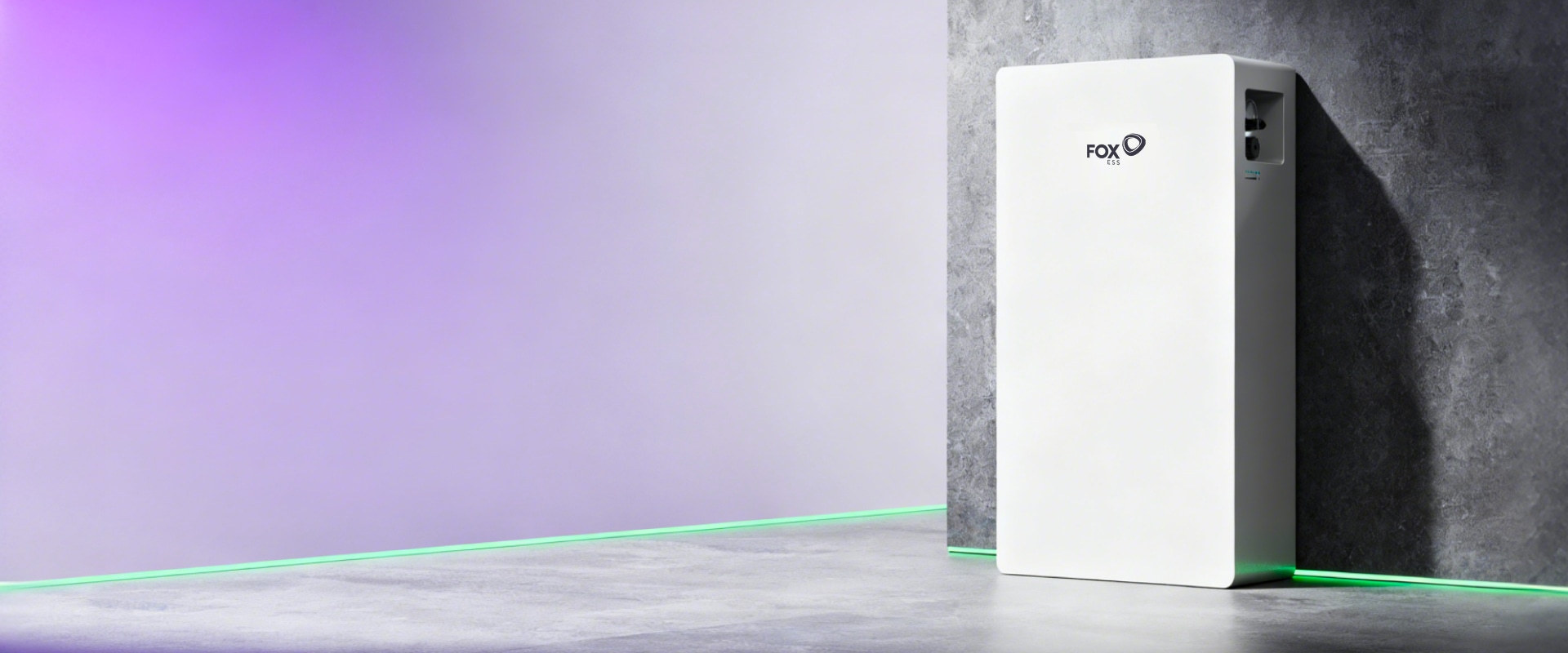

FoxESS EP11
The FoxESS EP series are high-voltage energy storage solutions meticulously designed to significantly simplify the construction of domestic or commercial PV systems with self-consumption. Within a single housing, you receive an integrated BMS and the battery, facilitating configuration, monitoring, and safe operation in daily cycles. The applied chemistry, LiFePO4 (LFP), stands out for its stable thermal properties and resilience to intensive operation, which translates to more reliable system performance, reduced overheating risks, and a longer lifespan compared to NMC solutions. The high cycle life and long-term warranty translate to a genuinely lower cost of stored energy over the entire service life, not just on paper.
The EP series can conveniently be expanded in parallel, allowing the system to grow alongside the user's needs - from a single-family home, through a small business, up to more demanding scenarios with backup power. A key advantage is also its compatibility with FoxESS hybrid inverters, simplifying selection and minimizing integration issues in both new and retrofitted installations.
Ranking
Specifications
Pros and cons
The official datasheets for EP11 and EP12 state ≥6,000 full cycles at a 90% depth of discharge, with a guaranteed capacity retention of ≥70% after 10 years. In comparison, standard NMC-class batteries typically guarantee 3,000-4,000 cycles at a lower DoD (80%), which translates to a significantly lower LCOS (cost of stored energy) over the entire lifespan of the system.
The entire series of enclosures has achieved IP65 protection, allowing for installation outdoors without the need for additional enclosures. The absence of active cooling (fans) eliminates one of the most common failure points in ESS systems in warehouses and reduces maintenance costs throughout the system's lifespan.
The EP6 (5.76 kWh) and EP12 PLUS (11.52 kWh) models can be connected in parallel in a configuration of up to 4 units, achieving 23.04 kWh or 46.08 kWh at a single connection point, respectively. This allows for phased system expansion without the need to replace the inverter or cabling, which is a significant cost advantage during upgrades.
The BMS is integrated directly into the battery module housing (unlike solutions that require a separate, externally mounted controller). This simplifies communication wiring, reduces the number of installation components, and shortens startup time - which installers highlight as one of the practical advantages of this series.
Datasheets for EP systems declare a power circuit efficiency of ≥95%. An independent study on the efficiency of battery systems, published in 2026 (IndexBox/Solar Performance Study), found that the FoxESS DC-coupled system achieved a System Performance Index of 97% - the best result in the 10 kW category, surpassing configurations from Kostal+BYD, among others.
FoxESS was founded in 2019, which means it has only been operating in the market for approximately 6 years at the time of offering a 10-year warranty. For comparison, BYD has been operating since 1995, and Sungrow since 1997. The company's relatively short operating history raises legitimate questions about its ability to provide long-term service and handle warranty claims - a crucial factor for institutional and bank-financed projects.
The EP series communicates using the CAN protocol, optimized for FoxESS hybrid inverters (H1, KH, H3, H3-Pro). Compatibility with inverters from other manufacturers (e.g., SMA, Fronius, Growatt) is limited or not guaranteed by the manufacturer. In projects involving the modernization of existing installations using inverters from other brands, this may necessitate replacing the inverter or incur additional integration costs.
Alternatives





About the EP series
These answers cover the whole series. Where a figure differs, the specification above is this model's own.