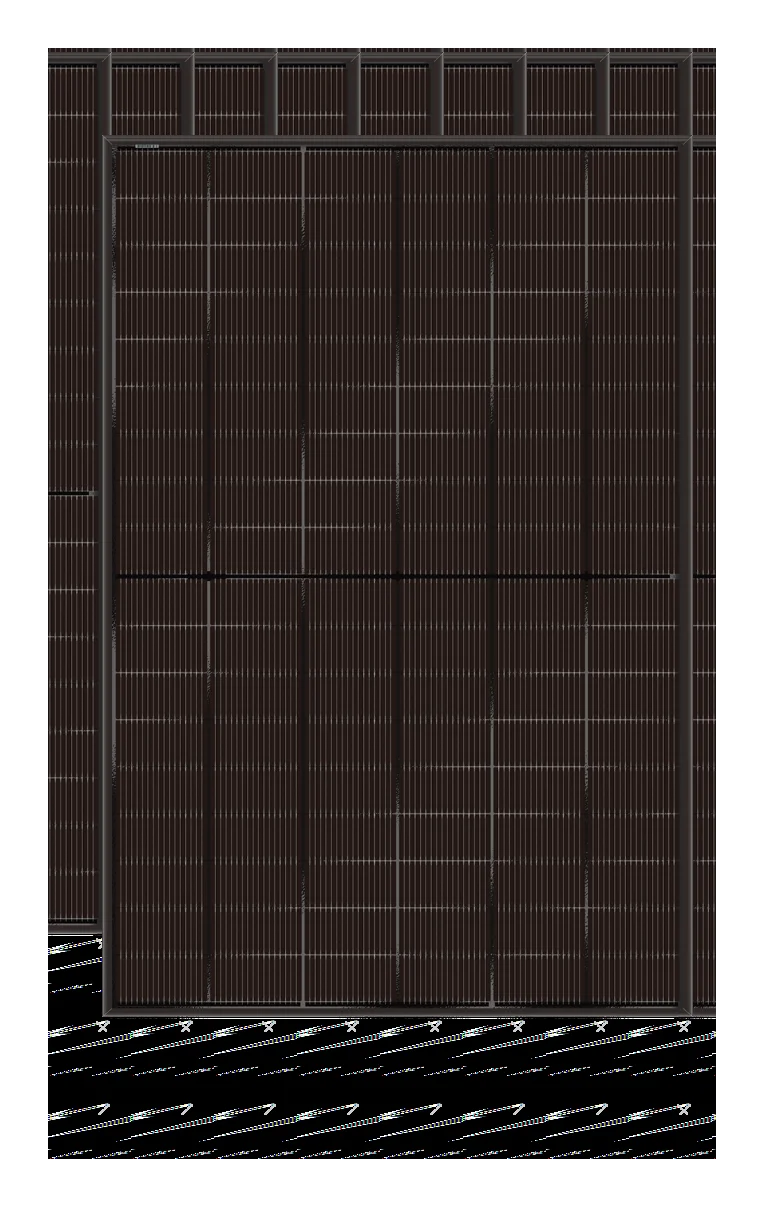
Ulica Solar UL-455M-108BDGN

UL-455M-108BDGN

455 Wp TOPCon Bifacial 80%
ComparePV verdict

Solid all-round for its segment

Rank 7,936 of 14,005
Compare panels Datasheet PDF
Power (Wp)
455
Typical for its class
Efficiency (%)
22.77
Typical · median 22.52%
Density (Wp/m²)
227.7
Typical · median 225.2
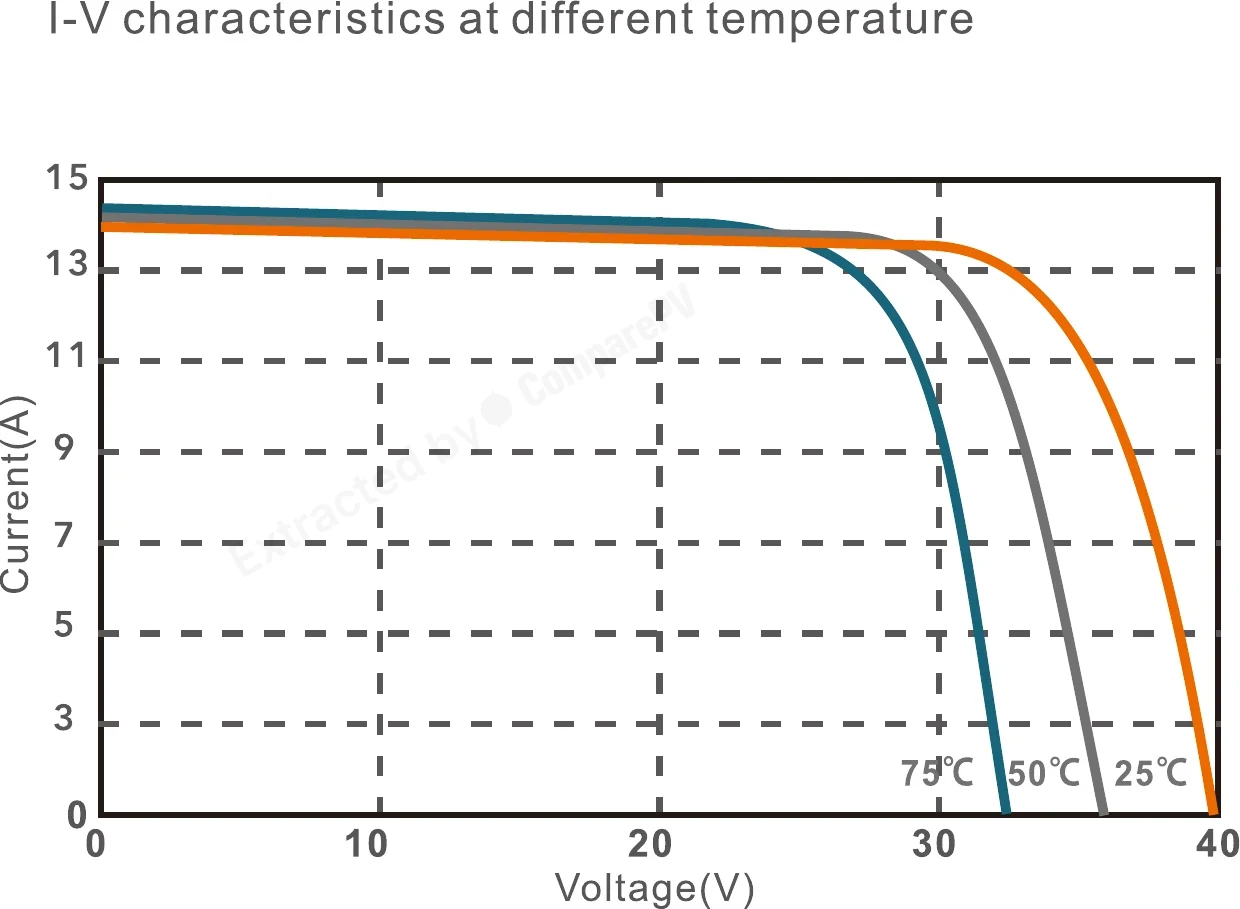
Temp (%/°C)
-0.290
Typical · median -0.290
Weight (kg)
24.0
Typical · median 24.0 kg
Warranty (yrs)
30
Typical · median 30 yrs

The Black Jade-Flow series is an advanced solution based on N-type TOPCon cell technology, which redefines performance standards in challenging lighting conditions. These panels stand out with their exceptional Full Black aesthetics, making them an ideal choice for investors who value a consistent design for modern residential buildings. Thanks to an innovative construction, the modules effectively minimize energy losses resulting from periodic shading and high ambient temperatures, which directly translates to higher efficiency throughout the entire life cycle of the installation. They solve the common problem of rapid power degradation, offering significantly better long-term stability than traditional older-type modules. This series is specifically dedicated to single-family homeowners looking for an uncompromising combination of elegance and maximum gains from electricity production. What distinguishes the Black Jade-Flow line from the competition is its optimized energy flow and high power density while maintaining standard dimensions, which facilitates installation on limited roof surfaces. Investing in these modules is a guarantee of energy security thanks to low light-induced degradation and excellent resistance to extreme weather conditions. By choosing this solution, the user receives a premium-class product that effectively combines innovative materials engineering with an impeccable appearance, realistically increasing the market value of any modern property.

Ranking

1,089 panels in the segment TOPCon 450-500 W
Metric This panel Median Position in segment Overall rank
Module efficiency 22.77% 22.52% Typical 3,073
Power density 227.7 225.2 Typical 2,888
Temperature coefficient -0.290 -0.290 Typical 2,165
Weight per kWp 52.7 52.2 Typical 6,401
Performance warranty 30 yrs 30 yrs Typical 21
Colour key Strong - top 25% Typical - middle 50% Weak - bottom 25%

Signals from the data

0 positive · 0 caution
Best for

Residential, shaded-installations and hot-climate.

Notes from the database
  • Efficiency of 22.8% matches the TOPCon 450-500W median
  • At 227.7 W/m² power density, roof space requirements are typical for TOPCon 450-500W panels
  • At -0.29%/°C, hot weather performance is typical for TOPCon 450-500W panels
  • Bifacial design (80% factor) captures reflected light - adds 4-12% yield on ground-mount or white roof
  • In the top 22% for efficiency among all TOPCon panels

Specifications

Open datasheet PDF
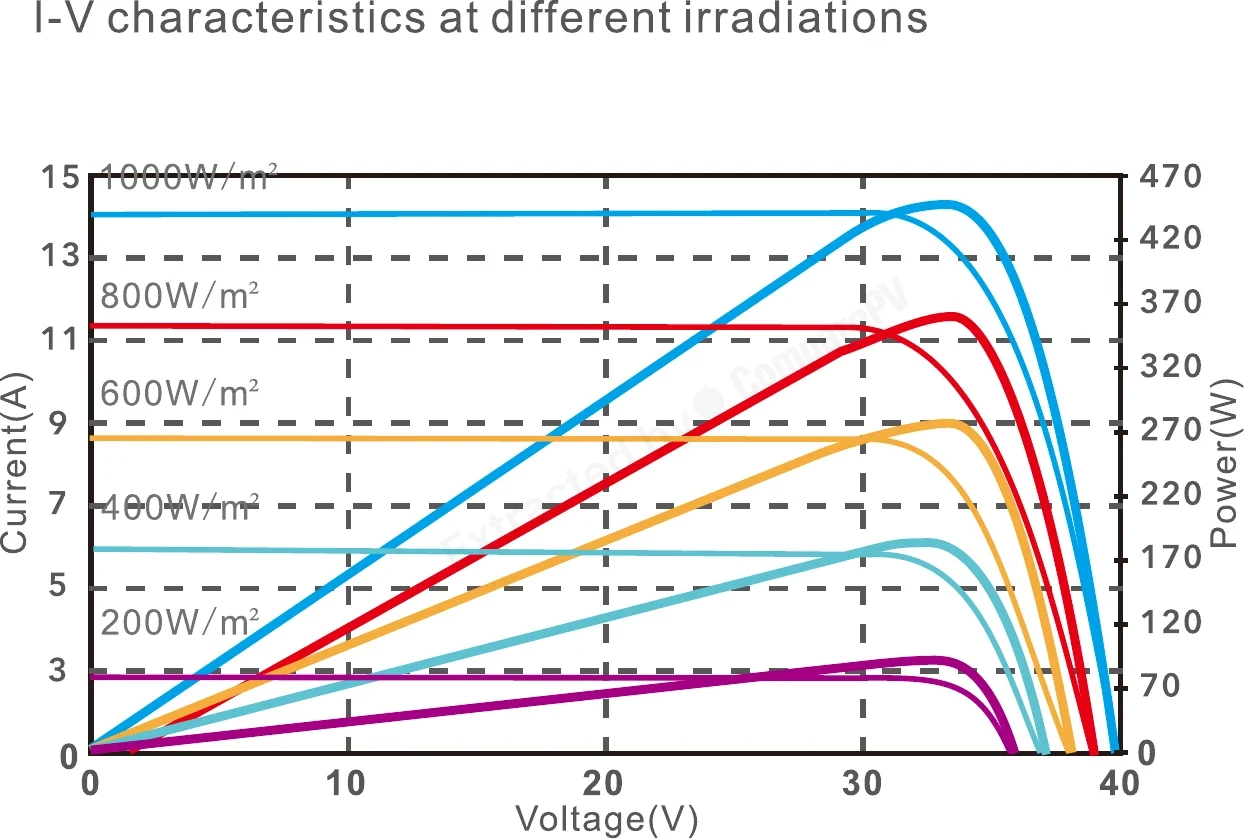
Nominal power (Pmax) 455 Wp Nameplate at 1000 W/m², 25 °C
Module efficiency 22.77 % Typical Segment median 22.52%
Vmpp · Impp 33.42 V · 13.61 A Operating point at max power
Voc · Isc 39.98 V · 14.45 A Sizes the string length
Max system voltage 1500 V Longer strings than 1000 V modules
Dimensions 1762×1134×30 mm · 2.00 m² of roof
Weight 24.0 kg Typical Typical · median 24.0 kg
Cells 108 · TOPCon Monocrystalline
Bifaciality 80 % Rear output as a share of front
Coefficient Pmax -0.290 %/°C Typical median -0.290 of its segment
Coefficient Voc · Isc -0.250 · 0.046 %/°C
NOCT 43 °C At 800 W/m², 20 °C ambient
Product warranty 15 years Hardware defects only
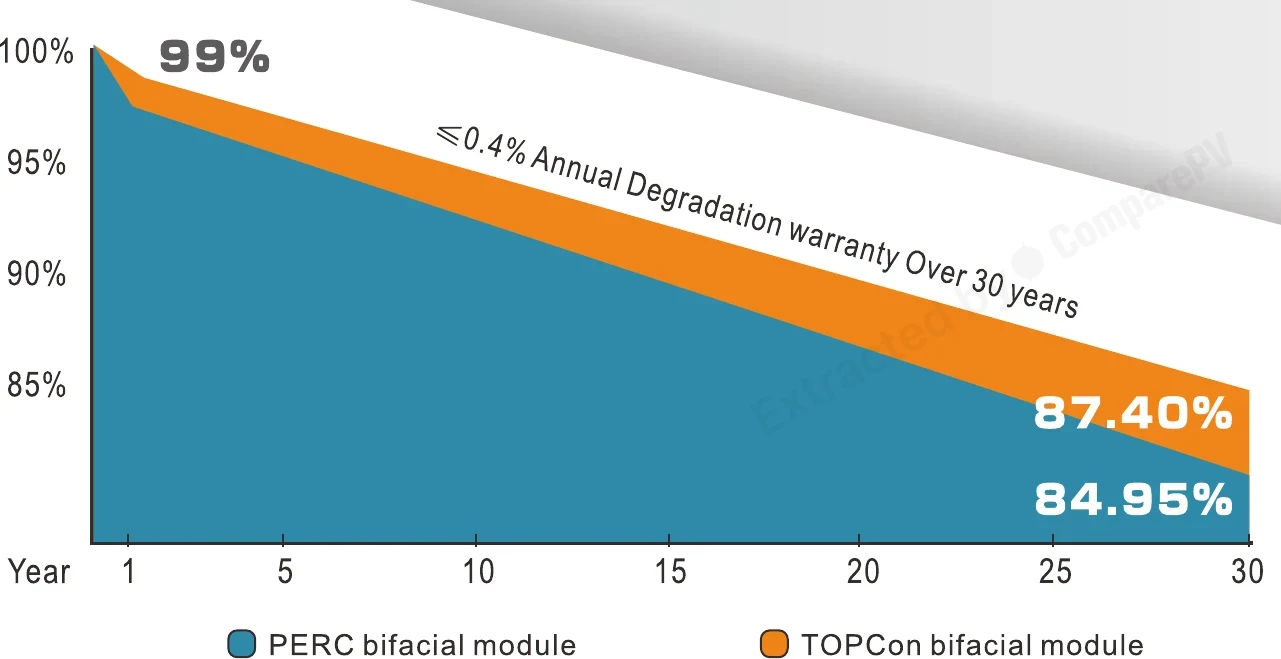
Performance warranty 30 years Typical median 30 yrs · median 30 yrs
End-of-warranty output 87.4 % Equals 398 W guaranteed
Degradation 1.00 → 0.40 % First year, then annual

Datasheet charts

Open datasheet PDF

Measured curves published by Ulica Solar in this model's datasheet. A chart carrying a wattage was measured on that variant alone - only the ones that describe 455 Wp appear here. The rest cover the whole series.
Simulations

Live - change any input
Lifetime output & value
30 years at 1200 kWh/kWp/year and €0.50 per kWh
Power in year 30
-
Lifetime energy
-
Energy value
-
With bifacial gain
-

Degradation from this panel's own datasheet figures. No inverter, soiling or shading losses.

Heat losses
-0.290 %/°C against a segment median of -0.290
-
Bifacial gain
Rear gain over light concrete: -
-

Model: bifaciality × albedo × 0.6 view factor. A first-order estimate, not a yield simulation.

Filter these
Size
Panel Power Eff. Temp. Weight Difference
Ulica Solar UL-455M-108BDGN 455 W 22.77% -0.290 24.0 kg You are here
AIKO-A495-MCE54Mw 495 W 24.80% -0.260 21.0 kg +40 W, lighter, +2.0 pp
LR7-54HJD-505M 505 W 24.70% -0.240 23.5 kg +50 W, cooler, +1.9 pp
AIKO-A490-MCE54Mw 490 W 24.50% -0.260 21.0 kg +35 W, lighter, +1.7 pp
LR7-54HJD-500M 500 W 24.50% -0.240 23.5 kg +45 W, cooler, +1.7 pp
CIPRO-TN9C54M-500W 500 W 24.50% -0.260 21.4 kg +45 W, cooler, +1.7 pp
GK-3-54HGb-500M 500 W 24.50% -0.260 21.4 kg +45 W, cooler, +1.7 pp
UL-440M-108BHVN 440 W 22.02% -0.290 20.6 kg -15 W, lighter, -0.8 pp
UL-445M-108BDGN 445 W 22.27% -0.290 24.0 kg -10 W, -0.5 pp
UL-450M-108BDGN 450 W 22.52% -0.290 24.0 kg -0.2 pp
UL-460M-108BDGN 460 W 23.02% -0.290 24.0 kg +0.2 pp
LR7-54HJD-510M 510 W 25.00% -0.240 23.5 kg +55 W, cooler, +2.2 pp

Found 1395 panels of the same or similar size to this one, within ±10 mm. See them here Found 1425 panels of the same or similar size to this one, within ±25 mm. See them here Found 3614 panels of the same or similar size to this one, within ±50 mm. See them here Found 3962 panels of the same or similar size to this one, within ±100 mm. See them here

Common questions

6 answered
How does N-type TOPCon technology in the Black Jade-Flow series differ from standard PERC cells?
N-type TOPCon cells used in the Black Jade-Flow series deliver higher efficiency (up to about 23%) and a significantly lower annual degradation rate than traditional P-type PERC cells. Thanks to an additional passivation layer, these modules handle high temperatures and partial shading better, resulting in higher energy yield under demanding conditions, especially during summer and at low sun angles.
Are Black Jade-Flow panels bifacial, and how much extra energy can that generate?
Yes, Black Jade-Flow modules use a bifacial construction with a glass rear layer, allowing them to capture reflected radiation from the back side of the panel as well. Depending on ground albedo (e.g., a light-colored roof, gravel, or snow), the additional energy gain can range from a few to over ten percent compared to a standard monofacial panel of the same 460 Wp rated power.
What warranty does Ulica Solar offer on the Black Jade-Flow series?
Ulica Solar provides a 15-year product warranty covering material and workmanship defects, along with a 30-year linear power output warranty. This means that after 30 years of operation the panel should retain around 87% of its initial power output, a typical result for modern N-type TOPCon cells with low light-induced degradation.
Are Black Jade-Flow panels suitable for a pitched roof on a single-family home?
Yes, the Black Jade-Flow series, rated up to 460 Wp with a Full Black aesthetic, is designed for pitched-roof installations on single-family homes where both appearance and performance matter. Standard module dimensions make installation on typical rafter structures straightforward, and the high power density allows for greater system output on limited roof space.
Is Ulica Solar a Tier 1 manufacturer, and can this brand be trusted?
Ulica Solar is not currently listed as a Tier 1 manufacturer under the Bloomberg NEF classification, but it is an experienced Chinese solar panel maker with many years on the market, offering full IEC certification and standard warranties (15/30 years) comparable to higher-tier brands. Tier 1 status mainly reflects a company's financial stability rather than the technical quality of the module itself.
What does 'optimized energy flow' mean for Black Jade-Flow panels, and how does it affect power output?
This term refers to a module design that minimizes energy losses from internal resistance and uneven cell heating, a common issue under variable irradiance conditions. In practice, this results in more stable daily energy production, reduced losses during partial shading, and higher efficiency over the entire lifespan of the installation compared to older module types.
Add to compare