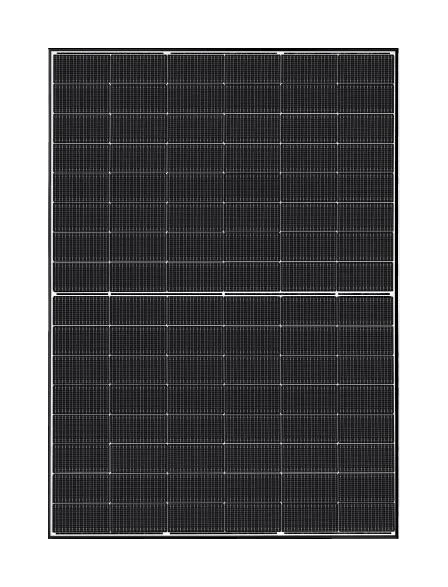
Suntech STP430S-H48-Nth+

Suntech STP430S-H48-Nth+

430 Wp TOPCon Bifacial 80%
ComparePV verdict

Middle of its segment, modest efficiency

Rank 8,223 of 14,129
Compare panels Datasheet PDF
Power (Wp)
430
Typical for its class
Efficiency (%)
21.50
Weak · bottom 17%
Density (Wp/m²)
215.2
Weak · bottom 23%
Temp (%/°C)
-0.290
Typical · median -0.290
Weight (kg)
21.5
Typical · median 22.0 kg
Warranty (yrs)
30
Typical · median 30 yrs

Suntech Ultra V Pro mini (Transparent Black Glass-Glass Bifacial Module) are modules designed for installations where aesthetics, durability, and real energy yield matter. What sets them apart is the Transparent Black finish - an elegant, cohesive visual design easily adaptable to modern roofs and architectural projects compared to traditional panels with contrasting grid lines. The glass-glass construction with thin glass panels enhances moisture and micro-crack resistance while simultaneously reducing roof load - a key advantage for older roof structures and lightweight coverings.

N-type TOPCon cells help minimize performance degradation over time and maintain efficiency under typical rooftop operating conditions. The half-cut technology increases resilience to partial shading (chimneys, window frames, antennas), translating to more stable energy production. Thanks to the bifacial design, the module can harness reflected light, making it ideal for bright roofs, facades, carports, and ground-mounted systems where high albedo provides additional gain.

Ranking

1,220 panels in the segment TOPCon 400-450 W
Metric This panel Median Position in segment Overall rank
Module efficiency 21.50% 22.00% Weak · bottom 17% 8,022
Power density 215.2 220.2 Weak · bottom 23% 7,880
Temperature coefficient -0.290 -0.290 Typical 2,220
Weight per kWp 50.0 51.5 Typical 3,329
Performance warranty 30 yrs 30 yrs Typical 21
Colour key Strong - top 25% Typical - middle 50% Weak - bottom 25%

Signals from the data

0 positive · 2 caution
Best for

Residential, commercial, shaded-installations and BIPV.

Not ideal for

Tight roof space and roofs where every square metre has to count.

Watch-outs
21.50% module efficiency

Bottom 17% of the TOPCon 400-450 W segment, against a median of 22.00%.

215.2 watts per square metre

Bottom 23% of the TOPCon 400-450 W segment, against a median of 220.2.

Notes from the database
  • Efficiency of 21.5% matches the TOPCon 400-450W median
  • 215.2 W/m² power density is 5.0 W/m² below TOPCon 400-450W median (220.2 W/m²) - requires larger installation area
  • Temperature coefficient of -0.29%/°C matches the TOPCon 400-450W median
  • Bifaciality factor of 80% can add 4-12% extra yield with reflective mounting surface
  • In the top 57% for efficiency among all TOPCon panels

Specifications

Open datasheet PDF
Nominal power (Pmax) 430 Wp Nameplate at 1000 W/m², 25 °C
Module efficiency 21.50 % Weak Segment median 22.00%
Vmpp · Impp 28.61 V · 15.03 A Operating point at max power
Voc · Isc 34.87 V · 15.69 A Sizes the string length
Max system voltage 1500 V Longer strings than 1000 V modules
Dimensions 1762×1134×30 mm · 2.00 m² of roof
Weight 21.5 kg Typical Typical · median 22.0 kg
Cells 96 · TOPCon Monocrystalline
Bifaciality 80 % Rear output as a share of front
Coefficient Pmax -0.290 %/°C Typical median -0.290 of its segment
Coefficient Voc · Isc -0.250 · 0.046 %/°C
NOCT 42 °C At 800 W/m², 20 °C ambient
Product warranty 25 years Hardware defects only
Performance warranty 30 years Typical median 30 yrs · median 30 yrs
End-of-warranty output 87.4 % Equals 376 W guaranteed
Degradation 1.00 → 0.40 % First year, then annual

Datasheet charts

Open datasheet PDF

Measured curves published by Suntech in this model's datasheet. A chart carrying a wattage was measured on that variant alone - only the ones that describe 430 Wp appear here. The rest cover the whole series.

Simulations

Live - change any input
Lifetime output & value
30 years at 1200 kWh/kWp/year and €0.50 per kWh
Power in year 30
-
Lifetime energy
-
Energy value
-
With bifacial gain
-

Degradation from this panel's own datasheet figures. No inverter, soiling or shading losses.

Heat losses
-0.290 %/°C against a segment median of -0.290
-
Bifacial gain
Rear gain over light concrete: -
-

Model: bifaciality × albedo × 0.6 view factor. A first-order estimate, not a yield simulation.

Filter these
Size
Panel Power Eff. Temp. Weight Difference
Suntech STP430S-H48-Nth+ 430 W 21.50% -0.290 21.5 kg You are here
AIKO-A480-MAH54Mw 480 W 24.10% -0.260 21.5 kg +50 W, cooler, +2.6 pp
GK-5-54HG-480M 480 W 24.10% -0.260 21.0 kg +50 W, cooler, +2.6 pp
JKM480N-48QL6-DB-F2-EU 480 W 24.02% -0.260 24.4 kg +50 W, cooler, +2.5 pp
GKA96N-PRO-480W 480 W 24.02% -0.300 21.0 kg +50 W, hotter, +2.5 pp
STP435S-H48-Nfb 435 W 21.80% -0.290 21.5 kg +0.3 pp
STP440S-H48-Nfb 440 W 22.00% -0.290 21.5 kg +10 W, +0.5 pp
LR7-54HJD-510M 510 W 25.00% -0.240 23.5 kg +80 W, cooler, +3.5 pp
AIKO-A495-MCE54Mw 495 W 24.80% -0.260 21.0 kg +65 W, cooler, +3.3 pp
LR7-54HJD-505M 505 W 24.70% -0.240 23.5 kg +75 W, cooler, +3.2 pp
WST-505BKX54-A2 505 W 24.70% -0.260 25.0 kg +75 W, heavier, +3.2 pp
AIKO-A490-MCE54Mw 490 W 24.50% -0.260 21.0 kg +60 W, cooler, +3.0 pp
LR7-54HJD-500M 500 W 24.50% -0.240 23.5 kg +70 W, cooler, +3.0 pp
CIPRO-TN9C54M-500W 500 W 24.50% -0.260 21.4 kg +70 W, cooler, +3.0 pp

Found 1402 panels of the same or similar size to this one, within ±10 mm. See them here Found 1432 panels of the same or similar size to this one, within ±25 mm. See them here Found 3651 panels of the same or similar size to this one, within ±50 mm. See them here Found 3999 panels of the same or similar size to this one, within ±100 mm. See them here

About the Ultra V Pro mini (Transparent Black Glass-Glass Bifacial Module) series

6 answered

These answers cover the whole series. Where a figure differs, the specification above is this module's own.

How much power does the Suntech Ultra V Pro mini deliver and who is it suited for?
The module reaches a maximum power output of 440 Wp, allowing high energy yield from a limited roof area with fewer panels. Thanks to N-type TOPCon cells and bifacial construction, it works well for both residential rooftop installations and ground-mount or carport projects, where the extra gain from reflected light adds real value.
What's the difference between the bifacial technology in the Ultra V Pro mini and a standard monofacial panel?
A bifacial module generates electricity from both the front and rear side, capturing light reflected off the roof, facade, or bright ground surfaces. In practice this means additional energy yield, especially noticeable on light-colored surfaces, ground-mount systems, or elevated mounting structures, compared to conventional monofacial panels.
What warranty comes with the Suntech Ultra V Pro mini panels?
The manufacturer provides a 25-year product warranty and a 30-year linear power output warranty. This means that even after three decades of use, the panel should still deliver a significant share of its original power output, supporting a predictable long-term return on investment.
Is the glass-glass construction of the Ultra V Pro mini heavier and does it require roof reinforcement?
No, despite having two glass layers, the glass-glass module uses thinner glass than traditional glass-backsheet designs, keeping the weight increase minimal. This makes the panel safe for older roof trusses and lightweight roofing, while also improving resistance to moisture ingress and microcracks compared to standard construction.
Does the Transparent Black design suit modern homes without compromising performance compared to classic panels?
Transparent Black offers a uniform black finish without a visible grid pattern between cells, blending better with modern architecture than panels with a contrasting frame. The aesthetic doesn't affect electrical performance - the module still uses TOPCon cells, half-cut technology, and bifacial construction, so it retains full energy efficiency.
How do TOPCon cells and half-cut technology affect performance under partial shading?
Half-cut technology splits cells into smaller segments, so shading part of the panel (for example from a chimney or antenna) has less impact on the output of the entire module. N-type TOPCon cells also degrade more slowly over time, together resulting in more stable and predictable energy yield throughout the panel's service life.
Add to compare