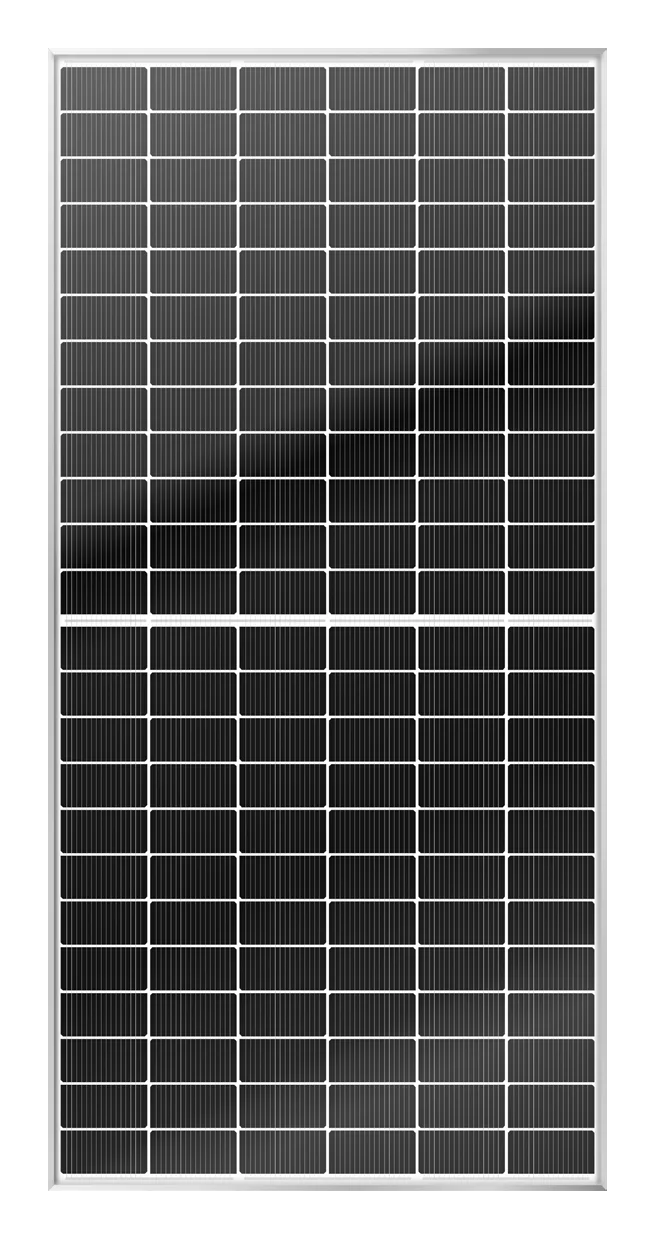
Sunova TS-BGT72(570)

TS-BGT72(570)

570 Wp N-type Bifacial 80%
ComparePV verdict

Middle of its segment, heavy for its output

Rank 4,685 of 14,005
Compare panels Datasheet PDF
Power (Wp)
570
Typical for its class
Efficiency (%)
22.10
Typical · median 22.45%
Density (Wp/m²)
220.7
Typical · median 224.5
Temp (%/°C)
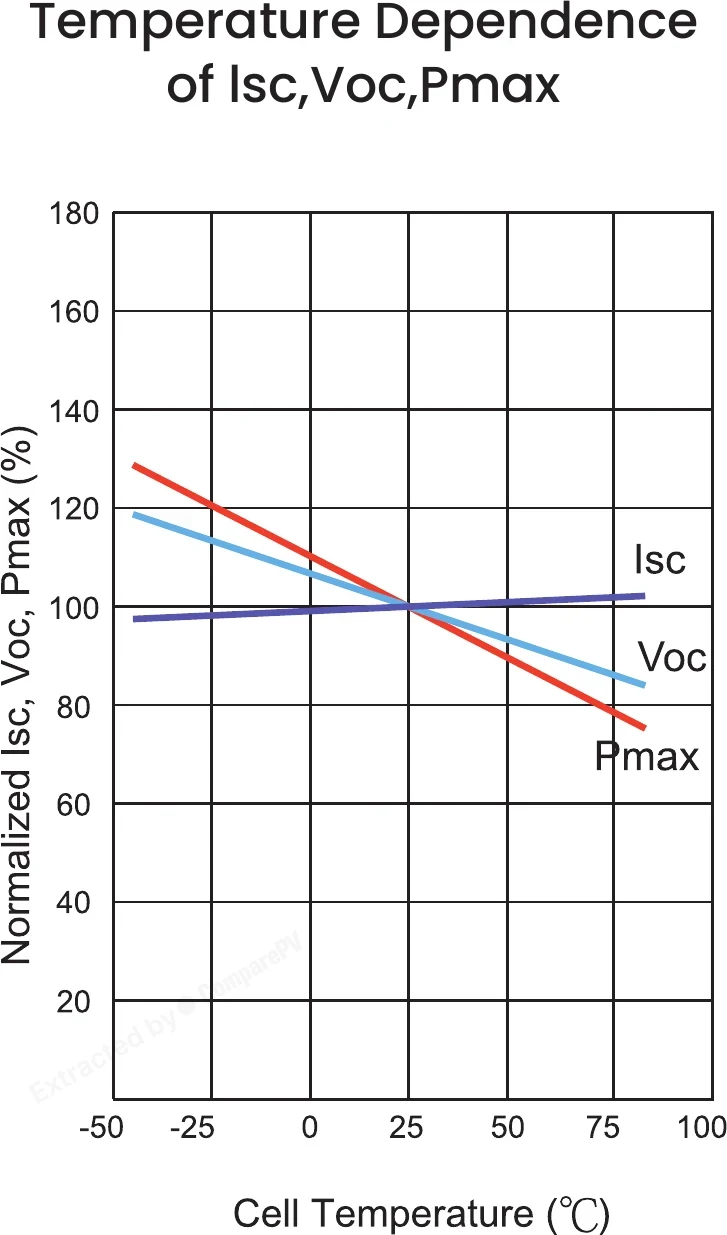
-0.290
Typical · median -0.290
Weight (kg)
31.5
Weak · 2.0 kg above median
Warranty (yrs)
30
Typical · median 30 yrs

The Sunova TS-BGT72 series consists of bifacial modules with a dual-glass construction, designed for high energy production even when conditions on the roof or ground are not ideal. By utilizing both sides, they effectively capture reflections from bright surfaces, such as the roof, membranes, or gravel, which translates to higher output without increasing the installation area. The use of N-type cells helps maintain stable performance over time and reduces typical losses seen in older technologies, while the half-cut design supports better performance under partial shading and reduces the risk of localized overheating.

The glass on both sides increases resistance to moisture, UV radiation, and temperature changes, making the TS-BGT72 suitable for more demanding environments and long-term operation. This series is focused on durability and predictable output. It is particularly suitable for commercial and industrial installations, large roofs, and PV farms, where energy balance, reliability, and profitability over the entire lifespan are crucial.

Ranking

259 panels in the segment N-type 550-600 W
Metric This panel Median Position in segment Overall rank
Module efficiency 22.10% 22.45% Typical 6,012
Power density 220.7 224.5 Typical 6,058
Temperature coefficient -0.290 -0.290 Typical 2,165
Weight per kWp 55.3 52.3 Weak · bottom 20% 9,702
Performance warranty 30 yrs 30 yrs Typical 21
Colour key Strong - top 25% Typical - middle 50% Weak - bottom 25%

Signals from the data

0 positive · 1 caution
Best for

Commercial, utility-scale and shaded-installations.

Not ideal for

Weight-limited structures.

Watch-outs
55.3 kg per kWp

Bottom 20% of the N-type 550-600 W segment, against a median of 52.3.

Notes from the database
  • Efficiency of 22.1% matches the N-type 550-600W median
  • Power density of 220.7 W/m² is 3.8 W/m² below N-type 550-600W median (224.5 W/m²) - needs more roof space
  • Temperature coefficient of -0.29%/°C matches the N-type 550-600W median
  • Weight of 31.5 kg is 2.0 kg above N-type 550-600W median (29.5 kg) - verify structural support
  • 80% bifaciality enables rear-side power generation, boosting yield by 4-12% on reflective surfaces

Specifications

Open datasheet PDF
Nominal power (Pmax) 570 Wp Nameplate at 1000 W/m², 25 °C
Module efficiency 22.10 % Typical Segment median 22.45%
Vmpp · Impp 43.62 V · 13.07 A Operating point at max power
Voc · Isc 51.52 V · 13.70 A Sizes the string length
Max system voltage 1500 V Longer strings than 1000 V modules
Dimensions 2278×1134×35 mm · 2.58 m² of roof
Weight 31.5 kg Weak Weak · 2.0 kg above median
Cells 144 · N-type Monocrystalline
Bifaciality 80 % Rear output as a share of front
Coefficient Pmax -0.290 %/°C Typical median -0.290 of its segment
Coefficient Voc · Isc -0.280 · 0.040 %/°C
NOCT 45 °C At 800 W/m², 20 °C ambient
Product warranty 15 years Hardware defects only
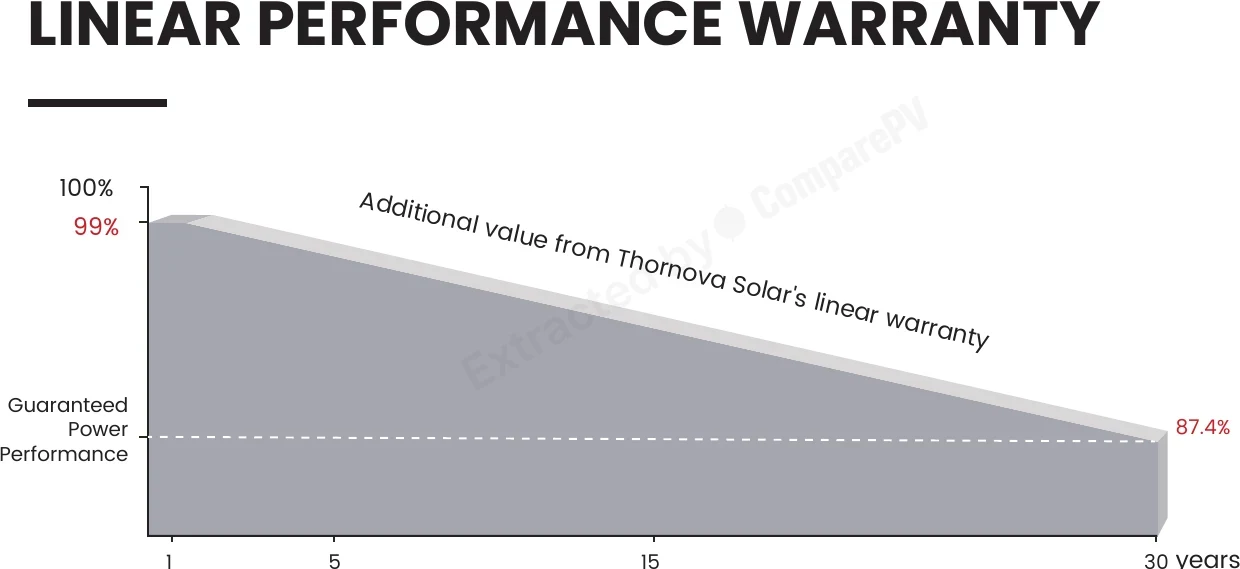
Performance warranty 30 years Typical median 30 yrs · median 30 yrs
End-of-warranty output 87.4 % Equals 498 W guaranteed
Degradation 1.00 → 0.40 % First year, then annual

Datasheet charts

Open datasheet PDF

Measured curves published by Sunova in this model's datasheet. A chart carrying a wattage was measured on that variant alone - only the ones that describe 570 Wp appear here. The rest cover the whole series.
Simulations

Live - change any input
Lifetime output & value
30 years at 1200 kWh/kWp/year and €0.50 per kWh
Power in year 30
-
Lifetime energy
-
Energy value
-
With bifacial gain
-

Degradation from this panel's own datasheet figures. No inverter, soiling or shading losses.

Heat losses
-0.290 %/°C against a segment median of -0.290
-
Bifacial gain
Rear gain over light concrete: -
-

Model: bifaciality × albedo × 0.6 view factor. A first-order estimate, not a yield simulation.

Alternatives

All Sunova panels
Filter these
Size
Panel Power Eff. Temp. Weight Difference
Sunova TS-BGT72(570) 570 W 22.10% -0.290 31.5 kg You are here
LR7-60HVH-560M 560 W 24.80% -0.260 25.0 kg Cooler, lighter, +2.7 pp
LR7-60HVH-555M 555 W 24.60% -0.260 25.0 kg Cooler, lighter, +2.5 pp
LR7-60HVHL-550M 550 W 24.40% -0.260 16.3 kg Cooler, 15 kg lighter, +2.3 pp
JAT60S40-540/LR 540 W 24.40% -0.260 23.5 kg -30 W, lighter, +2.3 pp
GK-5-60HG-540M 540 W 24.40% -0.260 23.3 kg -30 W, lighter, +2.3 pp
JKM545-54QL6-DV-F1-EU 545 W 24.27% -0.260 27.5 kg Cooler, lighter, +2.2 pp
LR7-60HVH-545M 545 W 24.20% -0.260 25.0 kg Cooler, lighter, +2.1 pp
RS535~555S8-144GA (535W) 535 W 20.70% -0.340 32.5 kg -35 W, hotter, -1.4 pp
TS-BG72(540) 540 W 20.90% -0.330 32.3 kg -30 W, hotter, -1.2 pp
TS-BW72(545) 545 W 21.10% -0.330 27.6 kg Hotter, -1.0 pp, -5 yr warranty
AIKO-A650-MAE72Mw 650 W 25.20% -0.260 27.0 kg +80 W, lighter, +3.1 pp
AIKO-A645-MAE72Mw 645 W 25.00% -0.260 27.0 kg +75 W, lighter, +2.9 pp
AIKO-A640-MAE72Mw 640 W 24.80% -0.260 27.0 kg +70 W, lighter, +2.7 pp
AIKO-A635-MAE72Mw 635 W 24.60% -0.260 27.0 kg +65 W, lighter, +2.5 pp
AIKO-A630-MAH72Dw 630 W 24.40% -0.260 32.5 kg +60 W, cooler, +2.3 pp

Found 2326 panels of the same or similar size to this one, within ±10 mm. See them here Found 2368 panels of the same or similar size to this one, within ±25 mm. See them here Found 2382 panels of the same or similar size to this one, within ±50 mm. See them here Found 2547 panels of the same or similar size to this one, within ±100 mm. See them here

Common questions

6 answered
How much extra energy does bifaciality add in the Sunova TS-BGT72 panels?
Thanks to two-sided operation, TS-BGT72 modules can generate up to 25% more energy compared to a classic monofacial panel, depending on ground albedo. Best results are achieved on bright gravel, roofing membranes, or ground-mount farms with reflective terrain. In practice, real gains typically fall in the 5-15% range, but bifacial operation alone improves the energy balance without increasing the installation footprint.
How do the N-type cells in the TS-BGT72 differ from older PERC panels?
N-type cells used in the TS-BGT72 series have a lower annual degradation rate (about 0.4%) than typical PERC panels, resulting in higher energy yield after many years of operation. N-type also handles LID effects and high temperatures better, allowing the module to maintain higher efficiency (up to 22.8%) throughout the period covered by the 30-year power warranty.
What warranty comes with Sunova TS-BGT72 panels?
The TS-BGT72 series is covered by a 15-year product warranty and a 30-year linear power warranty, guaranteeing at least 87.4% of initial power output after 30 years. This is standard for modern N-type modules and allows planning an installation with a long, predictable return on investment, especially for commercial projects and PV farms.
Can TS-BGT72 panels withstand heavy snow and wind loads?
Yes, the dual-glass construction of the TS-BGT72 module withstands wind loads up to 2400 Pa and snow loads up to 5400 Pa, making it suitable for harsher climates, including large industrial rooftops and regions with heavy snowfall. Glass on both sides also increases mechanical resistance and reduces the risk of microcracks compared to constructions using a rear-side backsheet.
Does the half-cut technology in the TS-BGT72 help with partial shading?
Yes, splitting the 144 cells into halves in a half-cut layout reduces the impact of partial shading, for example from chimneys, antennas, or nearby buildings, by lowering power losses in the shaded segment of the module. This design also reduces the risk of hot spots, extending panel lifespan and improving installation safety over time.
Are Sunova TS-BGT72 panels suitable for large commercial installations and PV farms?
Yes, the TS-BGT72 series, with power up to 590 Wp, is designed for large-scale installations - large industrial roofs and PV farms - where the energy balance per square meter and low annual degradation matter most. High module power reduces the number of panels, mounting structures, and cabling needed to reach the target system capacity, lowering BoS costs.
Add to compare