Resun Solar RS8H-M-480

Resun Solar RS8H-M-480

480 Wp TOPCon
ComparePV verdict

Middle of its segment, modest efficiency

Rank 10,116 of 14,354
Compare panels Datasheet PDF
Power (Wp)
480
Typical for its class
Efficiency (%)
20.21
Weak · bottom 1%
Density (Wp/m²)
202.1
Weak · bottom 1%
Temp (%/°C)
-0.350
Weak · bottom 2%
Weight (kg)
26.3
Weak · 2.3 kg above median
Warranty (yrs)
30
Typical · median 30 yrs

The RS8H-M series from Resun Solar combines monocrystalline cells built with N-type TOPCon technology and a half-cut cell design, effectively minimizing power losses caused by shading and the hot-spot effect. The multi-busbar 9-11 BB grid reduces internal current losses and boosts conversion efficiency, while also lowering the risk of microcracks and busbar breakage, resulting in a longer service life for the installation. The panel also stands out for its strong resistance to PID degradation, limiting power loss over time and delivering higher energy yield with a lower LCOE. A 3.2mm tempered glass with anti-reflective coating ensures solid performance even under low-light conditions, and certified mechanical strength against wind and snow loads makes it suitable for demanding climates, including areas with elevated salt mist and ammonia exposure. RS8H-M is built for commercial and industrial investors who need high reliability, stable energy output over decades, and low annual power degradation, backed by an extended manufacturer warranty.

Ranking

1,125 panels in the segment TOPCon 450-500 W
Metric This panel Median Position in segment Overall rank
Module efficiency 20.21% 22.52% Weak · bottom 1% 12,219
Power density 202.1 225.2 Weak · bottom 1% 12,246
Temperature coefficient -0.350 -0.290 Weak · bottom 2% 10,660
Weight per kWp 54.8 52.2 Weak · bottom 18% 9,397
Performance warranty 30 yrs 30 yrs Typical 31
Colour key Strong - top 25% Typical - middle 50% Weak - bottom 25%

Signals from the data

5 positive · 5 caution
Best for

Commercial and utility-scale.

Not ideal for

Tight roof space, roofs where every square metre has to count and hot climates.

Watch-outs
20.21% module efficiency

Bottom 1% of the TOPCon 450-500 W segment, against a median of 22.52%. Ranked 12,219th in the whole database.

202.1 watts per square metre

Bottom 1% of the TOPCon 450-500 W segment, against a median of 225.2. Ranked 12,246th in the whole database.

-0.350 %/°C temperature coefficient

Bottom 2% of the TOPCon 450-500 W segment, against a median of -0.290. Ranked 10,660th in the whole database.

What owners get
N-type TOPCon cells with half-cut design

The half-cut TOPCon cell architecture reduces power loss under partial shading and lowers the risk of hot-spot effects, resulting in more stable energy yield under real-world installation conditions.

High resistance to PID degradation

The manufacturer claims enhanced resistance to potential-induced degradation (PID), limiting power loss over the module's operating life and contributing to a lower LCOE over a 25-30 year horizon.

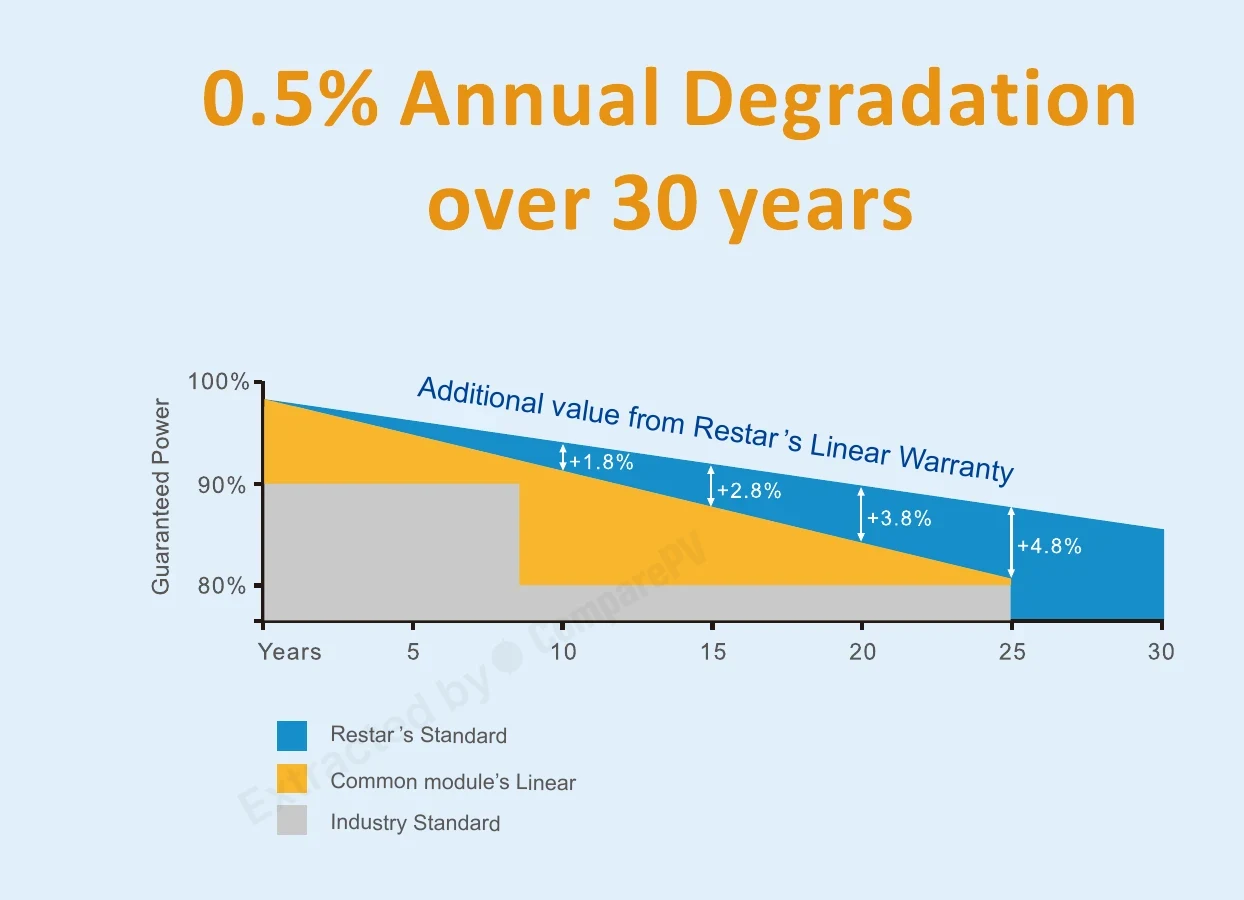
30-year linear power warranty

The 30-year linear power warranty, combined with the typically slower annual degradation of N-type cells, puts the RS8H-M series on par with leading TOPCon-segment manufacturers, giving investors predictable energy yield over the long term.

Multi-busbar 9-11 BB grid

The 9-11 busbar grid reduces internal resistive losses and lowers the risk of microcracks and interconnect ribbon breakage, improving mechanical reliability during transport and installation.

Certified resistance to environmental loads

3.2 mm tempered glass with an anti-reflective coating, combined with certified resistance to wind and snow loads as well as elevated salt mist and ammonia concentration, makes the series suitable for commercial and industrial installations in harsher climates, such as coastal or agricultural sites.

Trade-offs
Lower efficiency than competing HJT modules

The maximum efficiency of 21.69% trails comparable HJT-based modules at the same 515 Wp max power - Huasun Aurora Pro (23.17%) and Jolywood JW-HD120N Black Series (23.3%) - meaning a larger installation area is needed to reach the same power output.

No bifacial variant in this series

RS8H-M is a monofacial module (is_bifacial: false), while some competing series in the same power segment (e.g., Huasun Aurora Pro RS490-515S8R) offer bifacial variants that can capture additional energy yield from ground reflection in ground-mounted installations.

Notes from the database
  • Efficiency of 20.2% is 2.3pp below the TOPCon 450-500W median (22.5%)
  • 202.1 W/m² power density is 23.1 W/m² below TOPCon 450-500W median (225.2 W/m²) - requires larger installation area
  • -0.35%/°C temperature coefficient - 0.06pp worse than TOPCon 450-500W median (-0.29%/°C), expect higher hot weather losses
  • Weight of 26.3 kg is 2.3 kg above TOPCon 450-500W median (24.0 kg) - verify structural support
  • #12219 for efficiency, #10660 for temperature performance out of 14354 panels

Specifications

Open datasheet PDF
Nominal power (Pmax) 480 Wp Nameplate at 1000 W/m², 25 °C
Module efficiency 20.21 % Weak Segment median 22.52%
Vmpp · Impp 37.62 V · 12.76 A Operating point at max power
Voc · Isc 45.07 V · 13.65 A Sizes the string length
Max system voltage 1500 V Longer strings than 1000 V modules
Dimensions 2094×1134×35 mm · 2.37 m² of roof
Weight 26.3 kg Weak Weak · 2.3 kg above median
Cells 132 · TOPCon Monocrystalline
Coefficient Pmax -0.350 %/°C Weak bottom 2% of its segment
Coefficient Voc · Isc -0.320 · 0.050 %/°C
NOCT 45 °C At 800 W/m², 20 °C ambient
Product warranty 15 years Hardware defects only
Performance warranty 30 years Typical median 30 yrs · median 30 yrs
Degradation 0.50 % Per year after the first

Datasheet charts

Open datasheet PDF

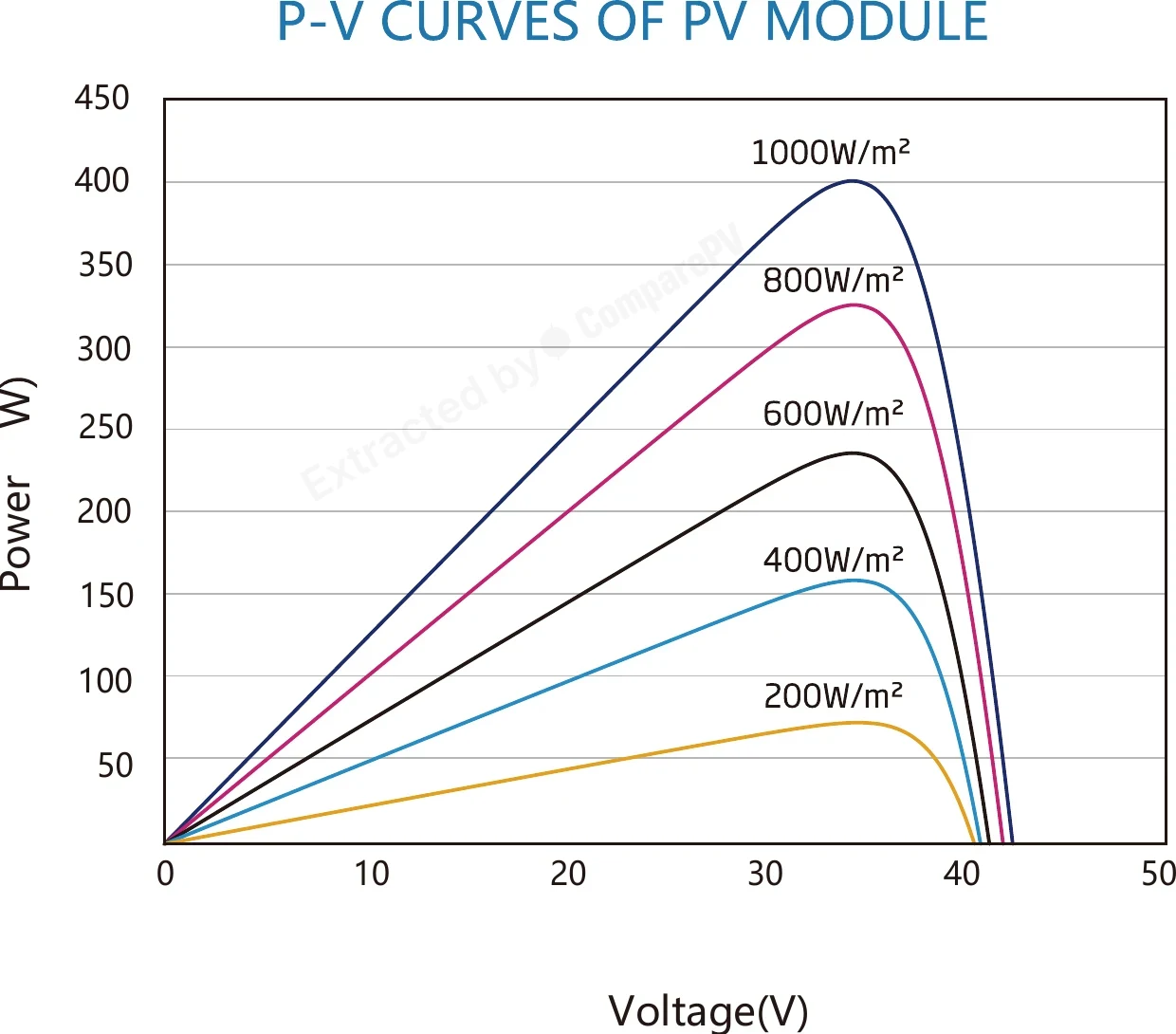
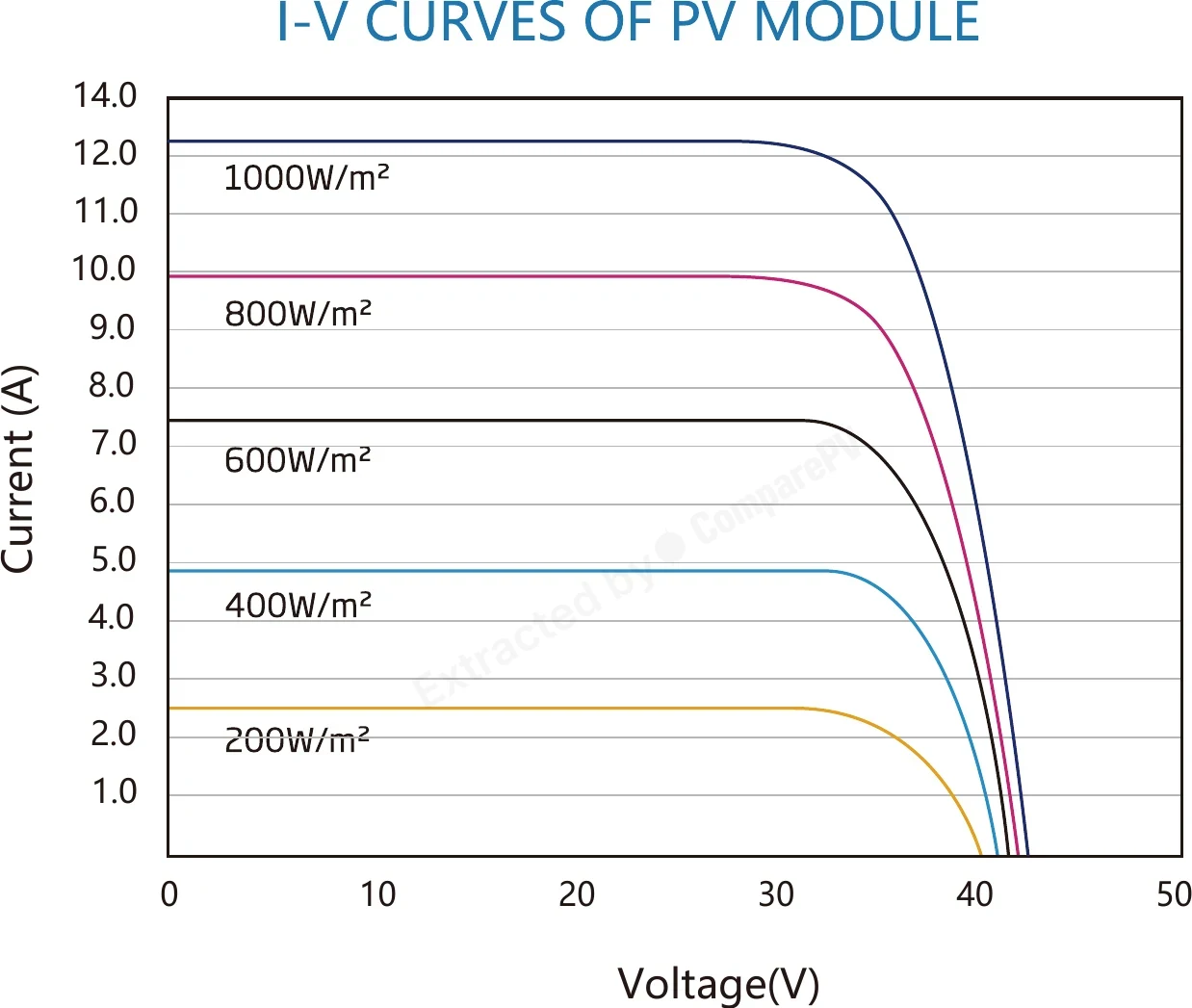
Measured curves published by Resun Solar in this model's datasheet. A chart carrying a wattage was measured on that variant alone - only the ones that describe 480 Wp appear here. The rest cover the whole series.
Simulations

Live - change any input
Lifetime output & value
30 years at 1200 kWh/kWp/year and €0.50 per kWh
Power in year 30
-
Lifetime energy
-
Energy value
-

Degradation from this panel's own datasheet figures. No inverter, soiling or shading losses.

Heat losses
-0.350 %/°C against a segment median of -0.290
-

Alternatives

All Resun Solar panels
Filter these
Size
Panel Power Eff. Temp. Weight Difference
Resun Solar RS8H-M-480 480 W 20.21% -0.350 26.3 kg You are here
JKM510T-48HL6M-DB 510 W 25.52% -0.240 22.0 kg Cooler, lighter, +5.3 pp
JKM505T-48HL6M-DB 505 W 25.27% -0.240 22.0 kg Cooler, lighter, +5.1 pp
JKM500T-48HL6M-DB 500 W 25.02% -0.240 22.0 kg Cooler, lighter, +4.8 pp
LR7-54HJD-510M 510 W 25.00% -0.240 23.5 kg +30 W, cooler, +4.8 pp
AIKO-A495-MCE54Mw 495 W 24.80% -0.260 21.0 kg Cooler, lighter, +4.6 pp
JKM495T-48HL6M-DB 495 W 24.77% -0.240 22.0 kg Cooler, lighter, +4.6 pp
LR7-54HJD-505M 505 W 24.70% -0.240 23.5 kg Cooler, lighter, +4.5 pp
WST-505BKX54-A2 505 W 24.70% -0.260 25.0 kg +25 W, cooler, +4.5 pp
SPR-BE54-HD505 505 W 24.70% -0.260 26.0 kg Cooler, +4.5 pp, +10 yr warranty
RS8H-M-485 485 W 20.42% -0.350 26.3 kg +0.2 pp
RS8H-M-490 490 W 20.64% -0.350 26.3 kg +10 W, +0.4 pp
RS8H-M-495 495 W 20.85% -0.350 26.3 kg +15 W, +0.6 pp
RS8H-M-500 500 W 21.06% -0.350 26.3 kg +20 W, +0.8 pp
RS8H-M-505 505 W 21.27% -0.350 26.3 kg +25 W, +1.1 pp
RS8H-M-510 510 W 21.48% -0.350 26.3 kg +30 W, +1.3 pp
RS8H-M-515 515 W 21.69% -0.350 26.3 kg +35 W, +1.5 pp
SPR-BE66-GD615 615 W 24.80% -0.260 30.1 kg +135 W, +4.6 pp, +10 yr warranty

Found 407 panels of the same or similar size to this one, within ±10 mm. See them here Found 418 panels of the same or similar size to this one, within ±25 mm. See them here Found 435 panels of the same or similar size to this one, within ±50 mm. See them here Found 969 panels of the same or similar size to this one, within ±100 mm. See them here

About the RS8H-M series

6 answered

These answers cover the whole series. Where a figure differs, the specification above is this module's own.

What is the maximum power output of the RS8H-M series panel?
RS8H-M series panels reach a maximum power output of up to 515 Wp. This is achieved by combining N-type TOPCon monocrystalline cells with a half-cut cell layout and a 9-11 busbar (BB) grid, which together reduce current losses and increase energy conversion efficiency.
How does TOPCon technology in the RS8H-M differ from standard PERC panels?
The N-type TOPCon cells used in RS8H-M feature lower power degradation over time and higher efficiency than older P-type PERC cells. An additional passivation layer reduces charge carrier recombination, resulting in higher energy yield, better performance at high temperatures, and a lower LCOE over the system's lifetime.
What warranty does Resun Solar offer on the RS8H-M panels?
The manufacturer provides a 15-year product warranty and a 30-year linear power output warranty. This means that even after three decades of operation, the panel should retain a significant portion of its original performance, making this series a solid long-term investment for commercial and industrial customers.
Are RS8H-M panels suitable for harsh climate conditions, such as coastal installations?
Yes, RS8H-M modules have certified mechanical resistance to wind and snow loads and are resistant to elevated salt mist and ammonia concentrations. This makes them suitable for both coastal areas and locations near agricultural facilities, where standard panels could otherwise corrode more quickly.
Is the RS8H-M a bifacial panel that generates power from its rear side?
No, the RS8H-M series is a monofacial panel, designed to generate power only from its front side. Investors seeking additional energy yield from ground reflection, such as ground-mount installations on light-colored surfaces, should consider alternative bifacial series from the manufacturer's lineup.
What does PID resistance mean for RS8H-M panels and why does it matter?
PID (Potential Induced Degradation) is a power loss phenomenon caused by voltage potential differences within a system, especially common in large installations with high string voltages. The RS8H-M's high PID resistance limits this effect, ensuring more stable energy production throughout the panel's lifetime and reducing the risk of unexpected performance drops.
Add to compare