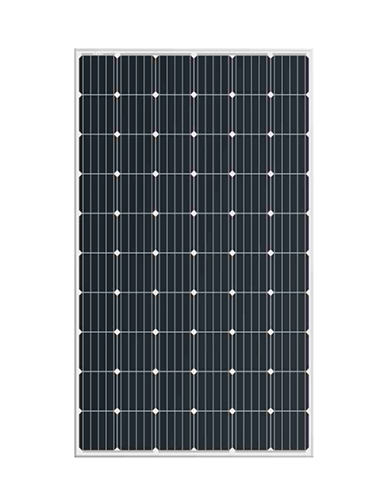
Rarlon PV Tech RL260HP-60

RL260HP-60

260 Wp Polycrystalline
ComparePV verdict

Middle of its segment, weak in heat

Rank 13,913 of 14,005
Compare panels Datasheet PDF
Power (Wp)
260
Weak · bottom 23%
Efficiency (%)
15.98
Weak · bottom 18%
Density (Wp/m²)
159.8
Weak · bottom 19%
Temp (%/°C)
-0.470
Weak · bottom 2%
Weight (kg)
17.0
Typical · median 19.0 kg
Warranty (yrs)
-
Not published

The Rarlon PV Tech Polycrystalline Photovoltaic Module series, available in 60-cell and 72-cell configurations, are designed for stable operation in typical operating conditions in Poland, from rooftop installations to larger ground-mounted systems. The use of polycrystalline cells is a practical choice for investors seeking a proven technology with predictable performance and a good cost-effectiveness ratio in both renovation and budget-conscious projects.

A key feature of this series is positive power tolerance, which makes it easier to maintain the intended performance of the entire string without unexpected issues after installation. The modules feature a high-sealing junction box and bypass diodes, which improve resistance to partial shading and reduce the risk of losses due to uneven sunlight exposure. The construction, based on tempered glass, supports durability in windy, rainy, and temperature-fluctuating conditions.

This is a good option for installers and investors who want to rely on a simple, compatible, and easy-to-maintain series of panels in standard formats.

Ranking

1,015 panels in the 160-360 W band, all technologies
Metric This panel Median Position in segment Overall rank
Module efficiency 15.98% 17.70% Weak · bottom 18% 13,649
Power density 159.8 176.4 Weak · bottom 19% 13,631
Temperature coefficient -0.470 -0.360 Weak · bottom 2% 13,879
Weight per kWp 65.4 64.4 Typical 13,071
Performance warranty - 25 yrs Not published 13,880
Colour key Strong - top 25% Typical - middle 50% Weak - bottom 25%

Signals from the data

5 positive · 6 caution
Best for

Residential and commercial.

Not ideal for

Hot climates, tight roof space and roofs where every square metre has to count.

Watch-outs
-0.470 %/°C temperature coefficient

Bottom 2% of the 160-360 W band, against a median of -0.360. Ranked 13,879th in the whole database.

15.98% module efficiency

Bottom 18% of the 160-360 W band, against a median of 17.70%.

159.8 watts per square metre

Bottom 19% of the 160-360 W band, against a median of 176.4.

What owners get
Positive power tolerance

Modules feature positive power tolerance, meaning no risk of receiving a panel below the rated Wp value. This simplifies precise string power balancing without unexpected losses after installation.

Bypass diodes and sealed junction box

Bypass diodes reduce performance losses under partial shading, while a high-rated junction box improves resistance to moisture and contamination in more demanding mounting environments.

Mature, proven poly-Si technology

The series has been in production since 2014, meaning years of field performance history and well-understood degradation behavior - a strong asset for investors who prioritize predictability over novel technologies.

Tempered glass construction

The use of tempered glass supports mechanical resistance to snow and wind loads, relevant for Poland's typical climate with significant seasonal variability.

Competitive efficiency within the poly-Si segment

Efficiency up to 17.21% is comparable to similar poly-Si modules on the market, e.g. TPL P-60 (17.1%) or Gintech GIN P6F-60 (17%), placing the series in the typical range for this technology.

Trade-offs
Efficiency below newer mono-Si technologies

Maximum efficiency of 17.21% clearly lags behind modules based on newer cell technologies - e.g. Techwise Solar Micro Sun Series reaches 21.12% at the same 280 Wp power rating, a roughly 4 percentage-point gap that means lower energy yield from the same roof area.

Manufacturer not on the BNEF Tier 1 list

Rarlon PV Tech (Ningbo Rarlon Photovoltaic Technology) does not appear on the current BloombergNEF Tier 1 list, unlike segment leaders such as JA Solar, Trina Solar, or Jinko Solar. This can complicate project financing where banks require Tier 1 components.

Poly-Si technology has a lower efficiency ceiling

Polycrystalline cells inherently have a lower efficiency ceiling than mono-Si PERC or TOPCon cells now dominant in the market, meaning lower installed power for the same roof area compared to newer mono-based solutions.

Notes from the database
  • Efficiency of 16.0% is 5.8pp below the database median (21.8%)
  • At 159.8 W/m², this panel generates 58.3 W/m² less per unit area than database median (218.1 W/m²)
  • At -0.47%/°C, loses 0.17pp more power per degree than database median (-0.30%/°C)
  • Weight of 17.0 kg (9.5 kg below database median of 26.5 kg) allows easier transport and roof mounting
  • In the top 97% for efficiency among all N-type panels

Specifications

Open datasheet PDF
Nominal power (Pmax) 260 Wp Nameplate at 1000 W/m², 25 °C
Module efficiency 15.98 % Weak Segment median 17.70%
Vmpp · Impp 30.92 V · 8.41 A Operating point at max power
Voc · Isc 37.90 V · 9.15 A Sizes the string length
Max system voltage 1000 V Longer strings than 1000 V modules
Dimensions 1640×992×35 mm · 1.63 m² of roof
Weight 17.0 kg Typical Typical · median 19.0 kg
Coefficient Pmax -0.470 %/°C Weak bottom 2% of its segment
Coefficient Voc · Isc -0.346 · 0.036 %/°C
NOCT 47 °C At 800 W/m², 20 °C ambient

Simulations

Live - change any input
Lifetime output & value
30 years at 1200 kWh/kWp/year and €0.50 per kWh
Power in year 30
-
Lifetime energy
-
Energy value
-

Degradation from this panel's own datasheet figures. No inverter, soiling or shading losses.

Heat losses
-0.470 %/°C against a segment median of -0.360
-
Filter these
Size
Panel Power Eff. Temp. Weight Difference
Rarlon PV Tech RL260HP-60 260 W 15.98% -0.470 17.0 kg You are here
CS3K-310P-AG 310 W 18.70% -0.360 22.5 kg Cooler, heavier, +2.7 pp
RL310HP-120 310 W 18.60% -0.390 18.5 kg +50 W, cooler, +2.6 pp
CS3K-310PB-AG 310 W 18.40% -0.360 22.3 kg Cooler, heavier, +2.4 pp
CS3K-305P-AG 305 W 18.40% -0.360 22.5 kg Cooler, heavier, +2.4 pp
LNSK-310P 310 W 18.31% -0.360 21.0 kg +50 W, cooler, +2.3 pp
RL305HP-120 305 W 18.30% -0.390 18.5 kg +45 W, cooler, +2.3 pp
WS-295 295 W 18.17% -0.386 18.5 kg +35 W, cooler, +2.2 pp
CS3K-305PB-AG 305 W 18.10% -0.360 22.3 kg Cooler, heavier, +2.1 pp
RL250HM-60 250 W 15.37% -0.470 17.0 kg -10 W, -0.6 pp
RL270HM-60 270 W 16.60% -0.470 17.0 kg +10 W, +0.6 pp
RL280HM-60 280 W 17.21% -0.470 17.0 kg +20 W, +1.2 pp
RL290HM-60 290 W 17.83% -0.470 17.0 kg +30 W, +1.8 pp
RL300HM-60 300 W 18.44% -0.470 17.0 kg +40 W, +2.5 pp
SPR-MAX3-400-COM 400 W 22.60% -0.270 19.0 kg +140 W, cooler, +6.6 pp
LEPV 400 400 W 22.31% -0.290 20.0 kg +140 W, cooler, +6.3 pp
NS-360MH-60 360 W 22.12% -0.290 17.0 kg +100 W, cooler, +6.1 pp

Found 182 panels of the same or similar size to this one, within ±10 mm. See them here Found 218 panels of the same or similar size to this one, within ±25 mm. See them here Found 379 panels of the same or similar size to this one, within ±50 mm. See them here Found 472 panels of the same or similar size to this one, within ±100 mm. See them here

Common questions

6 answered
What is the difference between the 60-cell and 72-cell variants of the Rarlon PV Tech Polycrystalline series, and which one should I choose for a rooftop installation?
The 60-cell variant has a smaller footprint and lower per-panel wattage, making it the better fit for sloped roofs with limited usable surface area. The 72-cell module is physically larger and produces more power per unit, which is advantageous for ground-mount systems or large roof planes where minimizing the number of modules and BoS components matters. For a typical single-family home, the 60-cell variant is the more common choice.
Do the Rarlon PV Tech Polycrystalline modules carry a positive power tolerance, and what does that mean in real-world use?
Yes, the series features a positive power tolerance. This means every panel leaves the factory at or above its rated 280 Wp, never below. In practice, the entire string maintains consistent output without underperforming units dragging down production. This is a meaningful advantage at the system-design stage, where predictable yield is critical for accurate energy calculations.
How well do the Rarlon PV Tech Polycrystalline panels handle partial shading from a chimney or antenna?
The modules are equipped with bypass diodes inside the junction box. These diodes automatically route current around shaded cells, allowing the unshaded portion of the panel to continue producing power. This significantly reduces energy losses caused by localized shading from chimneys, dormers, or antennas compared to modules without bypass diode protection — a well-proven feature in polycrystalline technology.
How durable are the Rarlon PV Tech Polycrystalline modules under Polish weather conditions?
The panels use tempered glass that withstands mechanical stress from wind loads, snow accumulation, and hail. The junction box carries a high IP ingress protection rating, shielding internal electronics from the moisture and frost typical of Polish winters. The series is engineered for reliable operation across the full temperature range experienced in Central European climates, from summer heat to sub-zero winter temperatures.
Are the Rarlon PV Tech Polycrystalline modules compatible with mainstream inverters available in Poland?
Yes, the 60-cell and 72-cell Polycrystalline modules operate within standard voltage and current ranges compatible with widely used inverters from SMA, Fronius, Huawei, Growatt, and other brands. Their standard mechanical and electrical specifications make them easy to integrate into new installations or existing system expansions, with no need for special MPPT range adjustments or custom adapters.
Is polycrystalline technology still cost-effective compared to monocrystalline modules in today's market?
Polycrystalline modules offer a lower upfront purchase price and a long track record of reliability. Their efficiency is somewhat lower than monocrystalline panels, which matters when roof area is limited. For budget-conscious investors or projects with ample available space where LCOE per installed kilowatt is the primary metric, polycrystalline technology remains a practical and economically sound choice.
Add to compare