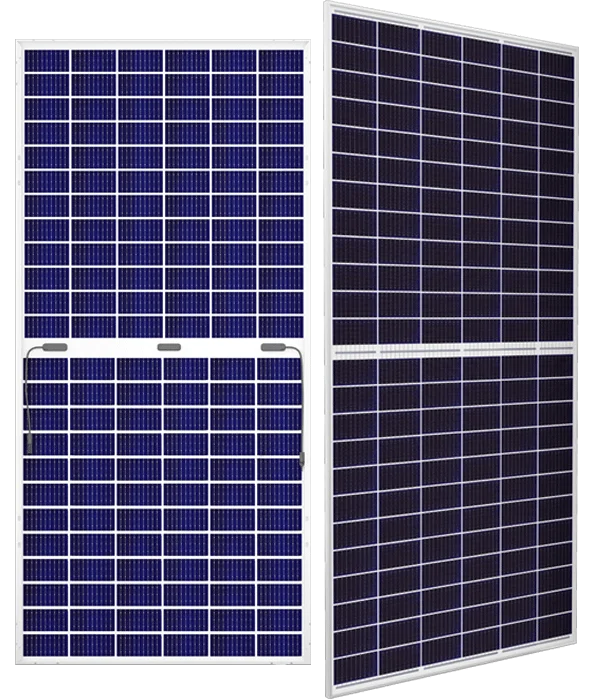
Canadian Solar CS3K-310PB-AG

CS3K-310PB-AG

310 Wp PERC Bifacial 70%
ComparePV verdict

Warranty pick, heavy for its output

Rank 13,148 of 14,005
Compare panels Datasheet PDF
Power (Wp)
310
Weak · bottom 17%
Efficiency (%)
18.40
Typical · median 19.00%
Density (Wp/m²)
184.3
Typical · median 190.0
Temp (%/°C)
-0.360
Typical · median -0.360
Weight (kg)
22.3
Weak · 3.3 kg above median
Warranty (yrs)
30
Strong · top 15%

The BiKu series consists of bifacial photovoltaic modules from Canadian Solar built around poly-crystalline cells in a glass-glass housing, allowing the rear side of the panel to capture additional energy reflected from the ground. This design works particularly well on ground-mounted installations, flat roofs, or structures over light-colored surfaces, where albedo lets you meaningfully boost energy yield without expanding the installation footprint. The panels use MBB (multi busbar) technology, which reduces resistive losses and improves the module's aesthetics, while the glass-glass construction increases mechanical durability and extends product lifespan. The series stands out for its high bifaciality of up to 70%, translating into a real power gain from the rear side of the module. Thanks to a low power temperature coefficient, the panels maintain high efficiency even on hot days, and the sturdy aluminum frame provides resistance to heavy snow and wind loads. This makes it a strong choice for investors seeking higher returns per square meter of installation and greater durability than conventional single-sided modules, while keeping the same straightforward mounting typical of standard silicon panels.

Ranking

286 panels in the segment PERC 300-350 W
Metric This panel Median Position in segment Overall rank
Module efficiency 18.40% 19.00% Typical 13,130
Power density 184.3 190.0 Typical 13,110
Temperature coefficient -0.360 -0.360 Typical 12,345
Weight per kWp 71.9 60.0 Weak · bottom 11% 13,496
Performance warranty 30 yrs 25 yrs Strong · top 15% 21
Colour key Strong - top 25% Typical - middle 50% Weak - bottom 25%

Signals from the data

6 positive · 4 caution
Best for

Residential and commercial.

Not ideal for

Weight-limited structures.

Strengths
30 year performance warranty

Top 15% of the PERC 300-350 W segment, against a median of 25 yrs.

Watch-outs
71.9 kg per kWp

Bottom 11% of the PERC 300-350 W segment, against a median of 60.0.

What owners get
Bifacial energy gain up to 70%

A bifaciality factor of up to 70% enables real additional energy yield from the rear side of the module, particularly on ground-mount installations and flat roofs with high-albedo surfaces, without increasing the installation footprint.

Glass-glass construction improves durability

The dual-glass (glass-glass) encapsulation avoids the backsheet/EVA degradation issues typical of standard laminates and improves mechanical resistance, supporting Canadian Solar's 30-year power warranty.

Backed by a Tier-1 bankable manufacturer

Canadian Solar is a Tier-1 (bankable) manufacturer operating since 2001, meaning low counterparty risk for bank-financed projects and strong credibility with insurers and institutional investors.

30-year linear power warranty

The 30-year power warranty and 12-year product warranty match or exceed the standard at the time the series launched (2018), and combined with a low power temperature coefficient, deliver stable energy yield in hot climates.

MBB (multi-busbar) technology

Multi-busbar cell metallization reduces resistive losses compared to conventional lower-busbar-count cells, improving both efficiency and module aesthetics.

Trade-offs
Discontinued (series ended in 2020)

The BiKu series launched in 2018 and ceased production in 2020, superseded by the BiHiKu line and TOPCon technology. This limits access to warranty service, spare parts, and matching modules for expanding an existing installation.

Lower efficiency than current peer modules

Maximum efficiency of 19.9% trails comparable 400 Wp modules currently on the market, such as Heliene 108HC M10 SL All Black (20.5%) and MWG Mono (20.12%), meaning a larger installed area is needed for equivalent power.

Legacy PERC cell technology

The 2018-generation PERC cells exhibit a higher LID/LeTID degradation rate and weaker temperature performance than newer N-type technologies (TOPCon, HJT), which now dominate the premium bifacial module segment.

Notes from the database
  • At 18.4% efficiency, this panel is 1.1pp below the PERC 0-400W median of 19.4%
  • At 184.3 W/m², this panel generates 10.1 W/m² less per unit area than PERC 0-400W median (194.4 W/m²)
  • At -0.36%/°C, hot weather performance is typical for PERC 0-400W panels
  • At 22.3 kg (1.8 kg above PERC 0-400W median of 20.5 kg), requires checking roof load capacity
  • Bifacial design (70% factor) captures reflected light - adds 4-10% yield on ground-mount or white roof

Specifications

Open datasheet PDF
Nominal power (Pmax) 310 Wp Nameplate at 1000 W/m², 25 °C
Module efficiency 18.40 % Typical Segment median 19.00%
Vmpp · Impp 33.10 V · 9.37 A Operating point at max power
Voc · Isc 39.70 V · 9.81 A Sizes the string length
Max system voltage 1500 V Longer strings than 1000 V modules
Dimensions 1696×992×30 mm · 1.68 m² of roof
Weight 22.3 kg Weak Weak · 3.3 kg above median
Cells 120 · PERC Polycrystalline
Bifaciality 70 % Rear output as a share of front
Coefficient Pmax -0.360 %/°C Typical median -0.360 of its segment
Coefficient Voc · Isc -0.280 · 0.050 %/°C
NOCT 41 °C At 800 W/m², 20 °C ambient
Product warranty 12 years Hardware defects only
Performance warranty 30 years Strong top 15% · median 25 yrs

Simulations

Live - change any input
Lifetime output & value
30 years at 1200 kWh/kWp/year and €0.50 per kWh
Power in year 30
-
Lifetime energy
-
Energy value
-
With bifacial gain
-

Degradation from this panel's own datasheet figures. No inverter, soiling or shading losses.

Heat losses
-0.360 %/°C against a segment median of -0.360
-
Bifacial gain
Rear gain over light concrete: -
-

Model: bifaciality × albedo × 0.6 view factor. A first-order estimate, not a yield simulation.

Filter these
Size
Panel Power Eff. Temp. Weight Difference
Canadian Solar CS3K-310PB-AG 310 W 18.40% -0.360 22.3 kg You are here
LNSK-340M 340 W 20.08% -0.360 21.0 kg +30 W, +1.7 pp, -5 yr warranty
CS3K-330P 330 W 19.90% -0.360 18.5 kg Lighter, +1.5 pp, -5 yr warranty
CS3K-335MB-AG 335 W 19.90% -0.360 22.3 kg +25 W, +1.5 pp
LNSK-335M 335 W 19.78% -0.360 21.0 kg +25 W, +1.4 pp, -5 yr warranty
CS3K-325P 325 W 19.60% -0.360 18.5 kg Lighter, +1.2 pp, -5 yr warranty
CS3L-360P 360 W 19.50% -0.360 21.1 kg +50 W, +1.1 pp, -5 yr warranty
LNSK-330M 330 W 19.49% -0.360 21.0 kg +20 W, +1.1 pp, -5 yr warranty
CS3K-320P 320 W 19.30% -0.360 18.5 kg Lighter, +0.9 pp, -5 yr warranty
CS3K-290PB-AG 290 W 17.20% -0.360 22.3 kg -20 W, -1.2 pp
CS3K-295PB-AG 295 W 17.50% -0.360 22.3 kg -15 W, -0.9 pp
CS3K-300PB-AG 300 W 17.80% -0.360 22.3 kg -10 W, -0.6 pp
CS3K-305PB-AG 305 W 18.10% -0.360 22.3 kg -0.3 pp
CS3K-315MB-AG 315 W 18.70% -0.360 22.3 kg +0.3 pp
CS3K-320MB-AG 320 W 19.00% -0.360 22.3 kg +10 W, +0.6 pp
CS1H-320MS 320 W 19.00% -0.370 19.2 kg Lighter, +0.6 pp, -5 yr warranty
CS3K-325MB-AG 325 W 19.30% -0.360 22.3 kg +15 W, +0.9 pp
SPR-MAX3-400-COM 400 W 22.60% -0.270 19.0 kg +90 W, +4.2 pp, +10 yr warranty

Found 42 panels of the same or similar size to this one, within ±10 mm. See them here Found 161 panels of the same or similar size to this one, within ±25 mm. See them here Found 293 panels of the same or similar size to this one, within ±50 mm. See them here Found 753 panels of the same or similar size to this one, within ±100 mm. See them here

Common questions

6 answered
Is the Canadian Solar BiKu series still available for purchase?
The BiKu series has been discontinued by Canadian Solar and replaced by newer bifacial lines based on mono PERC and TOPCon cells. BiKu panels may still be found through some distributors as remaining stock, but purchasing them comes with limited availability of spare parts and matching modules for existing installations. Current bifacial models from the manufacturer are worth considering as a replacement.
How much extra energy does the 70% bifaciality of BiKu panels actually deliver?
A 70% bifaciality coefficient means the rear side of the module can generate up to 70% of the front side's power under ideal albedo conditions. In practice, when mounted over a light-colored ground surface (gravel, white roofing) or on a ground-mount structure with adequate clearance, the real annual energy gain typically ranges from 5-20%, depending on mounting height, tilt angle, and ground reflectance.
What warranty comes with Canadian Solar BiKu panels?
BiKu panels carry Canadian Solar's standard 12-year product warranty and a 30-year linear power warranty, guaranteeing a specified percentage of rated power output over that period. Although the series has been discontinued, warranty obligations remain valid for already-installed panels, as Canadian Solar, being a tier 1 manufacturer, maintains after-sales support for legacy products.
Are BiKu panels suitable for ground-mount installations?
Yes, this is one of the series' primary applications. The glass-glass construction and high bifaciality make BiKu panels well suited for ground-mount solar farms, where mounting on a rack with sufficient clearance above the ground lets the rear side capture reflected light. They also perform well on flat roofs with light-colored surfaces, such as PVC membrane roofing.
How does glass-glass construction differ from standard glass-backsheet panels, and is it worth the extra cost?
In glass-glass panels, cells are laminated between two glass sheets instead of glass and a polymer backsheet. This increases mechanical strength, reduces moisture-related degradation, and extends module lifespan, which is reflected in longer warranty terms. The added cost makes sense for harsh-site installations or projects where maximum durability matters most, such as solar farms designed for a 30-year operating life.
Does the MBB technology in BiKu panels improve performance under partial shading?
MBB (multi busbar) technology increases the number of thin conductive paths on each cell, shortening the current path, reducing resistive losses, and improving aesthetics through less visible busbars. While MBB alone doesn't eliminate shading losses the way half-cut cells do, the added path redundancy modestly improves resilience against microcracks and localized power loss.
Add to compare