Efficiency leader, weak in heat
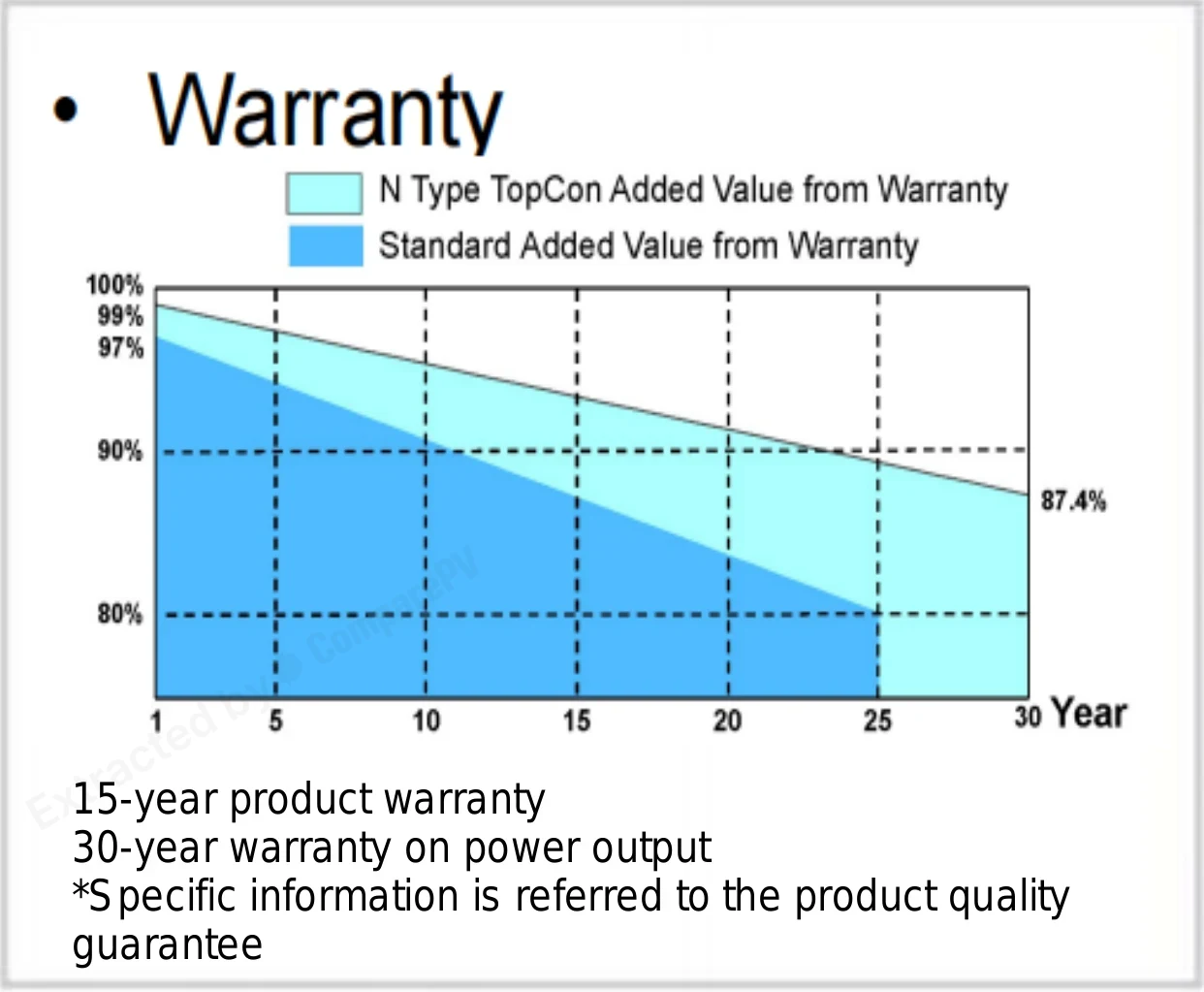
The FE72-18X(ND) series from Fellow Energy comprises modern photovoltaic modules based on N-TOPCon technology, which fundamentally sets them apart from conventional P-type panels. N-type cells are inherently free from the LID effect - i.e., light-induced degradation - which means more stable and higher energy production throughout the entire lifecycle of the installation. The double-glass (glass-glass) construction provides exceptional mechanical resistance and effective protection against moisture and soiling, extending module lifespan even under the demanding weather conditions typical of Poland. Modules in this series generate up to 30% more energy than classic P-type panels, especially in hot conditions, thanks to their low temperature coefficient - they lose significantly less power as temperature rises compared to standard modules on the market. This is particularly important in the context of increasingly frequent heat waves in Poland. The series is designed both for rooftop installations on single-family homes and for commercial and industrial facilities, where reliability and long-term productivity are of key importance. A 30-year linear power warranty guaranteeing up to 87.4% of the original output confirms the high build quality and durability of this technology - making it an excellent choice for informed investors focused on proven, future-ready photovoltaic solutions.
Ranking
Signals from the data
Residential, commercial and hot-climate.
Hot climates.
Top 12% of the TOPCon 550-600 W segment, against a median of 22.44%.
Top 17% of the TOPCon 550-600 W segment, against a median of 224.4.
Bottom 10% of the TOPCon 550-600 W segment, against a median of -0.290.
Module efficiency of 22.9% exceeds all three direct peers: Horay Solar HS 182-144 TC-D Ocean (22.8%), Talesun TM7G72M BIPRO (22.8%), and AE Solar HORIZON CMD-144BDS (22.86%). Higher energy yield per unit of roof area translates to a lower installed cost per kWp for the end customer.
N-type cell architecture inherently eliminates Light Induced Degradation (LID), which reduces power output by 1–3% in conventional P-type PERC modules during initial sun exposure. The Pmax temperature coefficient of -0.29%/°C compares favorably against the typical PERC range of -0.34 to -0.35%/°C — at a cell temperature of 70°C, power loss is approximately 14.5% vs. ~17% for legacy PERC technology.
Dual-glass construction eliminates moisture ingress associated with polymer backsheets, extending mechanical service life. Bifaciality adds real-world energy yield from reflected irradiance (albedo): on typical concrete or gravel surfaces (albedo 0.2–0.3), annual energy production increases by 5–15% compared to an equivalent monofacial module.
The manufacturer guarantees ≥99% of rated power after year 1 and ≥87.4% after 30 years, implying annual degradation ≤0.4%/year. While peer Talesun TM7G72M matches the 30-year term, standard P-type PERC market warranties are typically 25 years with an 84.8% end-of-life threshold — making the FE72-18X(ND) warranty meaningfully superior to the prior technology generation.
Fellow Energy holds Tier-1 bankable status, making its modules acceptable to lenders in non-recourse project finance. The company operates 3 manufacturing facilities with 2.1 GW of annual production capacity, providing supply chain stability for commercial and utility-scale installations.
The workmanship and materials warranty is 15 years, whereas leading Tier-1 manufacturers — LONGi Hi-MO 9, JA Solar DeepBlue 4.0, Trina Vertex N, Jinko Tiger Neo — all provide a 25-year product warranty as standard. The 10-year gap is material in project finance due diligence and long-horizon LCOE calculations.
Fellow Energy has approximately 5 years of operating history (est. 2020), making it more difficult to independently verify the credibility of its 30-year power warranty commitment compared to manufacturers with 15–25 years of documented performance history (e.g., Jinko Solar est. 2006, JA Solar est. 2005). This represents standard counterparty risk for long-DSCR project financing.
- Efficiency of 22.9% matches the TOPCon 550-600W median
- At 228.4 W/m² power density, this panel generates 4.0 W/m² more per unit area than TOPCon 550-600W median (224.4 W/m²)
- Temperature coefficient of -0.31%/°C is 0.02pp worse than TOPCon 550-600W median (-0.29%/°C) - higher losses in summer heat
- At 32.5 kg, this panel is 1.3 kg heavier than the TOPCon 550-600W median (31.2 kg) - more demanding for installation crews
- Bifaciality factor of 80% can add 4-12% extra yield with reflective mounting surface
Specifications
Datasheet charts
Measured curves published by Fellow Energy in this model's datasheet. A chart carrying a wattage was measured on that variant alone - only the ones that describe 590 Wp appear here. The rest cover the whole series.
Simulations
Degradation from this panel's own datasheet figures. No inverter, soiling or shading losses.
Model: bifaciality × albedo × 0.6 view factor. A first-order estimate, not a yield simulation.
Alternatives



Found 2326 panels of the same or similar size to this one, within ±10 mm. See them here Found 2368 panels of the same or similar size to this one, within ±25 mm. See them here Found 2382 panels of the same or similar size to this one, within ±50 mm. See them here Found 2547 panels of the same or similar size to this one, within ±100 mm. See them here