Efficiency leader, no clear weak spot
Bruk-Bet OPTIMAL EDGE Glass-Glass photovoltaic panels are technologically advanced modules that utilize a double tempered glass construction to ensure uncompromising protection for silicon cells. Thanks to the use of modern N-Type monocrystalline cells, this series is characterized by outstanding efficiency and significantly lower power degradation over time, which guarantees stable energy yields for decades. The glass-glass structure eliminates the traditional backsheet, which directly translates into extreme resistance to external factors such as humidity, ammonia, or salt mist. These modules effectively solve the problem of micro-cracks and chemical corrosion, offering structural rigidity ideal for installations exposed to extreme wind and heavy snow loads. A key advantage for the investor is the increased fire resistance class, which significantly raises the level of fire safety for the entire facility. OPTIMAL EDGE Glass-Glass is a solution dedicated to demanding prosumers and businesses that prioritize maximum longevity and investment security in harsh environmental conditions. Compared to the competition, the product stands out with its Polish heritage and rigorous endurance tests, which confirm its reliability where standard backsheet-based solutions may prove insufficient.
Ranking
Signals from the data
Residential and commercial.
Top 1% of the PERC 450-500 W segment, against a median of 20.82%. Ranked 5,963rd in the whole database.
Top 1% of the PERC 450-500 W segment, against a median of 208.5. Ranked 5,914th in the whole database.
Top 1% of the PERC 450-500 W segment, against a median of -0.350. Ranked 2,165th in the whole database.
A peak module efficiency of 22.17% positions the series directly alongside leading competitors such as the Sunket SKT480 (22.24%) and Shinson S-Blade BIPV (22.24%), and well above the First Solar Series 6 Plus Bifacial (19%). For a typical 10 kWp residential installation, this translates to approximately 15% less roof area required compared to 19%-efficiency modules.
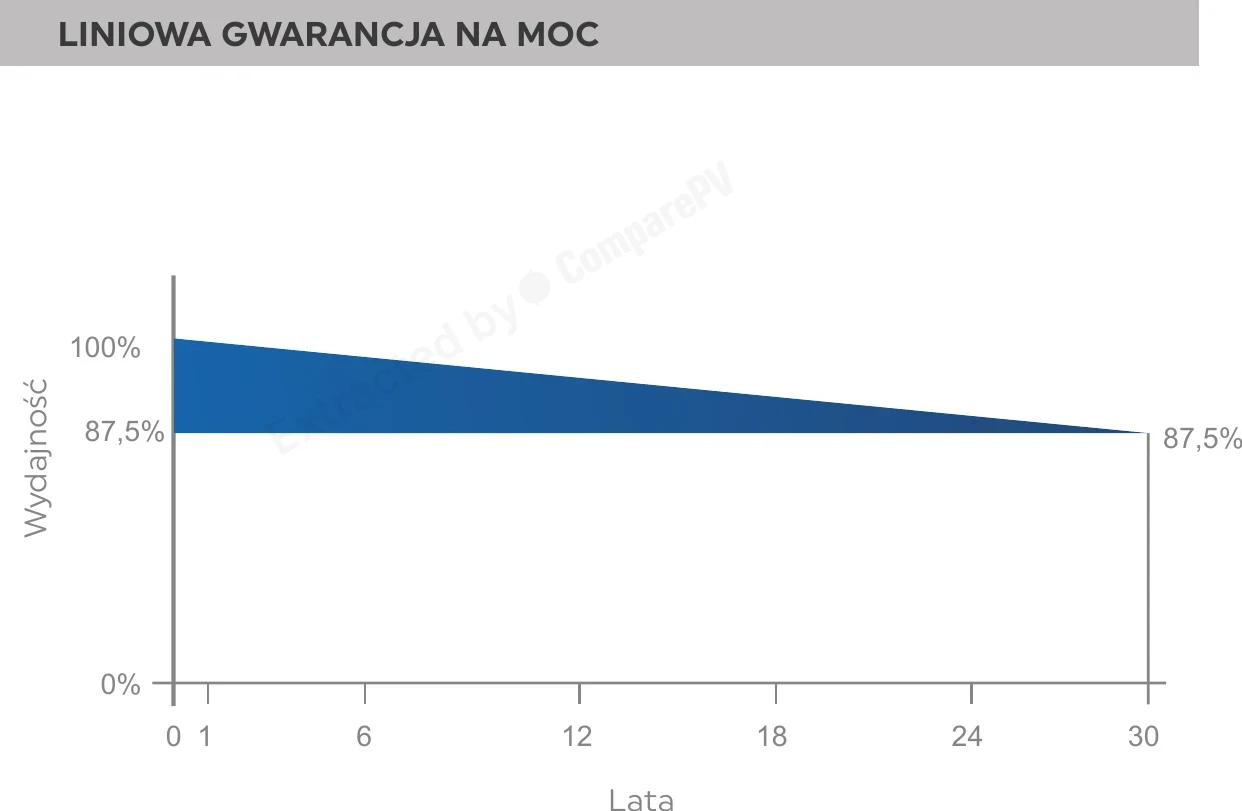
The manufacturer provides a 30-year linear power output warranty — five years longer than the prevailing industry standard of 25 years. For commercial installations and prosumers operating under long-term financial models, this directly results in a higher guaranteed cumulative energy yield over the contract period.
Bruk-Bet subjected the modules to 400 thermal cycles (2× the IEC requirement) as well as PID, LID, ammonia, and salt mist resistance testing at a KIWA laboratory. For agricultural, coastal, and industrial installations, this constitutes hard documentary evidence that not every manufacturer provides without an additional charge for an 'enhanced' variant.
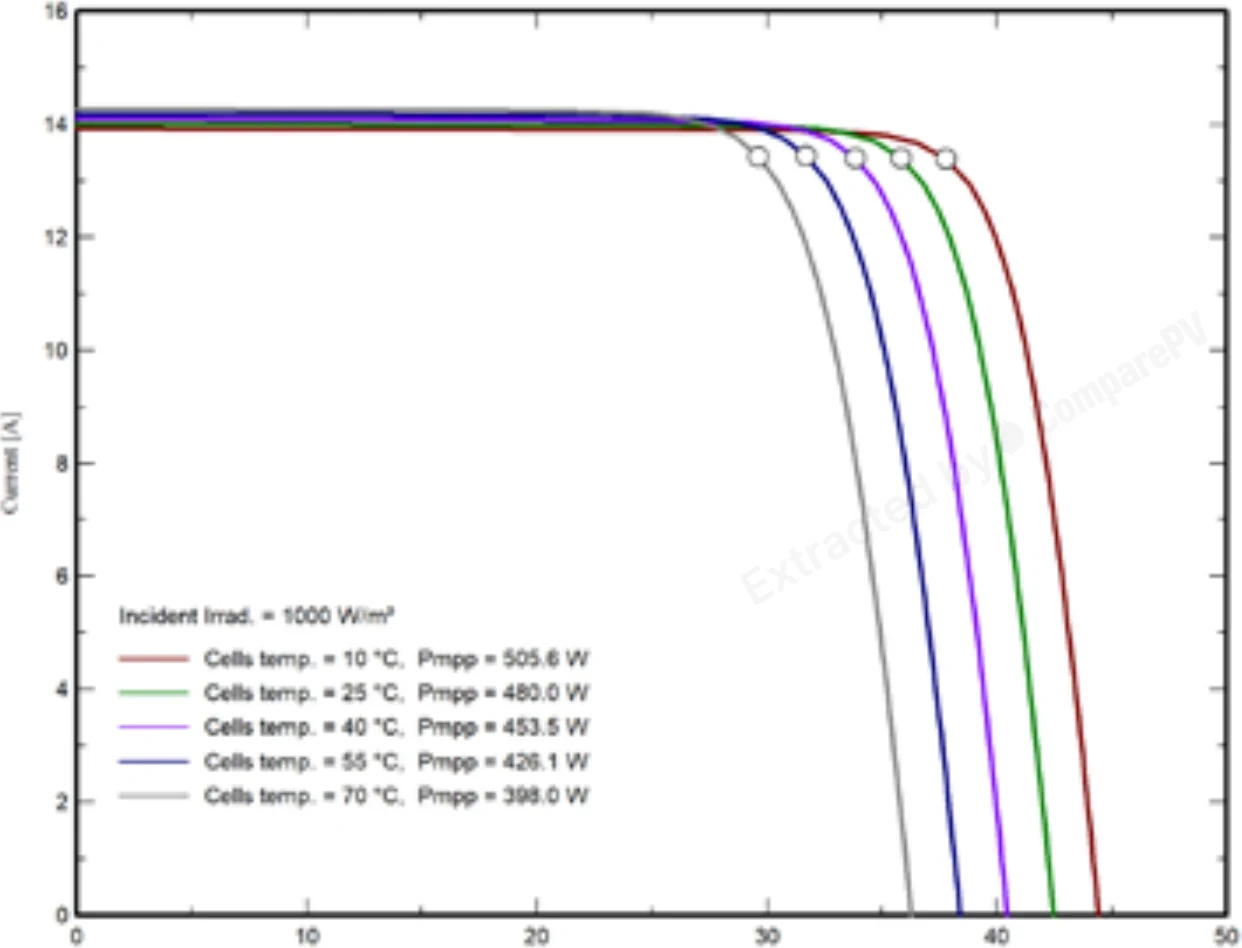
N-type cell technology eliminates the Light Induced Degradation (LID) effect inherent to P-type/PERC cells, and the temperature coefficient is typically 20–25% more favorable than PERC (~-0.26%/°C vs. ~-0.35%/°C). This results in higher energy yields on hot days and a lower real-world annual degradation rate.
Bifacial energy harvesting enables an additional 5–15% energy gain from ground or rooftop reflections, depending on surface albedo. The manufacturer has operated in Poland since 1984 and maintains a domestic distribution network, resulting in faster service response times compared to importers without a local support infrastructure.
Bruk-Bet does not participate in PVEL (PV Evolution Labs) testing nor in the Bloomberg NEF Tier-1 ranking. For large commercial installations financed through bank loans or leasing, the absence of this status may complicate or preclude project acceptance by lenders that require Tier-1-listed modules as a condition of bankability.
The glass-glass construction results in an estimated module weight of ~26–28 kg, compared to ~21–23 kg for glass-foil equivalents of the same power class. Installation on an existing roof requires a structural load-bearing assessment, which adds the cost of a building engineering survey and may rule out installation on older roofs with limited load capacity.
- Efficiency of 22.2% is 1.4pp above the PERC 450-500W median (20.8%)
- At 221.7 W/m² power density, this panel generates 13.2 W/m² more per unit area than PERC 450-500W median (208.5 W/m²)
- Temperature coefficient of -0.29%/°C vs median -0.35%/°C means ~2% less power loss at 65°C
- Weight of 26.0 kg is 1.5 kg above PERC 450-500W median (24.5 kg) - verify structural support
- Ranked #5963 out of 14005 panels for efficiency in the database
Specifications
Datasheet charts
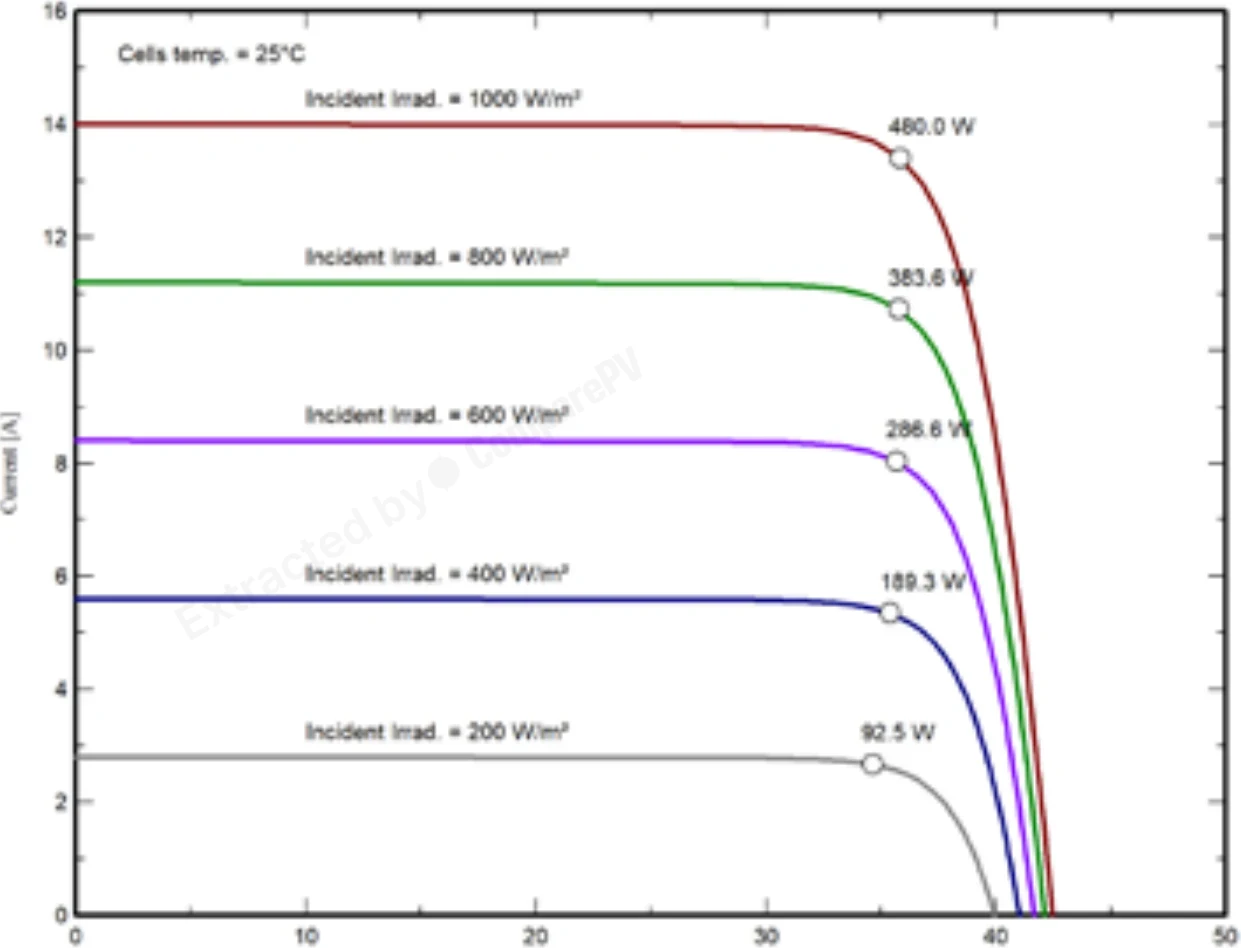
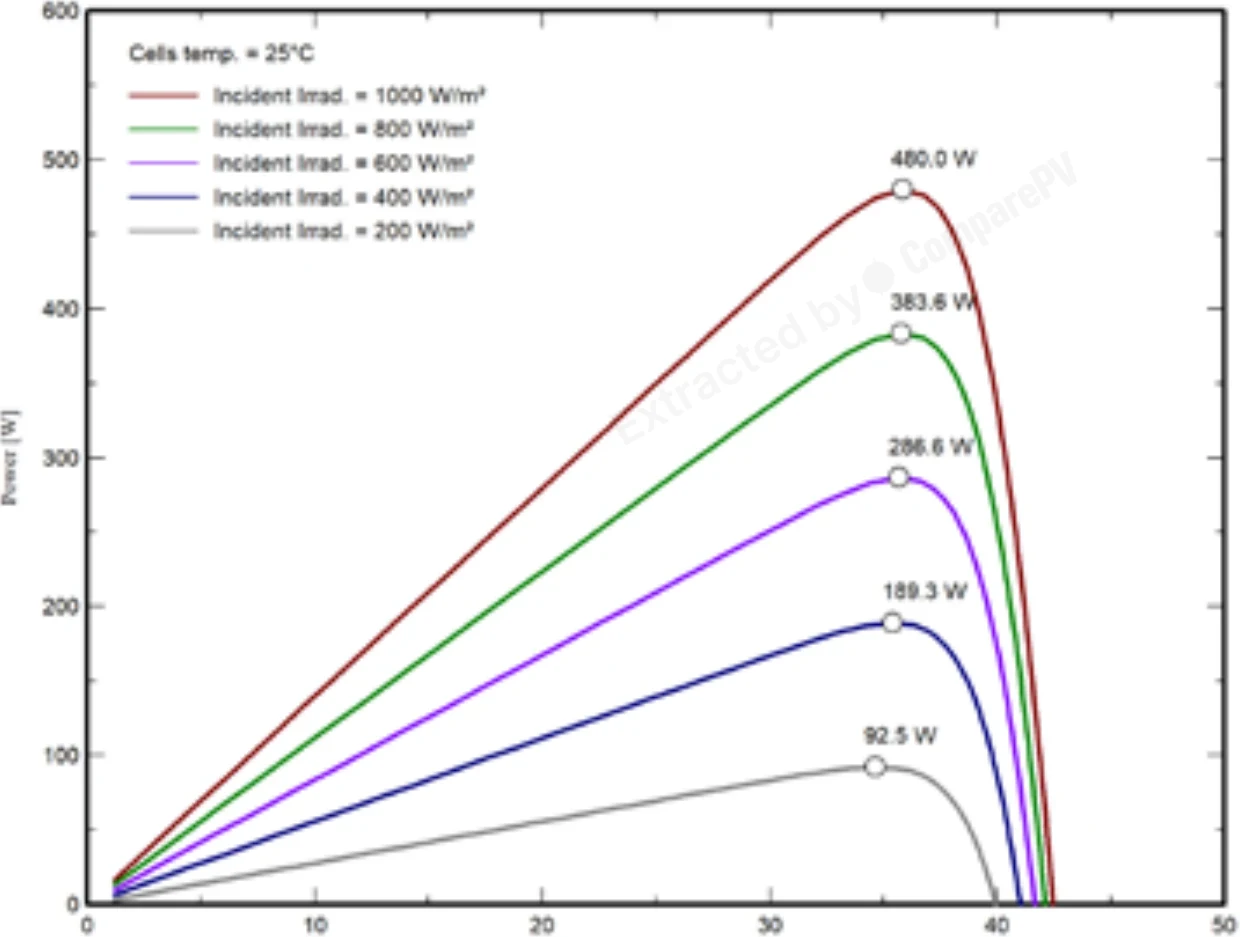
Measured curves published by Bruk-Bet in this model's datasheet. A chart carrying a wattage was measured on that variant alone - only the ones that describe 480 Wp appear here. The rest cover the whole series.
Simulations
Degradation from this panel's own datasheet figures. No inverter, soiling or shading losses.
Alternatives






Found 746 panels of the same or similar size to this one, within ±10 mm. See them here Found 755 panels of the same or similar size to this one, within ±25 mm. See them here Found 916 panels of the same or similar size to this one, within ±50 mm. See them here Found 1503 panels of the same or similar size to this one, within ±100 mm. See them here