Space saver, no clear weak spot
The ASTRO N5s CHSM54N-HC series consists of advanced modules based on n-type TOPCon technology that set new efficiency standards in rooftop installations. Thanks to the use of n-type cells, these panels offer significantly lower annual degradation and better performance in low-light conditions, which directly translates into higher energy yields in the long term. They are distinguished by a smaller size while maintaining high power output, effectively solving the problem of limited space on the roofs of single-family houses. The construction based on n-type TOPCon technology guarantees excellent resistance to the PID phenomenon and a minimal temperature coefficient, ensuring the system operates stably even during hot days. It is an ideal solution for prosumers looking for high power density and an aesthetic finish. The use of Half-cut cells additionally reduces losses resulting from partial shading, significantly increasing the reliability of the entire installation. Compared to the competition, this series stands out with an optimal price-to-quality ratio, offering a long-term performance warranty that effectively protects the investment for decades. It is a choice for those who focus on substantive innovations that realistically shorten the payback period of investments in modern photovoltaics.
Ranking
Signals from the data
Residential and shaded-installations.
Top 17% of the N-type 400-450 W segment, against a median of 218.3.
Top 18% of the N-type 400-450 W segment, against a median of 21.91%.
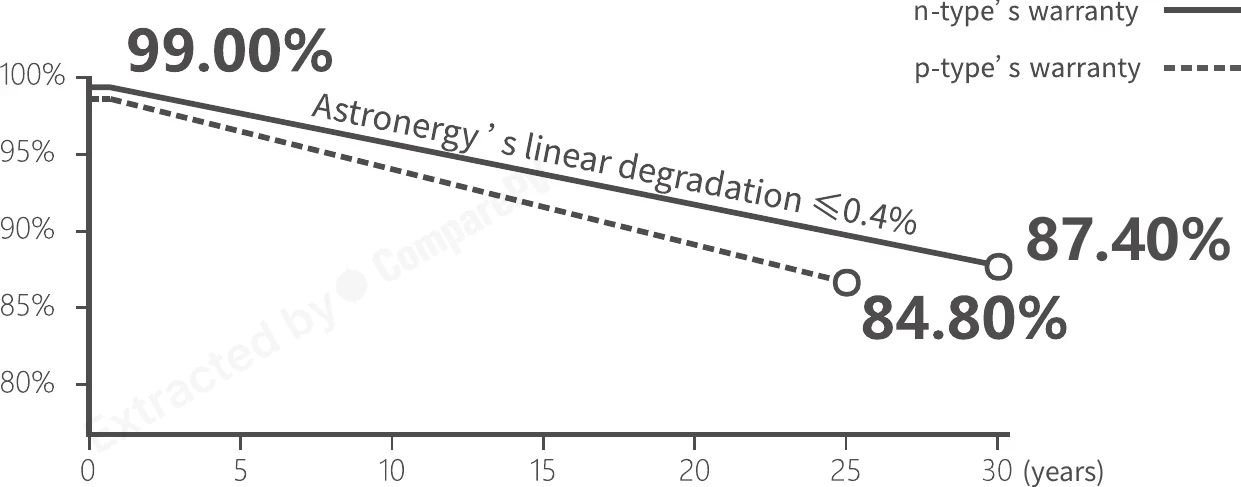
N-type TOPCon cells offer a degradation rate of 1% in the first year and only 0.4%/year in the subsequent 29 years – a significant improvement compared to PERC technology (typically 2% / 0.45–0.55%/year). This guarantees a minimum of 87.4% of the nominal power after 30 years of operation.
The maximum efficiency of 22.8% (for the 445 Wp model) places this series above direct competitors such as Q-Cells Q.TRON BLACK (22.3%), Solitek SOLRIF D Satin (22.06%), and SunEvo SE6-46SC EVOX (21.4%). The higher power density allows for achieving the desired output on a smaller roof area.
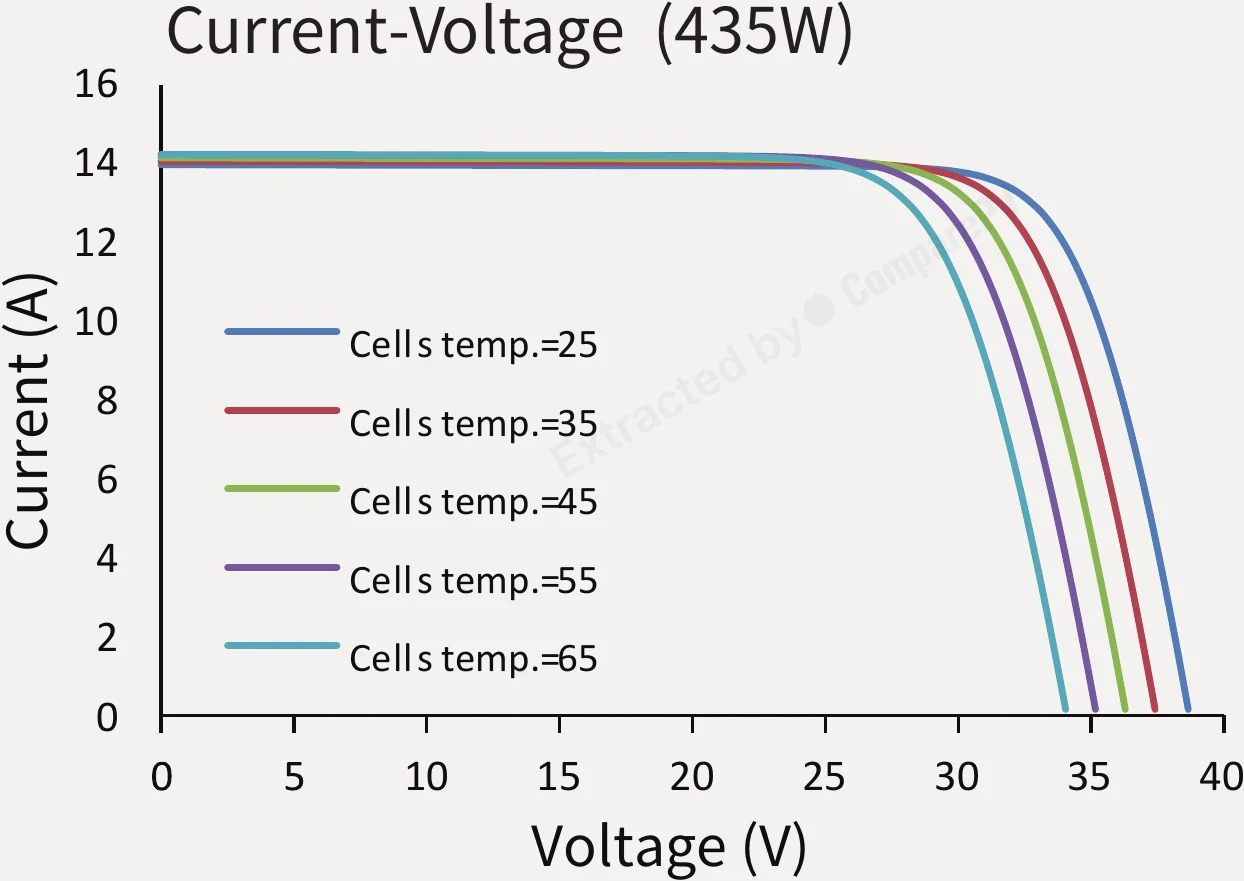
The temperature coefficient of Pmax is -0.29%/°C, which, under typical Polish climatic conditions (summer peak temperatures of 40–60°C on the panel surface), results in significantly lower thermal losses compared to PERC modules with a typical -0.35%/°C coefficient. This directly translates to higher energy yield on hot days.
Astronergy offers a 30-year linear warranty with a 87.4% performance guarantee after 30 years – which is at least 5 years longer than the standard 25-year warranty offered by most Tier-1 manufacturers (e.g., JA Solar, Trina Solar). The warranty is insured by an international insurance company (as stated in the official datasheet).
With dimensions of 1722 x 1134 x 30 mm (108 half-cut cells), this module provides a high power output of 425–445 W, while maintaining a relatively small module surface area. This makes it ideal for designing installations on typical pitched roofs with limited usable space.
The ASTRO N5s CHSM54N-HC series was produced exclusively between 2022 and 2024, and is now officially discontinued. The limited availability of new modules makes it difficult to expand existing installations with identical panels in the future, and service and replacement options will gradually become more scarce. When planning a new installation, it is advisable to consider the currently produced series (e.g., ASTRO N7s).
The series is monofacial only (is_bifacial: false). Competitive solutions in the same power and technology range (N-type TOPCon) are increasingly offering bifacial versions, with the potential for a 5–15% gain in energy yield on reflective surfaces, which could be significant for installations on reflective sheets or gravel.
- Efficiency of 22.3% matches the N-type 400-450W median
- 222.8 W/m² power density - 4.5 W/m² more than N-type 400-450W median (218.3 W/m²), more power per roof area
- Temperature coefficient of -0.29%/°C matches the N-type 400-450W median
- Ranked #5100 out of 14005 panels for efficiency in the database
Specifications
Datasheet charts
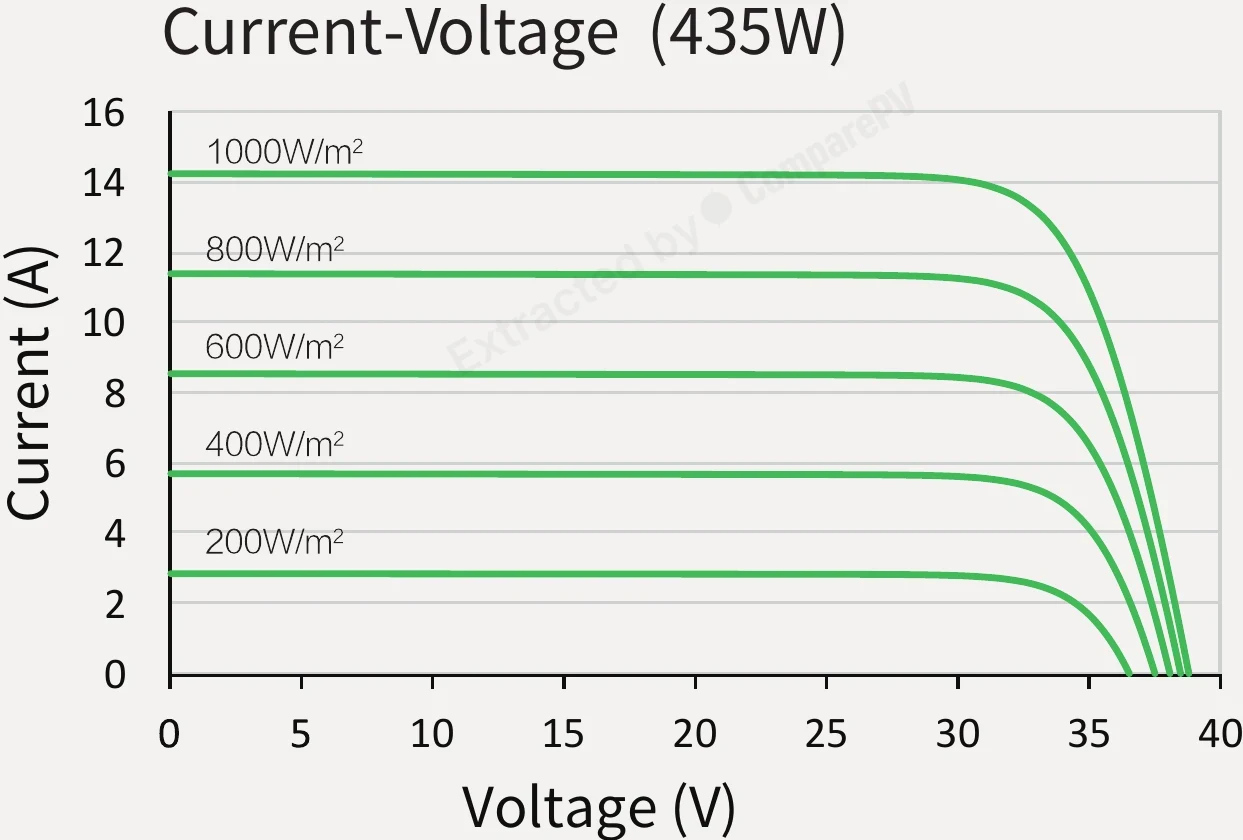
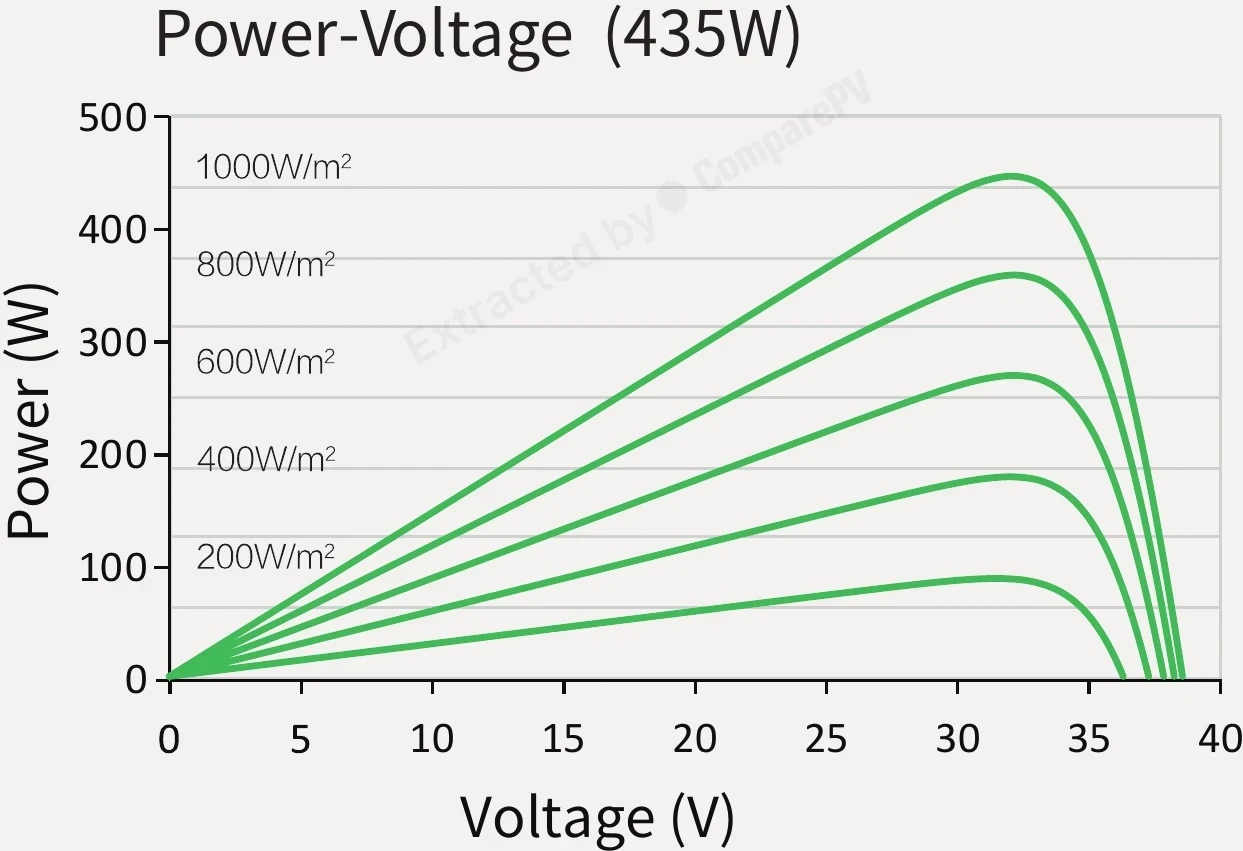
Measured curves published by Astronergy in this model's datasheet. A chart carrying a wattage was measured on that variant alone - only the ones that describe 435 Wp appear here. The rest cover the whole series.
Simulations
Degradation from this panel's own datasheet figures. No inverter, soiling or shading losses.







Found 1783 panels of the same or similar size to this one, within ±10 mm. See them here Found 1914 panels of the same or similar size to this one, within ±25 mm. See them here Found 3392 panels of the same or similar size to this one, within ±50 mm. See them here Found 3970 panels of the same or similar size to this one, within ±100 mm. See them here