Longi Solar LR7-54HVH-485M vs Longi Solar LR8-66HYD-670M
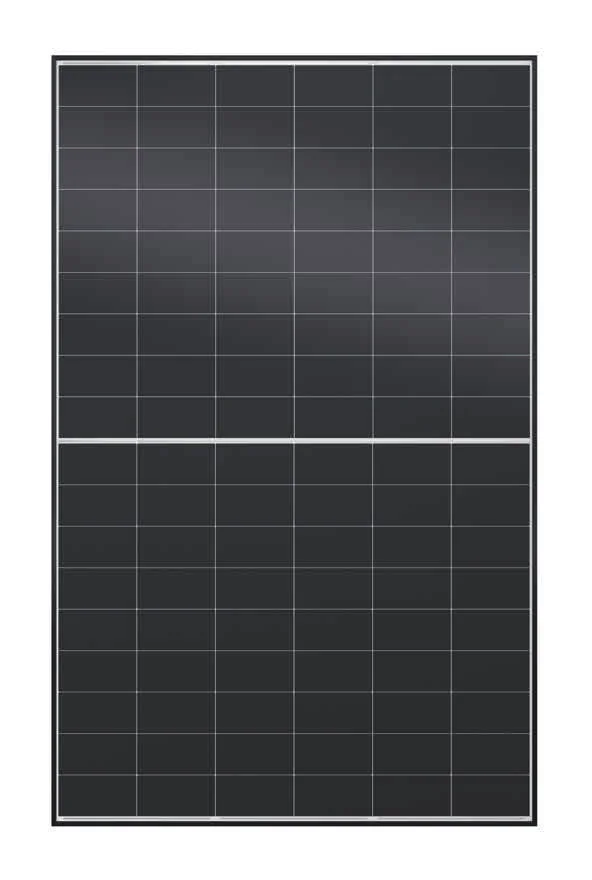
VS

The verdict
LR8-66HYD-670M leads on the differences that matter
The largest is module efficiency: 1.00 pp more efficient. 3 of 18 comparable parameters are identical, with 1 more left out because at least one datasheet does not publish it.
See all 15 differencesHow alike are they
3
of 18 comparable
parameters are identical
parameters are identical
identical
differs
not published
01
15 of 18 parameters
What actually differs
Parameter
LR7-54HVH-485M
LR8-66HYD-670M
Difference
Module efficiency
23.80 %
24.80 %
1.00 pp more efficient
Rated power
485 Wp
670 Wp
185 W more power
Power density
237.6 Wp/m²
248.0 Wp/m²
10.4 Wp/m² higher
Weight
21.6 kg
33.5 kg
11.9 kg lighter
Product warranty
15 yrs
12 yrs
3 yrs longer
Weight per kWp
44.5 kg/kWp
50.0 kg/kWp
5.5 kg/kWp lighter
Open-circuit voltage
40.40 V
50.12 V
9.72 V apart
Module area
2.041 m²
2.701 m²
0.660 m² apart
Short-circuit current
15.23 A
16.86 A
1.63 A apart
Cell technology
N-type
Back Contact
N-type vs Back Contact
Voltage at max power
33.40 V
41.38 V
7.98 V apart
Cell count
108
132
24 cells apart
Current at max power
14.53 A
16.19 A
1.66 A apart
Bifacial
No
Yes
No vs Yes
Dimensions
1800x1134x30 mm
2382x1134x30 mm
1800x1134x30 mm vs 2382x1134x30 mm
02
What it means on a roof
Thirty years of production
A 1.0% first-year loss then 0.40% a year, assumed for both panels, at 1,200 kWh/kWp a year
Same temp coeff. for both panels (-0.260 %/°C), so a warmer roof scales both curves by the same factor: the totals fall together and neither panel gains on the other.
LR7-54HVH-485M
16,273 kWh
LR8-66HYD-670M
22,480 kWh
Lifetime gap
6,207 kWh
Output when it is hot
Rated power carried across the range a module actually sees
Scenario
LR7-54HVH-485M
LR8-66HYD-670M
Standard test conditions
25 °C
100.0% of rated power
485 W
670 W
Cool, bright day
40 °C
96.1% of rated power
466 W
644 W
Typical summer roof
55 °C
92.2% of rated power
447 W
618 W
Hot roof
70 °C
88.3% of rated power
428 W
592 W
03
Full specification
Parameter
LR7-54HVH-485M
LR8-66HYD-670M
Difference
Power and efficiency
Rated power
485 Wp
670 Wp
+185 W for LR8-66HYD-670M
Module efficiency
23.80 %
24.80 %
+1.00 pp for LR8-66HYD-670M
Power density
237.6 Wp/m²
248.0 Wp/m²
+10.4 Wp/m² for LR8-66HYD-670M
Open-circuit voltage
40.40 V
50.12 V
9.72 V apart
Voltage at max power
33.40 V
41.38 V
7.98 V apart
Short-circuit current
15.23 A
16.86 A
1.63 A apart
Current at max power
14.53 A
16.19 A
1.66 A apart
Temperature
Temperature coefficient
-0.260 %/°C
-0.260 %/°C
Same
Mechanical
Dimensions
1800x1134x30 mm
2382x1134x30 mm
1800x1134x30 mm vs 2382x1134x30 mm
Module area
2.041 m²
2.701 m²
0.660 m² apart
Weight
21.6 kg
33.5 kg
-11.9 kg for LR7-54HVH-485M
Weight per kWp
44.5 kg/kWp
50.0 kg/kWp
-5.5 kg/kWp for LR7-54HVH-485M
Warranty and degradation
Product warranty
15 yrs
12 yrs
+3 yrs for LR7-54HVH-485M
Performance warranty
30 yrs
30 yrs
Same
Annual degradation
0.35 %/yr
-
Not published by Longi Solar
Technology
Cell technology
N-type
Back Contact
N-type vs Back Contact
Cell type
Monocrystalline
Monocrystalline
Same
Cell count
108
132
24 cells apart
Bifacial
No
Yes
No vs Yes
04
14,005 panels
Against the whole database
Efficiency
#433
vs
#12
LR8-66HYD-670M leads by 421 places
Power density
#495
vs
#14
LR8-66HYD-670M leads by 481 places
Heat behaviour
#511
vs
#511
Tied - the same position in the database
Weight
#465
vs
#3,317
LR7-54HVH-485M leads by 2,852 places
Warranty
#21
vs
#21
Tied - the same position in the database
Overall
#5,435
vs
#490
LR8-66HYD-670M leads by 4,945 places
05
Open the full database
More useful comparisons
Same series, other bin

Longi Solar LR7-54HVH-485M vs Longi Solar LR7-54HVH-500M
3 differences, the largest is module efficiency
Same series, other bin
Longi Solar LR7-54HVH-485M vs Longi Solar LR7-54HVH-495M
3 differences, the largest is module efficiency
Same series, other bin
Longi Solar LR7-54HVH-485M vs Longi Solar LR7-54HVH-490M
One difference: module efficiency
Same series, other bin
Longi Solar LR7-54HVH-485M vs Longi Solar LR7-54HVH-480M
One difference: module efficiency
Same series, other bin
Longi Solar LR8-66HYD-670M vs Longi Solar LR8-66HYD-665M
One difference: module efficiency
Same series, other bin
Longi Solar LR8-66HYD-670M vs Longi Solar LR8-66HYD-660M
3 differences, the largest is module efficiency
06
Written summary
Checking cache...
07
Questions about this pairing
Which panel is better: Longi Solar LR7-54HVH-485M or Longi Solar LR8-66HYD-670M?
According to our database: Longi Solar LR8-66HYD-670M has higher module efficiency (24.80% vs 23.80%). See the full spec comparison and 30-year energy simulation above for a complete picture.
What is the efficiency of Longi Solar LR7-54HVH-485M and Longi Solar LR8-66HYD-670M?
Longi Solar LR7-54HVH-485M has a module efficiency of 23.80%, while Longi Solar LR8-66HYD-670M is 24.80%. Higher efficiency means more electricity from the same roof area - useful when space is limited.
What cell technology does Longi Solar LR7-54HVH-485M use vs Longi Solar LR8-66HYD-670M?
Longi Solar LR7-54HVH-485M uses N-type cells; Longi Solar LR8-66HYD-670M uses Back Contact. Modern n-type technologies (TOPCon, HJT, BC) typically deliver higher efficiency and lower degradation compared to older PERC (p-type) cells.
What is the warranty on Longi Solar LR7-54HVH-485M and Longi Solar LR8-66HYD-670M?
Longi Solar LR7-54HVH-485M has a 30 years power warranty; Longi Solar LR8-66HYD-670M has a 30 years power warranty. The power warranty guarantees a minimum percentage of rated output at the end of the warranty period (typically 80-87%). Product (materials) warranties are usually shorter.
Are Longi Solar LR7-54HVH-485M and Longi Solar LR8-66HYD-670M bifacial panels?
Longi Solar LR8-66HYD-670M is bifacial (captures light from both faces); Longi Solar LR7-54HVH-485M is monofacial. Bifacial panels work best on ground mounts or raised structures with a light-coloured surface underneath.
Shop prices: See 174 Longi Solar offers
Every figure here is from the manufacturers' own datasheets - a dash means the value is not published, never an estimate. The thirty-year projection and the temperature scenarios are calculations from those figures, and each states its assumption above.