Trina Solar TSM-425NEG9.28

Trina Solar TSM-425NEG9.28

425 Wp N-type
ComparePV verdict

Middle of its segment, weak in heat

Rank 7,900 of 14,129
Compare panels Datasheet PDF
Power (Wp)
425
Typical for its class
Efficiency (%)
21.90
Typical · median 21.95%
Density (Wp/m²)
219.1
Typical · median 218.4
Temp (%/°C)
-0.300
Weak · bottom 25%
Weight (kg)
21.5
Typical · median 22.0 kg
Warranty (yrs)
30
Typical · median 30 yrs

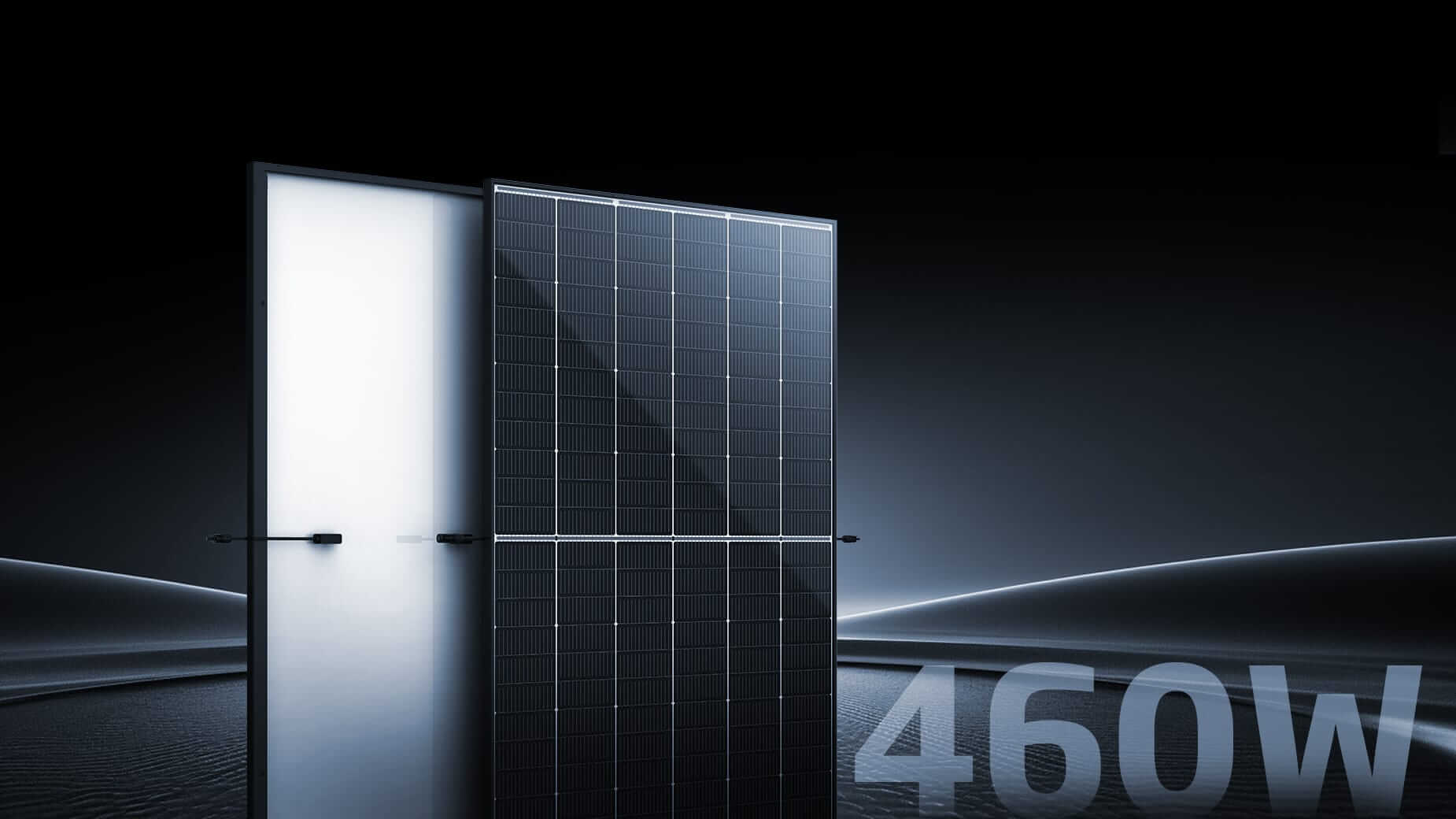
Trina Solar Vertex S+ Dual Glass modules are designed for rooftops, where longevity, aesthetics, and stable energy production over years are equally important. The key feature is the dual glass construction - instead of a traditional backsheet, glass is used on both sides, improving resistance to moisture, aggressive environments (e.g., coastal areas) and long-term thermal stress. Combined with n-type i-TOPCon cells, the module offers high efficiency even under low-light conditions and slower degradation, translating to a more predictable yield over the installation’s lifecycle.

Vertex S+ is also practical for installation teams - its format optimized for roofs and popular mounting systems simplifies on-site logistics, while connection solutions support compatibility with modern inverters and optimizers. For investors, this means greater long-term reliability and reduced risk of performance declines. It’s an excellent choice for homes, small businesses, and projects where aesthetics (including the full black version) and high craftsmanship quality are key.

Ranking

322 panels in the segment N-type 400-450 W
Metric This panel Median Position in segment Overall rank
Module efficiency 21.90% 21.95% Typical 6,847
Power density 219.1 218.4 Typical 6,806
Temperature coefficient -0.300 -0.290 Weak · bottom 25% 6,152
Weight per kWp 50.6 51.2 Typical 4,012
Performance warranty 30 yrs 30 yrs Typical 21
Colour key Strong - top 25% Typical - middle 50% Weak - bottom 25%

Signals from the data

0 positive · 1 caution
Best for

Residential, commercial and shaded-installations.

Not ideal for

Hot climates.

Watch-outs
-0.300 %/°C temperature coefficient

Bottom 25% of the N-type 400-450 W segment, against a median of -0.290.

Notes from the database
  • Efficiency of 21.9% matches the N-type 400-450W median
  • At 219.1 W/m² power density, roof space requirements are typical for N-type 400-450W panels
  • At -0.30%/°C, hot weather performance is typical for N-type 400-450W panels
  • #6847 for efficiency, #6152 for temperature performance out of 14129 panels

Specifications

Open datasheet PDF
Nominal power (Pmax) 425 Wp Nameplate at 1000 W/m², 25 °C
Module efficiency 21.90 % Typical Segment median 21.95%
Vmpp · Impp 36.60 V · 11.61 A Operating point at max power
Voc · Isc 43.40 V · 12.37 A Sizes the string length
Max system voltage 1500 V Longer strings than 1000 V modules
Dimensions 1770×1096×30 mm · 1.94 m² of roof
Weight 21.5 kg Typical Typical · median 22.0 kg
Cells 120 · N-type Monocrystalline
Coefficient Pmax -0.300 %/°C Weak bottom 25% of its segment
Coefficient Voc · Isc -0.250 · 0.040 %/°C
NOCT 43 °C At 800 W/m², 20 °C ambient
Product warranty 25 years Hardware defects only
Performance warranty 30 years Typical median 30 yrs · median 30 yrs
End-of-warranty output 87.4 % Equals 371 W guaranteed
Degradation 1.00 → 0.40 % First year, then annual

Simulations

Live - change any input
Lifetime output & value
30 years at 1200 kWh/kWp/year and €0.50 per kWh
Power in year 30
-
Lifetime energy
-
Energy value
-

Degradation from this panel's own datasheet figures. No inverter, soiling or shading losses.

Heat losses
-0.300 %/°C against a segment median of -0.290
-
Filter these
Size
Panel Power Eff. Temp. Weight Difference
Trina Solar TSM-425NEG9.28 425 W 21.90% -0.300 21.5 kg You are here
SPR-MAX7-475 475 W 24.00% -0.270 21.1 kg +50 W, +2.1 pp, +10 yr warranty
JST-EDMH-(445-465)W-TD (465W class) 465 W 23.81% -0.300 20.5 kg +40 W, lighter, +1.9 pp
JAT54S40-475/LR 475 W 23.80% -0.260 19.3 kg +50 W, cooler, +1.9 pp
TWMNH-48HW475 475 W 23.80% -0.280 23.7 kg +50 W, heavier, +1.9 pp
CHSM48RN(DG)/F-BH-475 475 W 23.80% -0.290 24.5 kg +50 W, heavier, +1.9 pp
AIKO-A475-MCE54Mw 475 W 23.80% -0.260 21.0 kg +50 W, cooler, +1.9 pp
AIKO-A475-MAH54Mw 475 W 23.80% -0.260 21.5 kg +50 W, cooler, +1.9 pp
TSM-400NEG9.28 400 W 20.60% -0.300 21.5 kg -25 W, -1.3 pp
TSM-405NEG9.28 405 W 20.90% -0.300 21.5 kg -20 W, -1.0 pp
TSM-410NEG9.28 410 W 21.10% -0.300 21.5 kg -15 W, -0.8 pp
TSM-415NEG9.28 415 W 21.40% -0.300 21.5 kg -10 W, -0.5 pp
TSM-420NEG9.28 420 W 21.70% -0.300 21.5 kg Very close match
LR7-54HJD-510M 510 W 25.00% -0.240 23.5 kg +85 W, cooler, +3.1 pp
AIKO-A495-MCE54Mw 495 W 24.80% -0.260 21.0 kg +70 W, cooler, +2.9 pp
LR7-54HJD-505M 505 W 24.70% -0.240 23.5 kg +80 W, cooler, +2.8 pp
WST-505BKX54-A2 505 W 24.70% -0.260 25.0 kg +80 W, cooler, +2.8 pp

Found 6 panels of the same or similar size to this one, within ±10 mm. See them here Found 59 panels of the same or similar size to this one, within ±25 mm. See them here Found 3694 panels of the same or similar size to this one, within ±50 mm. See them here Found 4185 panels of the same or similar size to this one, within ±100 mm. See them here

About the Vertex S+ Dual Glass Monocrystalline Module series

6 answered

These answers cover the whole series. Where a figure differs, the specification above is this module's own.

How does the dual glass construction of the Trina Vertex S+ differ from a standard backsheet panel?
In a standard module, the rear layer is a polymer backsheet, while the Vertex S+ Dual Glass uses tempered glass on both sides. This construction offers better protection against moisture, microcracks, and PID degradation, keeping performance stable in demanding conditions such as coastal areas or wide temperature swings. It also improves fire resistance and makes the glass easier to recycle at end of life.
What warranty comes with the Trina Vertex S+ 425W panels, and what does it cover?
The manufacturer provides a 25-year product warranty against material and workmanship defects and a 30-year linear power output warranty. Thanks to the n-type cells, first-year power degradation is capped at 1%, dropping to around 0.4% per year afterward, so the module should still deliver strong output relative to its nominal power after three decades of operation.
Are Trina Vertex S+ 425W panels suitable for a sloped residential roof?
Yes, the 1762×1134 mm format and roughly 21 kg weight are typical for residential installations and fit well with common mounting systems used on sloped roofs. The half-cut cell design also improves shading tolerance, which matters on roofs with chimneys, dormers, or antennas where shadows fall on only part of the array.
What is n-type i-TOPCon technology in the Vertex S+ series, and is it worth the investment?
i-TOPCon is an n-type cell technology with an extra passivation layer that reduces electron recombination losses and pushes module efficiency above 21%. In practice this means better performance under weak or diffuse light and slower degradation compared to older p-type PERC cells. For an investor, this translates into higher lifetime energy yield despite a somewhat higher upfront cost.
Are Trina Vertex S+ panels bifacial and able to generate power from both sides?
No, this specific Vertex S+ Dual Glass 425W version is a monofacial module despite the glass rear layer. Glass was used instead of a backsheet for durability and environmental resistance, not to capture rear-side light. Buyers looking for rear-side energy gain should check Trina Solar's dedicated bifacial product lines instead.
Is Trina Solar a tier 1 manufacturer, and can it be trusted for a 25-30 year investment?
Yes, Trina Solar is one of the world's largest PV module manufacturers, headquartered in China with tier 1 status, reflecting solid financial standing and decades of production experience. This matters for long warranty periods like 25 years on the product and 30 years on power output, since it increases the likelihood the company will remain operational to honor warranty claims throughout that time.
Add to compare