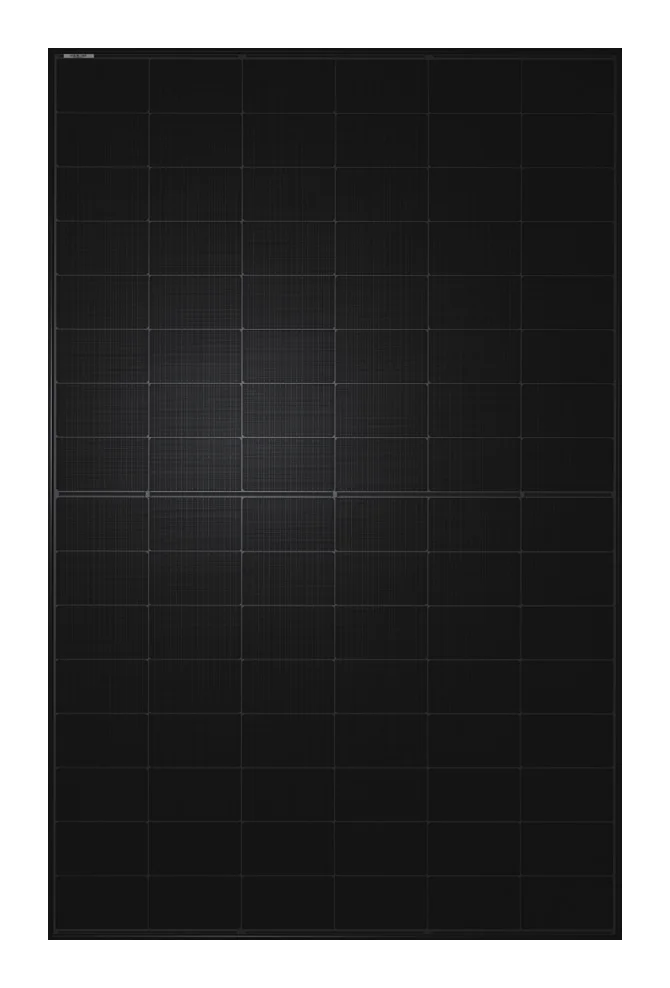
Tongwei TWMNH-48HC430

TWMNH-48HC430

430 Wp TOPCon Bifacial 80%
ComparePV verdict

Strong in heat, modest efficiency

Rank 9,962 of 14,005
Compare panels Datasheet PDF
Power (Wp)
430
Typical for its class
Efficiency (%)
21.50
Weak · bottom 17%
Density (Wp/m²)
215.2
Weak · bottom 23%
Temp (%/°C)
-0.280
Strong · top 4%
Weight (kg)
20.9
Typical · median 22.0 kg
Warranty (yrs)
30
Typical · median 30 yrs

Photovoltaic panels from the Tongwei TWMNH Bifacial Full-black Module (48) series set a new standard in the premium segment, combining uncompromising aesthetics with advanced N-type TOPCon technology. Their uniqueness lies in the use of a bifacial design in an all-black version, which allows for generating additional energy from reflected radiation while maintaining an elegant roof appearance. Thanks to a smaller format based on 48 cells, these modules are perfect for complex roof surfaces where every centimeter of space and ease of maneuvering during installation matters. A key differentiator is the exceptional resistance to LID and LeTID degradation, which translates into a significantly higher energy yield in the long term compared to standard P-type cells. The use of bifaciality technology makes these panels an excellent choice for demanding prosumers looking for a solution that performs great even in low-light conditions. This solution eliminates the problem of compromise between performance and design, offering low temperature coefficients that guarantee stable operation on hot days. Investing in this series ensures the use of the latest achievements in materials engineering, which effectively shorten the payback period of the installation.

Ranking

1,218 panels in the segment TOPCon 400-450 W
Metric This panel Median Position in segment Overall rank
Module efficiency 21.50% 22.00% Weak · bottom 17% 7,958
Power density 215.2 220.2 Weak · bottom 23% 7,816
Temperature coefficient -0.280 -0.290 Strong · top 4% 1,309
Weight per kWp 48.6 51.4 Typical 2,370
Performance warranty 30 yrs 30 yrs Typical 21
Colour key Strong - top 25% Typical - middle 50% Weak - bottom 25%

Signals from the data

1 positive · 2 caution
Best for

Residential and hot-climate.

Not ideal for

Tight roof space and roofs where every square metre has to count.

Strengths
-0.280 %/°C temperature coefficient

Top 4% of the TOPCon 400-450 W segment, against a median of -0.290. Ranked 1,309th in the whole database.

Watch-outs
21.50% module efficiency

Bottom 17% of the TOPCon 400-450 W segment, against a median of 22.00%.

215.2 watts per square metre

Bottom 23% of the TOPCon 400-450 W segment, against a median of 220.2.

Notes from the database
  • Efficiency of 21.5% matches the TOPCon 400-450W median
  • Power density of 215.2 W/m² is 5.0 W/m² below TOPCon 400-450W median (220.2 W/m²) - needs more roof space
  • At -0.28%/°C, hot weather performance is typical for TOPCon 400-450W panels
  • At 20.9 kg, this panel is 1.1 kg lighter than TOPCon 400-450W median (22.0 kg) - easier handling during installation
  • Bifacial design (80% factor) captures reflected light - adds 4-12% yield on ground-mount or white roof

Specifications

Open datasheet PDF
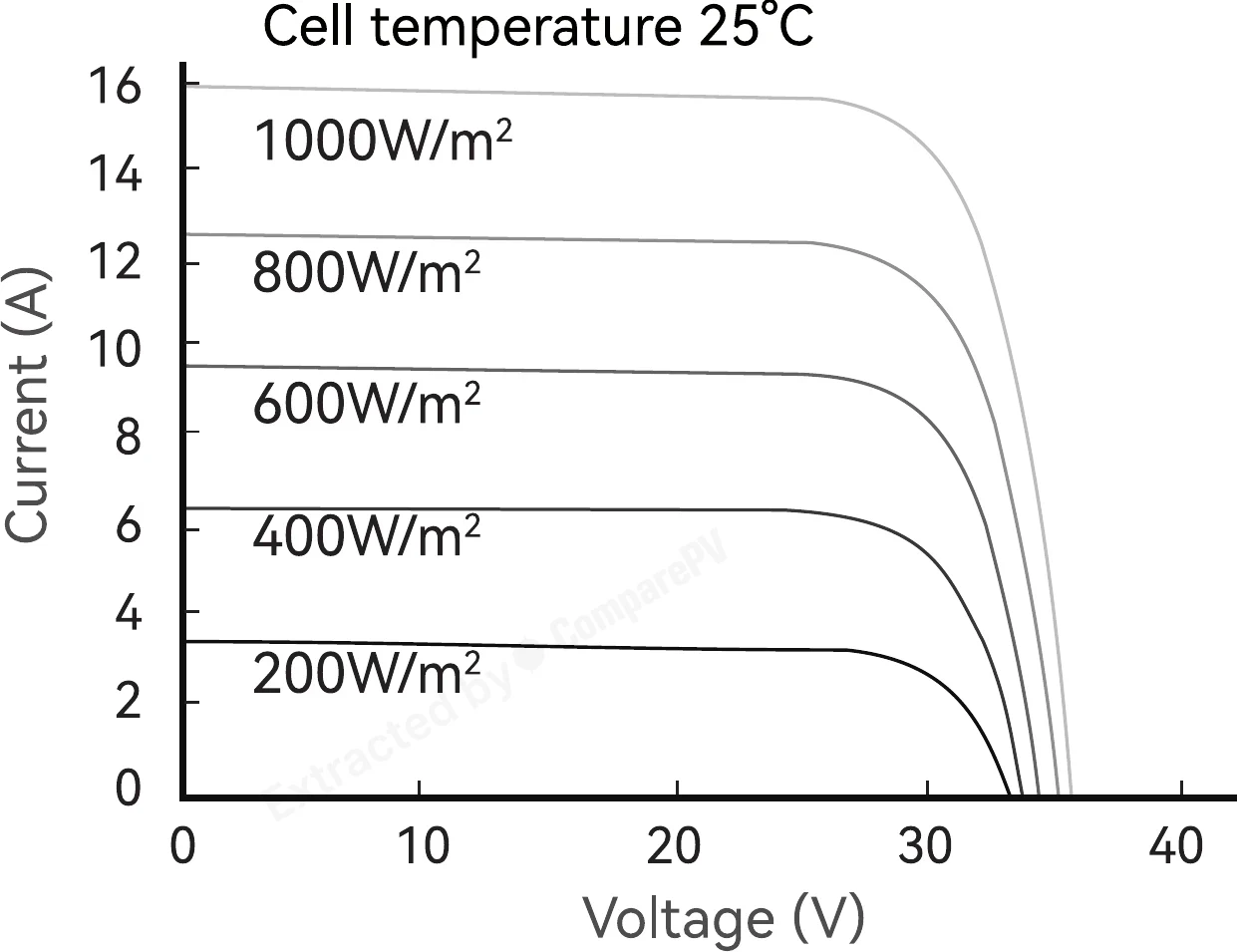
Nominal power (Pmax) 430 Wp Nameplate at 1000 W/m², 25 °C
Module efficiency 21.50 % Weak Segment median 22.00%
Vmpp · Impp 29.36 V · 14.65 A Operating point at max power
Voc · Isc 34.31 V · 15.85 A Sizes the string length
Max system voltage 1500 V Longer strings than 1000 V modules
Dimensions 1762×1134×30 mm · 2.00 m² of roof
Weight 20.9 kg Typical Typical · median 22.0 kg
Cells 96 · TOPCon Monocrystalline
Bifaciality 80 % Rear output as a share of front
Coefficient Pmax -0.280 %/°C Strong top 4% of its segment
Coefficient Voc · Isc -0.240 · 0.046 %/°C
NOCT 45 °C At 800 W/m², 20 °C ambient
Product warranty 15 years Hardware defects only
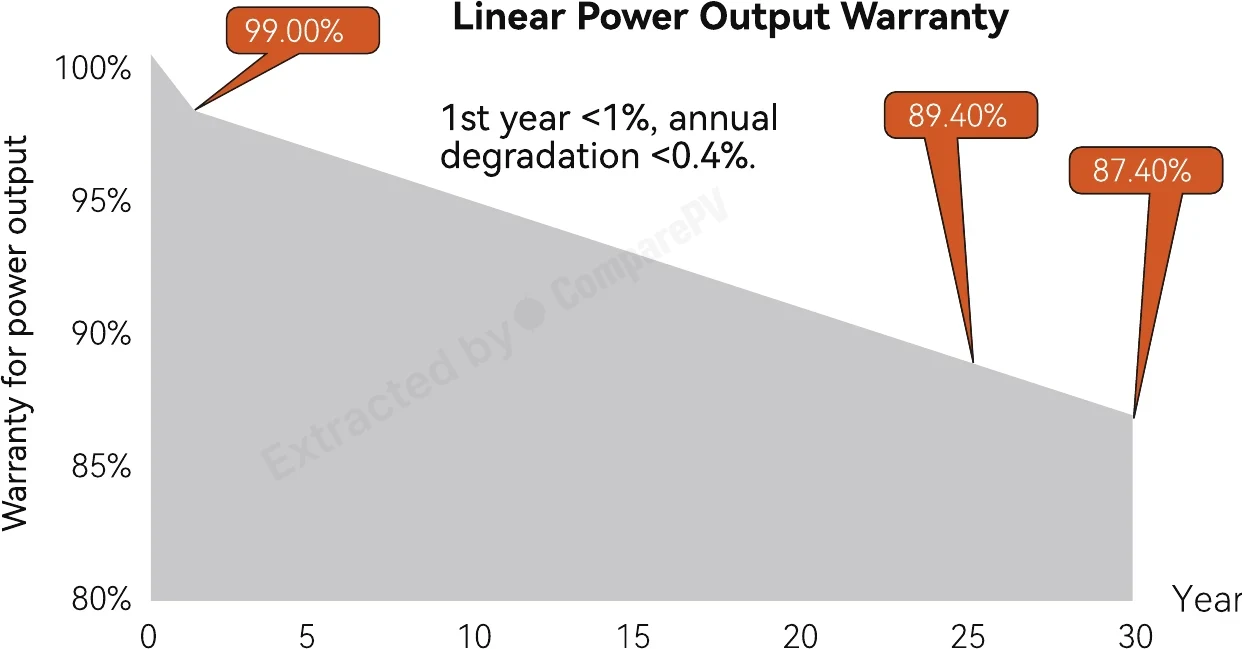
Performance warranty 30 years Typical median 30 yrs · median 30 yrs
End-of-warranty output 87.4 % Equals 376 W guaranteed
Degradation 1.00 → 0.40 % First year, then annual

Datasheet charts

Open datasheet PDF

Measured curves published by Tongwei in this model's datasheet. A chart carrying a wattage was measured on that variant alone - only the ones that describe 430 Wp appear here. The rest cover the whole series.
Simulations

Live - change any input
Lifetime output & value
30 years at 1200 kWh/kWp/year and €0.50 per kWh
Power in year 30
-
Lifetime energy
-
Energy value
-
With bifacial gain
-

Degradation from this panel's own datasheet figures. No inverter, soiling or shading losses.

Heat losses
-0.280 %/°C against a segment median of -0.290
-
Bifacial gain
Rear gain over light concrete: -
-

Model: bifaciality × albedo × 0.6 view factor. A first-order estimate, not a yield simulation.

Filter these
Size
Panel Power Eff. Temp. Weight Difference
Tongwei TWMNH-48HC430 430 W 21.50% -0.280 20.9 kg You are here
AIKO-A480-MAH54Mw 480 W 24.10% -0.260 21.5 kg +50 W, cooler, +2.6 pp
GK-5-54HG-480M 480 W 24.10% -0.260 21.0 kg +50 W, cooler, +2.6 pp
JKM480N-48QL6-DB-F2-EU 480 W 24.02% -0.260 24.4 kg +50 W, heavier, +2.5 pp
GKA96N-PRO-480W 480 W 24.02% -0.300 21.0 kg +50 W, hotter, +2.5 pp
TWMNH-48HD435 435 W 21.80% -0.280 20.9 kg +0.3 pp
TWMNH-48HD440 440 W 22.00% -0.280 20.9 kg +10 W, +0.5 pp
TWMNH-48HD445 445 W 22.30% -0.280 20.9 kg +15 W, +0.8 pp
TWMNH-48HD450 450 W 22.50% -0.280 20.9 kg +20 W, +1.0 pp
LR7-54HJD-510M 510 W 25.00% -0.240 23.5 kg +80 W, cooler, +3.5 pp
AIKO-A495-MCE54Mw 495 W 24.80% -0.260 21.0 kg +65 W, cooler, +3.3 pp
LR7-54HJD-505M 505 W 24.70% -0.240 23.5 kg +75 W, cooler, +3.2 pp
AIKO-A490-MCE54Mw 490 W 24.50% -0.260 21.0 kg +60 W, cooler, +3.0 pp
LR7-54HJD-500M 500 W 24.50% -0.240 23.5 kg +70 W, cooler, +3.0 pp
CIPRO-TN9C54M-500W 500 W 24.50% -0.260 21.4 kg +70 W, cooler, +3.0 pp

Found 1395 panels of the same or similar size to this one, within ±10 mm. See them here Found 1425 panels of the same or similar size to this one, within ±25 mm. See them here Found 3614 panels of the same or similar size to this one, within ±50 mm. See them here Found 3962 panels of the same or similar size to this one, within ±100 mm. See them here

Common questions

6 answered
Is the Tongwei TWMNH Bifacial Full-black Module (48) series still available for purchase?
No, the TWMNH Bifacial Full-black Module (48) series has been discontinued by Tongwei. This model was gradually phased out in favor of newer generation TOPCon modules with higher unit power output. Availability is now limited to remaining distributor stock, so it's worth checking current stock with your supplier before planning a larger installation based solely on this model.
What warranty comes with the Tongwei TWMNH Bifacial Full-black Module (48) panels?
The manufacturer provides a 15-year product warranty and a 30-year linear power output warranty, typical for premium N-type TOPCon modules. This means protection against manufacturing defects for 15 years, plus a guaranteed, gradually declining power output over three decades of operation—an important factor when calculating the payback period of a PV investment.
Is the 48-cell TWMNH module format suitable for small or complex roofs?
Yes, the smaller 48-cell format (dimensions approx. 1762×1134 mm, weight approx. 21 kg) makes installation easier on complex roof surfaces with dormers, chimneys, or skylights. The compact dimensions make the panel easier to maneuver during installation and allow better use of limited roof space compared to standard 72- or 144-cell modules.
Does bifacial technology in the TWMNH panels actually increase energy production?
Yes, thanks to the double-sided design, TWMNH panels capture additional energy from light reflected off the ground, roof, or snow, resulting in higher yield than conventional monofacial modules, especially over high-albedo surfaces. The exact energy gain depends on surrounding albedo and mounting height, but in typical residential conditions it can add several percent to annual output.
How do Tongwei TWMNH panels perform during hot weather and on hot roof surfaces?
These modules feature a low power temperature coefficient, typical of N-type TOPCon technology, so they lose less efficiency as cell temperature rises compared to conventional P-type panels. In practice, this means more stable energy output on hot summer days, when roof surface temperature can significantly exceed ambient temperature.
How does the TOPCon technology used in the TWMNH series differ from older PERC cells?
The N-type TOPCon cells used in the TWMNH series offer higher resistance to LID and LeTID degradation than traditional P-type PERC cells, resulting in higher and more stable energy yield over the long term. This technology also delivers higher base efficiency and better performance in low-light conditions and elevated temperatures.
Add to compare