PolyCrown Solar Tech NS-290MH-72

NS-290MH-72

290 Wp Monocrystalline
ComparePV verdict

Space saver, no clear weak spot

Rank 12,201 of 14,005
Compare panels Datasheet PDF
Power (Wp)
290
Weak · bottom 22%
Efficiency (%)
22.54
Strong · top 1%
Density (Wp/m²)
225.5
Strong · top 1%
Temp (%/°C)
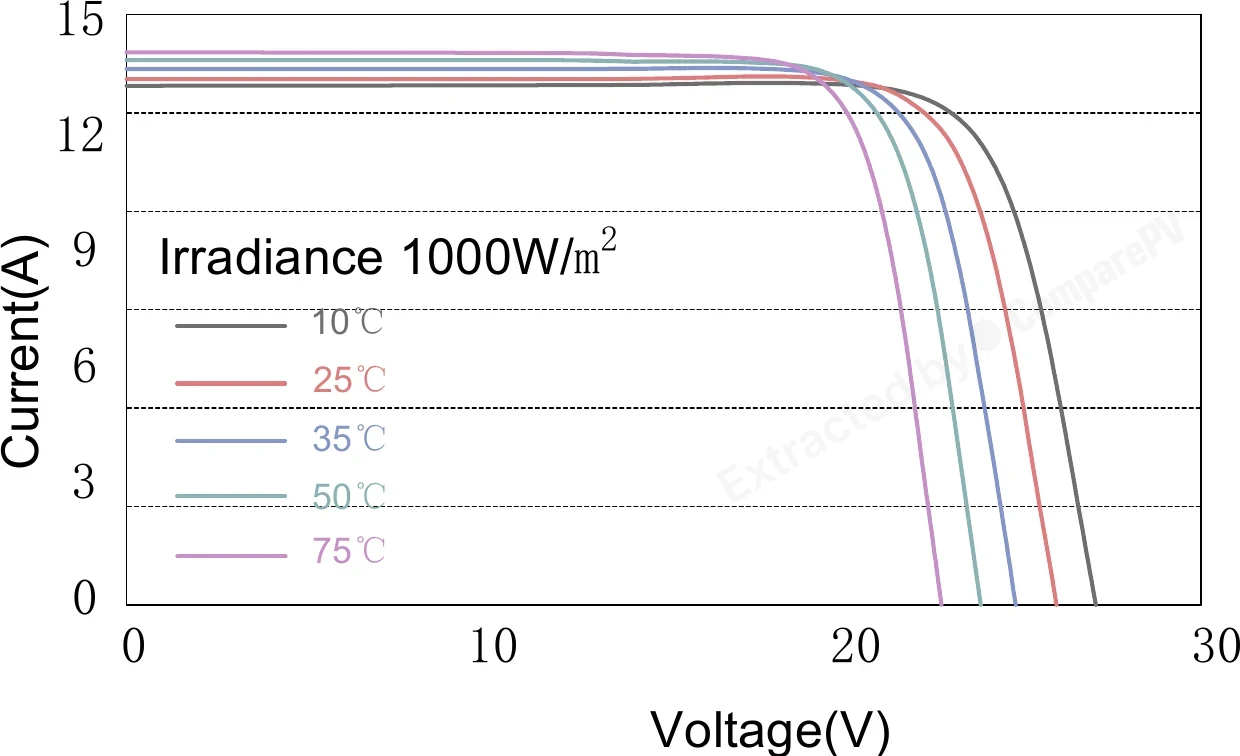
-0.290
Strong · top 11%
Weight (kg)
12.5
Strong · 7.7 kg below median
Warranty (yrs)
25
Typical · median 25 yrs

The PolyCrown Solar Tech Monocrystalline 72 series is a solution designed for projects requiring maximum efficiency and energy stability on large surfaces. Utilizing advanced monocrystalline cell technology, these panels offer an excellent power-to-space ratio, making them an ideal choice for solar farms and large commercial installations. A key innovation is the use of a multi-busbar design, which effectively shortens the electron flow path and minimizes internal losses. Thanks to the high transmittance of tempered glass with an anti-reflective coating, these modules maintain impressive efficiency even in low-light conditions, which is a significant advantage in the Polish climate zone. The 72 series solves the problem of performance degradation over time, offering increased resistance to the PID effect and micro-cracks thanks to rigorous quality control at the production stage. A robust, anodized frame guarantees resistance to extreme mechanical loads, such as heavy snow or strong wind gusts. By choosing these panels, investors gain the assurance of long-term yields while reducing installation costs, as the higher unit power of the module allows for a reduction in the number of structural components. It is a solid foundation for a profitable investment in renewable energy sources, standing out from the competition with its high performance in variable temperatures.

Ranking

1,481 panels in the 190-390 W band, all technologies
Metric This panel Median Position in segment Overall rank
Module efficiency 22.54% 19.02% Strong · top 1% 3,920
Power density 225.5 190.2 Strong · top 1% 3,895
Temperature coefficient -0.290 -0.360 Strong · top 11% 2,165
Weight per kWp 43.1 61.1 Strong · top 1% 263
Performance warranty 25 yrs 25 yrs Typical 9,798
Colour key Strong - top 25% Typical - middle 50% Weak - bottom 25%

Signals from the data

8 positive · 2 caution
Best for

Roofs where every square metre counts, weight-limited structures and small roofs that need every watt.

Strengths
225.5 watts per square metre

Top 1% of the 190-390 W band, against a median of 190.2. Ranked 3,895th in the whole database.

43.1 kg per kWp

Top 1% of the 190-390 W band, against a median of 61.1. Ranked 263rd in the whole database.

22.54% module efficiency

Top 1% of the 190-390 W band, against a median of 19.02%. Ranked 3,920th in the whole database.

What owners get
Efficiency up to 23.32% — Tier-1 level

Peak efficiency of 23.32% matches the direct comparable JA Solar Monocrystalline72 (300Wp/23.32%) and is significantly higher than other listed comparables, such as DMEGC Greenhouse (11.61%) or Solitek SOLID Agro Frameless (14.88%). This is a top-of-segment result for the classic 72-cell format.

Longer product warranty than JA Solar

The 15-year product warranty exceeds the standard offered by the direct comparable — JA Solar Monocrystalline72 typically ships with a 12-year product warranty at the same 25-year power warranty. This gives investors longer coverage without any tradeoff in performance guarantees.

Low temperature coefficient of -0.290%/°C

Per the NS-260-300MH-72 datasheet, the power temperature coefficient is -0.290%/°C, better than the typical -0.35 to -0.40%/°C of older mono PERC modules. This translates into lower yield losses on hot days.

Multi-busbar design with strict quality control

Multi-busbar cell interconnection shortens the electron flow path and reduces resistive losses, while rigorous manufacturing QC improves PID resistance and reduces microcrack risk — supporting stable long-term energy yield.

Reinforced frame for snow and wind loads

The anodized frame construction offers increased resistance to mechanical loads typical of the Polish climate zone, such as accumulated snow in winter and strong wind gusts, reducing the risk of field microdamage.

Trade-offs
Low unit power for 2026 standards

Maximum power of 300Wp on a 72-cell format sits well below today's mainstream market standard (400-600+ Wp modules). This means more modules, more cabling and more mounting structure per kWp installed, raising BoS costs on larger projects.

No bifacial technology

The series is monofacial (is_bifacial: false), so it cannot capture the additional rear-side energy gain from reflected light that bifacial modules provide (typically 5-20% depending on ground albedo) — an increasingly standard feature for the utility-scale and commercial installations this series targets.

Notes from the database
  • At 22.5% efficiency, this panel is 0.7pp above typical database modules (median: 21.8%)
  • Power density of 225.5 W/m² packs 7.4 W/m² more into the same footprint vs database median (218.1 W/m²)
  • Temperature coefficient of -0.29%/°C matches the database median
  • Weight of 12.5 kg (14.0 kg below database median of 26.5 kg) allows easier transport and roof mounting
  • #3920 for efficiency, #2165 for temperature performance out of 14005 panels

Specifications

Open datasheet PDF
Nominal power (Pmax) 290 Wp Nameplate at 1000 W/m², 25 °C
Module efficiency 22.54 % Strong Segment median 19.02%
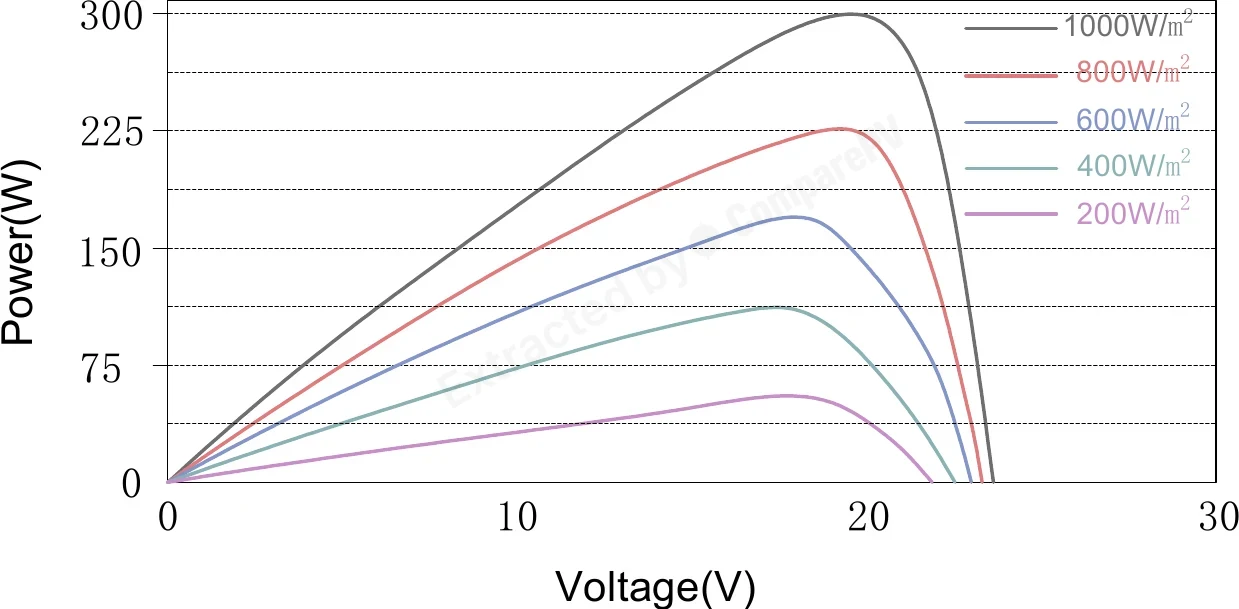
Vmpp · Impp 19.32 V · 15.02 A Operating point at max power
Voc · Isc 23.28 V · 15.97 A Sizes the string length
Max system voltage 1500 V Longer strings than 1000 V modules
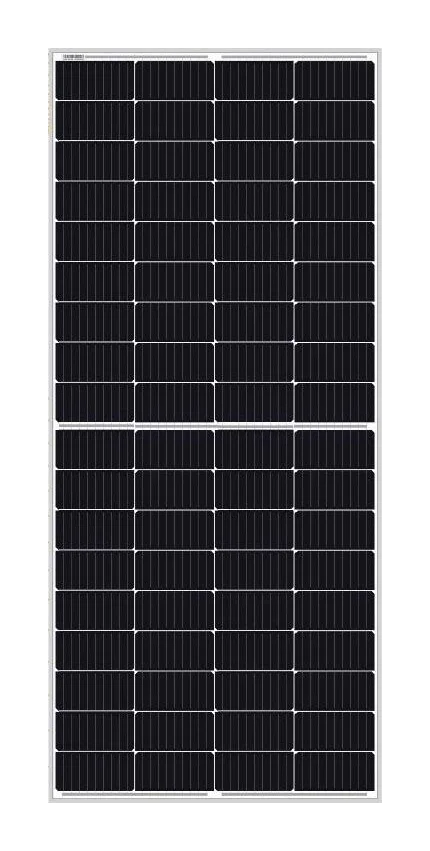
Dimensions 1715×750×30 mm · 1.29 m² of roof
Weight 12.5 kg Strong Strong · 7.7 kg below median
Cells 72 Monocrystalline
Coefficient Pmax -0.290 %/°C Strong top 11% of its segment
Coefficient Voc · Isc -0.250 · 0.045 %/°C
NOCT 45 °C At 800 W/m², 20 °C ambient
Product warranty 15 years Hardware defects only
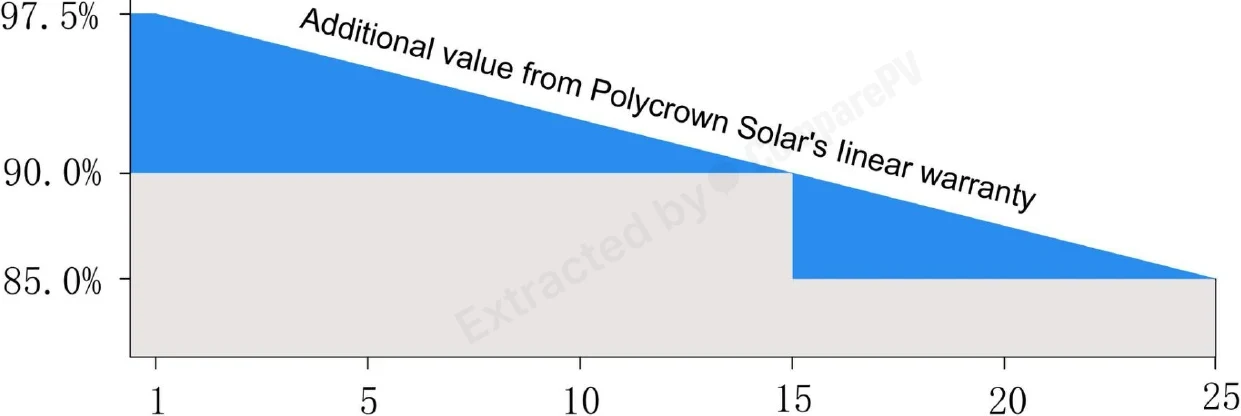
Performance warranty 25 years Typical median 25 yrs · median 25 yrs
End-of-warranty output 80.0 % Equals 221 W guaranteed
Degradation 2.50 → 0.73 % First year, then annual

Datasheet charts

Open datasheet PDF

Measured curves published by PolyCrown Solar Tech in this model's datasheet. A chart carrying a wattage was measured on that variant alone - only the ones that describe 290 Wp appear here. The rest cover the whole series.
Simulations

Live - change any input
Lifetime output & value
30 years at 1200 kWh/kWp/year and €0.50 per kWh
Power in year 30
-
Lifetime energy
-
Energy value
-

Degradation from this panel's own datasheet figures. No inverter, soiling or shading losses.

Heat losses
-0.290 %/°C against a segment median of -0.360
-
Filter these
Size
Panel Power Eff. Temp. Weight Difference
PolyCrown Solar Tech NS-290MH-72 290 W 22.54% -0.290 12.5 kg You are here
NS-300MH-72 300 W 23.32% -0.290 12.5 kg +10 W, +0.8 pp
ZEUS 1.2 FullBlack 280W 280 W 23.31% -0.260 14.3 kg Cooler, +0.8 pp, +5 yr warranty
NS-330MH-80 330 W 23.15% -0.290 15.0 kg +40 W, heavier, +0.6 pp
GKA182M285W 285 W 23.00% - 10.8 kg Lighter, +0.5 pp, +5 yr warranty
GKA182M240W 240 W 23.00% - 10.8 kg -50 W, +0.5 pp, +5 yr warranty
GKA182M260W 260 W 23.00% - 10.8 kg -30 W, +0.5 pp, +5 yr warranty
GKA182M270W 270 W 23.00% - 10.8 kg -20 W, +0.5 pp, +5 yr warranty
NS-260MH-72 260 W 20.21% -0.290 12.5 kg -30 W, -2.3 pp
NS-270MH-72 270 W 20.99% -0.290 12.5 kg -20 W, -1.6 pp
NS-280MH-72 280 W 21.76% -0.290 12.5 kg -10 W, -0.8 pp
NS-290MH-72 290 W 22.54% -0.290 12.5 kg Very close match
NS-280MH-72 280 W 21.76% -0.290 12.5 kg -10 W, -0.8 pp
TW-280MM-1 280 W 21.12% -0.400 12.5 kg Hotter, -1.4 pp, -5 yr warranty
NS-270MH-72 270 W 20.99% -0.290 12.5 kg -20 W, -1.6 pp

Found 10 panels of the same or similar size to this one, within ±10 mm. See them here Found 12 panels of the same or similar size to this one, within ±25 mm. See them here Found 12 panels of the same or similar size to this one, within ±50 mm. See them here Found 13 panels of the same or similar size to this one, within ±100 mm. See them here

Common questions

6 answered
What warranty does the PolyCrown Solar Tech Monocrystalline72 series carry and what does it cover?
The Monocrystalline72 series comes with a 15-year product warranty covering material defects and workmanship, plus a 25-year linear power output warranty. The power warranty guarantees a defined minimum performance level over the full 25-year period. This is among the longer power warranties available on the market and is an important factor when calculating the LCOE for a PV farm or large commercial installation.
Do PolyCrown Monocrystalline72 panels perform well under the overcast conditions typical of Central Europe?
Yes. The Monocrystalline72 series uses high-transmittance tempered glass with an anti-reflective coating, which improves energy harvest under diffuse and low-irradiance conditions. This makes the modules well-suited for climates like Poland's, where direct solar irradiation is lower than in Southern Europe. Investors planning installations in central or northern regions will benefit from the module's improved low-light performance.
What is PID and are the Monocrystalline72 panels protected against it?
PID (Potential Induced Degradation) is a gradual power loss caused by high system voltage and moisture penetrating the module laminate. The Monocrystalline72 series is built with enhanced PID resistance through strict cell-level quality control and optimized encapsulant composition. In practice, this reduces the risk of permanent power degradation in large string systems operating at high DC voltages, helping to protect long-term energy yield.
What mechanical loads can PolyCrown Monocrystalline72 panels handle — are they suitable for heavy snow regions?
The anodized aluminum frame of the Monocrystalline72 series is engineered for extreme mechanical loads, including heavy snow accumulation and strong wind gusts. 72-cell commercial-grade modules in this class are typically certified for static loads around 5400 Pa (snow) and 2400 Pa (wind), though exact values should be confirmed in the product datasheet. This makes them a viable choice for flat rooftop and ground-mount systems in continental climates.
Is 300 Wp enough for a large-scale PV farm, or is the Monocrystalline72 series underpowered for utility projects?
At 300 Wp, the Monocrystalline72 sits in the commercial module class, though the utility-scale market increasingly favors modules above 400 Wp. Its key advantage is a high power-to-footprint ratio: higher per-module wattage reduces the total number of modules, mounting structures, and BoS components, lowering overall installation costs. This makes the series competitive for projects with constrained roof or land area, even if it is not the highest-density option available today.
How does the multi-busbar design in the Monocrystalline72 series differ from older technology and why does it matter?
Traditional monocrystalline cells used 2–3 busbars to collect current. The Monocrystalline72 series uses a multi-busbar (MBB) architecture, which shortens the electron path and distributes thermal stress across more contact points. The practical results are lower internal resistive losses, higher module efficiency, and improved resistance to microcracks that can develop during shipping or installation — all of which contribute to more stable long-term power output.
Add to compare