Light for its output, needs the roof space
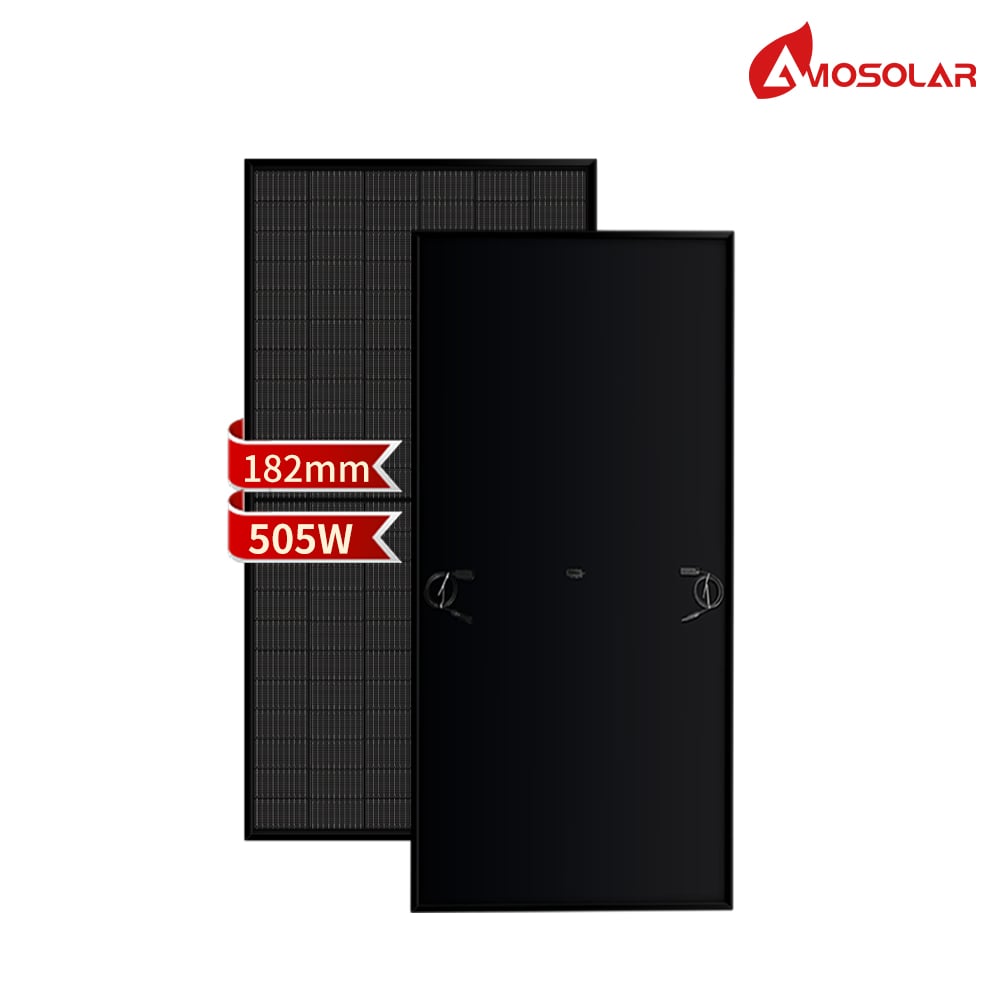
The AmoSolar AS485-515M10-132 FULL BLACK series is designed for installations where both aesthetics and stable performance in challenging conditions are important. The use of monocrystalline M10 modules and a 132-cell layout promotes high power density while maintaining good module performance. The FULL BLACK version makes it easier to aesthetically match with dark tiles, metal roofing, or modern facades, so that the panels do not visually dominate the building's structure.
This is a solution for investors who want to minimize energy losses during hot weather - this is facilitated by the favorable temperature coefficient. The modules are also designed for long-term operation: the high sealing class of the connection box and standard connections that make installation easy play an important role. This series is suitable for single-family homes, company roofs, and projects where aesthetics, durability, and predictable energy yields are a priority.
Ranking
Signals from the data
Residential, commercial and hot-climate.
Roofs where every square metre has to count and tight roof space.
Top 23% of the PERC 450-500 W segment, against a median of 53.1.
Bottom 14% of the PERC 450-500 W segment, against a median of 208.5.
Bottom 15% of the PERC 450-500 W segment, against a median of 20.82%.
The uniform black finish across the frame, cells, and backsheet allows the array to blend seamlessly into dark ceramic tile, bituminous, or dark metal roofing. In the residential prosumer and architectural integration segments, this is a decisive sales argument that standard modules with white backsheets simply cannot offer.
The 132-cell half-cut M10 (182 mm) layout splits the module into two independent electrical circuits, reducing resistive losses by approximately 50% compared to full-cell designs and significantly limiting the impact of partial shading on one half of the module from affecting the other. This translates into a tangible real-world benefit on rooftops with chimneys or dormers.
A peak efficiency of 21.69% with a fully black aesthetic places this series above the typical 20–21% range for PERC Full Black modules. Since a standard white backsheet reflects heat more effectively, achieving 21.69% with a black backsheet indicates well-managed cell operating temperatures in this module design.
The manufacturer guarantees a linear power degradation profile over 25 years — a standard aligned with premium-segment market norms. For residential prosumer systems in the typical 8–12 kWp range, this provides predictable energy yield throughout the full system payback period.
At a maximum efficiency of 21.69%, this series falls noticeably short of direct competitors in the same power class: Canadian Solar TOPBiHiKu6 reaches 22.8%, Huasun Aurora Pro 23.17%, and Jolywood JW-HD120N 23.3%. A gap of 1.1–1.6 percentage points translates to approximately 5–7% less power harvested from the same roof area under identical irradiance conditions.
All three peer comparables use N-type cells (TOPCon or HJT), which carry a lower Pmax temperature coefficient (TOPCon: approx. −0.29%/°C; HJT: approx. −0.25%/°C) versus the typical −0.35%/°C for P-type PERC. In the Polish climate, where modules regularly reach 60–70°C in summer, this difference results in approximately 1.5–2.5% higher real annual energy losses. P-type PERC also exhibits a higher susceptibility to LeTID (Light and elevated Temperature Induced Degradation) than N-type technologies.
The product warranty stands at 12 years, whereas leading Tier-1 manufacturers such as Jinko Solar and LONGi offer 15 years — and in some product lines up to 25 years. On systems backed by a 25-year linear power warranty, the mid-life operating period (years 13–25) is left without coverage against manufacturing defects, materially increasing the owner's potential service and replacement costs.
AmoSolar does not appear on BloombergNEF's bankable manufacturers list (BNEF Tier-1 Q1 2026). For commercial installations or projects requiring debt financing, this may represent a significant barrier — financial institutions and insurers frequently mandate modules from BNEF-listed manufacturers as a condition for loan approval or policy issuance. The risk is lower in the residential prosumer segment, but it does affect the residual value of the installation upon a potential property sale.
- At 20.4% efficiency, this panel is on par with typical PERC 450-500W modules
- Power density of 204.2 W/m² is 4.2 W/m² below PERC 450-500W median (208.5 W/m²) - needs more roof space
- At -0.35%/°C, hot weather performance is typical for PERC 450-500W panels
- In the top 83% for efficiency among all PERC panels
Specifications
Simulations
Degradation from this panel's own datasheet figures. No inverter, soiling or shading losses.
Alternatives






Found 397 panels of the same or similar size to this one, within ±10 mm. See them here Found 408 panels of the same or similar size to this one, within ±25 mm. See them here Found 425 panels of the same or similar size to this one, within ±50 mm. See them here Found 953 panels of the same or similar size to this one, within ±100 mm. See them here